What Is Stress Relaxation in Springs and How Does It Affect Performance?
Stress relaxation is the gradual loss of load or force in a spring under constant deflection over time, and it is the hidden factor that determines whether a precision component fails after months or performs reliably for decades. Unlike fatigue, which causes sudden fracture from cyclic loading, stress relaxation silently reduces the spring’s ability to maintain its required force, leading to loose connections, seal leaks, or electrical contact failure. For engineers specifying springs for high-temperature or long-life applications, accounting for stress relaxation is not optional—it is a mandatory design consideration that dictates material selection, manufacturing process, and operational limits.
What Is Stress Relaxation in Springs and How Is It Measured?
Stress relaxation is the time-dependent decrease in stress within a spring when it is held at a constant strain (deflection). It is quantified as a percentage of initial load lost over a specified time and temperature, typically measured using ASTM E328, which prescribes test fixtures that maintain fixed deflection and record force decay. For example, a stainless steel spring 302 held at 20 percent deflection at 200 degrees Celsius can lose 15 to 25 percent of its initial load within 1,000 hours, whereas the same spring at room temperature may lose less than 2 percent over 10,000 hours. The measurement result is expressed as a relaxation curve, plotting retained stress versus logarithmic time, which allows engineers to extrapolate long-term behavior using the Larson-Miller parameter for elevated temperature predictions.
How Does Temperature Accelerate Stress Relaxation in Spring Materials?
Temperature is the single most dominant accelerator of stress relaxation because it increases atomic diffusion and dislocation movement, which allows the material to permanently deform and shed elastic stress. A general engineering rule is that for every 25 to 30 degrees Celsius increase in operating temperature, the relaxation rate roughly doubles for most spring steels. For instance, music wire (ASTM A228) is rated for continuous service up to 120 degrees Celsius, but at 150 degrees Celsius it can lose 30 percent of its load in just 100 hours; in contrast, Inconel X-750 retains more than 90 percent of its load at 540 degrees Celsius for 1,000 hours. The practical implication is that any spring operating above 80 degrees Celsius must be designed with a higher initial load or a material specifically alloyed for high-temperature resistance, such as 17-7 PH stainless steel or Elgiloy.
Which Spring Materials Have the Highest Resistance to Stress Relaxation?
The ranking of stress relaxation resistance follows the material’s melting point and its ability to resist dislocation creep, with cold-worked and precipitation-hardened alloys performing significantly better than standard carbon steels. Below is a comparative table based on typical retained load after 1,000 hours at 20 percent deflection:
| Material | Maximum Continuous Temperature | Retained Load at 200°C | Retained Load at 350°C | Relative Cost Index |
| Music Wire (A228) | 120°C | 55% (not recommended) | N/A | 1.0 |
| Chrome Silicon (A401) | 200°C | 75% | N/A | 1.3 |
| 302 Stainless Steel | 230°C | 65% | N/A | 2.1 |
| 17-7 PH Stainless | 320°C | 92% | 70% | 3.5 |
| Inconel X-750 | 540°C | 98% | 93% | 8.0 |
| Elgiloy | 400°C | 96% | 88% | 9.5 |
Chrome silicon and 17-7 PH are the most practical choices for automotive and industrial applications because they balance cost with high retained load. For aerospace or medical devices where failure is catastrophic, Inconel X-750 is the specified material, as it maintains structural integrity even under combined stress and corrosive environments.
How Does Initial Stress Level Affect the Rate of Relaxation?
The higher the initial stress (as a percentage of the material’s tensile strength), the faster the relaxation rate, because the driving force for atomic rearrangement is proportionally larger. If a spring is designed at 80 percent of its torsional yield strength, it may relax twice as fast as a spring designed at 50 percent of yield strength, even at the same temperature. For example, a chrome silicon spring compressed to 700 MPa will lose approximately 12 percent of its load in 1,000 hours at 150 degrees Celsius, while the same spring at 500 MPa will lose only 5 percent. This is why precision spring manufacturers recommend designing for a maximum initial stress of 45 to 55 percent of tensile strength for long-life applications, sacrificing some initial force for long-term stability. Additionally, setting the spring (compressing it to solid height during manufacturing) can increase relaxation resistance by 10 to 15 percent because it creates beneficial residual compressive stresses on the surface.
Why Does Surface Treatment and Manufacturing Process Influence Relaxation?
Shot peening and presetting are two manufacturing processes that directly mitigate stress relaxation by introducing compressive residual stresses on the spring surface, which counteract the tensile stresses that drive relaxation. Shot peening with steel shot at an intensity of 0.2 to 0.4 mmA can improve relaxation resistance by 20 to 30 percent in high-strength steels, as measured by load retention at elevated temperatures. Presetting, or compression to solid height, redistributes stress and work-hardens the material, which reduces the effective stress during service; this process is standard for all compression springs rated above 60 percent of yield. In contrast, grinding the ends without subsequent stress relief can leave microcracks and localized tensile zones that accelerate relaxation by up to 25 percent, making post-grinding stress relief at 200 to 300 degrees Celsius mandatory for precision springs.
What Is the Difference Between Stress Relaxation and Fatigue in Spring Failure?
Stress relaxation is a static, time-dependent loss of force under constant deflection, while fatigue is a dynamic failure caused by cyclic loading that leads to crack initiation and fracture. A spring can fail by relaxation alone, where it simply stops exerting enough force to function, even though it remains physically intact; this is common in electrical contacts, valve springs, and clamps. Fatigue, on the other hand, is characterized by a sudden break after a number of cycles, often leaving visible beach marks on the fracture surface. In practice, both mechanisms act simultaneously: relaxation reduces the preload, which can increase the amplitude of cyclic stress and accelerate fatigue, creating a compound failure mode that is difficult to predict without combined testing.
How Can Engineers Predict Stress Relaxation for a Given Design Life?
Engineers can predict relaxation using the Larson-Miller parameter (LMP = T (C + log t)) to correlate temperature and time data from accelerated tests to real-world service conditions. For a given material, a master curve of relaxation percentage versus LMP is generated from tests at multiple temperatures; the designer then calculates the LMP for their operating temperature and required life, and reads the expected relaxation percentage directly. For example, if a 302 stainless steel spring operates at 150 degrees Celsius for 10 years (87,600 hours), the LMP is approximately 20,000, which corresponds to a 30 percent relaxation based on published data; this means the spring must be designed with an initial load 30 percent higher than the minimum functional load. This method is accurate within plus or minus 5 percent for standard materials when using certified test data, but requires careful validation for new alloys or unusual surface treatments.
What Are the Best Design Practices to Minimize Stress Relaxation?
The best design practices are to reduce operating temperature, lower initial stress, and select a material with a higher melting point and cold-worked structure. Specifically, keep initial torsional stress below 50 percent of tensile strength, avoid continuous temperatures above the material’s rated limit, and specify shot peening and presetting for any spring expected to last more than 10,000 hours. In addition, use a larger wire diameter to reduce the number of active coils needed for the same spring rate, because larger wire cross-sections have a lower surface-to-volume ratio and relax slower due to reduced surface stress concentration. Finally, test prototype springs under actual load and temperature conditions for at least 100 hours and extrapolate to the target life, rather than relying solely on handbook values, because real-world surface conditions and manufacturing variability can shift relaxation by 10 to 15 percent.
FAQ
What Is the Typical Relaxation Rate for Music Wire at Room Temperature?
At room temperature (20 to 25 degrees Celsius), music wire springs typically lose 1 to 3 percent of their initial load over 10,000 hours at moderate stress levels. This is negligible for most consumer products, but can be significant for precision instruments or safety-critical mechanisms. For any application requiring less than 1 percent drift, choose 17-7 PH or a nickel alloy.
Can Stress Relaxation Be Reversed by Re-Compressing the Spring?
No, stress relaxation is a permanent metallurgical change that cannot be reversed by mechanical re-compression or cycling. Once the material has crept and redistributed its internal stresses, the original load cannot be restored without re-heat-treating and re-setting the spring. The only remedy is replacement with a spring designed with higher initial load or better material.
Does Stress Relaxation Occur in All Spring Types Including Torsion and Extension Springs?
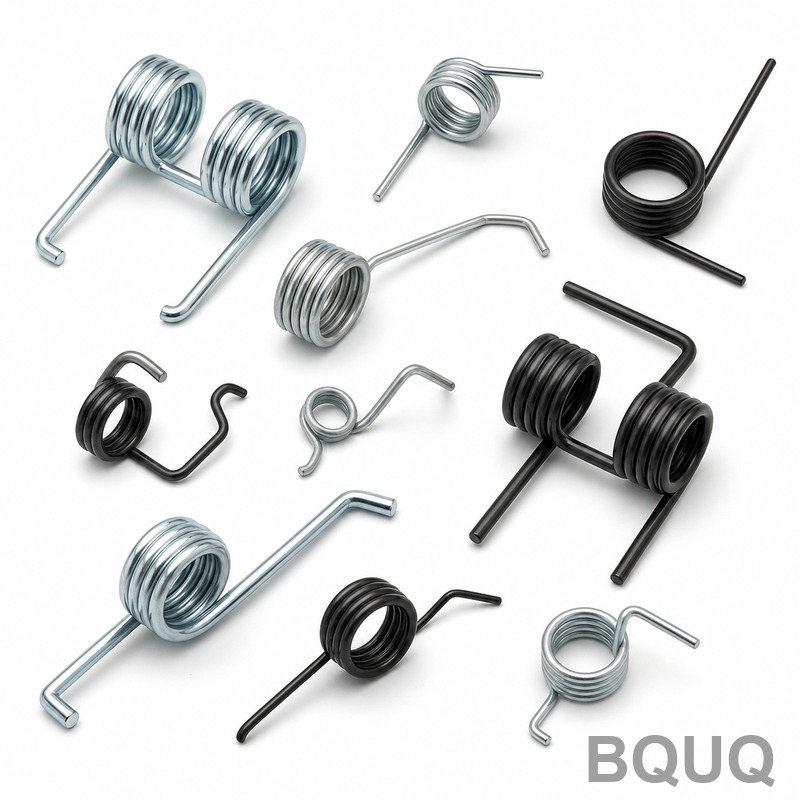
Yes, stress relaxation occurs in all spring types—compression, extension, torsion, and leaf springs—because it is a material property, not a geometry-specific phenomenon. However, torsion springs often show higher apparent relaxation because their stress is concentrated in the coil bend, while extension springs with initial tension relax faster due to the pre-stressing of the wire. Each type requires the same design considerations for temperature and initial stress.
What Is the Maximum Operating Temperature for Chrome Silicon Springs?
Chrome silicon (ASTM A401) springs can operate continuously up to 200 degrees Celsius, with a maximum intermittent temperature of 230 degrees Celsius. Above this temperature, the material begins to lose its hardness and relaxation accelerates rapidly, exceeding 25 percent load loss within 1,000 hours at 250 degrees Celsius. For temperatures above 200 degrees Celsius, switch to 17-7 PH or Inconel.
How Does Shot Peening Improve Stress Relaxation Resistance?
Shot peening induces compressive residual stresses on the spring surface to a depth of 0.1 to 0.3 millimeters, which must be overcome before the tensile relaxation mechanism can initiate. This effectively reduces the net tensile stress at the surface by 30 to 50 percent, slowing the relaxation rate by a corresponding amount. It is most effective on high-strength steels and less effective on softer alloys like phosphor bronze.
What Is the Cost Difference Between a Music Wire Spring and an Inconel X-750 Spring?
For the same geometry and spring rate, an Inconel X-750 spring costs approximately 8 to 10 times more than a music wire spring, primarily due to raw material cost and higher processing temperatures. This price difference is justified only when operating temperatures exceed 230 degrees Celsius or when failure would cause catastrophic system loss. For standard industrial applications, chrome silicon provides the best cost-performance balance.
When Should I Specify a Stress Relaxation Test for My Spring Order?
You should specify a stress relaxation test whenever the spring operates above 100 degrees Celsius, requires a service life greater than 5 years, or maintains a critical sealing or electrical contact function. The test should follow ASTM E328 with a minimum of 200 hours at the maximum operating temperature, and the acceptance criterion should be a maximum load loss of 5 percent. BQUQ can include this test in the production batch at a nominal additional cost of 3 to 5 percent per order.
Conclusion
Stress relaxation is a deterministic, time-temperature-dependent phenomenon that must be engineered out of any spring design intended for long-term or high-temperature service. By selecting the right material, controlling initial stress below 50 percent of yield, applying shot peening and presetting, and validating with accelerated testing, you can achieve load retention above 90 percent over a decade of operation. At BQUQ, we have manufactured precision springs for 20 years and routinely provide relaxation test data and material recommendations for automotive, medical, and energy applications. For a free engineering review of your spring design and a quotation with guaranteed relaxation performance, contact us at sc@bquq.com or WhatsApp +86 13713157787, and we will respond within 12 hours. Visit www.bquq.com to download our spring design guide and material selection chart.