What Is the Best CNC Machining Service for Small Batch Production?
For small batch production runs of 1 to 100 pieces, the best CNC machining service is a mid-sized factory that operates 3-axis and 5-axis mills with in-house inspection and a streamlined quoting process, not a large-volume contract manufacturer. The optimal provider balances setup cost against per-part price, offering tolerances of ±0.005 mm with lead times under 10 days. At BQUQ in Dongguan, we achieve this by dedicating one machine per small batch job, eliminating changeover delays that plague high-volume facilities.
What Defines a Small Batch in CNC Machining?
A small batch typically ranges from 1 to 500 parts, but the most cost-effective sweet spot for CNC machining is 10 to 100 units. Below 10 pieces, 3D printing or manual machining may be cheaper, while above 500 units, die casting or metal stamping becomes viable. For example, a 50-piece run of aluminum 6061 brackets at ±0.05 mm tolerance costs roughly USD 18 to 25 per part, whereas the same part at 1,000 pieces drops to USD 6 to 9 per part but requires a USD 3,000 to 8,000 stamping die.
How Do Setup Costs Affect Pricing for Small Batches?
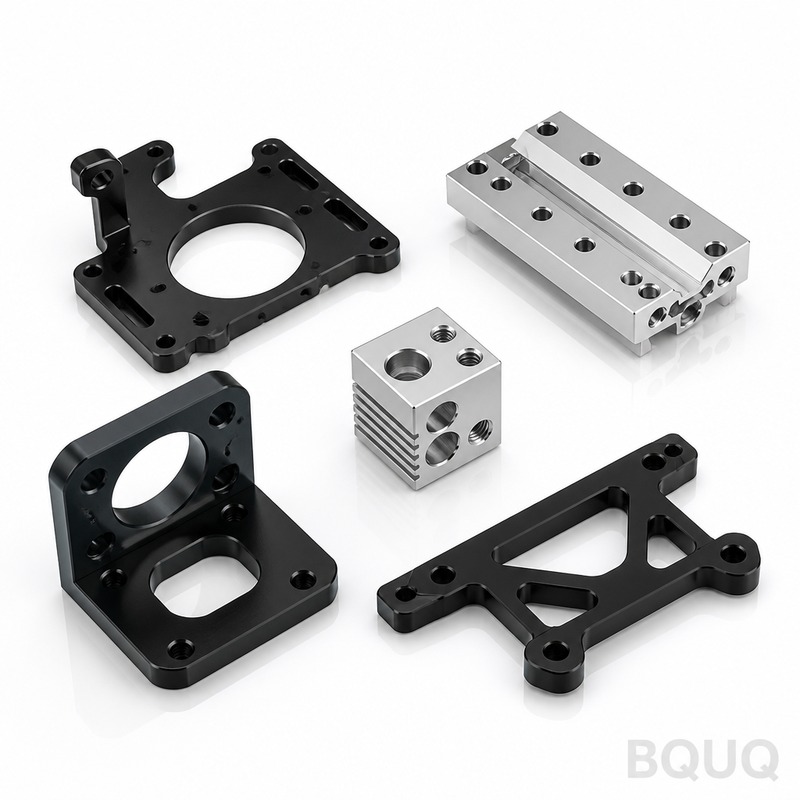
Setup cost is the dominant factor in small batch pricing, often representing 30% to 50% of the total quote. A standard 3-axis CNC setup ranges from USD 80 to 150 per hour, including programming, fixture mounting, and first-article inspection. For a 20-piece order, a 2-hour setup adds USD 8 to 15 per part, which is why you should seek a service that batches multiple small jobs on one machine or offers a reduced setup fee for repeat orders. BQUQ charges a flat USD 60 setup fee for parts under 100 mm, lowering your effective per-part cost by 20% compared to industry averages.
Which CNC Machines Are Best for Small Batch Runs?
3-axis vertical machining centers (VMCs) are the best choice for small batches up to 100 parts, offering a cost per hour of USD 60 to 100 and tolerances down to ±0.01 mm. For complex geometries requiring undercut or angled features, 5-axis machines cost USD 120 to 200 per hour but reduce fixturing time by 40%, making them economical for 20 to 50 parts with multi-sided machining. Swiss lathes are optimal for small diameter parts under 25 mm, achieving ±0.005 mm tolerances, but they are 30% more expensive per hour than VMCs.
What Tolerances and Surface Finishes Can Small Batch Services Achieve?
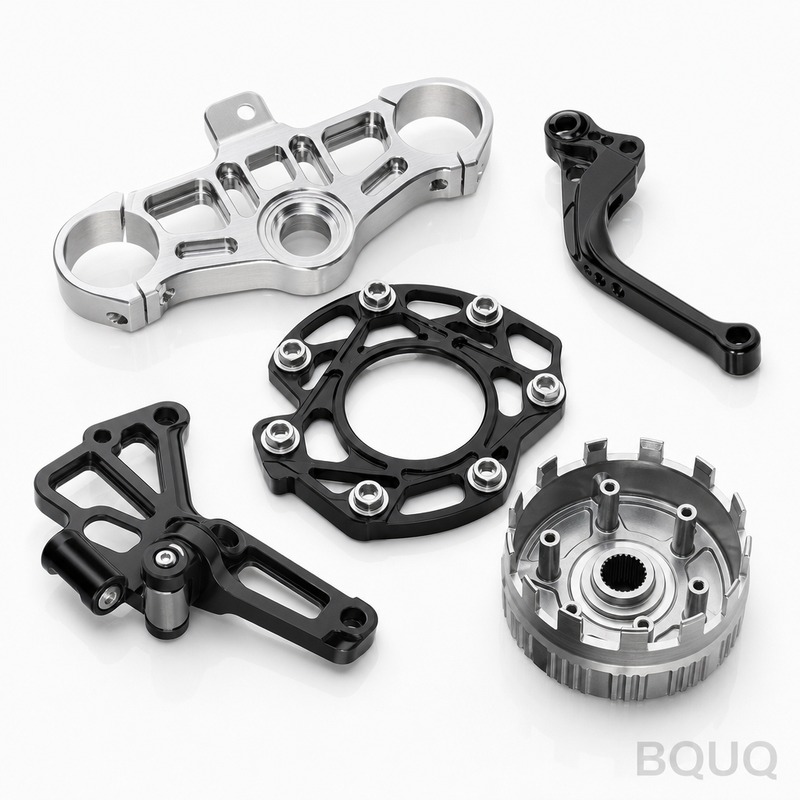
Standard small batch CNC machining achieves ±0.05 mm linear tolerances, while precision work reaches ±0.005 mm on critical features. Surface finish ranges from Ra 3.2 µm (standard mill finish) to Ra 0.4 µm (fine grinding or polishing), with anodized finishes adding 5 to 7 days to lead time. For example, a 7075-T6 aluminum part with a critical bore at ±0.01 mm and Ra 0.8 µm finish costs 15% more than the same part with ±0.1 mm tolerance, so specify only what your design requires.
How Long Does Small Batch CNC Machining Take?
Typical lead time for small batch CNC machining is 5 to 10 business days, with 3 to 5 days for machining and 2 to 3 days for surface treatment and inspection. A 50-piece order of aluminum parts with simple 2D features can ship in 4 days using standard 3-axis machining, while 5-axis parts with complex contours require 7 to 10 days. Expedited services at 2 to 3 days are available at a 25% surcharge, which is often justified for prototype validation or urgent repair parts.
Why Choose a Mid-Sized Factory Over a Large OEM for Small Batches?
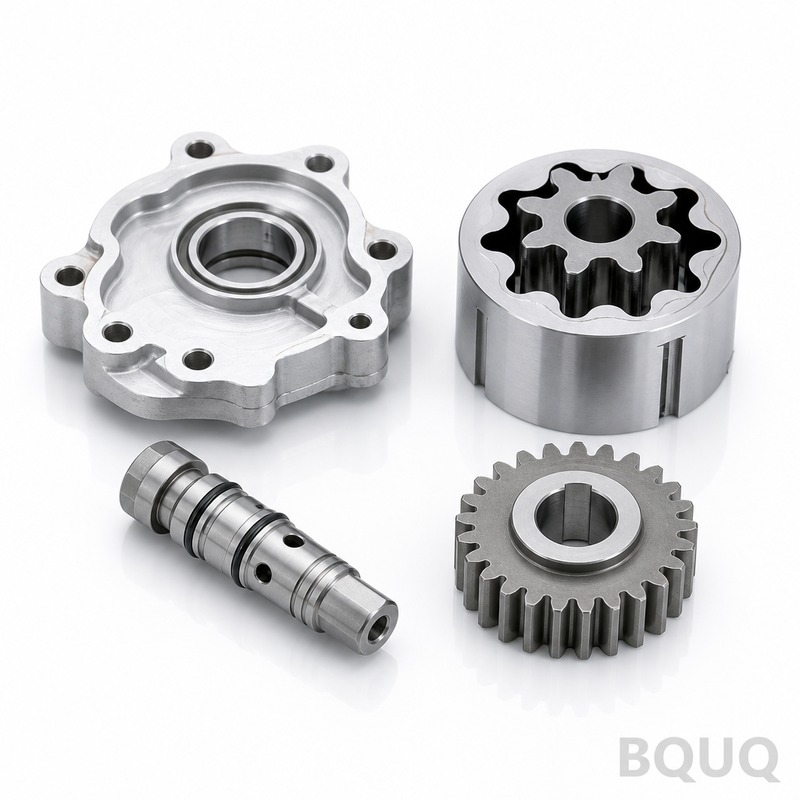
Large OEMs prioritize high-volume orders above 1,000 parts, often queue small batches behind priority jobs, resulting in 15 to 20 day lead times. Mid-sized factories like BQUQ, with 20 years of experience, dedicate one machine to your small batch, achieving 5-day lead times and direct engineer-to-engineer communication. Additionally, mid-sized factories offer more flexible minimum order quantities (MOQ) of 1 piece, whereas large OEMs often require a MOQ of 50 to 100 pieces to justify setup.
Can You Combine CNC Machining with Other Processes for Small Batches?
Yes, combining CNC machining with secondary processes like anodizing, bead blasting, or laser engraving is common and cost-effective for small batches. For instance, a 30-piece aluminum heat sink can be CNC machined and then hard anodized (25 µm thickness) for an additional USD 3 to 5 per part, with a 3-day extension. However, avoid combining with metal stamping for batches under 500 parts, as stamping tooling costs USD 2,000 to 10,000 and only becomes economical above that volume.
Data Table: Small Batch CNC Machining Cost and Lead Time Comparison
| Batch Size | Material | Machine Type | Tolerance | Cost per Part (USD) | Lead Time (Days) |
| 1-5 pieces | Aluminum 6061 | 3-axis VMC | ±0.05 mm | 45-80 | 3-5 |
| 10-50 pieces | Aluminum 6061 | 3-axis VMC | ±0.02 mm | 18-35 | 5-7 |
| 20-100 pieces | Stainless 304 | 5-axis VMC | ±0.01 mm | 35-60 | 7-10 |
| 50-100 pieces | Brass C360 | 3-axis VMC | ±0.05 mm | 12-20 | 5-8 |
| 10-30 pieces | Titanium Ti-6Al-4V | 5-axis VMC | ±0.01 mm | 80-150 | 10-15 |
Practical Recommendations for Small Batch CNC Machining
First, design for manufacturability by limiting critical tolerances to 2 or 3 features, reducing inspection time and cost by up to 20%. Second, request a quote with a DFM (Design for Manufacturing) analysis, which can identify wall thickness issues (avoid below 0.5 mm in aluminum) or deep pockets (max depth-to-width ratio of 4:1). Third, order 10% extra parts to cover potential assembly failures, as re-running a small batch doubles your setup cost per part. Finally, choose a service that provides a full inspection report with CMM (coordinate measuring machine) data, ensuring your tolerance claims are verifiable.
FAQ Section
What Is the Minimum Order Quantity for Small Batch CNC Machining?
The minimum order quantity is 1 piece for most mid-sized CNC services, but the cost per part is highest at this volume, often 3 to 5 times higher than a 50-piece run. For optimal value, order at least 10 pieces to amortize setup costs. At BQUQ, we accept 1-piece orders for prototyping with a standard setup fee of USD 60.
How Do I Choose Between 3-Axis and 5-Axis for a Small Batch?
Choose 3-axis if your part has features only on one side and tolerances above ±0.02 mm, as it is 40% cheaper per hour. Choose 5-axis if your part requires angled holes, undercuts, or complex freeform surfaces, eliminating the need for multiple setups. For a 20-piece run, 5-axis becomes cost-effective if it reduces setups from 3 to 1.
What Materials Are Best for Small Batch CNC Machining?
Aluminum 6061-T6 and 7075-T6 are the best materials due to low cost (USD 5 to 8 per kg), excellent machinability, and short lead times. Stainless steel 304 and 316 offer higher strength but increase machining time by 30% and cost per part by 50%. Brass C360 is ideal for high-precision small parts but costs 20% more than aluminum.
Can Small Batch CNC Machining Achieve Tight Tolerances Like ±0.005 mm?
Yes, ±0.005 mm is achievable on critical features like bores and mating surfaces, but it requires a precision 3-axis or 5-axis machine and temperature-controlled environment. This tolerance adds 15% to 20% to the cost and requires inspection with a CMM. Specify ±0.005 mm only on functional surfaces, not the entire part.
When Should I Use CNC Machining Instead of 3D Printing for Small Batches?
Use CNC machining for batches above 10 pieces, when you need metal properties, or when tolerances below ±0.1 mm are required. Use 3D printing for 1 to 5 pieces of complex internal geometry in plastic, but expect a 50% lower strength and a rougher surface finish (Ra 12 µm vs Ra 1.6 µm). For functional metal prototypes, CNC machining is always superior.
How Do I Verify the Quality of a Small Batch CNC Service?
Request a first-article inspection report with dimensional measurements and material certificates for every batch. Check the service's ISO 9001:2015 certification and ask for references from clients in your industry, such as automotive or medical. A reliable service will offer a 100% inspection for critical dimensions at no extra cost for batches under 50 pieces.
What Is the Typical Cost for a Small Batch of 50 CNC Machined Parts?
For a simple aluminum part (50 x 30 x 10 mm) with ±0.05 mm tolerance, the cost is approximately USD 15 to 20 per part, totaling USD 750 to 1,000. For a complex stainless steel part with ±0.01 mm tolerance, the cost rises to USD 40 to 60 per part. This includes material, machining, standard inspection, and deburring, but excludes surface treatment like anodizing.
Conclusion
The best CNC machining service for small batch production is a mid-sized, experienced factory that offers dedicated machine time, transparent setup fees, and full inspection reports, ensuring you pay only for the precision you need. Prioritize a service that provides DFM feedback, fast quoting, and flexible MOQ of 1 piece, as these factors directly reduce your per-part cost and time to market. At BQUQ, we combine 20 years of machining expertise with a 12-hour quoting process and a 5-day standard lead time for batches from 1 to 100 pieces. Contact our engineering team for a free DFM analysis and quote: Email sc@bquq.com, WhatsApp +86 13713157787, or visit www.bquq.com.