Auto lathe collet types explained: spring collets, hex and triangle bores, push vs pull types, round stock limits and how to choose for your automatic lathe.
Auto Lathe Collet Types: Spring, Hex and Triangle Bore Explained
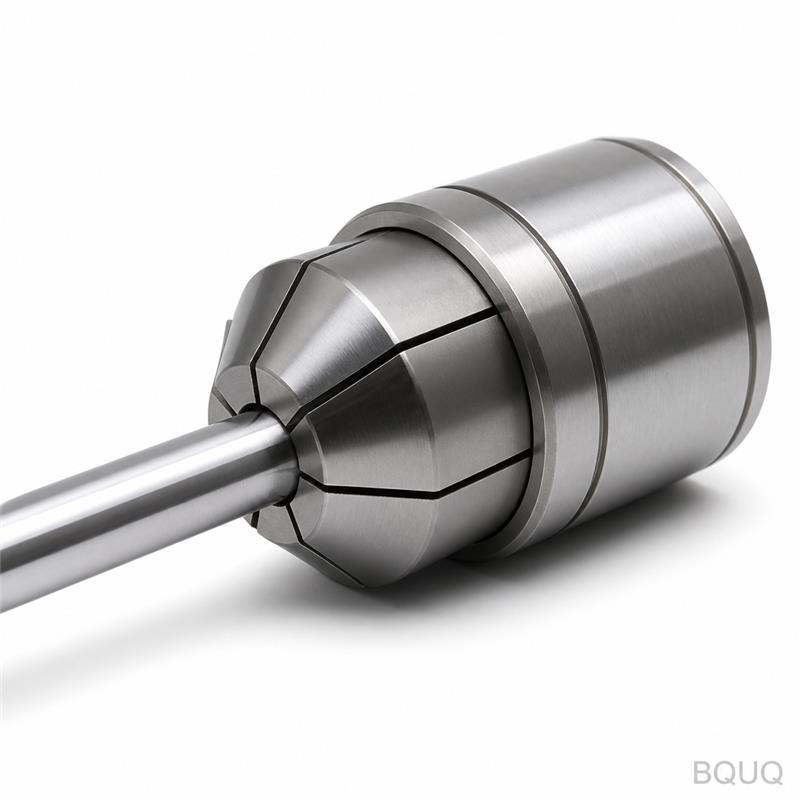
Short answer: automatic lathe (screw machine) collets come in three bore geometries for three stock shapes — round bores for round bar, hex bores for hex stock, and triangle bores for square stock — and in push-type versus pull-type designs that determine how the collet closes. A standard spring collet holds round bar from about 1 mm to 25 mm+, grips with a slot-and-taper mechanism, and repeats within a few microns when the stock and collet are matched. If your bar is hex or square, the bore geometry must match the stock exactly or grip collapses to point contact.
On an automatic lathe or CNC screw machine, the collet is the whole game: it holds the bar through thousands of cycles per shift, opens and closes on every part, and its grip quality decides whether the part runs true. This guide sorts out the type names, bore shapes and actuation styles so a buyer can specify the right collet the first time.
Push-Type vs Pull-Type: How the Collet Closes
The two actuation families differ in where the closing force comes from. A push-type collet is pushed into a tapered sleeve by a spring or mechanism behind it; the taper squeezes the collet closed. A pull-type collet is pulled into the taper from the front. The practical differences: push collets are simpler and common on cam-driven auto lathes, while pull collets give stronger, more consistent grip on CNC and Swiss machines and are easier to adjust. Some designs also use a draw tube that pulls the entire collet assembly. When ordering, match the actuation to your machine's collet system — a push collet in a pull-type machine will not close properly. If you are unsure which your machine uses, tell the supplier the machine make and model rather than guessing.
Bore Geometry: Round, Hex, Triangle
The bore shape must mirror the stock. Round bores grip round bar with full circular contact and are the default for 90% of work. Hex bores grip hex stock (common for screws, nuts and fittings made from hex bar) with full-face contact on the flats — using a round bore on hex stock grips only on the corners and slips under load. Triangle bores are the traditional answer for square stock: the three-point geometry conforms to square bar corners. Some manufacturers label triangle collets as "square" collets; verify the stock shape against the bore drawing. Within each shape, the bore size is matched to the stock with clearance of roughly 0.05-0.13 mm (0.002-0.005 in) — too tight and the collet will not close, too loose and grip is weak.
| Stock shape | Collet bore | Notes |
|---|---|---|
| Round bar | Round | Default; full 360° grip |
| Hex bar | Hex | Full-flat contact, holds torque on hex parts |
| Square bar | Triangle (3-point) | Conforms to square corners |
| Specialty shapes | Custom / broached | Rare; only for dedicated production |
Spring Collets and Slotted Collets
The "spring collet" name refers to the slotted, spring-loaded collet body — slots cut along the length let the nose flex closed as the taper is engaged. Slot patterns vary (straight, spiral, or alternating) and affect grip and runout. Straight-slot collets are the workhorse: predictable, economical, and fine for most bar work. Spiral or "emergency" slotting improves grip on out-of-round stock but costs more. The number of slots also matters: more slots conform better to stock but weaken the collet. For precision work, collets are often matched or "sized" to the exact stock diameter by the maker — a sized collet grips with minimal runout, while a "range" collet (one collet covering a diameter range) trades runout for flexibility.
Materials and Hardness
| Collet material | Hardness | Best for |
|---|---|---|
| Spring steel (65Mn / equivalent) | HRC 40-50 | General auto lathe work, economy |
| Alloy steel, hardened | HRC 50-60 | High-production, long life |
| Hardened + coated | Hard + coating | Abrasive stock, extended life |
| Brass collets | Soft | Delicate stock that must not be marked |
Harder collets last longer and hold better but are more brittle; softer materials protect polished or plated stock. For stainless and other work-hardening materials, a hard, well-lubricated collet with exact sizing prevents the stock from slipping and galling. Note that hardness numbers in catalog data vary by maker — compare the maker's recommended duty, not just the HRC figure.
How to Specify the Right Collet
Give the supplier four facts and the selection is nearly automatic: machine make and model (or collet series name such as 36, 46, 52, 630, 643 types common on auto lathes); stock shape and exact diameter (round bar at 12.00 mm is different from 12.07 mm for sizing); stock material and surface (bright drawn, ground, hex); and the duty (light prototype, production, high-speed). If the part features need extra rigidity, ask about hardened or coated options; if the stock is precious or finished, ask about softer grip or protective bores. A collet is a wear part — buy a spare for the sizes you run constantly, because a worn collet shows up as runout and chatter before it shows up on inspection.
Frequently Asked Questions
Q: What is a spring collet?
A: A spring collet is a slotted, spring-loaded collet whose nose flexes closed when pulled or pushed into a tapered sleeve, gripping round, hex or square bar. It is the standard workholding on automatic lathes and CNC screw machines, opening and closing on every bar feed.
Q: What is the difference between round, hex and triangle collet bores?
A: Round bores grip round bar, hex bores grip hex stock on its flats, and triangle bores grip square stock via three-point contact. The bore shape must match the stock shape — a round bore on hex stock only touches corners and slips under load.
Q: How do I know if my machine needs a push or pull collet?
A: Push collets close by being pushed into the taper from behind; pull collets are pulled into it from the front. Match the actuation to your machine's collet system — tell the supplier the machine make and model if you are unsure, since fitting the wrong type will not close properly.
Q: What clearance should a collet bore have over the stock?
A: Roughly 0.05-0.13 mm (0.002-0.005 in) for round stock. Too tight prevents closing; too loose weakens grip and increases runout. For precision work, order collets sized to the exact stock diameter.
Q: How long do auto lathe collets last?
A: It depends on duty, stock material and collet hardness — from thousands to millions of cycles. Hardened alloy collets last longest on abrasive stock; brass collets wear fast but protect finished stock. Replace collets when runout or chatter appears; a worn collet degrades part quality before it fails visibly.
Authored by the BQUQ Engineering Team. BQUQ is an ISO9001-certified source factory in Dongguan, China, running CNC machining, metal stamping, custom springs, heat sink and collet lines under one roof. Send drawings to sc@bquq.com or WhatsApp +86 13713157787 for a quote within 12 working hours. www.bquq.com