Swiss-type collet maintenance schedule: cleaning intervals, runout checks, lubrication, wear signs and when to replace collets on sliding headstock machines.
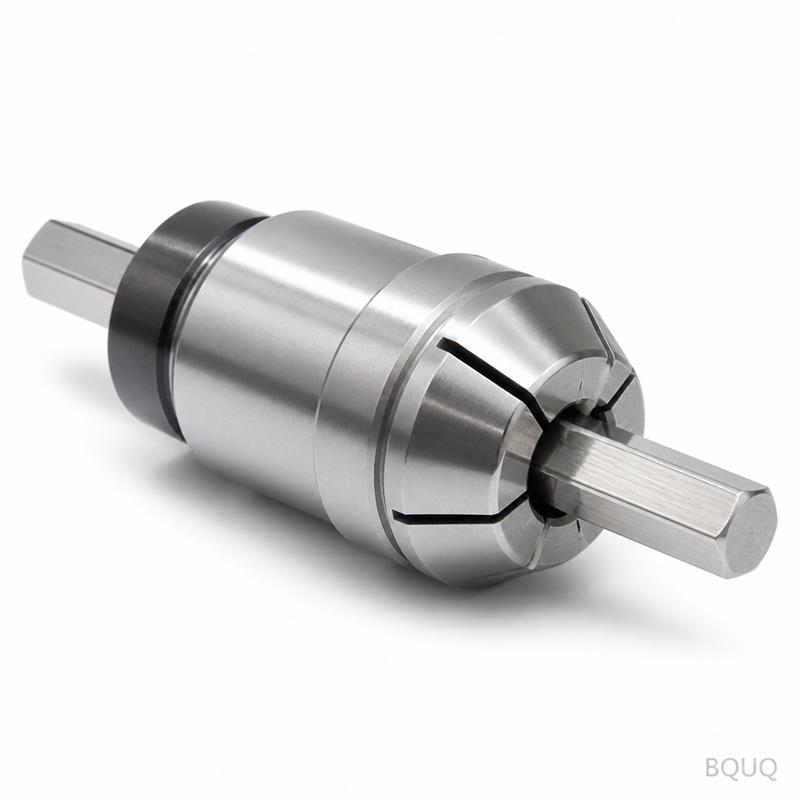
Swiss Collet Maintenance: Cleaning, Runout and Replacement
Short answer: a Swiss-type collet needs the same discipline as any precision tool — wipe and re-lubricate daily, deep-clean every shift change or sooner when running aluminum or plastics, check runout weekly against a ground test bar, and replace the collet the moment runout at the nose exceeds your process budget or grip marks appear on stock. A neglected collet costs far more in scrap and downtime than a new one; at typical Swiss-machine rates, one hour of lost production buys several collets.
Swiss-type machines push collets harder than any other workholding: the collet (and guide bushing) grip every bar as it feeds, cycle after cycle, all day. Contamination, wear and lubrication failures show up immediately as runout, chatter and stock marks. This guide is the maintenance routine that keeps a Swiss cell holding its numbers.
What Wears and Why
In a Swiss-type setup two components carry the precision: the guide bushing (which supports the bar right at the tool) and the collet (which grips and feeds it). Both wear from abrasive fines — aluminum oxide from machining aluminum, rust scale from carbon steel, carbide dust from grinding operations. Fines pack into the collet slots and between the collet and taper, pushing the nose off-center. Lubrication dries out and grip torque drops. Eventually the collet nose wears oversize and the slot edges round off, and runout at the nose creeps past what the process allows. The failure is gradual, which is why it needs scheduled checks rather than crisis response.
Daily and Per-Batch Routine
The practical routine: at the start of each shift, wipe the collet nose and taper with a clean cloth and apply a light machine oil or the maker's recommended collet lubricant — never grease, which collects fines. When changing stock material (especially from ferrous to aluminum or plastics), blow out the collet and bushing with air and wipe the taper; material-specific fines contaminate the next run. Every time a collet is removed, clean the taper seat in the spindle or headstock — contamination on the seat reads directly as runout. Log the cleaning in the machine's maintenance sheet; Swiss cells run best on a schedule, not on feel.
Weekly Runout Check
The single most valuable habit is a weekly runout check against a known-good ground test bar. Mount a precision ground bar (the same diameter the machine runs most), close the collet normally, and indicate the bar at the nose and at 50-100 mm out with a dial indicator or digital indicator on the tool post. Record nose runout and the far-end value. What to expect on a healthy machine: nose runout under 5 µm (0.005 mm) with a matched collet; far-end values depend on bar straightness and bushing condition. Compare week to week — a slow climb in nose runout means collet or taper wear; a sudden jump usually means contamination or a damaged collet slot. When nose runout exceeds your process tolerance (many shops set the alarm at 0.008-0.01 mm), replace the collet before it starts making scrap.
Replacement Signs
Replace the collet when any of these appear: nose runout past the process budget on a clean, properly seated collet; visible wear or rounding on the slot edges; grip marks transferred to finished stock (indicates internal damage or foreign material embedded); the collet no longer closes smoothly or grips unevenly around the circumference; or after a crash or dropped-collet event (a dropped collet can distort invisibly). Keep spares for high-use diameters. Also inspect the guide bushing on the same schedule — bushing wear shows as far-end runout and bar push-back, and bushings wear faster than collets on abrasive stock.
Lubrication: The Right Product and Amount
| Lubricant type | Use | Notes |
|---|---|---|
| Light spindle oil | Daily collet/bushing lube | Thin, carries fines away |
| Collet-specific oil | Per maker spec | Best film for taper grip |
| Paste lubricant | Guide bushing (some machines) | Where maker specifies |
| Dry / no lube | Only if maker allows | Rare on Swiss collets |
Too much lubricant is as bad as none: excess oil flings onto the cut zone, contaminates coolant and leaves residue on parts. A sparing application at the collet nose and taper, repeated on schedule, is the target. On machines with automatic lubrication, verify the metering unit is feeding — a blocked line starves the collet silently.
Frequently Asked Questions
Q: How often should I clean Swiss collets?
A: Wipe and re-lubricate at the start of every shift, blow out and wipe when changing stock material, and deep-clean the taper seat whenever a collet is removed. Aluminum and plastics need more frequent cleaning because their fines pack into collet slots quickly.
Q: How do I check collet runout?
A: Mount a precision ground test bar of the machine's common diameter, close the collet normally, and indicate at the nose and 50-100 mm out with a dial indicator. Healthy matched collets show under 5 µm nose runout; log the values weekly and watch for a slow climb that indicates wear.
Q: When should I replace a Swiss collet?
A: Replace when nose runout exceeds your process budget on a clean, properly seated collet; when slot edges show visible wear; when stock comes out marked; when closing feels uneven; or after a crash or drop. Neglected collets make scrap long before they fail visibly.
Q: What lubricant should I use on collets?
A: A light spindle oil or the machine maker's recommended collet lubricant, applied sparingly at the nose and taper on a schedule. Avoid grease, which collects abrasive fines, and avoid over-oiling, which contaminates coolant and parts.
Q: Does the guide bushing need the same maintenance?
A: Yes — the guide bushing carries as much precision as the collet on a Swiss machine. Clean and lubricate it on the same schedule, and inspect it for wear (far-end runout, bar push-back) since bushings wear faster than collets on abrasive stock.
Authored by the BQUQ Engineering Team. BQUQ is an ISO9001-certified source factory in Dongguan, China, running CNC machining, metal stamping, custom springs, heat sink and collet lines under one roof. Send drawings to sc@bquq.com or WhatsApp +86 13713157787 for a quote within 12 working hours. www.bquq.com