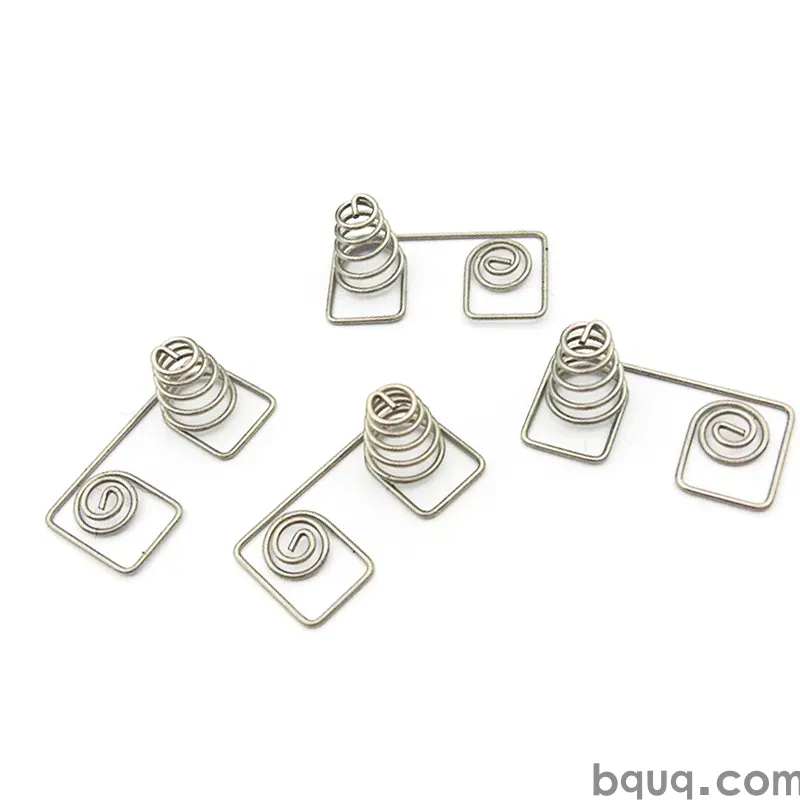
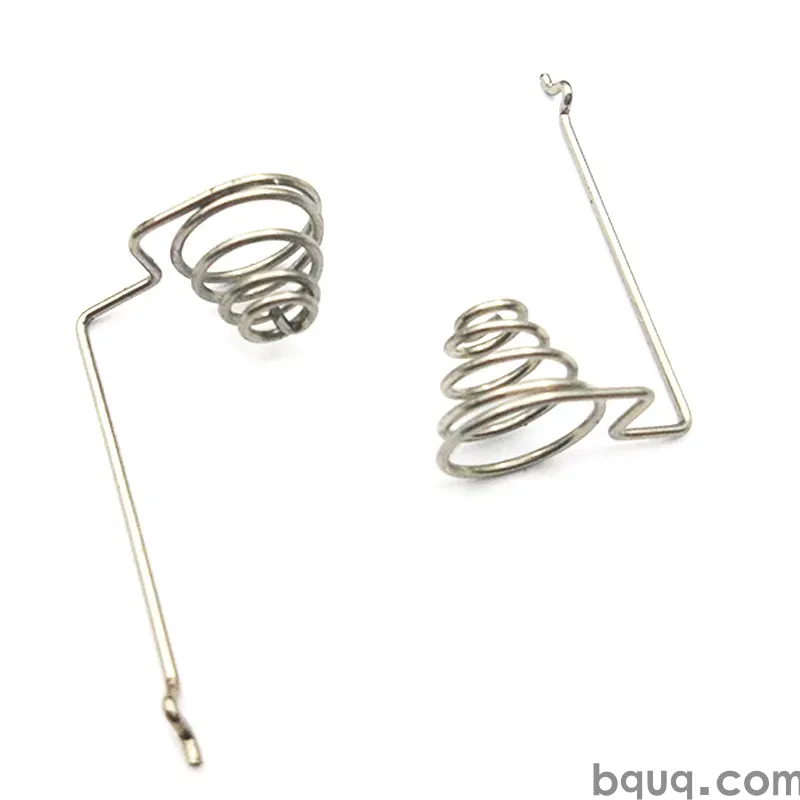
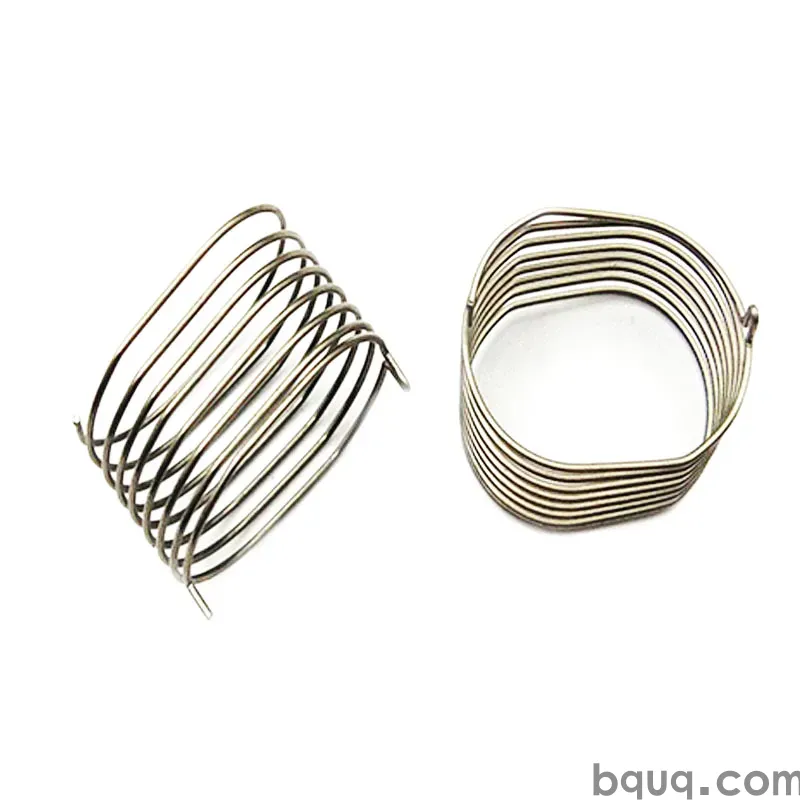
Spring collet materials compared: spring steel at 42-50 HRC for elastic grip, hardened steel for wear, coatings for life. BQUQ ISO9001 Dongguan factory.
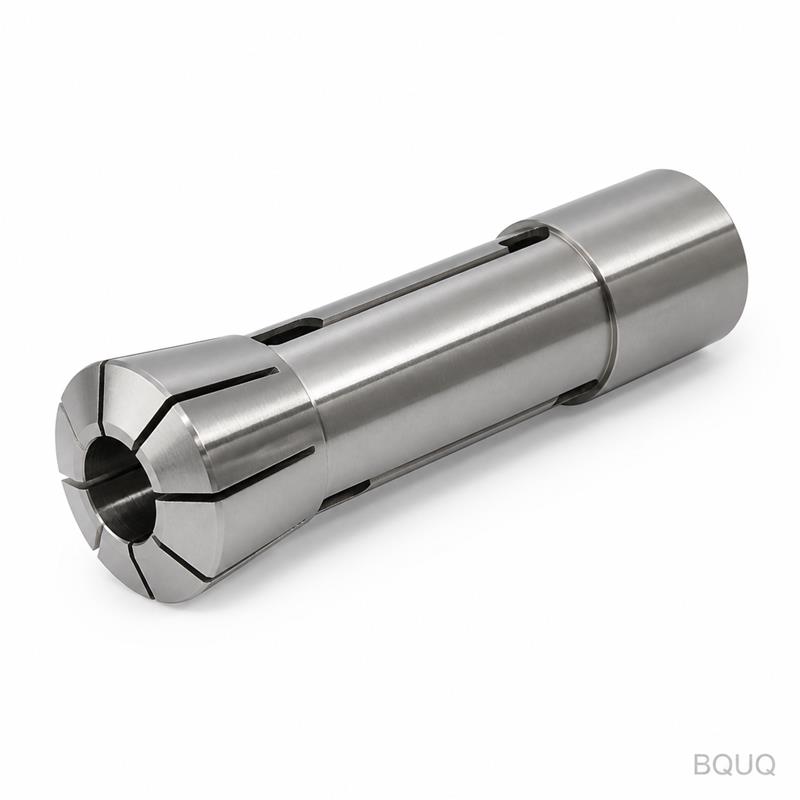
Collet Materials: Spring Steel, Hardened and Coated
Short answer: most workholding collets are made from hardened and tempered spring steel such as 65Mn or C75 running about 42–50 HRC, because a collet must flex open and closed millions of times and still grip hard. Fully hardened tool or bearing steel at 58–62 HRC is reserved for collets that barely flex, where wear resistance matters more than springiness. Coatings such as nitride, TiN or TiAlN add a hard wear layer on top of either base, typically multiplying grip-surface life 2–4 times on abrasive stock.
Every collet is a contradiction: the slotted section must act like a spring, returning to shape after each clamp cycle, while the gripping surface must act like a cutting tool, resisting wear from stock sliding through it at speed. No single hardness serves both jobs, which is why material selection is a compromise with rules behind it. Understand the rules and you can read a collet catalog like a spec sheet instead of a menu.
What a Collet Asks of Its Material
A spring collet grips by elastic deflection: the drawbar pulls the collet into a taper, the slotted segments bend inward, and the bore closes onto the stock. When the drawbar releases, the segments must spring back far enough to let the next bar feed freely. That job needs high yield strength, good fatigue resistance, and a hardness that balances wear against toughness.
The conflict: hard materials resist wear but resist bending too — they crack at slot roots instead of flexing. Soft materials flex beautifully but wear quickly and take a permanent set under repeated load. Heat treatment finds the middle. A spring-steel collet at 44–48 HRC flexes through its slot geometry without cracking and still wears acceptably on most bar stock. Push hardness much past 52 HRC in a heavily slotted collet and you start trading fatigue life for wear life.
Spring Steel: The Default Choice
Spring steel dominates collet manufacturing because the whole design assumes elastic flex. The most common grades in collet production are 65Mn (a manganese spring steel widely used in Asia) and C75 or CK75 (eutectoid carbon steel, common in European collet making), hardened and tempered to roughly 42–50 HRC. For higher cyclic duty, silicon-alloyed spring steel such as 60Si2Mn adds fatigue margin at slightly higher hardness.
These steels take a good ground finish, hold an edge at the bore, and — critically — survive the slot-root stress concentrations that kill harder materials. Most auto-lathe, Swiss headstock, ER and 5C collets you can buy are spring steel underneath whatever coating is on top.
Verifying hardness is straightforward and worth doing on any sourced batch: a Rockwell C check on a spare collet confirms the temper band, and the spread between samples tells you whether the heat treater controlled the process. Well-run spring collet production holds its target hardness within roughly ±2 HRC across a batch; wide scatter means some collets in the box are too soft to wear well and others too hard to survive slot flexing. A look at the slot roots under modest magnification also reveals burned or cracked edges from grinding, which are the first failure sites in service.
| Steel grade | Type | Typical hardness | Typical collet use |
|---|---|---|---|
| 65Mn / C75 | Carbon spring steel | 42–50 HRC | Auto-lathe and Swiss collets, ER collet bodies |
| 60Si2Mn | Silicon spring steel | 45–52 HRC | High-cycle, high-speed applications |
| GCr15 / SUJ2 | Bearing steel | 58–62 HRC | Fully hardened, small-flex precision collets |
| 9Cr18 / 440C | Martensitic stainless | 50–56 HRC | Corrosive or wash-down environments |
Fully Hardened Collets: When Wear Beats Flex
"Quenched" or fully hardened collets — often listed as quenched collets in catalogs — skip the spring temper and go to 55–62 HRC. They are made from bearing steel such as GCr15 (SUJ2) or high-carbon tool steel, hardened through and ground after heat treatment. The trade is explicit: these collets flex very little, so their slot geometry and gripping range are small, but their bore resists wear from abrasive stock, plated wire, or dirty bar that would wipe out a spring-temper collet in weeks.
Use fully hardened collets where three conditions hold: the stock diameter is tightly controlled so the collet never needs much flex, the material is abrasive or the cycle count is extreme, and concentricity must hold over a long run without reconditioning. The same reasoning appears one level up the chain in our collet heat treatment guide, which details hardening and tempering cycles for collet steels.
Coatings and Surface Treatments
Coatings exist to decouple surface hardness from bulk toughness: keep the body springy at 45 HRC and give the gripping surface a wear-resistant shell. The most common treatments on collets:
| Treatment | Surface hardness | What it does | Typical gain |
|---|---|---|---|
| Gas nitriding | 800–1200 HV case | Hard, thin case; low distortion | 1.5–2× wear life |
| TiN coating | ~2300 HV | Gold wear layer, low friction | 2–3× wear life |
| TiAlN coating | ~3300 HV | Higher temperature resistance | 2–4× on abrasive stock |
| Black oxide | ~negligible | Rust resistance only | Cosmetic / storage |
| Hard chrome | ~1000 HV | Wear + release of sticky stock | 2× in some materials |
Two cautions. First, coatings do not repair a soft substrate: a 45 HRC body with TiN still dents if chips pack between collet and stock. Second, coated collets can actually hold worse on sticky materials like aluminum — coating reduces the friction that helps grip, and aluminum picks up on some coatings. When you buy coated collets for aluminum, verify the coating choice against the material, or stay with polished uncoated steel. Polished and mirror-finished bores (see mirror-polished collets in our range) are often the better answer for aluminum and brass, where the goal is preventing pickup rather than surviving abrasion.
Coatings also need correct edge preparation. A coating laid over a sharp bore edge or slot lip spalls off in service and then accelerates wear at that exact spot, so coated collets should have lightly honed edges before coating. When comparing quotes for coated collets, ask what the coating is, its typical thickness (TiN runs roughly 2–4 µm, nitride cases 10–30 µm), and whether edges were prepared; the difference between a real coating job and a cosmetic tint is larger than the price difference between collets.
How Material Choice Interacts With Slots and Bore
Material and geometry are decided together, not separately. A collet with many narrow slots flexes more easily, so it can run slightly harder steel. A collet with three wide slots carries more stress at each slot root, so it needs the tougher spring-temper material or a drilled stress-relief hole at the root. That is why catalogs list "hardened" and "spring" variants of the same collet family: they are the same envelope, different material compromises.
Bore finish also interacts with material. A ground bore at 44 HRC spring steel gives excellent concentricity but moderate wear; the identical bore in 60 HRC bearing steel holds its size far longer. If your stock is cold-drawn, scaled, or plated — the abrasives that eat collets — a harder or coated bore pays for itself. If your stock is precision ground and clean, spring temper with a fine ground bore is the economical standard.
There is also a middle path worth knowing: differential hardness. Some premium collets are hardened overall for wear resistance but given a localized temper or relieved spring section behind the gripping zone, so the flexing part stays tough. This costs more to make because it adds a second heat-treat step and a careful grinding sequence, but it is the correct answer when one collet must grip abrasive stock all day and still flex reliably for millions of cycles.
Selection Logic for Buyers
Walk the decision in order. First, does the collet flex a lot (wide stock tolerance, frequent diameter changes) or a little (one tight diameter)? Flex means spring steel. Second, is the stock abrasive or the run length extreme? Yes means hardened or coated bore. Third, is pickup on soft materials a problem? Yes means polished bore, possibly uncoated. Fourth, is corrosion a factor? Yes means stainless spring grades.
For a source-factory shortcut: standard jobs on clean ground or drawn steel get spring-temper collets at 44–48 HRC; long-run abrasive jobs get hardened or TiN-coated collets; aluminum and brass jobs get polished bores. The collet grades explainer in our precision collet grades guide maps these materials onto catalog grade names.
Cost follows material honestly. Spring-temper collets are the cheapest because the steel and heat treatment are simple; fully hardened bearing-steel collets typically cost 20–40% more; coated versions add roughly 10–30% over their uncoated base depending on the coating and preparation. These are indicative spreads — the point is to buy the least expensive material that survives your actual stock and cycle count, not the most expensive one in the catalog.
Frequently Asked Questions
Q: What hardness should a collet be?
A: Spring-temper collets typically run 42–50 HRC, with 44–48 HRC the common band for auto-lathe and ER collets. Fully hardened precision collets run 55–62 HRC. Hardness alone is not the spec — match it to how much the collet must flex and how abrasive the stock is.
Q: Are coated collets worth the extra cost?
A: On abrasive stock such as cold-drawn steel, scaled bar, or plated wire, a nitride or TiN-coated bore typically pays back in 2–4 times the wear life, which usually beats the price premium. On clean ground stock or soft materials like aluminum, coatings add little and can hurt by reducing grip friction — specify them only where wear is the actual problem.
Q: What is the difference between spring steel and fully hardened collets?
A: Spring steel collets are hardened and tempered to stay elastic, flexing open and closed through their slots for millions of cycles. Fully hardened collets trade that flexibility for wear resistance and are used where the collet barely flexes and the bore must hold size on abrasive stock.
Q: Why do collets for aluminum often have polished bores?
A: Aluminum welds and picks up on rough or coated surfaces. A mirror-polished bore reduces friction and pickup, keeps the bar sliding cleanly, and prevents aluminum smearing into the collet slots, which is the main cause of runout drift on aluminum jobs.
Q: Can BQUQ make collets to a custom bore or material spec?
A: Yes. We bore, grind and recondition collets to specific stock diameters and can supply spring-temper, fully hardened, or coated versions per your run conditions. Send your collet drawing and material details to sc@bquq.com or WhatsApp +86 13713157787 for a quote within 12 working hours.
Related Resources
- Collet materials and heat treatment: hardening, tempering and case treatments for collet steels.
- Precision collet grades guide: how material and grinding grade map to catalog accuracy classes.
- Spring collets: spring-temper collets bored to your stock diameter for auto-lathe and Swiss work.
- About BQUQ: ISO9001-certified Dongguan factory making and reconditioning collets alongside CNC, stamping and spring lines.
- Contact us: send your collet spec for a 12-hour quotation.
Authored by the BQUQ Engineering Team. BQUQ is an ISO9001-certified source factory in Dongguan, China, running CNC machining, metal stamping, custom springs, heat sink and collet lines under one roof. Send drawings to sc@bquq.com or WhatsApp +86 13713157787 for a quote within 12 working hours. www.bquq.com