Collet Nose Diameter: Matching the Bushing and Stock
Short answer: The collet nose diameter must match the guide bushing bore within about 0.005–0.010 mm for Swiss-type work, and the bar stock must sit inside the collet grip range — typically ±0.05 mm of nominal for a standard spring collet. If the nose is undersized, the bushing cannot support the bar; if oversized, the collet will not seat in the chuck or spindle taper. Match all three — collet nose, bushing bore, and stock diameter — before you cut metal. BQUQ quotes these matched sets in 12 working hours.
Collet nose diameter is one of those dimensions that looks trivial on a drawing and causes scrap on the floor. It sits at the intersection of three separate tolerances: the collet itself, the guide bushing (or chuck nose), and the bar stock you feed through it. Get the stack-up wrong and you get runout, pull-out, chatter, or a bushing that wears out in a week.
This guide walks through how nose diameter is defined, how it interacts with guide bushings in Swiss-type machining, and how to specify matched collet-and-bushing sets for CNC lathe work. It is written for engineers and buyers sourcing collets, bushings, and collet chucks from a manufacturing partner.
What Is Collet Nose Diameter?
The nose diameter is the outside diameter of the collet at its front face — the end that faces the workpiece. On a spring collet, this is the leading edge of the slotted, tapered body. On a Swiss-type collet, it is the face that rides inside or against the guide bushing.
It is not the same as:
- Bore diameter — the internal diameter that grips the stock.
- Body diameter — the main cylindrical section that seats in the chuck or spindle.
- Taper angle — the included angle that the closing nut or chuck pushes against.
Nose diameter matters because it is the surface that locates against the bushing or the chuck nose. If the nose does not sit concentric with the bushing bore, the bar is not supported where it needs to be — right at the cutting zone.
Nose diameter vs. body diameter
On most ER-style collets, the nose diameter is slightly smaller than the body diameter, and the taper sits between them. On Swiss-type collets and guide bushings, the nose geometry is more critical because the bushing supports the bar directly behind the tool.
A typical relationship looks like this:
| Feature | Typical function | Critical tolerance |
|---|---|---|
| Nose diameter | Locates against bushing or chuck face | Concentricity to bore |
| Body diameter | Seats in chuck or spindle | Fit to chuck bore |
| Bore diameter | Grips stock | Grip range |
| Taper angle | Closing force transmission | Angle match to nut/chuck |
Why the nose is the locating surface
In Swiss-type machining, the guide bushing is the reference. The bar slides through the bushing, and the collet pushes the bar forward. The collet nose must align with the bushing bore so the bar does not deflect as it advances. Any mismatch shows up as taper, runout, or inconsistent part length.
How Does Nose Diameter Interact With the Guide Bushing?
In Swiss-type lathes, the guide bushing and the collet work as a pair. The bushing holds the bar steady at the cutting zone; the collet grips and feeds it. The nose diameter of the collet must be matched to the bushing bore so the two form a continuous support path.
The rule of thumb:
- Bushing bore = stock diameter + 0.005 to 0.010 mm clearance (for sliding fit).
- Collet bore = stock diameter within the collet's grip range.
- Collet nose = concentric with the bushing bore within 0.005 mm TIR for precision work.
If the collet nose is undersized relative to the bushing, the bar can deflect between the two. If oversized, the collet may not enter the bushing seat, or it may bind and wear the bushing face.
Sliding fit vs. gripping fit
The bushing is a sliding fit — the bar must move through it. The collet is a gripping fit — it must hold the bar without slipping. These two requirements pull in opposite directions, which is why matched sets matter.
A common mistake is to buy a collet and bushing separately from different suppliers and assume the nose diameters will match. They usually do not, because nose diameter is not a standardized dimension across all collet families.
Tolerance stack-up example
Consider a 6 mm bar:
| Component | Nominal | Tolerance | Result |
|---|---|---|---|
| Bar stock | 6.000 mm | ±0.010 mm | 5.990–6.010 mm |
| Bushing bore | 6.010 mm | +0.005/−0.000 mm | 6.010–6.015 mm |
| Collet bore | 6.000 mm | ±0.010 mm | 5.990–6.010 mm |
| Collet nose | Matched to bushing | ±0.005 mm TIR | Must align |
If the bar comes in at 6.010 mm and the bushing bore is 6.010 mm, the bar will not slide. If the bar is 5.990 mm and the bushing is 6.015 mm, the bar will rattle. The collet nose must be concentric enough that the bar does not deflect as it transitions from bushing to collet.
How Do You Match Collet Nose Diameter to Stock?
Matching is a three-step process: measure the stock, select the bushing, then select the collet.
Step 1: Measure the actual bar stock
Do not trust the nominal diameter. Cold-drawn and ground bar stock varies by grade and supplier. Measure across several points and note the maximum and minimum. For Swiss-type work, ground and polished stock is preferred because it holds diameter better.
Step 2: Select the guide bushing
The bushing bore should be the maximum stock diameter plus 0.005–0.010 mm. This gives a sliding fit without excessive clearance. For high-precision work, some shops use a clearance as tight as 0.003 mm, but this requires very consistent stock.
Step 3: Select the collet
The collet bore must grip the stock without bottoming out. A spring collet typically has a grip range of about ±0.05 mm around nominal. If the stock is outside that range, the collet will not close properly or will not release.
The collet nose diameter must then match the bushing seat. In matched sets, the collet and bushing are ground together or to the same reference so the nose aligns with the bushing bore.
Matching table
| Stock diameter | Bushing bore (typical) | Collet bore | Collet nose match |
|---|---|---|---|
| 3.000 mm | 3.005–3.010 mm | 3.000 mm | Concentric to bushing seat |
| 6.000 mm | 6.005–6.010 mm | 6.000 mm | Concentric to bushing seat |
| 10.000 mm | 10.005–10.010 mm | 10.000 mm | Concentric to bushing seat |
| 12.000 mm | 12.005–12.010 mm | 12.000 mm | Concentric to bushing seat |
These are indicative values. Actual clearance depends on stock finish, speed, and material.
What Happens When the Nose Diameter Is Wrong?
Wrong nose diameter shows up in predictable ways. Recognizing the symptom helps you trace it back to the dimension.
Undersized nose
An undersized nose leaves a gap between the collet and the bushing. The bar can deflect in that gap, producing:
- Taper on long parts.
- Runout that changes with bar position.
- Chatter at the cutting zone.
- Inconsistent part length in Swiss-type work.
Oversized nose
An oversized nose will not seat properly. It may:
- Bind in the bushing seat.
- Prevent the collet from closing fully.
- Wear the bushing face.
- Cause the collet to run off-center.
Worn nose
Even a correctly sized nose wears over time. Abrasive stock, high closing force, and poor lubrication accelerate wear. A worn nose loses concentricity and starts producing the same symptoms as an undersized nose. This is why collet wear patterns should be checked regularly on high-volume jobs.
How Does Nose Diameter Differ Across Collet Types?
Nose diameter is not a universal dimension. It varies by collet family, and each family has its own matching bushing or chuck.
| Collet type | Typical nose feature | Matching component |
|---|---|---|
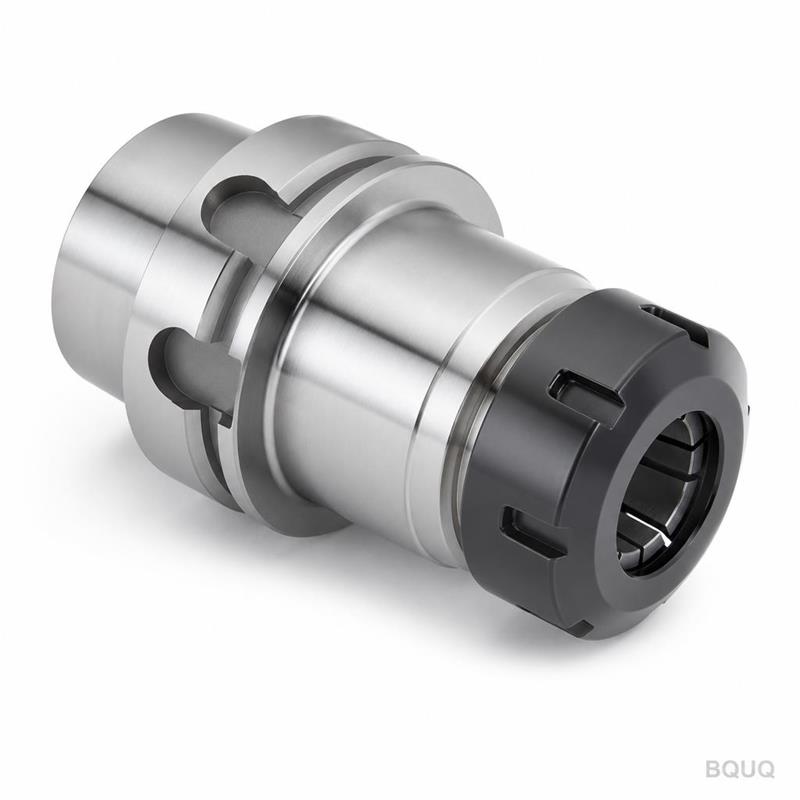
| ER collet | Nose smaller than body, taper behind | ER collet chuck or nut |
| 5C collet | Nose with external thread or keyway | 5C chuck or closer |
| Swiss-type collet | Nose matched to guide bushing | Swiss guide bushing |
| Auto-lathe collet | Nose matched to spindle nose | Auto-lathe spindle |
| R8 collet | Nose with key slot | R8 spindle |
For Swiss-type and auto-lathe work, the nose is usually matched to the bushing or spindle, not to a standard. This is why collet bushing compatibility is a separate design question from collet selection.
Swiss-type vs. auto-lathe
Swiss-type collets are designed for sliding-headstock machines, where the bar moves through a guide bushing. Auto-lathe collets are designed for fixed-headstock machines, where the collet sits in the spindle. The nose geometry reflects this: Swiss collets have a nose that aligns with the bushing, while auto-lathe collets have a nose that seats in the spindle.
Can You Use a Standard Collet With a Custom Bushing?
Sometimes, but it is a compromise. Standard collets have nose diameters ground to a nominal size. Custom bushings can be made to match, but the fit is only as good as the two tolerances allow.
The better approach is to specify the collet and bushing as a matched set. This is common in Swiss-type machining, where the bushing and collet are ground to the same reference. BQUQ produces matched collet and bushing sets for Swiss-type and auto-lathe applications, with nose diameters held to the bushing seat.
If you are running a standard collet, check the collet grip range before assuming it will hold your stock. Grip range and nose diameter are separate limits.
How Do You Specify a Matched Collet and Bushing Set?
Specify the set by function, not just by dimension. A good specification includes:
- Stock diameter and tolerance.
- Bushing bore and clearance.
- Collet bore and grip range.
- Nose diameter and concentricity to bore.
- Material and hardness.
- Surface finish on the bore and nose.
What to include on the drawing
| Parameter | Example | Notes |
|---|---|---|
| Stock diameter | 6.000 ±0.010 mm | Measure actual stock |
| Bushing bore | 6.008 +0.004/−0.000 mm | Sliding fit |
| Collet bore | 6.000 ±0.010 mm | Within grip range |
| Nose concentricity | 0.005 mm TIR | To bushing seat |
| Hardness | 58–62 HRC (typical) | For wear resistance |
| Bore finish | Ra 0.4 µm (typical) | For grip and release |
These values are indicative. Your application may require tighter or looser limits.
Why matched sets reduce scrap
When the collet and bushing are matched, the bar is supported continuously from the bushing into the collet. This reduces deflection, improves surface finish, and extends tool life. It also makes setup faster because the two components are already aligned.
For high-volume work, matched sets are usually worth the extra cost. For low-volume or prototype work, a standard collet with a close-fitting bushing may be acceptable.
Where Does BQUQ Fit In?
BQUQ is an ISO9001 precision manufacturing source factory in Dongguan, China. We run four production lines in one factory: CNC machining (±0.005 mm), metal stamping, custom springs, and heat sink production. We make collets, guide bushings, collet chucks, and matched sets for Swiss-type and auto-lathe applications.
We quote in 12 working hours and work with flexible MOQ, so you can order a matched set for a trial run before committing to production volumes. If you need help matching nose diameter to your bushing and stock, send us the stock diameter, bushing bore, and machine model.
- Auto-lathe collets for fixed-headstock machines.
- Power chucks for Swiss-type machines for sliding-headstock work.
- Tool holder collet chucks for milling and drilling.
Frequently Asked Questions
Q: What is collet nose diameter?
A: Collet nose diameter is the outside diameter of the collet at its front face — the end that faces the workpiece or guide bushing. It is the locating surface that must align with the bushing bore or chuck nose. It is not the same as bore diameter (which grips the stock) or body diameter (which seats in the chuck). On Swiss-type collets, nose diameter is matched to the guide bushing seat.
Q: How tight should the guide bushing clearance be?
A: For most Swiss-type work, the bushing bore should be 0.005–0.010 mm larger than the maximum stock diameter. This gives a sliding fit without excessive clearance. For high-precision work, clearance can be as tight as 0.003 mm, but this requires very consistent ground stock. Too tight and the bar will not slide; too loose and the bar will deflect at the cutting zone.
Q: Can I use a standard ER collet with a Swiss guide bushing?
A: Generally no. ER collets are designed for fixed-headstock machines and have nose geometry that does not match Swiss guide bushings. Swiss-type collets have a nose that aligns with the bushing bore. Using an ER collet in a Swiss application will usually produce runout, taper, or poor surface finish. Use a matched Swiss-type collet and bushing set instead.
Q: What happens if the collet nose is undersized?
A: An undersized nose leaves a gap between the collet and the bushing. The bar can deflect in that gap, producing taper on long parts, runout that changes with bar position, chatter at the cutting zone, and inconsistent part length. The symptom often looks like a bushing problem, but the root cause is the nose-to-bushing match.
Q: How do I measure collet nose diameter?
A: Measure the outside diameter at the front face with a micrometer or a bench comparator, taking readings at several points around the circumference to check concentricity. For matched sets, measure the nose relative to the bore using a dial indicator on a mandrel. Check for wear at the nose edge, since this is the area that contacts the bushing seat.
Related Resources
- About BQUQ and our Dongguan factory: /about/
- Collets, bushings, and collet chucks: /auto-lathe-collets/
- Industry trends in precision machining: /industry-dynamics/
- Technical articles on collets and tooling: /bquq-blog/
- Frequently asked questions: /faq/
- Case studies from production runs: /case/
- Contact the engineering team: /contact/
Authored by the BQUQ Engineering Team. BQUQ (Dongguan) runs CNC machining (±0.005 mm), metal stamping, custom springs, and heat sink production in one ISO9001 factory. Source-direct from Dongguan, China — quote in 12 hours: sc@bquq.com | WhatsApp +86 13713157787 | www.bquq.com