Spring Prototypes and Short Runs Without Tooling
Short answer: Most compression, extension, and torsion springs do not need a hard tool at all. They are formed from wire on CNC coilers and cam-driven formers, so a prototype is simply a short production run of one to fifty pieces. You pay for wire, setup time, and inspection — not for a die. At BQUQ, a no-tooling spring prototype typically ships in 5–10 working days after drawing approval, with quotes returned in 12 working hours. Tooling only becomes necessary when you need stamped flat springs, spring clips, or a formed strip profile, where a blanking or bending die is genuinely required. For round-wire springs, "tooling cost" is usually zero.
Why most springs are tool-free by nature
Buyers coming from injection moulding or die casting assume every new part starts with a tool. Springs are different. A helical compression spring is a length of wire wound into a helix; the "tool" is the machine's program, the feed rollers, the pitch tool, and the coiling point. Change the program, change the spring.
That has three practical consequences for a prototype program:
- Setup is time, not capital. You are paying for an operator to dial in pitch, diameter, and free length — not for a machined die block.
- Iteration is cheap. If your first prototype is 8% too stiff, the next revision is a program change and a new wire cut length.
- Small quantities are viable. A run of 25 pieces is a legitimate order, not a nuisance, because there is no tooling amortisation to spread across volume.
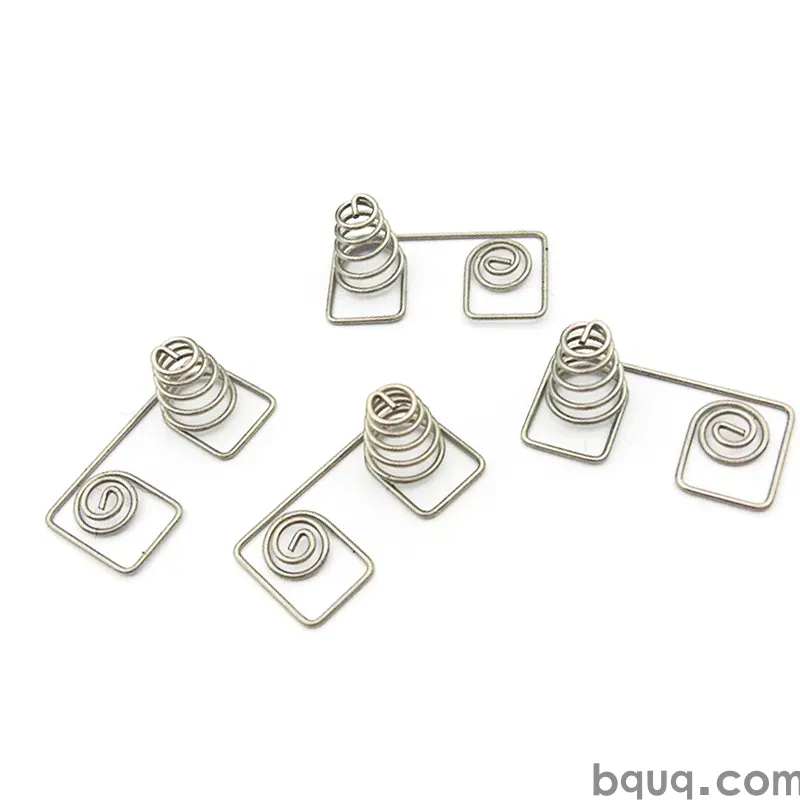
Where tooling does appear: flat springs, spring clips, stamped contacts, and any spring formed from strip rather than round wire. Those need a blanking or progressive die, and that cost is real. If your design is round wire, you can usually skip the tooling conversation entirely.
Which spring types can be prototyped without tooling?
This is the first question to settle, because it determines your cost structure before you send a single drawing.
| Spring type | Tooling required for prototype? | Typical prototype method | Notes |
|---|---|---|---|
| Compression (round wire) | No | CNC coiler, 2–4 axis | Pitch, ends, and rate set by program |
| Extension (round wire) | No | CNC coiler + hook forming | Hook geometry is the main variable |
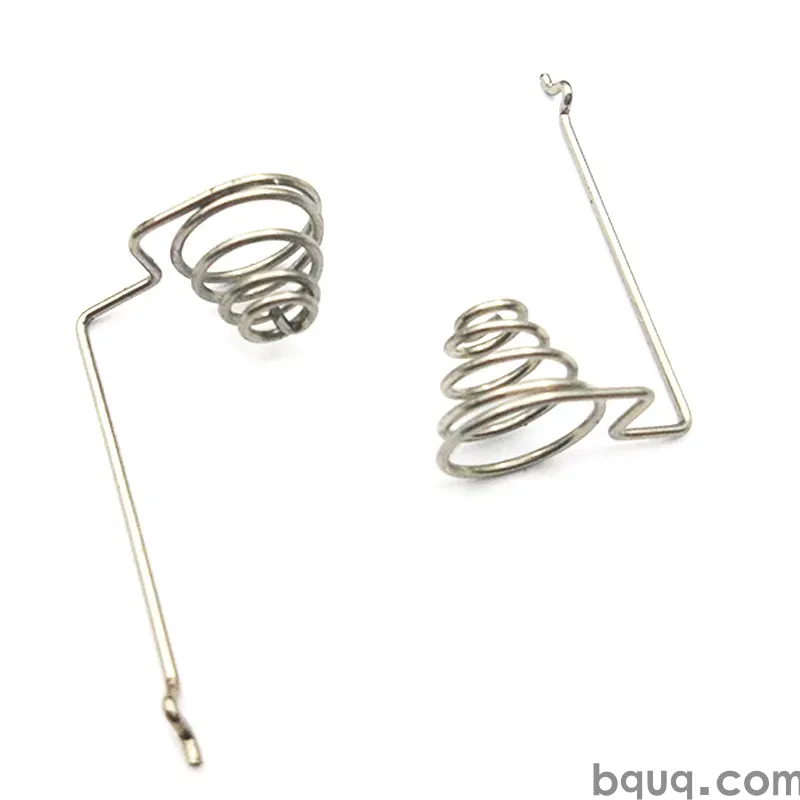
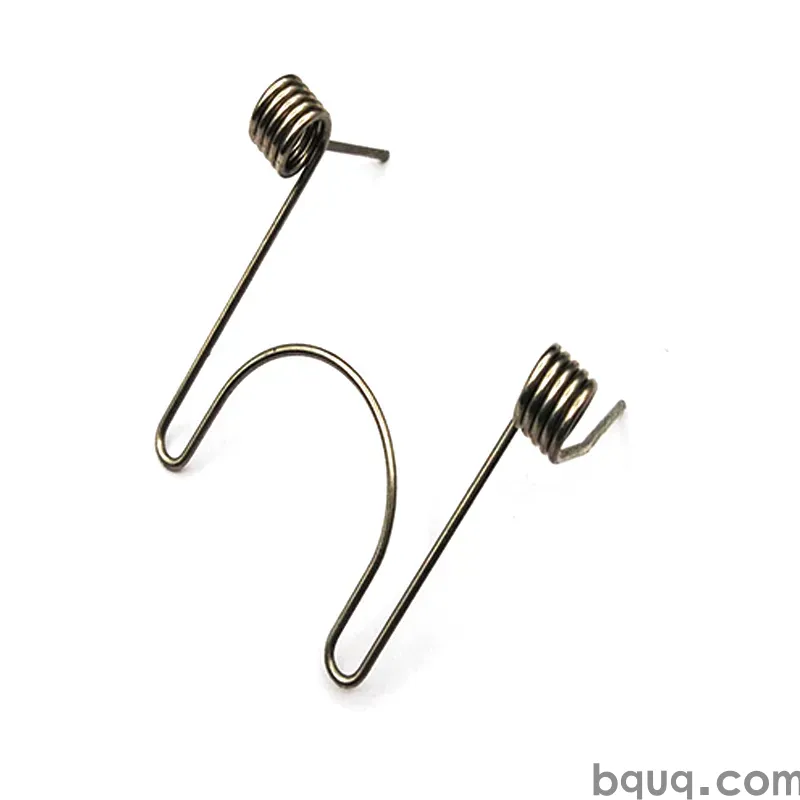
| Torsion (round wire) | No | CNC coiler + leg forming | Leg angle and bend radius set on machine |
| Double torsion / double body | No | CNC coiler, multi-step | Higher setup time, still no die |
| Conical / barrel compression | No | CNC coiler with variable pitch | Good for low solid height |
| Flat spring / leaf spring | Usually yes | Laser cut or stamped blank | Low-volume laser cutting avoids a die |
| Spring clip / stamped contact | Yes for volume | Progressive die | Prototype can be laser cut or wire EDM |
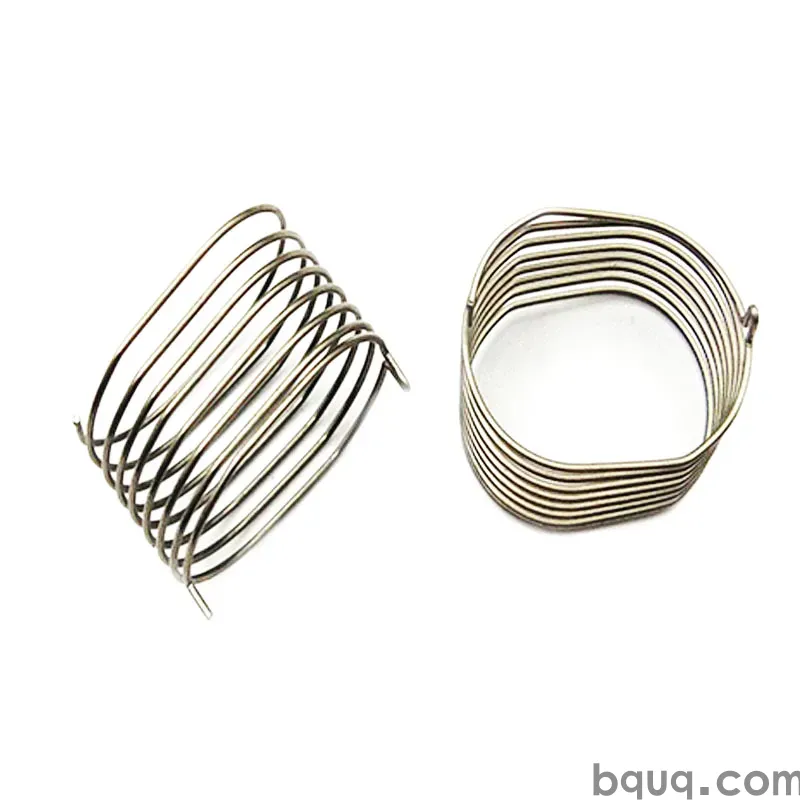
| Wire form (non-helical) | Sometimes | CNC wire former | Complex 3D forms may need a fixture |
The pattern is clear: if the spring is made by winding wire, you are in tool-free territory. If it is made by cutting and bending strip, you are not — although laser cutting and wire EDM can bridge the gap for prototype quantities of 1–100 pieces.
What actually drives prototype lead time and cost
Without a die, your lead time is dominated by four things. Understanding them lets you compress the schedule.
1. Wire availability
Standard spring steels — music wire, oil-tempered, 302/304 stainless, 17-7PH — are usually in stock in common diameters. Exotic alloys such as Inconel or Hastelloy often need to be ordered, which can add one to three weeks. If your prototype is schedule-critical, ask whether the alloy is a hard requirement or a preference.
2. Setup complexity
A simple compression spring with closed and ground ends might take 30–60 minutes of setup. A double torsion spring with specific leg angles, or a spring with a tight index and a high spring rate, can take several hours. Setup is the single largest line item on a 25-piece order — which is why the second order of the same part is dramatically cheaper.
3. End and feature geometry
Closed ends, ground ends, hooks, loops, reduced ends, and leg bends all add operations. Each operation is a separate setup step. A spring with two ground ends costs more to prototype than one with closed, unground ends, even though the wire is identical.
4. Inspection and documentation
If you need load testing at multiple deflections, a rate curve, or a dimensional report, that is engineering time. It is worth it for a design validation build; it is usually unnecessary for a fit check.
| Cost driver | Low | Medium | High |
|---|---|---|---|
| Wire type | Music wire, 302 SS | Oil-tempered, 17-7PH | Inconel, Hastelloy, titanium |
| Setup time | 0.5–1 h | 1–3 h | 3–8 h |
| End configuration | Closed, unground | Closed and ground | Hooks, loops, custom legs |
| Inspection | Dimensional check | Load at one point | Full rate curve + report |
| Quantity | 1–10 | 10–50 | 50–500 |
Treat the table as indicative bracket structure, not a price list. The useful takeaway is that quantity is the least important driver at prototype stage — geometry and alloy matter far more.
How to write a prototype spring drawing that gets quoted fast
A clean drawing is the difference between a 12-hour quote and a three-day email thread. Include these on the drawing or in the RFQ:
1. Wire diameter with tolerance (e.g. 1.20 mm ±0.02)
2. Outside or inside diameter — specify which, and the tolerance
3. Free length and tolerance
4. Total coils and active coils, or solid height
5. End type — closed, closed and ground, open, double closed
6. Direction of wind — right hand unless otherwise stated
7. Material and any finish (passivation, plating, shot peening)
8. Load at a specified deflection, or a target spring rate
9. Maximum operating temperature and environment, if relevant
10. Annual or prototype quantity, clearly separated
If you do not yet know the rate, that is fine — send the envelope (space available), the load you need to carry, and the deflection range. A spring engineer can propose a geometry. If you are still choosing between designs, the comparison in extension spring end types is a useful reference for how hook geometry changes stress concentration and installed length.
A note on tolerances
For round-wire springs, ±0.005 mm is a CNC machining tolerance, not a spring tolerance — spring tolerances are governed by wire diameter, index, and coiling repeatability. A realistic prototype tolerance on free length is typically ±1–2% for a well-controlled process, and load is often specified as ±10% at a reference deflection. Tightening beyond that is possible but costs yield. If load accuracy is critical to your assembly, say so explicitly rather than tightening every dimension on the drawing — the engineer can then focus control where it matters.
Prototype vs. short run vs. production: what changes
The manufacturing method barely changes between 10 pieces and 10,000 for round-wire springs. What changes is the process control.
| Stage | Quantity (typical) | Method | Control focus |
|---|---|---|---|
| Prototype | 1–50 | CNC coiler, manual setup | Geometry and fit |
| Short run | 50–5,000 | CNC coiler, semi-automated | Rate consistency, first-article |
| Production | 5,000+ | CNC coiler or cam former, automated | SPC on load, Cpk, lot traceability |
This is why a spring prototype is a genuine preview of production: the wire path is the same, so the mechanical behaviour you measure on a prototype carries over. That is not true of processes where the prototype is machined and the production part is moulded.
If your volumes eventually justify a cam-driven former for speed, the spring geometry generally stays identical — you are buying cycle time, not a different part.
Testing your prototype: what to measure and why
A prototype that fits is not necessarily a prototype that works. Two measurements catch most problems:
- Load at installed height. This is the number your assembly actually feels. Measure it on a load tester at the deflection the spring sees in service, not at some arbitrary point.
- Rate (N/mm). Rate tells you how the spring behaves across the whole stroke, and it is the number that reveals whether your wire diameter and active coils are right. A quick method is described in spring rate vs load — the difference between the two matters when your mechanism has a long travel.
For critical applications, add a fatigue check and a set/relaxation check. Springs that operate hot or cycle fast may need shot peening or a stress-relief set, which is a normal short-run operation, not a special project.
If your prototype is for an electronics application — contact load, antenna coil, battery contact — the load window is usually narrow and the measurement method matters as much as the spring. Spring load testing covers fixturing and deflection control so your numbers are comparable between prototype and production lots.
Common mistakes that add cost to a spring prototype
Over-specifying tolerance. ±0.1 mm on free length when ±1 mm would do doubles the setup effort for no functional gain.
Changing material mid-programme. Switching from music wire to stainless after the first prototype changes rate, corrosion behaviour, and sometimes the coiling setup. Decide early.
Forgetting the environment. If the spring sees moisture, salt spray, or a cleaning cycle, specify stainless or a coating on the prototype — not after the design freeze. Corrosion resistance is a material decision, not a finishing afterthought.
Requesting a die prematurely. If your design is round wire, a die is not needed for prototype or short run. Ask before you budget for one.
Sending a STEP file with no tolerances. CAD geometry defines nominal; it does not define what is acceptable. Always pair the model with a tolerance table.
Why source prototypes from a factory rather than a distributor
A distributor quotes from a catalogue and orders from a factory. For prototypes, that adds a layer of latency and removes your ability to ask the person who will actually run the machine. Sourcing directly from a manufacturer means:
- Setup questions get answered by the people doing the setup
- Design changes can be discussed against real machine capability
- Prototype and production come from the same process, so scale-up is predictable
- Flexible MOQ — a 20-piece prototype order is a normal order
BQUQ runs four production lines in one Dongguan factory covering CNC machining, metal stamping, custom springs, and heat sinks, under ISO9001. That combination matters when your prototype is not just a spring — for example, a spring that seats into a machined pocket, or a spring clip that pairs with a stamped bracket. Having both processes under one roof removes the tolerance stack argument between suppliers. See the compression spring range at /compression-springs/ and torsion designs at /torsion-springs/; extension springs with custom hooks are at /extension-custom-springs/.
Frequently Asked Questions
Q: Do I need to pay for tooling to get a spring prototype?
A: For round-wire compression, extension, and torsion springs, no. They are formed on CNC coilers where the geometry lives in the machine program, so a prototype is just a short production run. Tooling only applies to flat springs, spring clips, and stamped strip parts, where a blanking or bending die is genuinely required. Laser cutting or wire EDM can cover prototype quantities of those without a die.
Q: What is the minimum order quantity for a custom spring prototype?
A: MOQ is flexible — a single piece or a 20-piece validation build is a normal order for round-wire springs. Because there is no die to amortise, the economics work at low volume; you are paying for wire, setup time, and inspection rather than tooling. Larger prototype batches of 50–200 pieces are often better value per piece because setup is spread further.
Q: How long does a spring prototype take?
A: Typically 5–10 working days after drawing approval when the wire is in stock, with quotes returned in 12 working hours. Exotic alloys such as Inconel or Hastelloy may add one to three weeks if the diameter is not on the shelf. Complex geometry — double torsion bodies, multiple leg bends, or tight load windows requiring iteration — also extends the schedule.
Q: Can I get load testing with my prototype springs?
A: Yes. Load at a specified deflection, spring rate, and free length can all be measured and reported. For design validation, a rate curve across the working stroke is more useful than a single point, because it shows behaviour through the whole travel. Specify the deflection points you care about on the RFQ so the test fixture is set up correctly the first time.
Q: Will my prototype spring behave the same in production?
A: For round-wire springs, yes — the forming method is the same at 10 pieces and 10,000 pieces, so rate and geometry carry over. What changes at volume is process control: first-article inspection, statistical monitoring of load, and lot traceability. If production later moves to a cam-driven former for speed, the spring geometry stays the same.
Related Resources
- About BQUQ and our Dongguan factory: /about/
- Compression, torsion, and extension spring product ranges: /compression-springs/, /torsion-springs/, /extension-custom-springs/
- Industry trends in spring and metal component sourcing: /industry-dynamics/
- Technical articles on spring design and manufacturing: /bquq-blog/
- Frequently asked questions on quoting, MOQ, and tolerances: /faq/
- Case studies from prototype to production: /case/
- Contact our engineering team for a 12-hour quote: /contact/
Authored by the BQUQ Engineering Team. BQUQ (Dongguan) runs CNC machining (±0.005 mm), metal stamping, custom springs, and heat sink production in one ISO9001 factory. Source-direct from Dongguan, China — quote in 12 hours: sc@bquq.com | WhatsApp +86 13713157787 | www.bquq.com