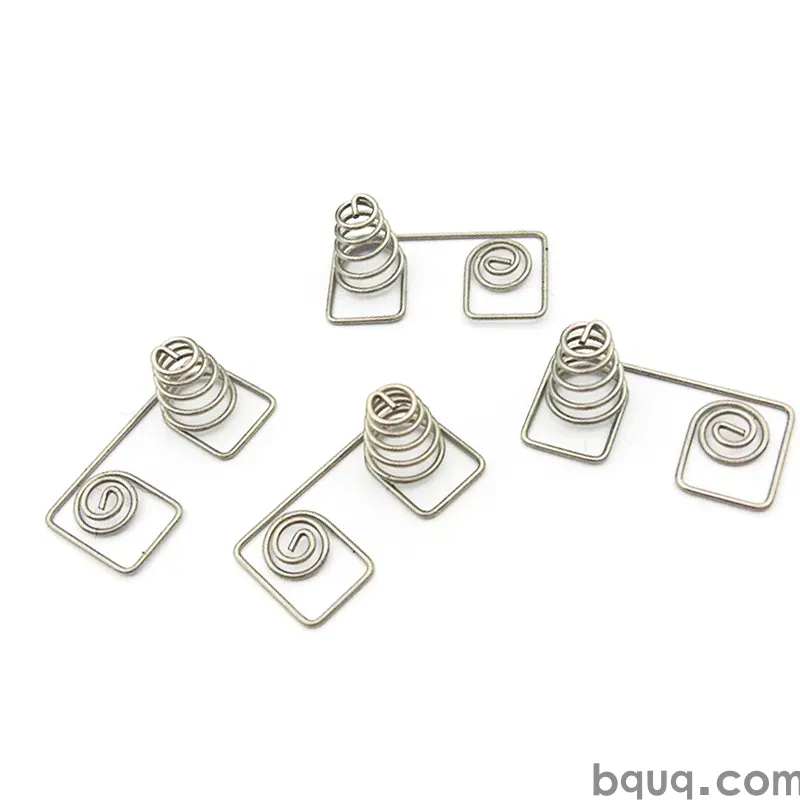
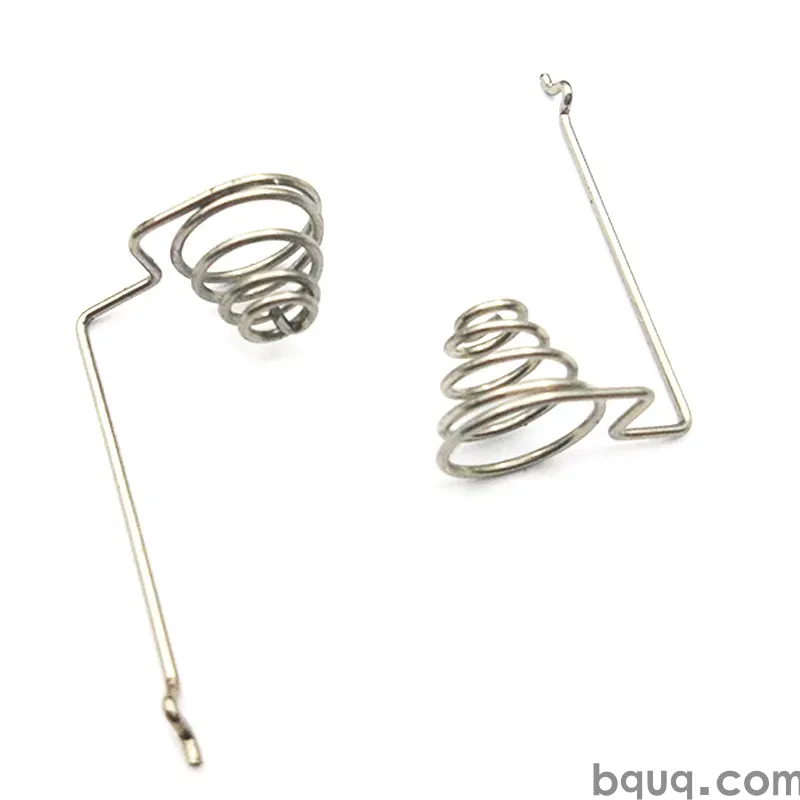
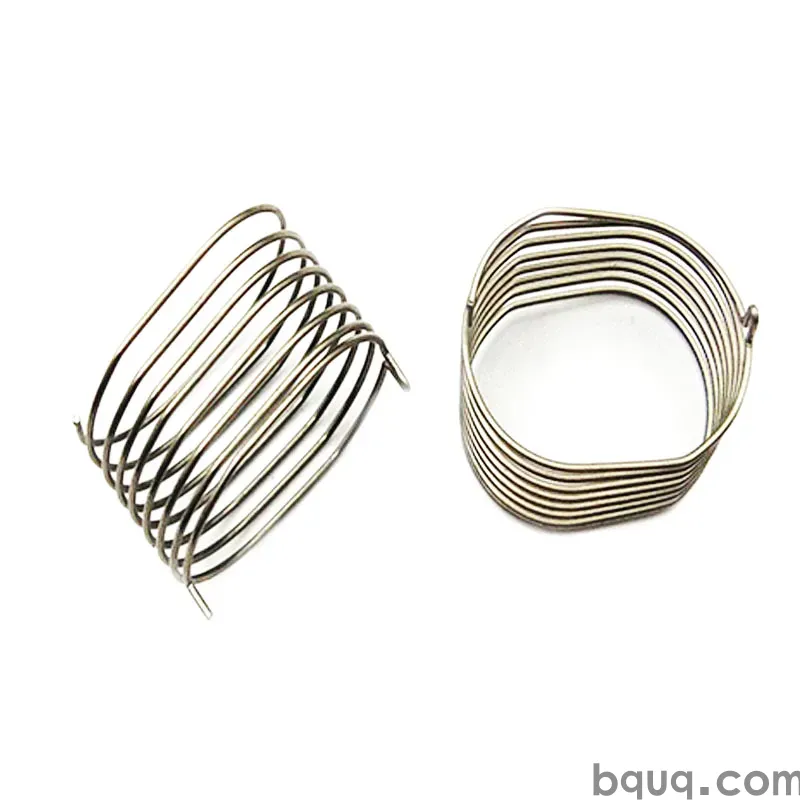
The spring manufacturing process explained: coiling, grinding, stress relief, presetting and testing. BQUQ, a Dongguan spring factory, controls every step.
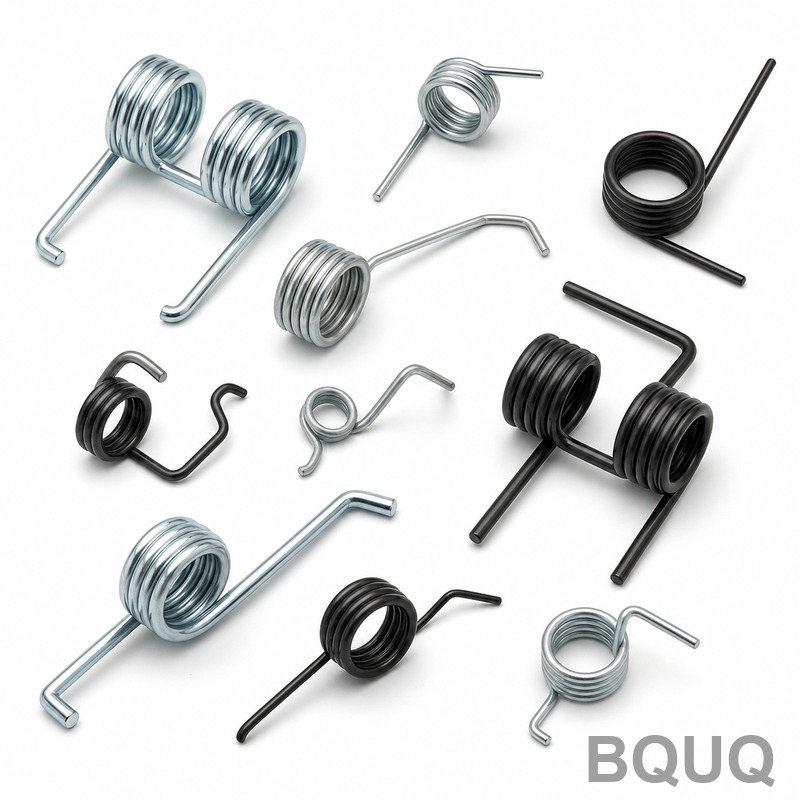
How Springs Are Made: Coiling to Heat Treatment to Testing
A spring is born in one of two ways: cold coiled from pre-tempered wire on a CNC machine, or hot wound from heated bar — then ground, heat-treated, preset, finished and tested before it ships. The sequence matters because each step fixes what the last one left imperfect: stress relief removes coiling stress, grinding makes ends square, presetting stabilizes the load, and the final load test is the only place the spring's promise is actually checked.
Springs look like the simplest mass-produced machine parts, but the process that makes a reliable one is surprisingly long. Between the wire spool and the boxed product sit coiling, end forming, grinding, heat treatment, presetting, possibly shot peening, finishing and a testing step that verifies the load at height. Skip any of it and the spring may look identical and fail early. This guide follows a compression spring through the shop floor, step by step, so you know what to expect from a supplier and which steps matter for your application.
Step 1: Coiling — Where the Spring Gets Its Shape
Cold coiling is the default for the vast majority of springs. A CNC coiler feeds wire from a spool, bends it around forming tools, and cuts it to length at speeds from a few pieces per minute for heavy wire to hundreds per minute for fine wire. Modern servo coilers hold dimensions by measuring the wire feed and tool positions on every cycle. The coiling machine also forms the ends — closing coils on a compression spring, or bending hooks and loops on an extension spring — often in the same setup, or in a separate four-slide or wire-forming operation for complex ends.
| Process step | Typical purpose | Key control |
|---|---|---|
| Cold coiling | Shape wire into helix | Wire feed, tool setup |
| End forming | Hooks, loops, closed ends | Form tool geometry |
| Hot winding (large springs) | Coil bar over ~10–16 mm | Mandrel, temperature |
| Grinding ends | Flat, square seats | Stock removal, coolant |
| Stress relief / temper | Remove coiling stress, set strength | Furnace time and temperature |
| Presetting | Stabilize load, add residual stress | Deflection past elastic limit |
| Finishing | Plating, passivation, peening | Coating thickness, bake |
Large springs — above roughly 10–16 mm wire — take the hot route: the bar is heated to 850–1000 °C and wound around a mandrel, then hardened and tempered. The process differences, and why the wire size splits the spring world in two, are covered in the hot vs cold wound springs guide.
Steps 2 and 3: Grinding and Heat Treatment
Compression springs that need flat seats go to an end grinder, which grinds both ends parallel and square to the axis, usually in one pass between two grinding wheels. Grinding removes a small amount of material — enough to make the end coil flat but not so much that the spring loses its closed coil — and the operation sets the squareness that keeps the spring standing straight in its bore. Extension and torsion springs skip end grinding and go straight to their end forming.
Heat treatment follows: cold coiled springs get a low-temperature stress relief, typically 230–430 °C depending on grade, which relaxes the coiling stresses without softening the pre-tempered wire. Hot wound springs instead get a full quench-and-temper cycle that develops their strength. Either way, the furnace profile — time at temperature, then cooling — is the process variable that determines whether the spring holds its specified load or relaxes in service.
Steps 4 and 5: Presetting, Peening and Finishing
Presetting, also called scragging, compresses the spring to solid or beyond its design deflection so it takes a permanent set. The spring then operates within its elastic range with beneficial residual stress, which is why preset springs hold their free length and load far better in service. Shot peening follows for fatigue-critical springs: hard shot hammers the surface and leaves compressive stress that blocks fatigue cracks, typically adding 20–35% to fatigue strength. Then the finish — zinc, nickel, black oxide, passivation or phosphate — is applied, with embrittlement relief baking for plated high-strength wire. Finishes and their corrosion performance are covered in our spring finishing and plating guide; the fatigue effects of presetting and peening are quantified in the spring fatigue life guide.
Step 6: Testing — Where the Spring Keeps Its Promise
No spring ships on geometry alone; the load at working height is the number the product actually uses, so it is the number that gets tested. Production springs are checked on load testers that compress each spring to a specified height and measure force, sorting against the ±10% load tolerance typical of the industry. Sample testing goes further: rate verification across the stroke, free length and OD checks, solid height, squareness, and for critical springs, fatigue testing on a cycling rig and crack inspection by eddy current or magnetic particle methods on large hot wound parts.
| Test | What it verifies | Typical tolerance / target |
|---|---|---|
| Load at height | Force at working height | ±10% typical |
| Rate | Force per mm over stroke | ±10% typical |
| Free length | Length at zero load | ±1–2% or mm-level |
| OD / ID | Fit in bore or on rod | Tooling-controlled, tight |
| Squareness | End parallelism | ~1–3° typical ground |
| Fatigue sample | Life at service stroke | Per design cycle target |
A load test on every spring is standard for precision work and is one reason spring pricing scales with wire size and tolerance: testing fine springs is fast and cheap, while heavy springs need bigger rigs. If your application is load-critical — and most are — ask for the load-at-height test data on the batch, and the rate curve on the sample.
What the Process Means for Buyers
The practical takeaways: samples are cheap and fast on cold coiled springs, so validate the design before committing tooling; heat treatment and presetting are invisible but decisive, so buy from a factory that controls furnace and scragging records, not just dimensions; and testing is where tolerance promises become real. BQUQ, an ISO9001-certified factory in Dongguan, runs the full sequence for compression springs, torsion springs and the wider spring product range — coiling, grinding, stress relief, presetting, finishing and load testing under one roof — and quotes within 12 working hours. Send drawings to sc@bquq.com or WhatsApp +86 13713157787 for a spec that includes the process steps your application needs.
Email sc@bquq.com or WhatsApp +86 137 1315 7787 with your PDF/DXF/STEP file. An engineer reviews it and replies with price, lead time and DFM notes on working days.
Frequently Asked Questions
Q: How fast can springs be coiled?
A: Small cold coiled springs run at hundreds of pieces per minute on CNC coilers; heavy cold wound wire drops to a few pieces per minute; hot wound springs are slower still because each one needs a mandrel and a furnace cycle. Speed is a function of wire size.
Q: Why do springs need heat treatment after coiling?
A: Cold coiling leaves residual stress that would let the spring relax and lose load in service. Stress relief at 230–430 °C removes it. Hot wound springs need a full quench and temper because their strength is developed after forming.
Q: What is presetting and is it always necessary?
A: Presetting compresses a new spring past its elastic limit so it takes a set and then works elastically with beneficial residual stress. It is standard for compression springs that must hold accurate load and is the cheapest single improvement to spring stability.
Q: Are all springs load tested before shipping?
A: Serious spring factories test every spring's load at height on precision springs, and sample-test rate, free length, OD and squareness. Testing is why load tolerance of ±10% is a meaningful promise rather than a guess.
Q: What is the difference between stress relief and tempering?
A: Stress relief is a low-temperature bake, 230–430 °C, that relaxes coiling stress in already-strong wire. Tempering is a higher-temperature heat treatment that sets final strength after hardening, used on hot wound and oil-tempered springs.
Related Articles
- custom-spring-order-guide — More from the BQUQ Custom Springs engineering series.
- torsion-spring-design-guide — More from the BQUQ Custom Springs engineering series.
- spring-material-selection-guide — More from the BQUQ Custom Springs engineering series.
Data Sources and Verification
Tolerances, cycle times and price ranges in this guide come from BQUQ production records at our Dongguan plant, where CNC machining (±0.005 mm), stamping, custom springs and heat sinks run under one roof. BQUQ is an ISO 9001:2015 certified factory; the certificate and batch inspection reports are available on request with every quotation.
Related Resources
- About BQUQ: an ISO9001-certified source factory in Dongguan running four production lines under one roof.
- Custom springs: compression, torsion and extension from the spring line — compression springs, torsion springs, extension and custom springs.
- Industry trends: manufacturing, material market, and sourcing analysis for buyers.
- Technical articles: engineering guides and process comparisons — more where this article came from.
- FAQ hub: quick answers on CNC, stamping, springs, and heat sinks.
- Case studies: real parts and real numbers from projects we engineered and delivered.
- Contact us: send your drawing and get a quote within 12 working hours.
Authored by the BQUQ Engineering Team. BQUQ is an ISO9001-certified source factory in Dongguan, China, running CNC machining, metal stamping, custom springs and heat sink lines under one roof. Send drawings to sc@bquq.com or WhatsApp +86 13713157787 for a quote within 12 working hours. www.bquq.com