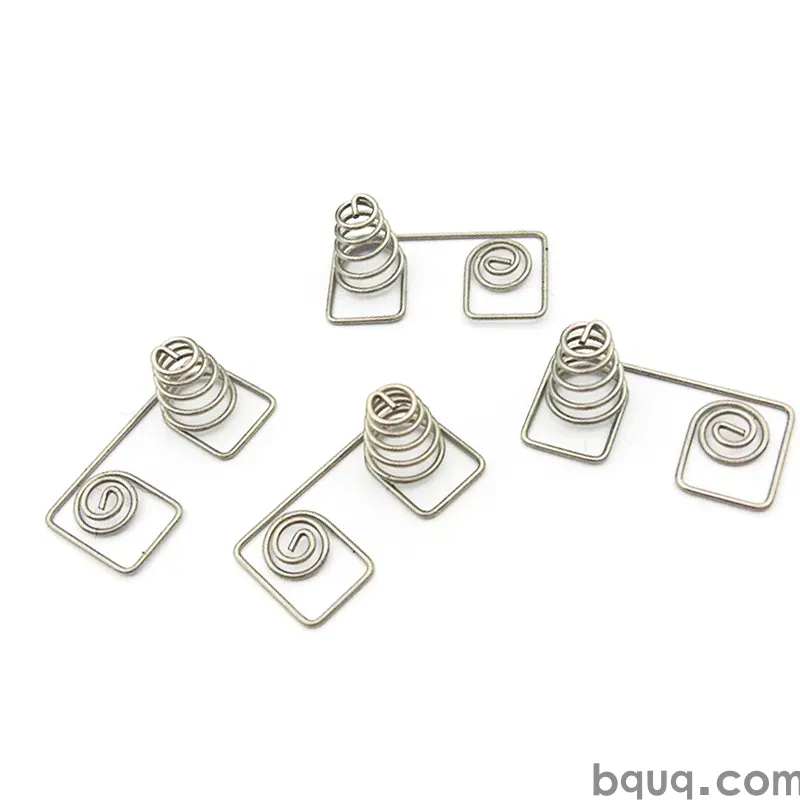
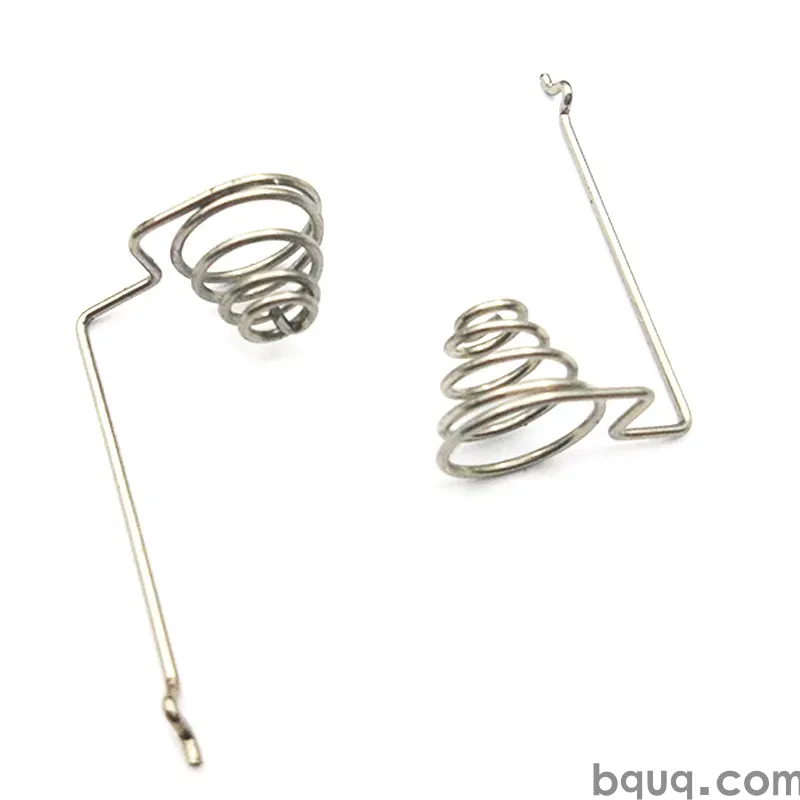
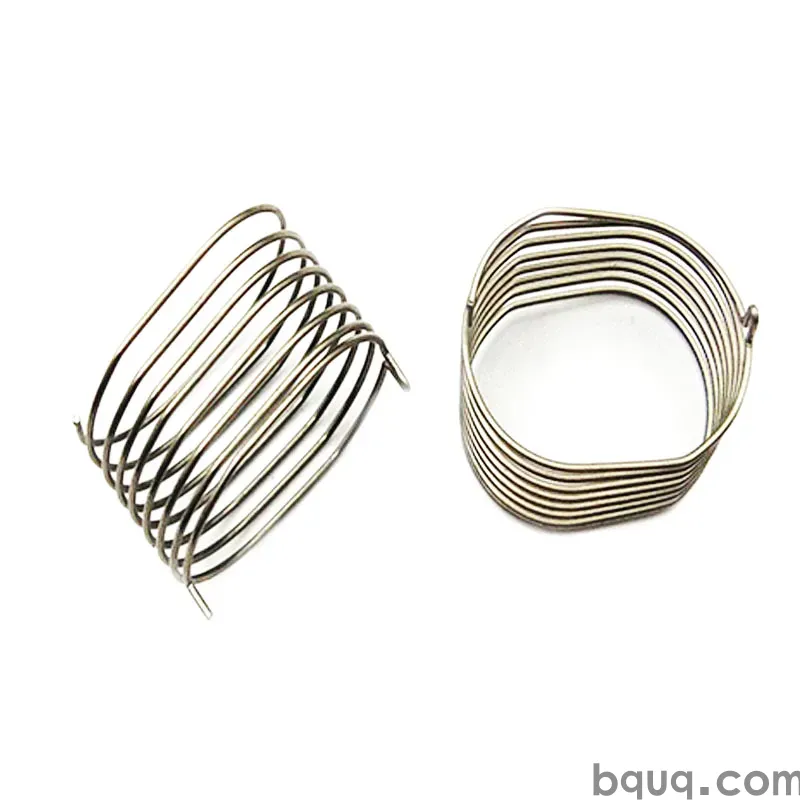
What to send when ordering custom springs: load, space, ends, environment and quantity. BQUQ, a Dongguan spring factory, quotes custom springs in 12 hours.
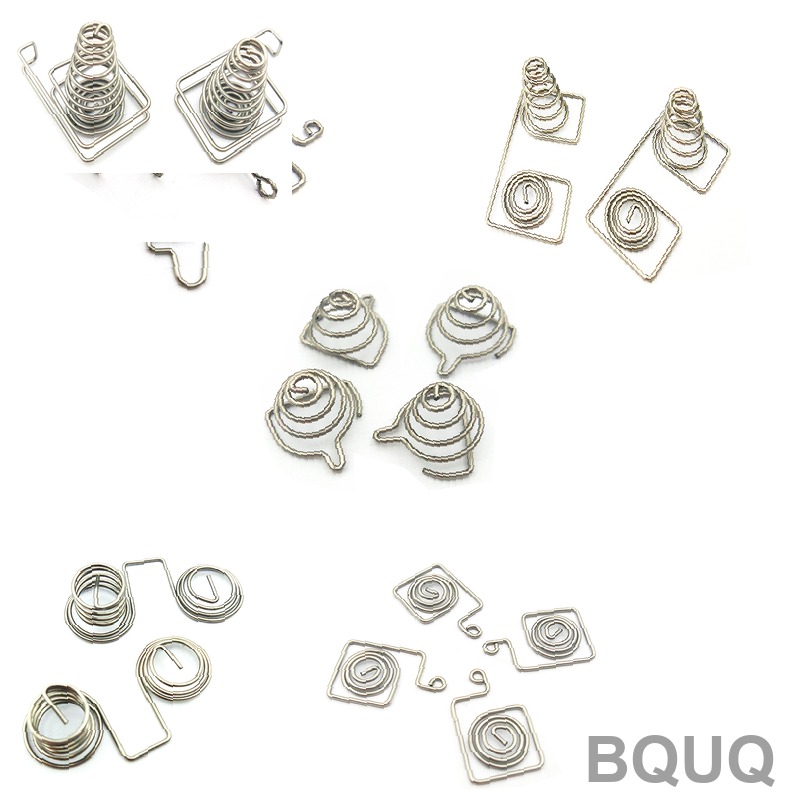
Ordering Custom Springs: The Info a Factory Needs for an Accurate Quote
A custom spring quote is only as accurate as the information behind it, and the list a factory needs fits on one page: working space (bore or rod diameter and available length), load at one or two working heights, end type, material, environment, cycles and quantity. Send those and a drawing or sketch, and a spring shop can quote rate, stress, tolerances and price without a single follow-up question — the fastest quotes are the ones with the most complete specs.
Ordering a custom spring is the opposite of ordering a machined part. A CNC shop machines exactly what you draw; a spring factory forms wire and then adjusts the tooling until the spring makes the load you need. Springs are specified functionally — force at height, torque at angle — more than dimensionally, and the factory's job is translating your mechanism's need into wire size, coil count and process steps. This guide is the checklist our own engineers use when a customer's inquiry arrives incomplete, so you can send the whole picture the first time and get a quote you can design against.
The Core Specification: Load at Working Heights
For a compression spring, the single most valuable sentence you can write is: "12 N at 20 mm compressed height, 25 N at 14 mm, free length 30 mm, OD under 12 mm." Load at height defines the spring better than any dimension, because the factory selects the wire and coils to hit that force and then verifies it on a tester. If you cannot state loads, state the function: "must push a battery contact with 150 g at 2 mm compression, fits in a 6 mm bore, survives 100,000 presses." Functional specs work; they just take more engineering on the factory side.
| Info a factory needs | Compression spring | Extension spring | Torsion spring |
|---|---|---|---|
| Space envelope | OD/ID, max length, solid height | Loop-center length, OD | Shaft OD, body OD, max angle |
| Force requirement | Load at 1–2 heights | Initial tension + load at length | Torque at 1–2 angles |
| Geometry | Wire dia or rate, coils, ends | Hook style, wind direction | Leg style, length, direction |
| Duty | Cycles, environment, temp | Same | Same |
| Quantity | Annual volume, samples first | Same | Same |
The rules for turning those requirements into a working spring — how rate is calculated from wire and coils, how end type changes the active coil count — are in the custom compression springs design guide and the compression spring rate guide on this blog. The more of this you put in the inquiry, the fewer assumptions the quote contains.
What to Add for Each Spring Type
Compression springs need the end type — plain, closed, or closed and ground — because it changes both seating and rate, plus free length, OD or mean diameter, and the solid height limit if the spring can be compressed to solid in the assembly. Extension springs need the hook or loop style, the free length between loop centers, and whether initial tension matters: "needs 2 N pull before it starts to extend" is a real requirement, not a detail. Torsion springs need the torque at working angles, leg geometry and direction, and the shaft diameter the body will sit on, since body clearance changes as the spring deflects.
Wire material choice can be delegated: state the environment — indoor, outdoor, washdown, salt air, elevated temperature, conductive duty — and the factory will recommend a grade, or you can pick from the strength and temperature tables in the spring material selection guide. State cycles too: a 100,000-cycle spring needs presetting and possibly shot peening, which changes the process and the price. And state the quantity honestly, because setup and tooling amortize differently at 100 pieces versus 100,000.
Drawings, Files and Functional Notes
A drawing is ideal, but a sketch with the key numbers is enough for a solid quote. Acceptable formats are the usual engineering set: STEP or IGES for 3D, PDF for 2D prints, and clear photos or sketches for simple adaptations of an existing spring — if you have a broken sample, send the sample's wire diameter, OD, coil count and free length measured with calipers. Note the direction of the helix if it matters, the working space in the assembled product, and anything the spring must not touch at full deflection. If a tolerance on the drawing conflicts with spring reality — a free length held to ±0.05 mm, for example — the factory should flag it rather than silently charge for it; springs are formed parts and carry proportional tolerances, typically ±10% on load and millimeter-level or percentage tolerances on free length.
| Inquiry completeness | What you get back |
|---|---|
| Loads + space + ends + material | Firm quote, no questions |
| Space + ends, no loads | Quote with assumed loads — verify |
| Vague description only | Quote with wide safety margin |
| Drawing + duty + quantity | Fastest, most accurate number |
The pricing logic is straightforward: wire cost, coiling time (which rises steeply with wire diameter), end forming, heat treatment, finishing and testing. Heavy springs cost more per piece partly because each one takes real machine time and furnace energy. Sample runs are inexpensive on CNC coilers — one-piece samples for testing are normal practice — so validate before volume. BQUQ, an ISO9001-certified source factory in Dongguan, China, quotes custom compression springs, extension springs and torsion springs within 12 working hours; send the checklist above to sc@bquq.com or WhatsApp +86 13713157787 and the quote comes back with the assumptions stated, not hidden.
Email sc@bquq.com or WhatsApp +86 137 1315 7787 with your PDF/DXF/STEP file. An engineer reviews it and replies with price, lead time and DFM notes on working days.
Frequently Asked Questions
Q: What is the minimum order quantity for custom springs?
A: Most spring factories, BQUQ included, accept one-piece sample orders for testing because CNC coilers need no expensive tooling. Volume pricing applies from a few thousand pieces up; ask for the price break at your real annual quantity.
Q: Can you quote from a sample spring instead of a drawing?
A: Yes. Measure wire diameter, outside diameter, total coils, free length and end type, and note the working space. A physical sample plus the load requirement is often enough for an accurate quote and a close reproduction.
Q: Why does the factory ask for load at height instead of just dimensions?
A: Because the load is what your mechanism uses. Dimensions describe the spring; load at height verifies it. Springs are adjusted on the coiler until the force at the working height is right, then tested to confirm it.
Q: What tolerances should I put on a custom spring drawing?
A: Industry-typical values: ±10% on load at specified height, ±1–2% or a few tenths of a millimeter on free length, tight OD because tooling controls it. Calling tighter tolerances than these costs money without buying reliability.
Q: How long does a custom spring order take?
A: Samples typically take 3–7 working days and production 10–20 working days for cold coiled springs, depending on wire size, finishing and quantity. BQUQ returns quotations within 12 working hours on working days.
Related Articles
- spring-surface-finishing-plating-guide — More from the BQUQ Custom Springs engineering series.
- spring-manufacturing-process-guide — More from the BQUQ Custom Springs engineering series.
- torsion-spring-design-guide — More from the BQUQ Custom Springs engineering series.
Data Sources and Verification
Tolerances, cycle times and price ranges in this guide come from BQUQ production records at our Dongguan plant, where CNC machining (±0.005 mm), stamping, custom springs and heat sinks run under one roof. BQUQ is an ISO 9001:2015 certified factory; the certificate and batch inspection reports are available on request with every quotation.
Related Resources
- About BQUQ: an ISO9001-certified source factory in Dongguan running four production lines under one roof.
- Custom springs: compression, torsion and extension from the spring line — compression springs, torsion springs, extension and custom springs.
- Industry trends: manufacturing, material market, and sourcing analysis for buyers.
- Technical articles: engineering guides and process comparisons — more where this article came from.
- FAQ hub: quick answers on CNC, stamping, springs, and heat sinks.
- Case studies: real parts and real numbers from projects we engineered and delivered.
- Contact us: send your drawing and get a quote within 12 working hours.
Authored by the BQUQ Engineering Team. BQUQ is an ISO9001-certified source factory in Dongguan, China, running CNC machining, metal stamping, custom springs and heat sink lines under one roof. Send drawings to sc@bquq.com or WhatsApp +86 13713157787 for a quote within 12 working hours. www.bquq.com