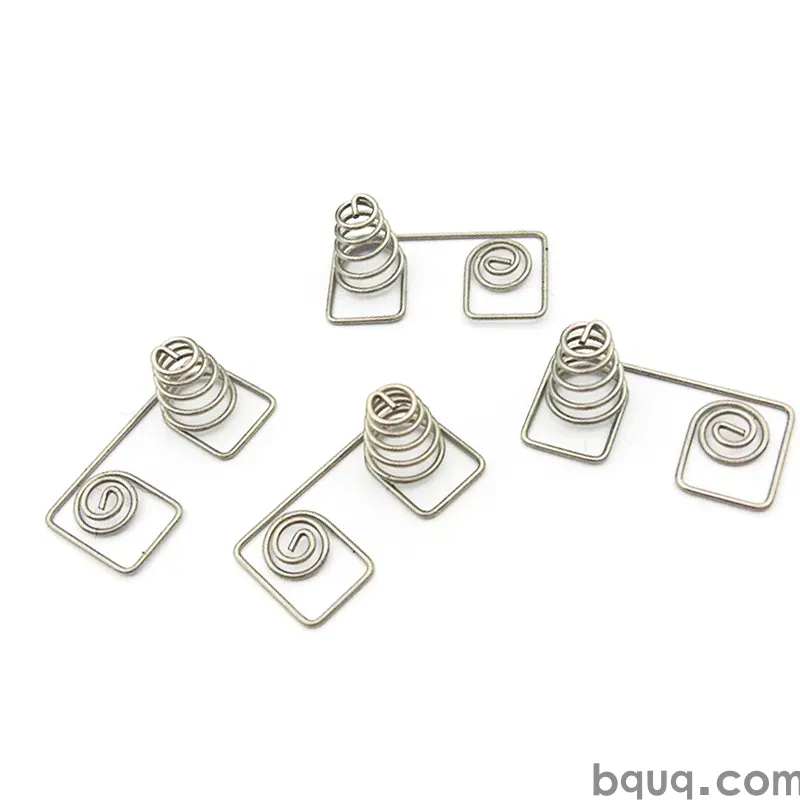
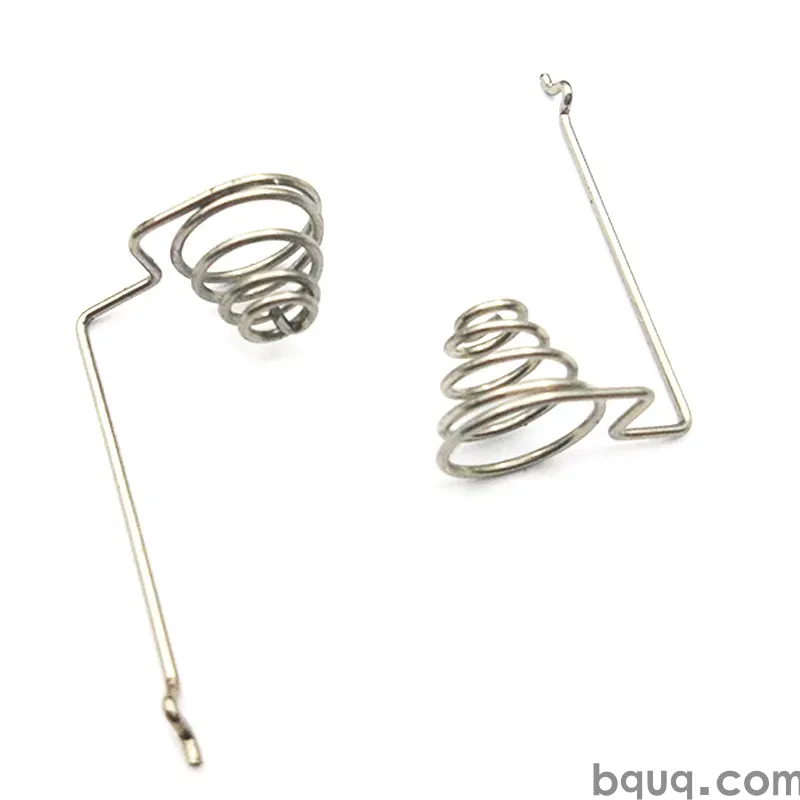
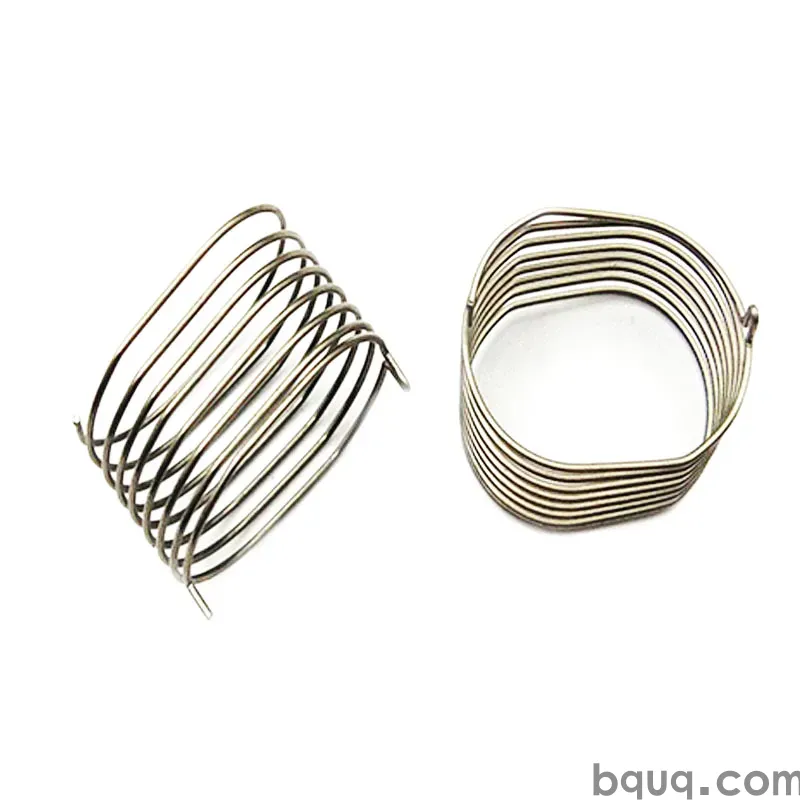
Spring finishes compared: zinc, nickel, black oxide, passivation and corrosion protection. BQUQ, a Dongguan spring factory, finishes springs to spec.
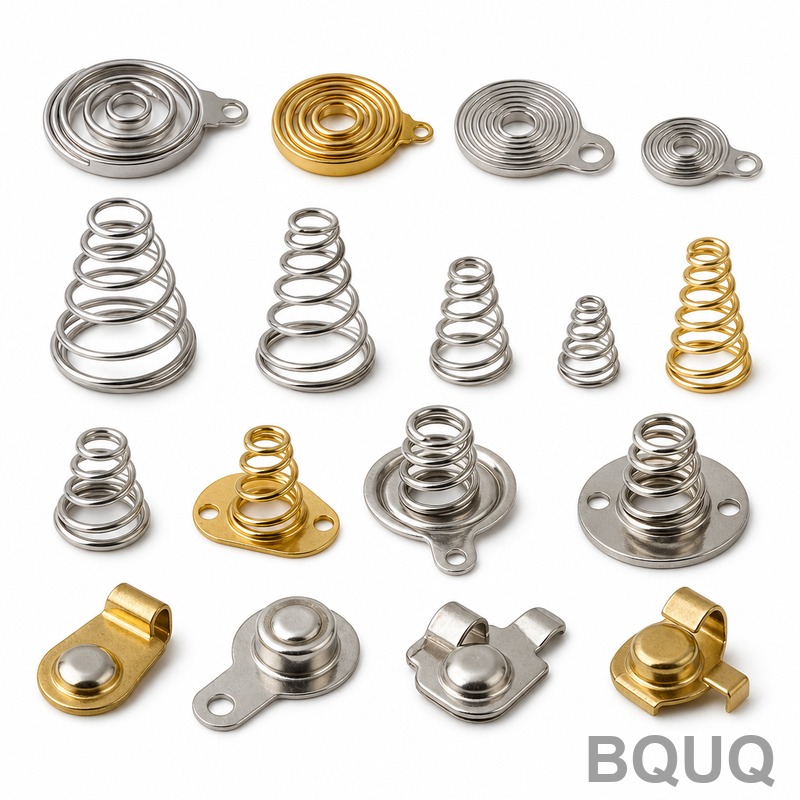
Spring Finishing and Plating: Zinc, Nickel and Corrosion Protection
Springs are plated or coated for one reason — corrosion — because bare carbon spring steel rusts in days of humid air and rust is a fatigue killer. Zinc plating is the low-cost default (typical 5–12 µm, with yellow or clear passivation); nickel plating adds hardness and a cleaner look; and for springs that must simply not corrode, stainless steel or beryllium copper skip plating entirely. High-strength springs need one extra rule: hydrogen embrittlement relief baking after plating, typically at 190–230 °C within hours of the bath.
A music wire spring is a brilliant piece of engineering that rusts. The same high-carbon surface that gives it strength is exactly what oxygen wants to attack, and once pitting starts, every cycle concentrates stress at the pit until the spring snaps. That is why finish selection is a real design decision for carbon steel springs: the coating decides how long the spring survives outdoors, in a washdown environment, or in a consumer product that lives in a humid warehouse. This guide compares the common finishes, the corrosion performance you can expect, and the traps — hydrogen embrittlement above all — that turn a cheap plating step into a field failure.
The Finish Options and What Each Actually Provides
| Finish | Typical thickness | Salt spray (typical, to red rust) | Relative cost | Best for |
|---|---|---|---|---|
| Zinc, clear passivate | 5–8 µm | 24–72 h | Lowest | Indoor, mild humidity |
| Zinc, yellow passivate | 5–12 µm | 72–120 h | Low | General industrial |
| Zinc-nickel alloy | 8–15 µm | 400–700 h | Moderate | Automotive, high corrosion |
| Nickel (electroplated) | 5–15 µm | 100–300 h (varies) | Moderate | Clean look, wear, mild chemical |
| Black oxide + oil | 1–3 µm | Low alone | Low | Cosmetic, light indoor |
| Phosphate + oil | 5–15 µm | 24–72 h with oil | Low | Break-in, paint base |
Zinc plating dominates spring finishing because it is cheap, sacrificial — it corrodes instead of the steel — and the passivate layer (clear, blue or yellow chromate or trivalent conversion) extends the life of the zinc itself. Salt spray hours above are typical ranges for the coating system, not guarantees: red rust time depends on thickness, passivation type and test standard, so treat the numbers as comparison anchors, not spec values. Zinc-nickel is the upgrade when automotive or outdoor requirements push salt spray expectations into the hundreds of hours.
Nickel, Black Oxide and Other Routes
Nickel plating gives springs a bright, hard, more corrosion-resistant surface than zinc and stands up to mild chemicals and wear, at higher cost; it is common on visible springs, springs in food-contact areas where the coating must be smooth, and springs that slide against a mating part. Black oxide is a thin conversion coating that looks good and holds oil but offers little corrosion protection on its own — treat it as indoor-only. Phosphate coatings are porous and hold oil or wax, which does the real protecting; they are a classic finish for heavy springs and a good paint base. If the spring must survive salt air, cleaning chemicals or high humidity for years, the honest answer is usually to change the material rather than pile on plating: stainless 302 or 316, or beryllium copper for conductive service, needs no coating at all. The material-versus-coating trade-off is weighed properly in our spring material selection guide.
Hydrogen Embrittlement: The Plating Trap
Electroplating — zinc, nickel, cadmium — generates hydrogen at the spring surface, and high-strength spring steel can absorb it. The hydrogen makes the steel brittle, and the spring can snap days or weeks later at a fraction of its real load, often with no visible warning. The standard countermeasure is a baking step, typically 190–230 °C for a few hours, started as soon as possible after plating — industry guidance commonly says within a few hours and always before any further processing. Springs above roughly 1,200–1,400 MPa tensile strength, which includes most music wire springs, are the sensitive ones, and some specifications prohibit electroplating them altogether, preferring mechanical plating, zinc flake coatings, or stainless.
| Spring condition | Embrittlement risk | Recommended practice |
|---|---|---|
| Music wire, high stress | High | Bake after plating, or avoid electroplating |
| Oil-tempered, hard-drawn | Moderate | Bake after plating |
| Stainless, beryllium copper | None from plating | No baking needed |
| Phosphate, black oxide, zinc flake | Low | Low-hydrogen routes |
Baking is not optional decoration; it is the difference between a spring that survives shipment and one that fails in the customer's hand. If a supplier cannot state its bake temperature and timing, ask. The same stress logic connects to fatigue — plating that cracks under cyclic stress becomes a notch — which is why fatigue-critical springs are often shot-peened before plating and derated in the spring fatigue design guide.
Plating vs. Not Plating: Matching Finish to Duty
Practical selection runs on three questions: where does the spring live, how strong is it, and does it cycle? Indoors and dry, a zinc clear or yellow passivate on carbon steel is enough. Outdoor, automotive underbody, or washdown duty pushes you to zinc-nickel, heavier nickel, or stainless. If the spring is highly stressed or cyclic, add embrittlement relief baking and consider shot peening under the coating; if it carries current, conductivity rules out most plating thicknesses and points to beryllium copper or gold-flashed contacts. And check the geometry — close-wound coils trap plating solution, so specify rinsing and drying care on tightly coiled springs to avoid residue and the corrosion it causes later.
BQUQ, an ISO9001-certified factory in Dongguan, finishes compression springs, extension springs and torsion springs with zinc, zinc-nickel, nickel, black oxide and passivation routes, including embrittlement relief baking on high-strength wire as a standard process step. Tell the factory the environment and the cycles, not just the color, and you get a coating that matches the duty: quotes within 12 working hours at sc@bquq.com or WhatsApp +86 13713157787.
Email sc@bquq.com or WhatsApp +86 137 1315 7787 with your PDF/DXF/STEP file. An engineer reviews it and replies with price, lead time and DFM notes on working days.
Frequently Asked Questions
Q: Is zinc or nickel plating better for springs?
A: Zinc is cheaper and sacrificially protects the steel; nickel looks better, is harder and resists mild chemicals. For sheer corrosion hours, zinc-nickel alloy beats both. Match the finish to the environment, not to preference.
Q: What is hydrogen embrittlement in springs?
A: Hydrogen absorbed during electroplating makes high-strength spring steel brittle, so the spring can break at low load days after plating. Relief baking at 190–230 °C shortly after the bath drives the hydrogen out and is mandatory for music wire and other high-strength grades.
Q: Can a stainless spring be plated?
A: It does not need to be — stainless resists corrosion by its own oxide layer, and plating it is usually wasted cost. Passivation, a light acid treatment that strengthens the oxide layer, is the standard "finish" for stainless springs.
Q: How many salt spray hours should a spring finish provide?
A: Typical zinc clear runs 24–72 hours to red rust in standard salt spray, yellow zinc 72–120 hours, zinc-nickel several hundred hours. These are typical ranges — the actual number depends on thickness, passivation and the test standard your spec cites.
Q: Will plating change my spring's dimensions or load?
A: Slightly. A 5–12 µm zinc layer adds a few microns per side, which matters only on the tightest wire or bore clearances, and plating never changes the steel's modulus. Load is unaffected; fit can be — check clearance on close-tolerance bores.
Related Articles
- hot-wound-vs-cold-wound-springs — More from the BQUQ Custom Springs engineering series.
- extension-spring-design-guide — More from the BQUQ Custom Springs engineering series.
- spring-material-selection-guide — More from the BQUQ Custom Springs engineering series.
Data Sources and Verification
Tolerances, cycle times and price ranges in this guide come from BQUQ production records at our Dongguan plant, where CNC machining (±0.005 mm), stamping, custom springs and heat sinks run under one roof. BQUQ is an ISO 9001:2015 certified factory; the certificate and batch inspection reports are available on request with every quotation.
Related Resources
- About BQUQ: an ISO9001-certified source factory in Dongguan running four production lines under one roof.
- Custom springs: compression, torsion and extension from the spring line — compression springs, torsion springs, extension and custom springs.
- Industry trends: manufacturing, material market, and sourcing analysis for buyers.
- Technical articles: engineering guides and process comparisons — more where this article came from.
- FAQ hub: quick answers on CNC, stamping, springs, and heat sinks.
- Case studies: real parts and real numbers from projects we engineered and delivered.
- Contact us: send your drawing and get a quote within 12 working hours.
Authored by the BQUQ Engineering Team. BQUQ is an ISO9001-certified source factory in Dongguan, China, running CNC machining, metal stamping, custom springs and heat sink lines under one roof. Send drawings to sc@bquq.com or WhatsApp +86 13713157787 for a quote within 12 working hours. www.bquq.com