Traceability for Springs: Wire Lots to Finished Parts
Short answer: Spring traceability means every finished spring can be linked back to the wire heat number, forming lot, machine, operator shift, and test record that produced it. In practice, BQUQ assigns a lot code when wire enters the东莞 factory, carries it through coiling, heat treatment, and finishing, and prints it on the bag label and inspection sheet. That gives you a documented chain from finished part to raw material in one step — typically within 12 working hours of a request. For critical parts, we hold retained samples and test data per lot, so a field failure can be traced to a specific wire batch rather than the whole production year.
If you have ever received a box of springs with nothing but a part number on the label, you already know the problem. A customer reports a broken spring six months after assembly. Your quality team asks a simple question: which wire made this spring, and was that wire from the same batch as the ones still in the warehouse? Without traceability, the answer is a shrug — and the safest response is to scrap or re-test an entire shipment.
Traceability is not bureaucracy for its own sake. It is the difference between containing a problem to 5,000 springs and containing it to 500,000. This article explains how spring traceability actually works on the factory floor, what data you should expect on a lot record, and how to specify traceability requirements in your RFQ without inflating cost.
What does "traceability" actually mean for a spring?
For a spring, traceability is a documented, unbroken link between a physical part and the material and process history behind it. It works in two directions:
- Forward traceability: from a wire lot, you can find every finished spring batch made from it. Useful when the wire supplier issues a recall or reports a bad heat.
- Backward traceability: from a finished spring, you can find the wire heat number, coiling machine, heat-treat batch, plating batch, and inspection results. Useful when a part fails in the field.
A spring is a deceptively simple object — a coil of wire — but it passes through more process steps than most machined parts: wire drawing or purchasing, coiling, stress relief, end grinding, shot peening, plating or coating, and final inspection. Each step can change fatigue life. Traceability is what lets you isolate which step caused a deviation.
The three levels of spring traceability
Most buyers do not need the same depth for every part. It helps to think in three tiers:
| Level | What is recorded | Typical use case | Relative cost impact |
|---|---|---|---|
| Level 1 — Lot level | Wire heat number, coil date, quantity, final inspection result | General industrial springs, non-safety parts | Baseline |
| Level 2 — Batch level | Above + machine ID, operator shift, heat-treat batch, plating batch, retained samples | Automotive-adjacent, appliance, power tools | Low single-digit % |
| Level 3 — Unit level | Above + serialized or dated marking on each part or bag, full dimensional record per sampling plan | Safety-critical, medical-adjacent, high-value assemblies | Higher; justified only for critical parts |
Be honest about which tier your application needs. Specifying Level 3 on a commodity spring that costs a few cents adds paperwork that nobody will ever read — and it slows every shipment.
How does a wire lot become a spring lot?
The chain starts before the wire ever reaches the coiler. Here is how it works at BQUQ's Dongguan factory, which runs four production lines including dedicated spring coiling.
Step 1 — Incoming wire and heat number capture
Spring wire arrives on spools or coils with a supplier certificate. The certificate carries a heat number — the identifier for the melt of steel the wire was drawn from — plus chemistry, diameter tolerance, tensile strength, and sometimes a coating spec.
When the wire is received, we record:
- Supplier name and certificate number
- Heat number
- Wire diameter (measured, not just claimed)
- Quantity received and quantity remaining
- Receiving date and inspector
That heat number is the anchor. Everything downstream references it.
Step 2 — Internal lot code assignment
The supplier's heat number is not enough on its own, because one heat can be split across many coils and consumed over months. So each production run gets an internal lot code that combines the heat number with a date and a sequence.
A typical format looks like this:
| Field | Example | Meaning |
|---|---|---|
| Material code | SUS304 | Stainless steel 304 |
| Heat number | H-24118 | Supplier melt identifier |
| Date code | 2503 | Year and month of coiling |
| Sequence | 07 | Seventh run of this part that month |
| Full lot code | SUS304-H24118-2503-07 | Unique production lot |
This code is what appears on the bag label, the inspection record, and the packing list. When you call with a problem, you read the code and we can pull the file.
Step 3 — Process record during manufacturing
At the coiler, the lot code travels with the work order. The operator records machine number, wire feed setting, coiling speed, and the shift. After coiling, the parts go to stress relief, where the furnace batch is logged against the same lot code.
For parts with plating or coating, the plating batch is logged separately and cross-referenced. This matters because plating can introduce hydrogen embrittlement in high-strength steel springs — if a failure appears, you want to know whether one plating batch or all of them are implicated.
Step 4 — Inspection and retained samples
Final inspection records go into the lot file: free length, outer diameter, wire diameter, load at a specified deflection, and any customer-specific dimensions. For Level 2 and above, we retain a sample of finished parts per lot so that a future failure can be compared against the original condition.
What should appear on a spring inspection record?
The inspection record is the document your quality engineer will actually read. A useful spring lot record typically contains the following. Exact contents depend on the part and the tier you specify.
| Record element | Why it matters | Typical availability |
|---|---|---|
| Wire heat number and supplier certificate | Confirms material grade and chemistry | Standard |
| Measured wire diameter | Coiling loads depend heavily on wire diameter | Standard |
| Free length and outer diameter | Basic fit and function | Standard |
| Load or rate at specified deflection | The functional property that matters most | Standard |
| Squareness / end grind condition | Affects seating and fatigue in compression springs | Standard |
| Heat treatment batch and temperature log | Stress relief drives fatigue life | Level 2+ |
| Plating / coating batch and thickness | Corrosion and embrittlement risk | Level 2+ |
| Shot peening parameters | Fatigue improvement, if specified | Level 2+ |
| Retained sample | Physical reference for future comparison | Level 2+ |
| Serialized marking | Unit-level identification | Level 3 |
If your drawing calls out a load tolerance of ±10% and a free length tolerance of ±0.5 mm, those are the numbers the record should show — with actual measured values, not just "pass."
Why does traceability pay off when a spring fails?
Consider a realistic scenario. A compression spring in a pump assembly starts breaking in the field after roughly 200,000 cycles. The failure rate is 2% — high enough to hurt, low enough that the cause is not obvious.
With traceability, the investigation is fast:
1. Collect failed springs and read the lot code.
2. Pull the lot file and check the wire heat number.
3. Compare against other lots of the same part that have not failed.
4. If failures cluster in one heat number or one heat-treat batch, you have your suspect scope.
Without traceability, step 2 does not exist. You are left with either a full redesign or a blanket recall — both far more expensive than the traceability effort would have been.
This is also why traceability pairs naturally with failure analysis. If you are already investigating a break, our article on spring failure analysis walks through the common root causes — fatigue, hydrogen embrittlement, overstress, and surface defects — and shows where lot data shortens the diagnosis.
Traceability and overload failures
Not every failure is a manufacturing defect. A spring that has been compressed solid, or that has yielded, looks different under examination than a fatigue crack. Traceability helps you separate the two: if a yielded spring comes from a lot that passed load testing, the cause is likely application-side. Our piece on spring overload and yield covers how to read those signatures.
How do you specify traceability in an RFQ?
Traceability requirements belong in the RFQ, not in a conversation after the first shipment. Vague requests like "please provide material certs" produce inconsistent documentation. Be specific.
A workable RFQ clause set looks like this:
- Traceability level: state Level 1, 2, or 3 explicitly.
- Marking: state whether the lot code goes on the bag label, the box label, or the part itself.
- Documentation: list the documents required — material certificate, dimensional report, load test report, plating certificate.
- Retention: state how long records and retained samples must be kept (common practice is 3–5 years, longer for regulated industries).
- Notification: require notification if a wire heat number changes between shipments of the same part number.
That last point is easy to overlook and surprisingly valuable. If your process is validated against a particular wire source, a silent change of heat or supplier is a process change. Asking to be notified costs nothing and prevents surprises.
If you are preparing a first order, our guide to preparing a custom spring RFQ covers the drawing and specification details that make quoting fast — including how to state tolerances and test requirements clearly.
Does traceability change the price?
Honestly, sometimes yes — but usually less than buyers expect. Level 1 traceability is essentially free because the data is already generated during normal production. Level 2 adds administrative time for logging furnace and plating batches and for retaining samples. Level 3 adds marking and per-unit recordkeeping, which is where cost becomes noticeable.
The bigger cost driver is not traceability itself but small lot sizes with frequent wire changes. If you order 2,000 springs four times a year, you generate four lot records. If you order 500 springs sixteen times a year, you generate sixteen. Consolidating order frequency usually saves more than trimming traceability requirements.
How does traceability interact with prototyping and short runs?
There is a common assumption that traceability only makes sense for mass production. In practice, short runs benefit just as much, because prototype failures are expensive in time rather than volume.
For prototype and short-run spring work, a practical approach is:
- Record the wire heat number even for a 50-piece run.
- Keep one retained sample per lot in a labeled bag.
- Note process settings used, so a later production run can be compared.
This is the same discipline described in our article on spring prototypes and short runs, where the goal is repeatability rather than volume documentation. When the design moves to production, the prototype lot record becomes the baseline.
What about compression, extension, and torsion springs?
Traceability requirements are broadly similar across spring types, but the critical process steps differ. The table below summarizes where lot data matters most for each family.
| Spring type | Critical traceability points | Typical functional record |
|---|---|---|
| Compression | Wire diameter, free length, load at deflection, squareness, stress relief batch | Load at 25% / 50% deflection |
| Extension | Initial tension, hook geometry, body length, end form tooling | Load at specified extension |
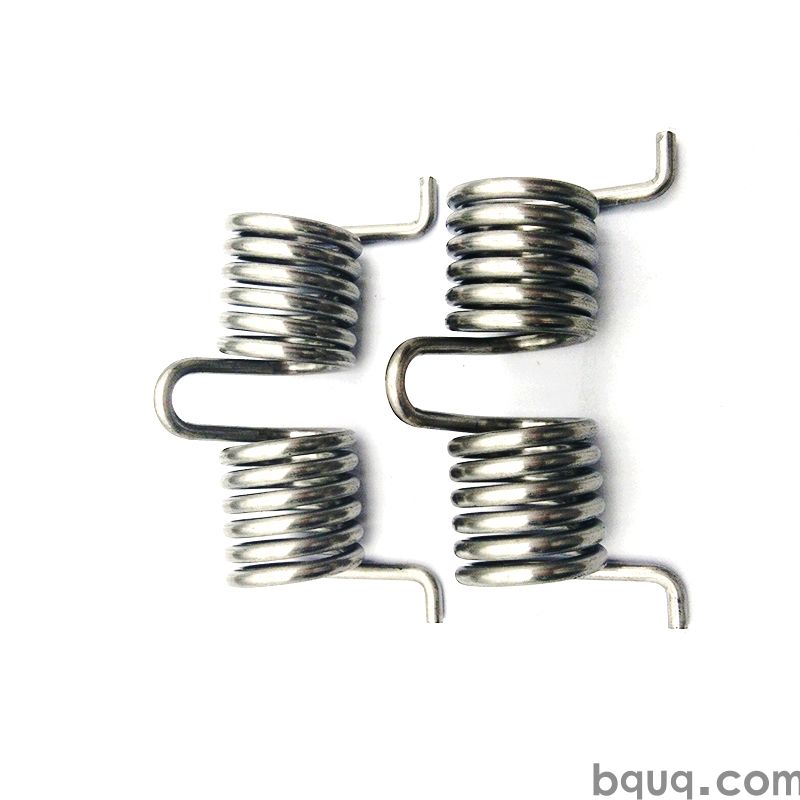
| Torsion | Leg angle, body diameter, torque at specified rotation, leg form tooling | Torque at specified angle |
| Plated or coated springs | Plating batch, thickness, embrittlement relief if applicable | Coating thickness report |
For compression springs, the load-at-deflection figure is the single most useful traceability data point, because it integrates wire diameter, coil diameter, active coils, and heat treatment into one number. You can browse the range we produce on our compression springs page.
Extension springs add initial tension, which is sensitive to coiling setup — so machine and setup records matter more. See extension custom springs for the end-form options that affect how the part is recorded.
Torsion springs are dominated by leg geometry, which is usually formed on secondary tooling. That tooling should be identified in the lot record, because a re-ground or replaced leg-forming tool is a process change. Our torsion springs page covers the typical tolerance ranges.
Frequently Asked Questions
Q: What is a wire heat number and why does it matter?
A: A heat number identifies the specific melt of steel that the wire was drawn from. It ties a finished spring back to the raw material chemistry and mechanical properties reported by the wire mill. If a material problem appears — wrong grade, out-of-spec tensile strength, inclusion defects — the heat number is what lets you scope the problem to the affected material rather than every spring you have ever bought.
Q: Can I get traceability on a small order?
A: Yes. Traceability is a documentation practice, not a volume threshold, so it applies to a 50-piece prototype run as easily as a 500,000-piece production order. The main practical difference is that small runs usually justify Level 1 or Level 2 records rather than unit-level serialization. Retained samples and the wire heat number are cheap to keep and are worth requesting even on trial orders.
Q: How long should spring lot records be retained?
A: Common industrial practice is three to five years, and longer for regulated or safety-related applications where the product's service life exceeds that window. The right retention period should be stated in your RFQ or quality agreement rather than assumed. If you need retained physical samples as well as paperwork, specify that separately, because sample storage consumes space and needs a defined disposal date.
Q: Does traceability guarantee the springs will not fail?
A: No. Traceability does not improve the spring; it improves your ability to respond when something goes wrong. A well-documented lot can still contain a defective part. What traceability provides is fast containment — identifying which shipments share the suspect material or process — and the evidence needed for a proper root-cause investigation instead of guesswork across an entire product line.
Q: What should I put on the purchase order for traceability?
A: State the traceability level, the marking location (bag, box, or part), the exact documents required, the retention period, and a notification requirement if the wire heat or supplier changes. Also list the functional dimensions and loads you want recorded. Putting these five items on the PO takes a few minutes and eliminates most of the back-and-forth that otherwise happens after the first shipment arrives.
Related Resources
- Learn about BQUQ's factory, equipment, and quality system: About
- Browse spring and hardware product ranges: Products
- Read market and sourcing context for springs and metal parts: Industry trends
- Explore more engineering articles: Technical articles
- Common sourcing and specification questions: FAQ
- See how other buyers structured their projects: Case studies
- Request a quote or send drawings: Contact
Authored by the BQUQ Engineering Team. BQUQ (Dongguan) runs CNC machining (±0.005 mm), metal stamping, custom springs, and heat sink production in one ISO9001 factory. Source-direct from Dongguan, China — quote in 12 hours: sc@bquq.com | WhatsApp +86 13713157787 | www.bquq.com