Swiss-type CNC turning explained: sliding headstock, guide bushing, bar diameter limits, tolerance benefits and cost crossover vs standard CNC lathes. BQUQ Dongguan.
Swiss-Type CNC Turning: When Sliding Headstock Wins
Short answer: a Swiss-type lathe feeds the bar through a guide bushing so the tool always cuts right next to the support point — that is why it holds ±0.005–0.01 mm on parts from 1 mm to 32 mm diameter with length-to-diameter ratios of 20:1 or more, in one operation. It wins whenever your part is long and thin, needs back-working (cross holes, threads on both ends) without a second setup, or runs in quantities above a few hundred pieces. Below roughly 3 mm diameter, Swiss-type is not a preference, it is the only reliable way to machine round bar.
The sliding headstock lathe has a reputation for being complicated and expensive, and both are half true. It is more complex to set up than a standard CNC lathe, and the hourly rate is higher. But for the part geometries it targets, it replaces three machines and a pile of handling errors. This guide covers how the machine works, what it does well, where it stops making sense, and how to cost it against conventional turning.
How a Swiss-Type Lathe Is Different
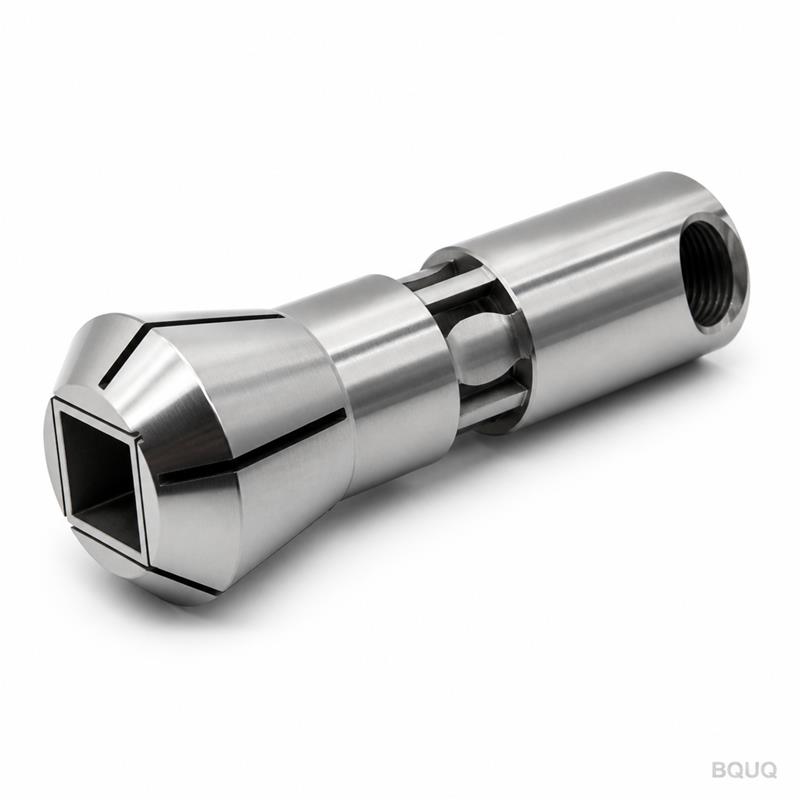
A conventional CNC lathe holds the bar in a chuck and cuts cantilevered — the further the tool works from the chuck jaws, the more the bar deflects and the looser your tolerance. A Swiss-type grips the bar in a collet behind a guide bushing and pushes the stock forward through the bushing as it cuts. The tool station sits immediately at the bushing face, so the effective unsupported length stays tiny no matter how long the part is. Long slender parts are machined in short "slices" while the bar advances. This is why Swiss machines dominate small precision shafts, pins, and any turned part with a big length-to-diameter ratio.
What Swiss-Type Machining Does Well
| Capability | What it means for your part |
|---|---|
| Long, thin parts | L/D ratios of 20:1 and beyond with straightness you can measure, not pray over |
| Small diameters | Practical from ~0.5–1 mm up to ~32 mm bar (larger with special machines) |
| Tight tolerance | ±0.005 mm routine on diameters; ±0.01 mm on length features |
| One-hit completion | Main spindle + back spindle: cross holes, flats, threads, slots on both ends without a second op |
| Complex profiles | Polygon/turret tools, live tooling, driven attachments for milled features |
| High-volume economy | Cycle times of seconds on small parts; unattended running with bar feeders |
| Surface finish | Ra 0.4 µm achievable on good diameters with proper inserts |
Swiss vs Conventional CNC Lathe: Where the Line Is
| Factor | Standard CNC lathe | Swiss-type lathe |
|---|---|---|
| Bar diameter sweet spot | 10–100 mm+ | 1–32 mm typical |
| L/D ratio limit | ~3–4:1 with support | 20:1+ routine |
| Setup complexity | Lower | Higher (bushing, collet, guide alignment) |
| Hourly rate | Lower | Higher (more axes, more precision) |
| Part cost crossover | Cheaper for short-fat parts | Cheaper for long-thin and high-volume small parts |
| Second operations | Often needed | Usually zero (back working built in) |
| Typical tolerances | ±0.01–0.05 mm | ±0.005–0.01 mm |
Rule of thumb: if the part fits inside a 25 mm diameter and is at least three diameters long, or has features on both ends, Swiss-type is at least worth quoting. If it is a short disc, a bushing under 2:1 L/D, or above 32 mm diameter, a standard lathe or mill-turn is likely cheaper.
Materials That Run Well on Swiss Machines
| Material | Swiss machining notes |
|---|---|
| Free-cutting brass (C36000) | Ideal: fast cycles, great finish, tight tolerance |
| Aluminum 6061 / 2011 | Excellent; 2011 for maximum speed |
| Stainless 303 / 304 / 316L | Good; 303 easiest, 316L gummy but fine with sharp tooling |
| Carbon steel 12L14 / 1215 | Excellent for pins, shafts, fasteners |
| Titanium Grade 2 / 5 | Feasible; slow, rigid, watch heat at the bushing |
| Copper / tellurium copper | Good for electrical pins and connectors |
| Plastics (PEEK, Delrin, PTFE) | Very good; PTFE needs sharp geometry and light cuts |
Material straightness and bar tolerance matter more on a Swiss machine than any other turning process, because the guide bushing grips the raw bar. Specify centerless-ground or drawn bar with tight straightness for precision batches; cheap hot-rolled stock will defeat the machine's accuracy before the first part is cut.
Design Rules That Keep Swiss Parts Affordable
Keep the drawing Swiss-friendly and the price drops noticeably. Wall thickness below 0.5 mm on small diameters needs care but is doable. Internal radii should match standard tooling. Deep small holes under 1 mm diameter are slow — expect cost. Avoid requiring a ground finish on the whole length when machined tolerance is sufficient. And if your part has a hex, a cross hole, or a thread on the back end, say so in the RFQ — that is exactly where Swiss back-working saves you a second operation and its tolerance stack.
When Swiss-Type Does Not Pay
Three cases push parts off Swiss machines: very short parts (a washer-like disc with 2:1 L/D) where a standard lathe or even a screw machine is cheaper; diameters beyond the bar capacity; and exotic one-off prototypes where setup time dominates — a standard lathe with steady rest is faster to tool. Also, if your quantity is 10 pieces, the Swiss machine's longer setup makes it the wrong tool regardless of geometry. Prototype runs belong on standard lathes or mill-turns; production moves to Swiss.
Frequently Asked Questions
Q: What is the difference between Swiss-type and CNC turning?
A: A Swiss-type lathe feeds bar stock through a guide bushing and cuts directly at the bushing face, so long thin parts stay rigid and tolerances stay tight. A conventional CNC lathe holds the work in a chuck and cuts it cantilevered, which limits length-to-diameter ratio to roughly 3-4:1 without extra support.
Q: What diameter range do Swiss lathes cover?
A: Most Swiss-type machines run bar from about 1 mm up to 20-32 mm diameter. Machines above 32 mm exist but are specialized; below 1 mm, micro Swiss machines and centerless ground stock take over. BQUQ quotes Swiss-type work across the practical 1-32 mm band.
Q: Why is Swiss machining more expensive per hour?
A: Swiss machines carry more axes, live tooling and bar-feed systems than a standard lathe, and setups take longer because bushing, collet and guide alignment must be precise. The higher rate pays off when it eliminates second operations and scrap on long thin parts — compare cost per finished part, not per hour.
Q: Can Swiss-type make parts with hex heads, cross holes and back threads?
A: Yes, in one hit. Main-spindle and back-spindle (sub-spindle) operations let the machine turn, mill, drill and thread both ends in a single cycle, then part off complete. That is the main reason Swiss parts beat multi-operation quotes on conventional machines.
Q: What tolerance should I expect on Swiss-turned parts?
A: ±0.005 mm on short supported diameters and ±0.01 mm on most length and milled features is realistic production capability from a well-run Swiss cell with temperature control and CMM verification. Longer unsupported features and deep holes relax to ±0.02-0.05 mm.
Authored by the BQUQ Engineering Team. BQUQ is an ISO9001-certified source factory in Dongguan, China, running CNC machining, metal stamping, custom springs, heat sink and collet lines under one roof. Send drawings to sc@bquq.com or WhatsApp +86 13713157787 for a quote within 12 working hours. www.bquq.com