CNC Machining Brass: Fast, Clean and Corrosion-Resistant
Short answer: Brass is one of the fastest and most forgiving metals to machine. Free-cutting grades such as C36000 run at 200–400 m/min surface speed — roughly three to five times faster than 304 stainless — with excellent chip control, no built-up edge problems, and as-machined finishes of Ra 0.4–1.6 µm straight off the tool. Tolerances of ±0.005 mm are routine on a well-set CNC lathe. Brass also resists atmospheric and fresh-water corrosion without plating, and it is non-magnetic and highly conductive. At BQUQ, brass turning and milling prototypes are quoted within 12 working hours, with flexible MOQ.
Brass is the material engineers reach for when a part needs to be accurate, corrosion-resistant, conductive, and above all fast. It is not the cheapest metal per kilogram, but it is frequently the cheapest finished part — because cycle times are short, tool life is long, secondary finishing is often unnecessary, and scrap has real resale value.
This article covers what actually matters when you specify brass for CNC machining: which alloy to choose, how it behaves on a lathe and mill, what tolerances and finishes you can realistically hold, where brass fails, and how it compares on cost to steel, aluminium and copper.
Why is brass so good for CNC machining?
Brass is a copper–zinc alloy, and the zinc content is what makes it machinable. Zinc acts as an internal chip breaker: instead of forming long, gummy strings that wrap around the tool and scratch the workpiece, brass shears into short, manageable chips.
That single property cascades into everything else:
- Higher cutting speeds. Free-cutting brass runs at 200–400 m/min in carbide, versus roughly 60–120 m/min for 304 stainless and 300–600 m/min for 6061 aluminium. Brass is in the same league as aluminium for speed, but with far better dimensional stability because its thermal expansion is lower.
- Longer tool life. Lower cutting forces and lower temperatures mean indexable inserts and small-diameter end mills last far longer than in stainless or titanium.
- Better as-machined finish. A sharp tool at the right feed leaves a bright, near-mirror surface. Many brass parts ship straight off the machine with no polishing step.
- No built-up edge. The classic aluminium problem — material welding to the cutting edge and smearing the surface — barely occurs in free-cutting brass.
- Tight tolerances are cheaper to hold. Because the material is stiff and stable, a lathe can hold ±0.005 mm on diameters without the in-process gauging that stainless often demands.
For high-volume turned parts — fittings, inserts, terminals, bushings, valve bodies, watch components, electrical contacts — brass is usually the default choice, not a compromise.
Which brass alloy should you specify?
Alloy selection drives machinability, corrosion behaviour, conductivity and price. The table below covers the grades you will actually see quoted.
| Alloy (UNS) | Common name | Approx. machinability rating | Typical use | Notes |
|---|---|---|---|---|
| C36000 | Free-cutting brass | 100 (reference) | Fittings, inserts, terminals, high-volume turned parts | Best machinability of any copper alloy; not recommended for hot working |
| C35300 | High-leaded brass | ~90 | Precision turned parts, gears, screw machine work | Slightly better strength than C36000, still excellent chips |
| C26000 | Cartridge brass 70/30 | ~30 | Deep-drawn shells, radiator cores, decorative | Excellent cold formability, poor chip breaking |
| C27000 | Yellow brass 65/35 | ~35 | General hardware, architectural, fasteners | Good corrosion resistance, moderate machining |
| C46400 | Naval brass | ~30 | Marine hardware, pump shafts, propeller parts | Tin addition resists seawater; slower to machine |
| C93200 | Bearing bronze (SAE 660) | ~70 | Bushings, bearings, wear plates | Not strictly brass — copper/tin/lead — but often quoted alongside |
| C17200 | Beryllium copper | ~20 | Springs, non-sparking tools, high-strength contacts | High strength after age hardening; dust requires controls |
Practical guidance: if the part is turned and the priority is cost per piece, specify C36000. If it needs more strength or is used outdoors near salt water, look at C46400 naval brass. If it must be drawn or formed after machining, C26000 is the formable option — but accept that chip control will be worse.
One caution: leaded brasses such as C36000 contain 2.5–3.5% lead. That is fine for most industrial, plumbing-legacy and electrical applications, but it is restricted in potable-water contact in many markets and in some medical or food-contact contexts. If your part touches drinking water or the human body, discuss a lead-free alternative early — the machining behaviour will change and so will the cost.
Turning vs milling brass: what changes?
Brass behaves differently depending on the operation, and the tooling strategy should follow.
CNC turning brass
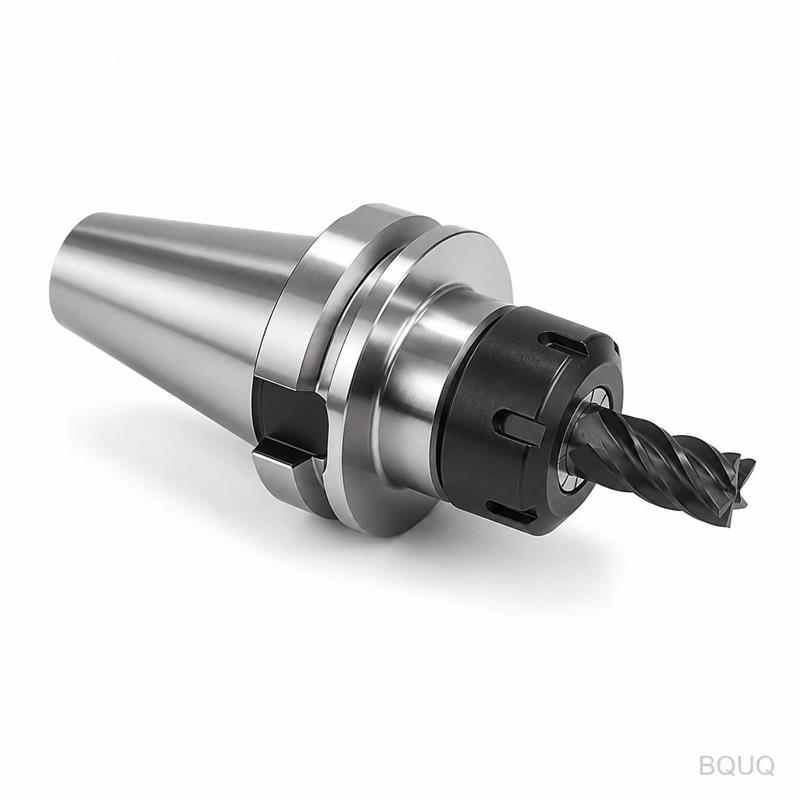
Turning is brass's home turf. On a CNC turning platform, brass parts run at high spindle speeds with light, consistent chip loads.
- Use positive-rake, polished-flute inserts. Uncoated carbide or thin PVD coatings work well; heavy coatings add friction without benefit.
- Keep feed per revolution high enough to break chips. Too light a feed produces long strings — the opposite of what brass is supposed to do.
- Use a good stream of coolant or high-pressure air to clear chips from the cutting zone. Dry machining is possible but chip evacuation becomes the limiting factor.
- For small-diameter work, Swiss-type lathes with guide bushings hold concentricity and allow unattended running.
CNC milling brass
Milling brass is also straightforward, but a few points matter:
- Two- or three-flute end mills with polished flutes clear chips better than four-flute tools in slots and pockets.
- Climb milling gives the best surface finish and reduces work hardening at the cut edge.
- Brass is soft and grabs. Secure workholding and sharp tools prevent pull-out and chatter on thin walls.
- Deburring is the main secondary operation. Brass burrs are sharp and thin; a quick vibratory or thermal deburr usually resolves them.
For parts that combine turned features and milled flats, slots or cross-holes, a single CNC machining setup on a mill-turn platform removes a whole operation and the positional error that comes with it.
What tolerances and finishes can brass hold?
Brass is dimensionally well-behaved, which is why it appears in instrument and optical hardware. Typical achievable results on production equipment:
| Feature | Typical achievable | Notes |
|---|---|---|
| Turned diameter tolerance | ±0.005 mm | Routine on a well-maintained lathe with temperature control |
| Milled pocket / profile | ±0.01 mm | Depends on feature size and wall stiffness |
| Hole position | ±0.01 mm | Better with single-setup mill-turn |
| As-machined surface finish | Ra 0.4–1.6 µm | Sharp tool, correct feed, polished flutes |
| Fine-turned finish | Ra 0.2–0.4 µm | Diamond or very sharp carbide, light finishing pass |
| Concentricity | 0.005–0.01 mm TIR | Best on Swiss-type or between-centres turning |
| Minimum wall thickness | ~0.3 mm | Below this, chatter and deflection dominate |
These are indicative figures for a capable shop, not a guarantee for every geometry. Deep holes, thin walls, long unsupported shafts and micro-features all push the achievable window outward. If you are chasing a specific surface requirement, the principles in our guide to CNC machining surface roughness apply directly to brass — feed rate and tool edge condition dominate the result far more than spindle speed.
Is brass actually corrosion-resistant?
Yes, within limits — and the limits matter.
Brass forms a thin, stable oxide/carbonate layer that protects it in most indoor, industrial and fresh-water environments. It does not rust the way steel does. That is why brass is used for marine fittings, instrument cases, valves and electrical hardware.
However:
- Dezincification. In stagnant, slightly acidic or high-chloride water, some brasses lose zinc preferentially, leaving a porous copper sponge. Naval brass (C46400) and dezincification-resistant (DZR) grades exist specifically to counter this.
- Ammonia and amines. Brass is susceptible to stress-corrosion cracking in ammonia-rich environments. If parts will be exposed to cleaning agents or refrigerants containing ammonia, stress-relieve after machining.
- Sulphides. Industrial atmospheres with sulphur compounds tarnish brass quickly. A clear lacquer or chromate-free passivation slows this.
- Galvanic coupling. Brass is more noble than steel and aluminium. In a wet assembly, the less noble metal will corrode. Insulate or coat accordingly.
For most indoor electronics, instrumentation and machinery applications, none of this is a practical concern. Brass simply stays clean and conductive for decades.
How does brass compare on cost?
Brass stock costs more per kilogram than aluminium or carbon steel. The finished part often costs less. Here is why.
| Material | Relative stock cost | Relative machinability | Typical cycle time | Secondary finishing needed |
|---|---|---|---|---|
| Free-cutting brass C36000 | High | Excellent | Short | Usually none |
| 6061 aluminium | Medium | Very good | Short | Often anodise |
| 304 stainless | Medium | Poor | Long | Often passivate |
| Carbon steel 1215 | Low | Good | Medium | Usually plate |
| Copper C11000 | Very high | Poor (gummy) | Long | Sometimes |
| Titanium Grade 5 | Very high | Very poor | Very long | Sometimes |
The economics flip in brass's favour through three levers: short cycle time, minimal tooling cost per part, and high scrap value. Brass chips are worth a meaningful fraction of virgin stock, which partially offsets material cost at volume. Our breakdown of CNC machining cost reduction covers how to evaluate this properly — the short version is that you should compare cost per finished part, never cost per kilogram.
If your part is a high-volume turned item, brass frequently beats aluminium on total cost despite the higher material price, because it machines faster and needs no anodising.
Where brass is the wrong choice
Brass is not universal. Avoid it when:
- Weight is critical. Brass density is about 8.5 g/cm³ — roughly three times aluminium. Drone frames, aerospace brackets and handheld devices usually go aluminium or titanium.
- High strength is required. Typical free-cutting brass yields around 200–350 MPa. Steel and titanium are far stronger.
- The part sees ammonia or aggressive chlorides. Choose DZR brass, bronze, or a different material family entirely.
- Potable water contact in regulated markets. Lead content becomes a compliance issue.
- Very high electrical current. Copper (C11000) conducts better; brass is a compromise between conductivity and machinability.
For conductive parts where machinability matters more than the last few percent of conductivity, brass wins. Our article on CNC copper machining explains where copper is worth the extra machining difficulty.
How BQUQ produces brass parts
BQUQ (Dongguan) runs four production lines under one ISO9001 system: CNC machining, metal stamping, custom springs and heat sink production. Brass work sits primarily on the CNC side, across turning and milling platforms.
What that means for a brass project:
- One factory, one accountability chain. Turned blanks, milled features, springs and stamped contacts can come from the same supplier with one inspection report.
- ±0.005 mm CNC capability on turned features, with CMM verification on critical dimensions.
- 12 working hours for a quote, including material recommendation if your drawing does not specify an alloy.
- Flexible MOQ — prototype quantities and production volumes both run through the same process controls.
- DFM feedback before cutting metal. If a wall is too thin, a thread is too fine, or a leaded alloy creates a compliance risk, we flag it at quotation rather than after the first article.
For a brass part that mixes turned and milled geometry, we would typically quote it as a single-setup CNC milling job with live tooling, which removes a second op and tightens positional tolerance.
Send a drawing or a 3D file to sc@bquq.com and you will have a quote with material, process and lead time inside 12 working hours.
Frequently Asked Questions
Q: What is the best brass alloy for CNC machining?
A: C36000 free-cutting brass is the reference grade, with a machinability rating of 100 — higher than any other copper alloy. It produces short chips, runs at 200–400 m/min, and holds tight tolerances easily. C35300 is a close second with slightly better strength. If you need seawater resistance, choose C46400 naval brass and accept a slower cut.
Q: Can CNC machining hold ±0.005 mm in brass?
A: Yes, on turned diameters, routinely — brass is stiff and thermally stable, so a well-maintained lathe with temperature control holds ±0.005 mm without special measures. Milled features typically land at ±0.01 mm. Thin walls, deep holes and long unsupported sections widen the window, so review those features with your supplier at quotation.
Q: Does brass need surface treatment after machining?
A: Usually not. As-machined brass is bright, clean and corrosion-resistant in indoor and industrial environments, so many parts ship without finishing. Treatments are added for specific reasons: clear lacquer to prevent tarnishing, stress relief to avoid ammonia cracking, or a light vibratory deburr to remove sharp edges. Plating is rarely needed.
Q: Is brass more expensive than aluminium for CNC parts?
A: Per kilogram, yes — brass stock costs more. Per finished part, brass often wins on high-volume turned work because it machines faster, needs no anodising, and generates high-value scrap. Aluminium wins decisively on weight and on large milled parts where material volume dominates. Compare cost per finished part, not per kilogram.
Q: Why does brass sometimes turn pink or tarnish?
A: Pink coloration indicates dezincification — zinc leaching out of the alloy in stagnant, chloride-rich or slightly acidic water. Tarnishing is a surface oxide or sulphide layer from atmospheric exposure. Choose a DZR or naval brass grade for wet service, and use a clear lacquer or controlled storage for parts that must stay bright.
Related Resources
- About BQUQ and our Dongguan production footprint: /about/
- CNC machining, turning and milling capabilities: /cnc-machining/
- More technical articles on materials and tolerances: /bquq-blog/
- Industry trends in precision manufacturing: /industry-dynamics/
- Common sourcing and specification questions: /faq/
- Case studies from production programs: /case/
- Request a brass part quote in 12 working hours: /contact/
Authored by the BQUQ Engineering Team. BQUQ (Dongguan) runs CNC machining (±0.005 mm), metal stamping, custom springs, and heat sink production in one ISO9001 factory. Source-direct from Dongguan, China — quote in 12 hours: sc@bquq.com | WhatsApp +86 13713157787 | www.bquq.com