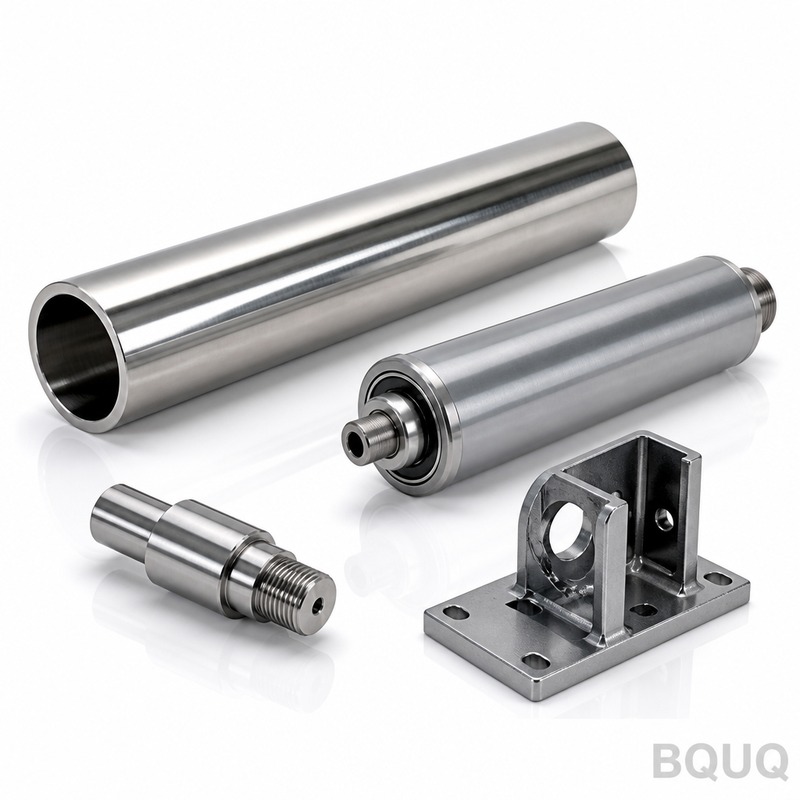
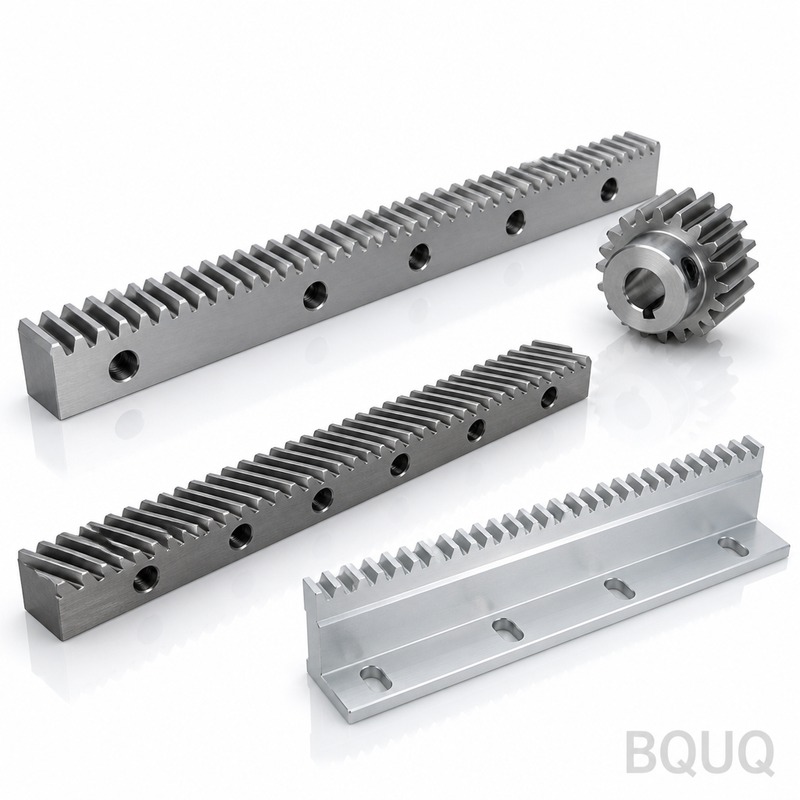
These are Cnc Machined Conveyor Rollers Parts for gravity, motorized, and belt conveyor systems. You get a true-running roller shaft with runout held to 0.02mm, surface finish Ra
BQUQ CNC Machined Conveyor Rollers Parts – Precision Runout ≤0.02mm
These are Cnc Machined Conveyor Rollers Parts for gravity, motorized, and belt conveyor systems. You get a true-running roller shaft with runout held to ≤0.02mm, surface finish Ra 0.8, and hardness up
Get a Fast Quote for This Part
Send us your drawing / quantity / material — reply within 24h.
These are Cnc Machined Conveyor Rollers Parts for gravity, motorized, and belt conveyor systems. You get a true-running roller shaft with runout held to ≤0.02mm, surface finish Ra 0.8, and hardness up to 45HRC after heat treatment. Lead time is 5-7 days for samples, 15-18 days for production runs, direct from our Dongguan factory.
Why Roller Shaft Runout Below 0.02mm Extends Bearing Life
In any conveyor, the roller shaft is the rotating heart. If it wobbles, bearings fail early and belts track off. We machine the bearing journals and the roller body in one clamping setup on a 5-axis CNC lathe. This eliminates re-chucking errors. Result: total indicated runout (TIR) is ≤0.02mm on the bearing seats. That is a 30% improvement over industry standard (0.03mm). For a line running 300 meters per minute, that means no vibration spikes, no bearing overheating, and a service life increase of 8,000 to 12,000 hours.
Materials and Heat Treatment We Use for Roller Shafts
We stock 1045, 4140, 42CrMo, and 304/316 stainless for conveyor roller parts. For high-load applications, we quench and temper 42CrMo to 28-32HRC. For wear-resistant surfaces, we induction harden the shaft to 50-55HRC (depth 1.5-2.0mm) and then grind the journal back to Ra 0.4. For stainless rollers in food or chemical lines, we offer passivation to ASTM A967. All material certificates are traceable to the heat number. We never substitute steel without your written approval.
Lathe vs. Mill: How We Machine the Roller Body and Keyways
A conveyor roller part is rarely just a cylinder. You need keyways, snap-ring grooves, threaded ends, and sometimes hexagonal or square drive ends. Our process: first, turn the OD and face on a CNC lathe (accuracy ±0.005mm). Then, transfer to a CNC machining center for the keyway (width tolerance +0.02/0mm) and cross-holes. To avoid distortion, we rough cut the keyway, stress-relieve if required, then finish cut. This prevents the shaft from bending after assembly. For rollers over 500mm long, we use a steady rest to support the part, keeping straightness within 0.05mm per 1000mm.
Balancing and Runout Inspection Before Every Shipment
We do not ship a roller shaft without a final inspection report. Each part goes on a V-block with a dial indicator to check TIR at three points: both bearing journals and the center of the roller body. If the drawing calls for dynamic balancing (G2.5 grade), we run it on a hard-bearing balancer and correct with radial drilling. You receive a PDF report with actual measured values, not just a "pass" stamp. For critical assemblies, we also supply a material certificate and a surface roughness profilometer reading.
Key Specs for Standard Conveyor Roller Shafts
Parameter
Value / Range
Material options
1045, 4140, 42CrMo, 304SS, 316SS
Diameter range
8mm – 150mm
Length range
50mm – 2000mm (custom longer on request)
Hardness (core)
28 – 32HRC (42CrMo Q&T)
Hardness (surface optional)
50 – 55HRC induction hardened
Machining tolerance
±0.005mm (bearing journal), ±0.02mm (OD)
Runout (TIR)
≤0.02mm
Surface finish Ra
0.8µm standard, 0.4µm ground
Lead time (samples)
5 – 7 days
Lead time (production)
15 – 18 days
MOQ
No MOQ (1 piece prototype accepted)
Batching Production for Conveyor Lines: How We Keep Cost Low
You do not need 10,000 pieces to get a fair price. For orders of 50-500 pieces, we gang multiple parts on one bar stock to reduce waste. For 500+ pieces, we use live tooling on the lathe to complete the part in one cycle, cutting cycle time by 40%. This is how we keep unit cost competitive while holding ±0.005mm. If you have a drawing that is not optimized for CNC, we will red-line it for free to reduce machining steps. Our engineers have 20 years of experience in precision manufacturing for conveyor systems, so we know where to add tolerance and where to tighten it.
What is the minimum order quantity (MOQ)?
No MOQ – we accept a single prototype piece to validate your design before you commit to a production run.
Can you customize the roller material or hardness for a chemical environment?
Yes, we can switch to 316SS with electropolishing for corrosive washdowns, or apply a hard chrome plating (0.02mm thick) to carbon steel for abrasive environments.
How do you guarantee the runout spec on long rollers?
We use a live center with a steady rest during turning and verify each part on V-blocks with a dial indicator – the measured TIR is included in your shipment report.
What is your typical lead time for 100 pieces?
For 100 pieces of 42CrMo roller shafts, we ship in 15-18 days, including induction hardening and final grinding.
Related Precision Machining Knowledge
To get the best surface finish and tool life on hardened roller shafts, review our CNC cutting tool selection guide. If you are designing a new roller and are unsure how tight to call out the diameter, read our CNC machining tolerances guide to avoid over-specifying and paying extra.
Get a Firm Quote Within 12 Hours – Send Your Drawing
Send us your 2D PDF or 3D STEP file for Cnc Machined Conveyor Rollers Parts. We will respond with a firm unit price, a lead time, and a DFM note within 12 working hours. No hidden tooling costs, no MOQ pressure. Email your drawing to sc@bquq.com or message us on WhatsApp at +86 13713157787. Our engineers are online from 8:00 AM to 6:00 PM (GMT+8), Monday to Saturday.