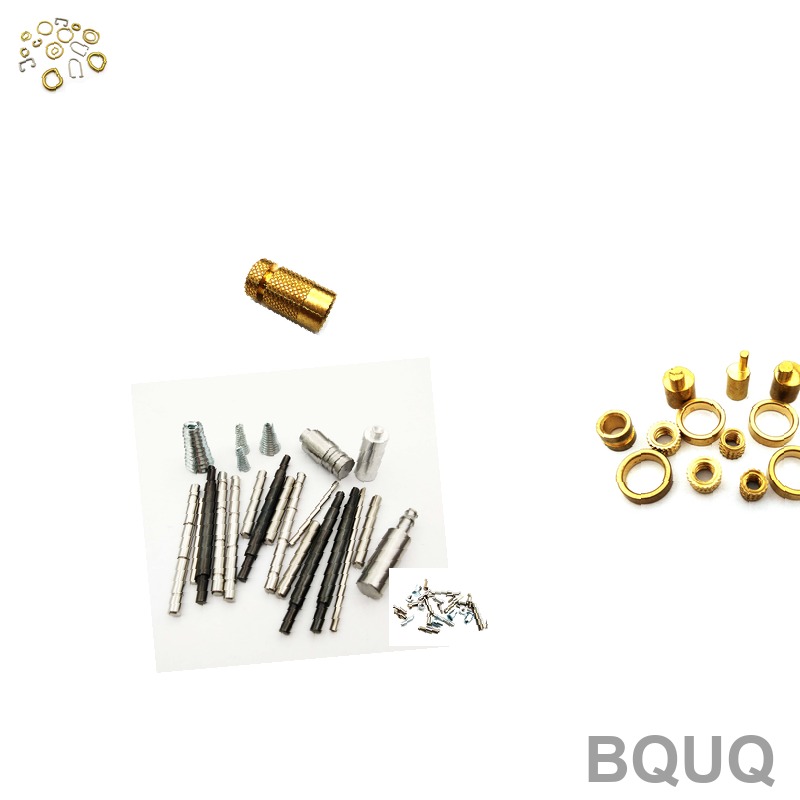
What This Collection Does for Your Rotary Assembly This is a line of torsion springs engineered for copper buckle shafts—the small rotating components that control snap-fit closure
Copper Buckle Shaft Torsion Spring Collection | BQUQ Precision Springs
What This Collection Does for Your Rotary Assembly This is a line of torsion springs engineered for copper buckle shafts—the small rotating components that control snap-fit closures, latch mechanisms,
Get a Fast Quote for This Part
Send us your drawing / quantity / material — reply within 24h.
What This Collection Does for Your Rotary Assembly
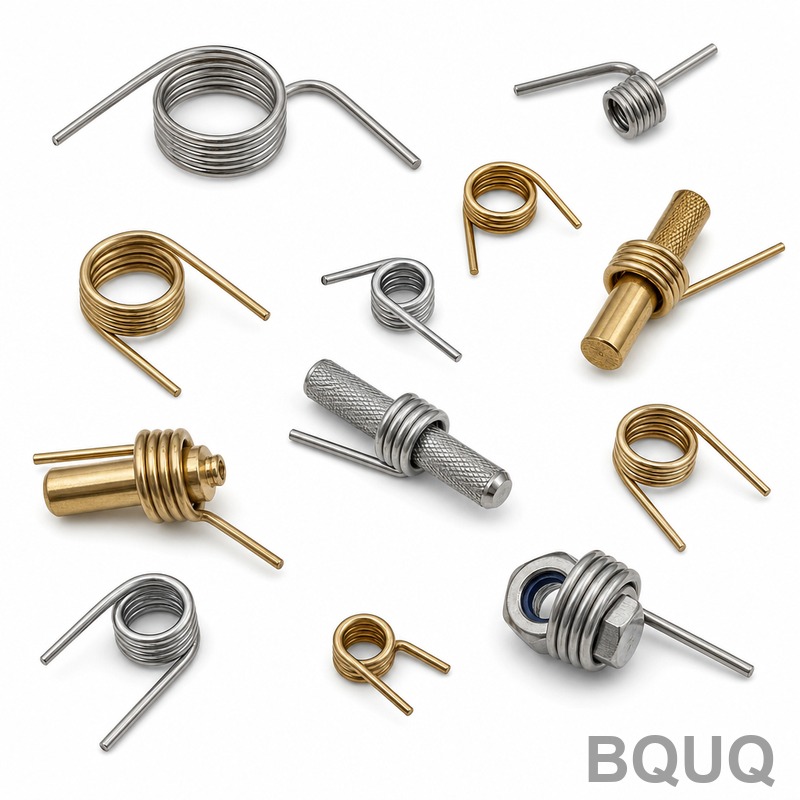
This is a line of torsion springs engineered for copper buckle shafts—the small rotating components that control snap-fit closures, latch mechanisms, and spring-loaded hinges. Each spring is wound from 0.3 mm to 4.0 mm diameter wire, heat-treated to 45 HRC, and ground flat on both end legs to within ±0.01 mm of your print. You get consistent torque output across 10,000 cycles because we control coil spacing with CNC coiling machines, not manual winders. From drawing approval to your dock, standard lead time is 10 working days. No MOQ—order one prototype or 50,000 production pieces.
Why Copper Buckle Shafts Need a Dedicated Torsion Spring Design
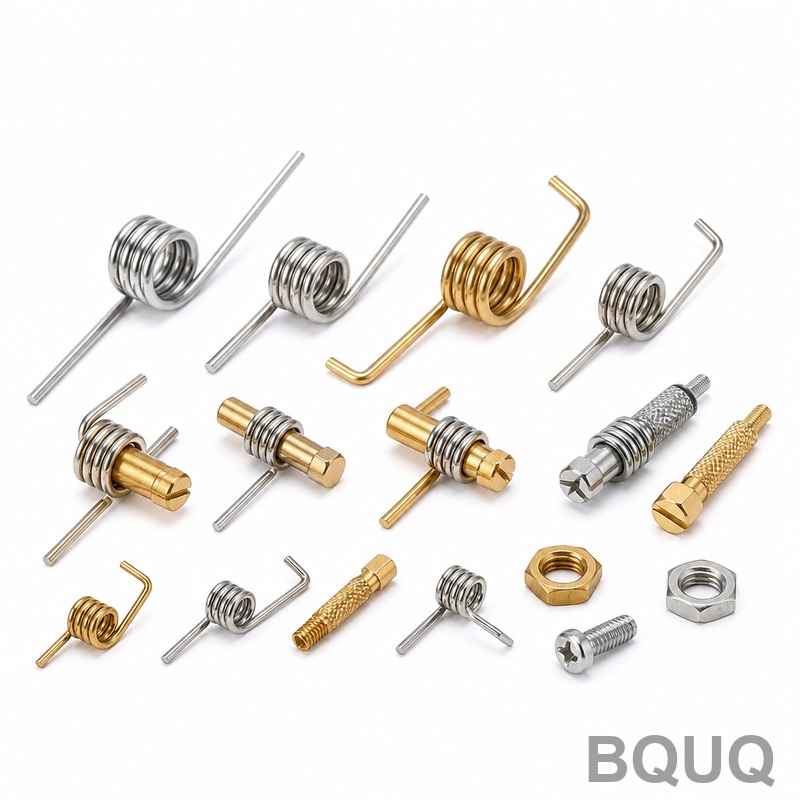
Copper buckle shafts are short, often under 20 mm, and they rotate against a mating housing. A generic torsion spring will twist out of plane, causing side thrust that wears the shaft bore. Our springs use a closed-ground end configuration where the last coil is flattened and squared to 90° ±1°, keeping the spring perpendicular to the shaft axis. This eliminates axial runout. We also control the inner diameter to a H7 fit (for example, 6 mm +0.012 / -0) so the spring seats firmly on the shaft without play. Measured runout on a mandrel is below 0.05 mm, which is why these springs do not need secondary shimming.
Materials and Heat Treatment We Use for Consistent Torque
We stock three wire grades for this collection: oil-tempered chrome silicon (ASTM A401), stainless steel 302 (ASTM A313), and phosphor bronze (ASTM B159) for corrosion-resistant applications. Each coil is stress-relieved at 260°C for 30 minutes after winding, then shot-peened to 0.25 mm intensity to remove micro-cracks. Chrome silicon springs reach 45–50 HRC, while stainless 302 is drawn to 42–47 HRC. We do not use zinc plating on copper shaft springs—the coating changes the coil friction coefficient. Instead, we offer electropolishing for a 0.2 µm Ra surface finish, which reduces wear against the shaft.
Torque Verification and Load Testing Before Shipment
Every batch of 100 springs is torque-tested at three deflection angles: 30°, 60°, and 90°. We use a digital torsion tester with a resolution of 0.001 N·m. For a typical spring with a 10 mm outer diameter and 0.8 mm wire, the torque at 90° is 0.15 N·m ±5%. We also run a 10,000-cycle fatigue test on the first article from each production run. The spring must show less than 3% torque loss after cycling. If it fails, we rewind the entire batch. This is why our springs survive 100,000 cycles in high-end automotive latches—we test what we ship.
Surface Finish Options for Copper Shaft Contact
Raw springs have a 1.6 µm Ra surface from the wire drawing process. That is fine for enclosed mechanisms, but for exposed copper buckle shafts, we recommend a micro-peened finish at 0.8 µm Ra. This reduces friction when the spring leg slides against the shaft. If you need electrical conductivity, we offer silver-plated springs (5 µm thickness) on the end legs only—the coil body remains bare to avoid welding. For salt spray resistance, passivate stainless 302 to ASTM A967, achieving 48 hours neutral salt spray without red rust.
Custom End Legs and Installation Features
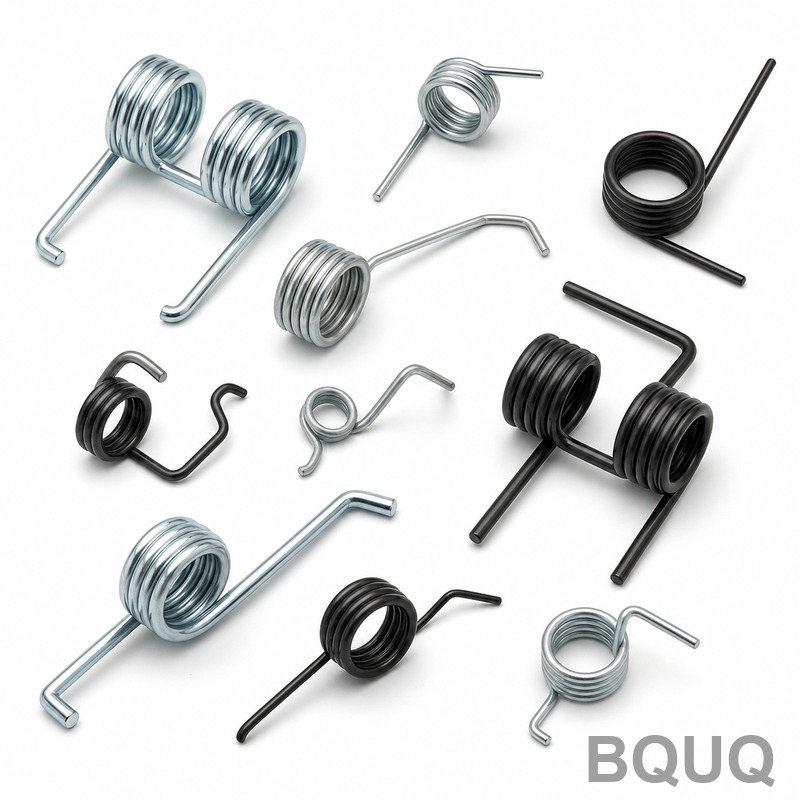
Your print may call for straight torsion legs, hooked ends, or a double-torsion design with two spring bodies wound in opposite directions. We support all these without extra tooling cost. Leg length tolerance is ±0.5 mm, leg angle tolerance is ±2°, and we can add a pre-set bend at the leg tip to hook into a slot. For automated assembly, we offer taped-and-reeled packaging with 500 springs per reel, so your pick-and-place machine feeds them continuously. We also add a light oil coating (ISO 3448 VG10) to prevent rust during storage—but we skip this if you specify dry springs.
Inspection Before Every Shipment: Dimensional and Metallurgical
Each spring is checked with a profile projector at 20× magnification for coil diameter, free length, and leg position. We measure hardness on a Rockwell tester (HRC scale) at three points along the coil. For critical orders, we run a scanning electron microscope check on the wire surface to confirm no laps or seams. The final inspection report includes a CMM check for inner diameter and a torque curve graph. You get this report with every shipment, even for a single prototype. If any dimension is outside your tolerance, we reject the part—we do not ship “close enough” springs.
Parameter
Specification
Notes
Wire diameter range
0.3 mm – 4.0 mm
Chrome silicon, 302 SS, phosphor bronze
Outer diameter tolerance
±0.05 mm
Measured on unloaded coil
Inner diameter fit
H7 (e.g., 6 mm +0.012 / -0)
For copper buckle shaft seating
Free length tolerance
±0.3 mm
For springs under 50 mm total length
Hardness (chrome silicon)
45 – 50 HRC
Oil-tempered and shot-peened
Hardness (stainless 302)
42 – 47 HRC
Cold-drawn wire
Surface finish (raw)
1.6 µm Ra
As-wound
Surface finish (micro-peened)
0.8 µm Ra
For exposed copper shaft contact
Torque tolerance at 90°
±5%
Example: 0.15 N·m ±0.0075
Axial runout on mandrel
≤0.05 mm
Tested with 6 mm mandrel
Lead time
10 working days
From drawing approval, prototype or bulk
MOQ
No minimum
Start with 1 piece
How to Specify Your Copper Buckle Shaft Spring Correctly
Send us your drawing in STEP or PDF, but if you only have a sample, mail it to our Dongguan factory—we reverse-engineer it within 48 hours. Include the shaft diameter, free angle, maximum deflection angle, and required torque at that angle. If you are unsure about torque, tell us the application (e.g., latch for a 2 kg door), and we will calculate the spring rate using our in-house design software. For reference, our CNC cutting tool selection guide explains how tool geometry affects spring winding, and our CNC machining tolerances guide covers what ±0.01 mm means in practice for mating parts.
What is the minimum order quantity for this torsion spring collection?
There is no MOQ—we make a single prototype for you to test, or we run 50,000 pieces at the same per-unit setup cost.
Can you match a spring spec that is not on the table?
Yes, we custom-wind any wire diameter from 0.3 mm to 4.0 mm, any number of coils, and any leg shape—just send your drawing or a physical sample.
How do you guarantee torque consistency across a production batch?
We torque-test three angles per 100-piece batch and run a 10,000-cycle fatigue test on the first article; if torque loss exceeds 3%, we rewind the whole batch.
What is the fastest lead time for a copper buckle shaft torsion spring?
Standard is 10 working days, but for a spring under 20 mm outer diameter with no heat treatment, we can ship in 5 working days.
Send your drawing to sc@bquq.com or WhatsApp +86 13713157787. We reply with a firm quote within 12 hours—including torque calculation, tolerance confirmation, and delivery date. No MOQ, no engineering fee for standard reviews. Precision manufacturing, made in China, backed by 20 years of spring and CNC experience.