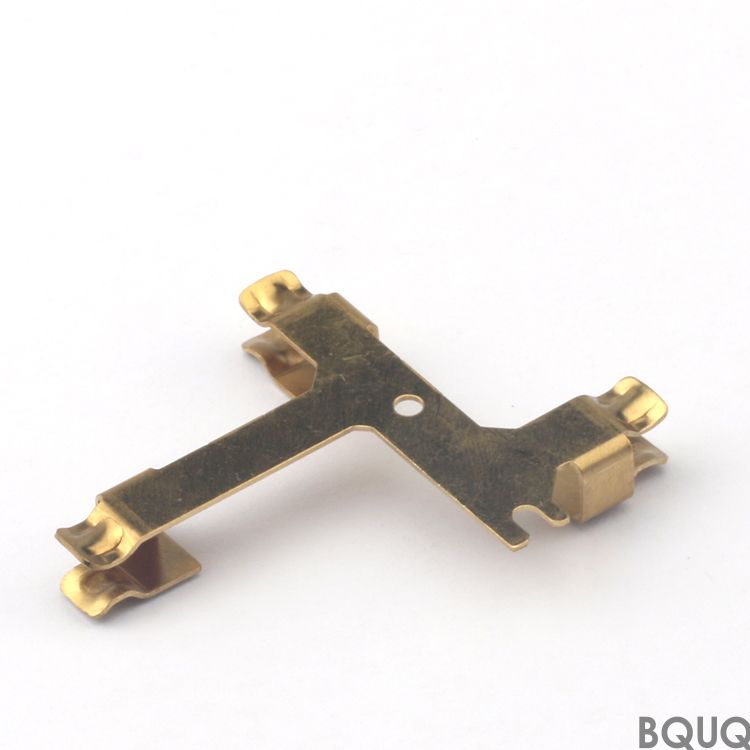
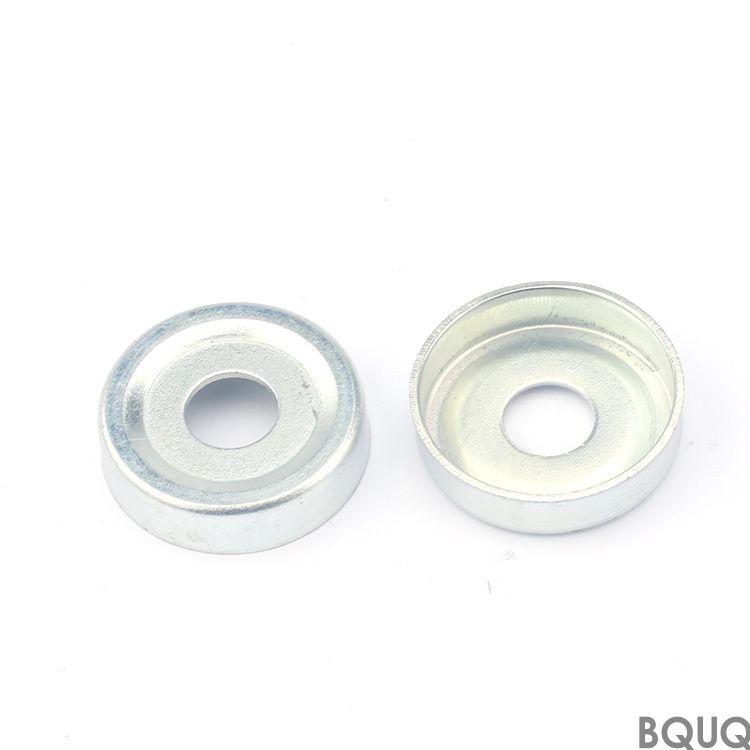
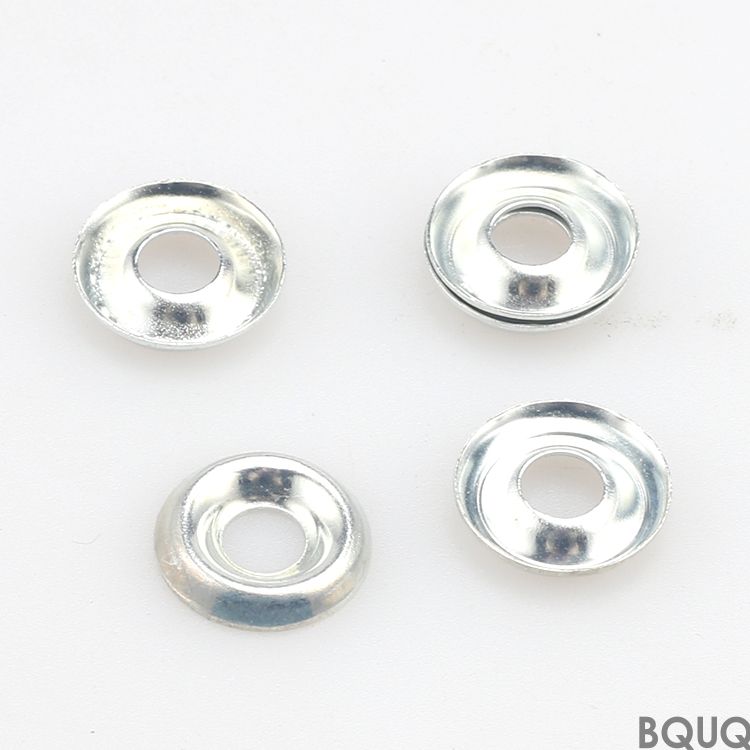
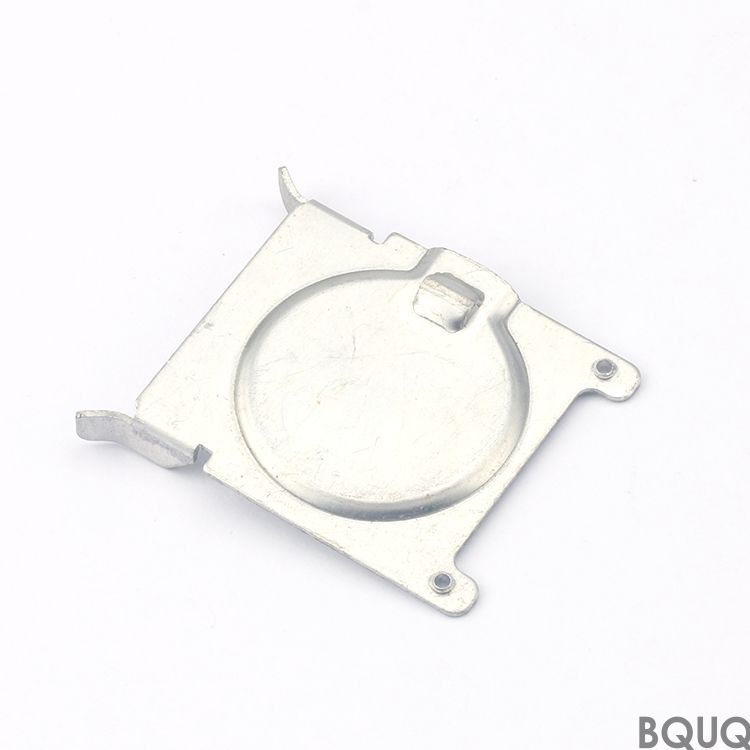
Our Metal Stamping Parts are cold-formed from coil or strip stock using progressive dies and high-speed presses (up to 600 strokes per minute). You get burr-free edges under 0.05 m
Precision Metal Stamping Parts from BQUQ | Tight Tolerances, No MOQ
Our Metal Stamping Parts are cold-formed from coil or strip stock using progressive dies and high-speed presses (up to 600 strokes per minute). You get burr-free edges under 0.05 mm, dimensional toler
Get a Fast Quote for This Part
Send us your drawing / quantity / material — reply within 24h.
Our Metal Stamping Parts are cold-formed from coil or strip stock using progressive dies and high-speed presses (up to 600 strokes per minute). You get burr-free edges under 0.05 mm, dimensional tolerance of ±0.01 mm on critical features, and a surface finish of Ra 0.8 µm on stamped faces — all repeatable across 100,000+ pieces. As a precision manufacturing factory in Dongguan with 20 years of CNC machining and stamping history, we ship standard parts in 3 days and custom dies in 15 working days.
How We Hold ±0.01 mm on a High-Speed Press
Most stamping shops claim tight tolerances but rely on single-hit dies. We use progressive dies with 6-12 stations, each station performing a separate operation (piercing, forming, coining, trimming) while the strip moves through. This eliminates secondary handling errors. Our presses are fitted with servo-driven feeders that advance the strip to ±0.005 mm. The die sets are ground to a 0.005 mm parallelism, and we use carbide punches for wear resistance — a set runs 5 million hits before requiring regrind. For your critical hole-to-edge dimensions, we add in-die sensors that stop the press if the strip position drifts beyond ±0.008 mm.
Materials and Heat Treatment We Run Daily
We stock 12 grades of steel and non-ferrous alloys in coil form. For spring steel parts (e.g., clips, retainers), we use C67S or 65Mn, hardened to 42-48 HRC after stamping. For structural brackets, we use SPCC or SPFH540 hot-rolled pickled steel. For electronics shields, we use 304 stainless or C17200 beryllium copper. If your part needs wear resistance, we can add localized induction hardening (up to 55 HRC) or through-hardening in a vacuum furnace. We also offer zinc plating, nickel plating, and passivation per ASTM B633 or QQ-P-35. Every heat treatment batch includes a hardness test report — you get the actual readings, not a certificate of compliance.
Tooling: What You Pay For and What You Keep
Your quote includes die design, die manufacturing, and trial runs. We do not charge extra for die tryout parts. The die set becomes your property after full payment — you can move it to another factory if you ever want. For low-volume prototypes, we offer soft tooling (aluminum or kirksite dies) at 30% of the cost of hard tooling, with a life of 5,000-20,000 hits. For high-volume production, we build hard tooling with D2 tool steel or carbide inserts, rated for 500,000+ hits. We also store your die for free in our climate-controlled tool room and can modify it for design revisions within 5 days.
Surface Finish and Flatness After Stamping
Stamping leaves microscopic tool marks and a slight rollover on the punched edge. We control this in three ways. First, we use a die clearance of 5-8% of material thickness — too tight causes tool wear, too loose creates heavy burrs. Second, we add a coining station to flatten critical surfaces to 0.02 mm flatness over a 100 mm length. Third, we can brush or vibratory-finish parts to Ra 0.4 µm on request. For parts that need a mirror finish (e.g., heat sink bases), we do a secondary lapping pass to Ra 0.1 µm. Our standard stamped surface is Ra 0.8 µm, which is acceptable for most mechanical and electrical applications.
Inspection Before Every Shipment
We do not ship from batch samples alone. Every production lot goes through a 3-stage inspection. Stage 1: in-process check every hour by the press operator using a pin gauge and hardness tester. Stage 2: full dimensional layout on a CMM (coordinate measuring machine) for 5 pieces per lot — we check all critical dimensions, hole positions, and surface profile. Stage 3: final visual and functional check for burrs, scratches, and contamination. We include a dimensional report with every shipment, listing measured values versus your drawing. If you require a PPAP Level 3 submission, we prepare that in 10 working days at no extra cost. Our QC team has 12 inspectors and uses calibrated equipment traceable to NIST standards.
Pricing That Makes Sense for Low-Volume Runs
We know many stamping factories refuse orders under 10,000 pieces. We do not. Our no MOQ policy means you can order 100 pieces for a prototype or a repair job. For orders under 5,000 pieces, we use soft tooling and a slower feed rate, which adds about 15% to the unit price compared to high-volume runs. For orders above 50,000 pieces, we switch to carbide tooling and high-speed presses, reducing unit cost by up to 40%. Our quoting system prices tooling and parts separately, so you can compare us against other suppliers without hidden costs. We also offer annual contracts with price lock-in for 12 months if you commit to a monthly volume.
Specification
Our Capability
Standard Range
Material thickness
0.1 mm to 6.0 mm
0.3 mm - 3.0 mm
Max part size
400 mm x 300 mm
Up to 200 mm x 150 mm
Dimensional tolerance
±0.01 mm
±0.05 mm for standard parts
Punch edge burr
Max 0.05 mm
Max 0.1 mm
Surface finish (Ra)
0.4 µm (brushed)
0.8 µm - 1.6 µm
Flatness
0.02 mm / 100 mm
0.05 mm / 100 mm
Hardness (steel parts)
42-48 HRC (spring steel)
20-35 HRC (mild steel)
Press capacity
10 to 250 tons
25-160 tons
Lead time (custom die)
15 working days
20-25 days
Lead time (standard parts)
3 working days
5-7 days
MOQ
No minimum (no MOQ)
1,000 pcs
Order volume per month
Up to 5 million parts
50,000 - 2 million
If you are comparing stamping against other processes, check our CNC cutting tool selection guide to see when machining beats stamping. For a deeper look at what tolerances we can actually hold on stamped features, read our CNC machining tolerances guide — it explains the difference between stamped and machined surfaces.
Packaging and Logistics from Dongguan to Your Dock
We pack stamped parts in anti-rust paper, then in corrugated boxes, then on pallets. For delicate parts (thin spring clips, small shields), we use compartmentalized trays to prevent tangling. We mark every box with a barcode and packing list. For export, we use sea freight (FOB Shenzhen or Hong Kong), air freight (DDP to major airports), or courier (DHL/FedEx/UPS). Typical sea freight to Los Angeles takes 14-18 days; air freight takes 3-5 days. We handle all export documentation, including commercial invoice, packing list, and certificate of origin. For urgent orders, we can hold finished goods in our bonded warehouse and ship partial shipments weekly.
Design for Stamping — What We Need From Your Drawing
Send us a 2D drawing (PDF or DWG) and a 3D model (STEP or IGES). We will review the part for stamping feasibility — minimum bend radius, hole-to-edge distance, and material thickness limitations. If we see an issue, we will suggest design changes that reduce tooling cost or improve part quality. For example, we often recommend adding a relief notch near a bend to prevent cracking, or changing a hole shape from square to round to extend punch life. We provide DFM feedback within 24 hours of receiving your file. You do not need to be a stamping expert — our engineers handle that part.
What Is Your Minimum Order Quantity (MOQ)?
Our MOQ is zero — we accept orders for 1 piece to 5 million pieces, though unit price for very small orders is higher because tooling setup is the same.
Can You Customize the Material or Heat Treatment?
Yes, we can substitute any material in our stock list or source a specific grade for you, and we adjust heat treatment cycles to hit your target hardness range.
How Do You Control Quality for Large Volume Orders?
We use hourly in-process checks, CMM inspection of 5 pieces per lot, and a final visual check on every piece before packing.
What Is the Lead Time for a Custom Stamped Part?
Standard parts ship in 3 working days; custom parts with a new die ship in 15 working days, including tooling fabrication and trial runs.
Send your drawing for a firm quote within 12 hours. Email sc@bquq.com or WhatsApp +86 13713157787. We reply to every inquiry within one business hour, and we quote in USD or RMB based on your preference. Our Metal Stamping Parts are made in China with full export experience — you get the same quality as local suppliers at a lower cost. No MOQ, no minimum order value, no hidden tooling charges. Try us with a single prototype part.