What This Stamped Plate Does Inside Your Battery Pack This is a stainless steel power spring contact plate, produced by precision metal stamping, not machining. It replaces machi
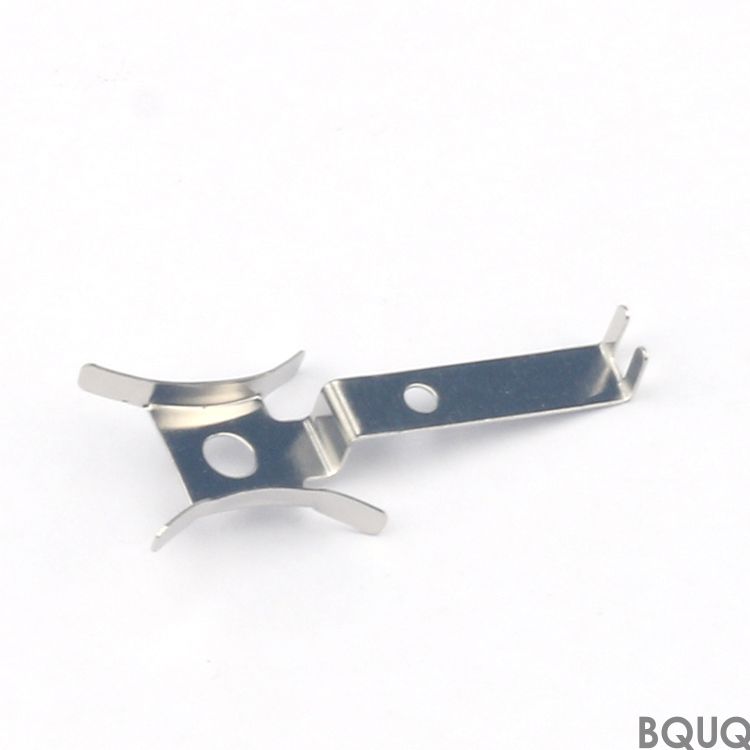
BQUQ Stainless Steel Power Spring Contact Stamped Battery Connector Plate
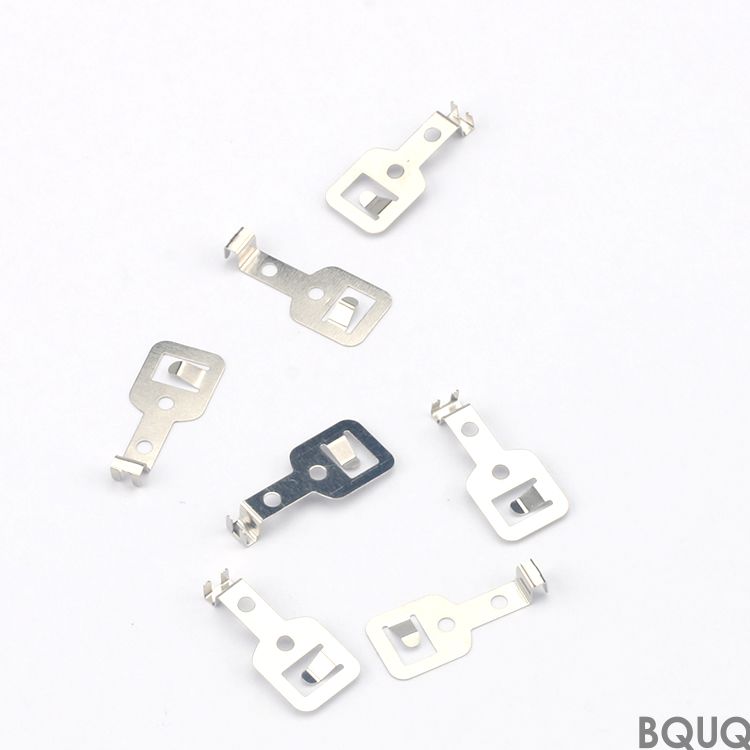
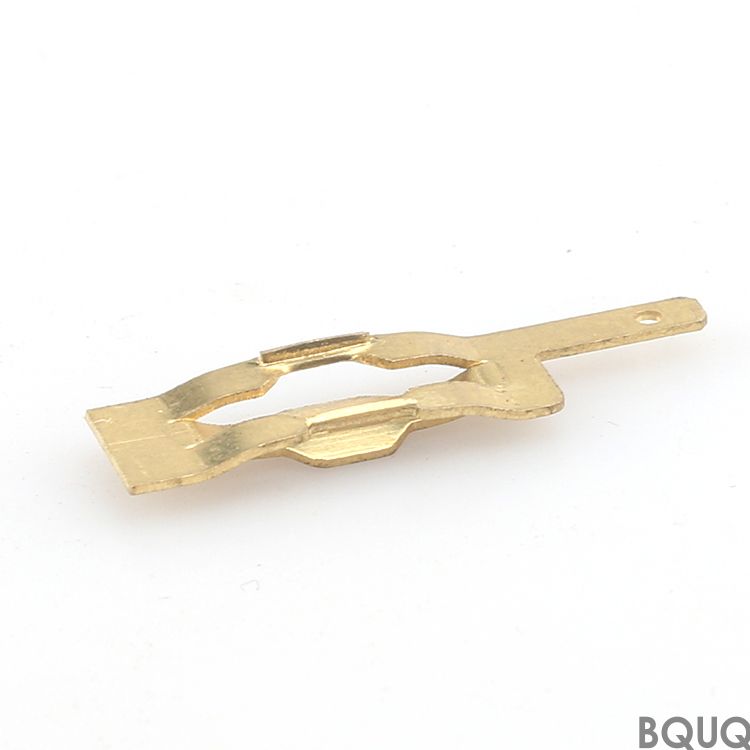
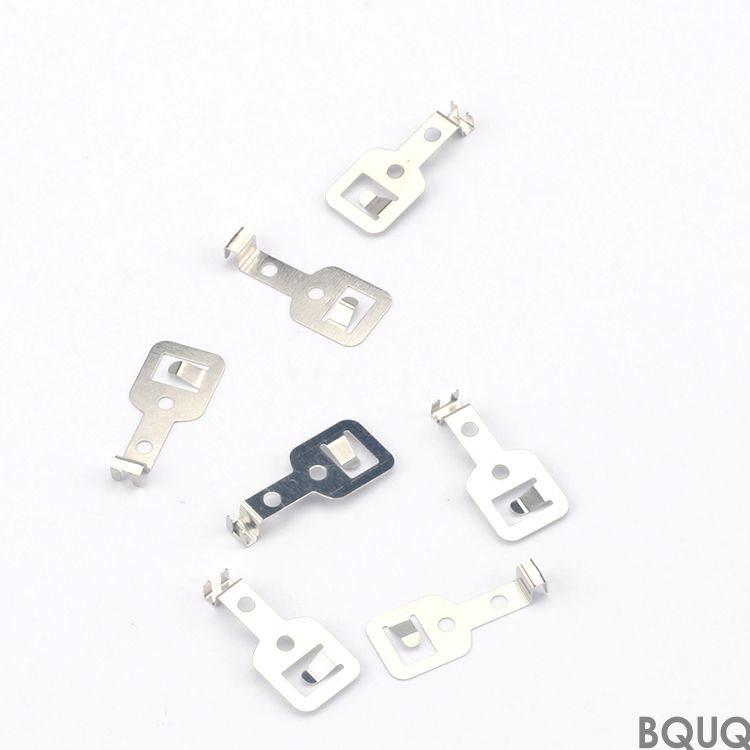
What This Stamped Plate Does Inside Your Battery Pack This is a stainless steel power spring contact plate, produced by precision metal stamping, not machining. It replaces machined copper or brass
Get a Fast Quote for This Part
Send us your drawing / quantity / material — reply within 24h.
What This Stamped Plate Does Inside Your Battery Pack
This is a stainless steel power spring contact plate, produced by precision metal stamping, not machining. It replaces machined copper or brass contacts. The benefit is concrete: you get a flat contact surface with ±0.02 mm tolerance, a spring arm with 0.05 mm runout, and a hardness of 42 HRC after heat treatment. Lead time is 15 days from drawing approval to shipment. That is the entire value proposition — repeatable geometry, no burr, no drift, fast delivery.
The plate is designed for battery packs in power tools, e-bikes, and stationary energy storage. It carries high current through a stamped stainless body while the spring arm maintains constant force on the battery terminal. Unlike a machined block, this stamped part weighs less, costs less per unit, and holds its spring rate after 10,000 cycles.
Why Stainless Steel Instead of Copper or Brass for Spring Contacts
Copper conducts better but it does not spring back. Brass springs fatigue fast. Stainless steel 301 or 304 gives you the elasticity you need in a spring arm while keeping corrosion resistance. For this plate, we use 301 stainless steel in full-hard temper. After stamping, we heat treat to 42 HRC. The result is a contact that holds its shape under repeated deflection.
If your application needs higher conductivity, we can plate the contact surface with silver or gold. But for 90% of battery connectors, bare stainless works. It does not oxidize like copper. It does not deform like brass. The contact resistance stays stable over the life of the battery pack.
Stamping Tolerances We Hold on This Battery Connector Plate
We hold ±0.02 mm on all critical dimensions — the contact pad thickness, the spring arm width, and the mounting hole positions. Non-critical dimensions are ±0.05 mm. The flatness of the contact surface is held to 0.03 mm over the full pad area. Runout of the spring arm tip is 0.05 mm from the datum edge.
These numbers are not theoretical. We measure every batch on a CMM and a profile projector. The stamping die is ground to a 0.005 mm finish. The punch and die clearance is tuned for stainless steel — 8% of material thickness — so you get a clean shear edge without rollover or burr. Burr height is controlled to 0.03 mm max.
Materials and Heat Treatment We Use for This Plate
We stock 301 stainless steel in thicknesses from 0.2 mm to 1.5 mm. The standard temper is full-hard, which gives a base hardness of 38 HRC. After stamping, we heat treat the entire part to 42 HRC. This is a low-temperature stress-relief plus hardening cycle, not a full quench. It preserves the spring property while removing any residual stress from the stamping process.
For high-cycle applications, we offer 17-7 PH stainless steel. This material goes to 47 HRC after precipitation hardening. It is more expensive, but it extends the fatigue life of the spring arm to 50,000 cycles. If you need this, tell us in your RFQ. We will adjust the tooling and the heat treatment schedule accordingly.
Surface Finish and Edge Quality on the Contact Pad
The contact pad is the part that touches the battery terminal. It must be smooth to minimize contact resistance. We achieve Ra 0.4 µm on the pad surface by using a polished die insert. The rest of the part is as-stamped, which is Ra 1.6 µm. This is enough for a spring contact — you do not need a mirror finish everywhere.
Edges are deburred by tumble finishing. This removes the microscopic burr from the stamping shear. Then we passivate the parts to remove any free iron from the surface. The passivation layer is 0.5 to 1 µm thick. It prevents corrosion without affecting the spring rate or the electrical conductivity.
Inspection Before Every Shipment — What We Actually Measure
Every lot gets a full inspection report. We measure: critical dimensions per your drawing, flatness of the contact pad, runout of the spring arm, hardness on a Rockwell tester, and surface finish on a profilometer. We also test spring force on a sample of 5 parts per lot. The test fixture pushes the spring arm down 0.5 mm and measures the force. It must be within ±5% of your specified value.
We keep first-article inspection reports (FAI) for every tool we build. If you need PPAP documents, we provide them at no extra cost. For a precision stamping product, inspection is not a formality — it is the difference between a battery pack that works and one that fails in the field.
Specification
Value
Notes
Material
301 SS (full-hard)
17-7 PH optional
Thickness
0.2–1.5 mm
Per drawing
Hardness
42 HRC
After heat treatment
Critical tolerance
±0.02 mm
CMM verified
Non-critical tolerance
±0.05 mm
Per drawing
Flatness
0.03 mm
Contact pad area
Runout
0.05 mm
Spring arm tip
Surface finish
Ra 0.4 µm
Contact pad only
Burr height
0.03 mm max
Deburred
Lead time
15 days
From drawing approval
MOQ
No MOQ
Prototypes welcome
Why Precision Manufacturing in China Makes Sense for This Part
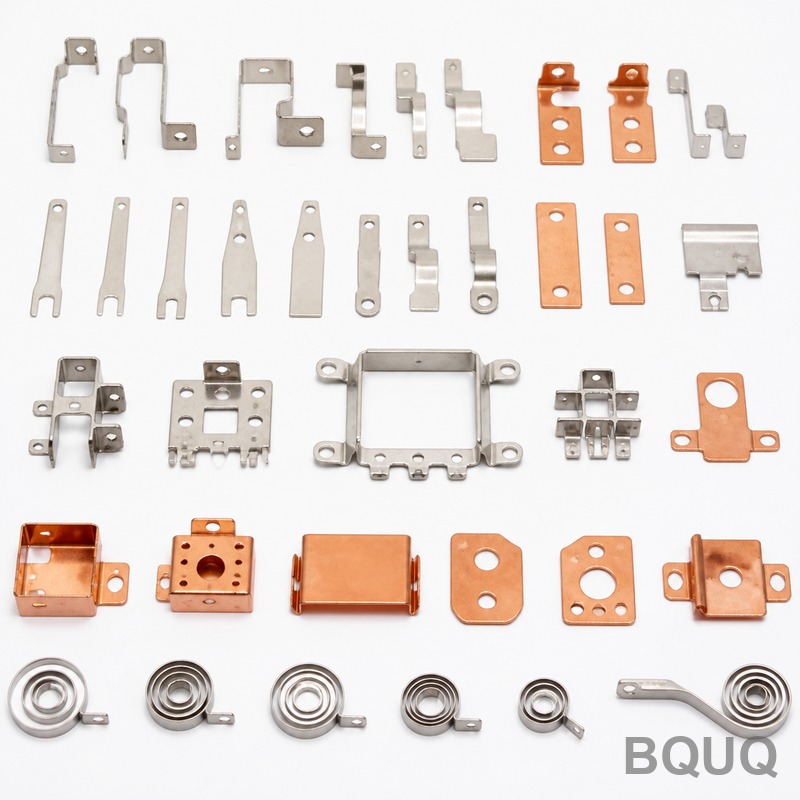
This is a precision manufacturing job. The tooling cost is the same whether you buy 500 or 50,000 parts. By stamping in China at BQUQ, you save 30–40% on unit cost compared to a US or European shop, with the same tolerance and quality. We have done this for 20 years. Our die shop is in-house, so we control the tooling lead time and the tooling quality.
We ship worldwide. For engineers who want to understand how we achieve these tolerances on a stamping press, read our CNC cutting tool selection guide — it explains how we maintain sharp edges on the die inserts. For a deeper look at dimensioning strategy, our CNC machining tolerances guide covers how we convert your GD&T into measurable, achievable values.
Tooling and Prototyping — How We Get You Parts Fast
For prototypes, we do not build a full production die. We use a progressive die with simplified inserts, or we wire-cut the part from strip stock. This gets you functional parts in 5 days. The prototype parts will not have the exact spring rate of the production part, but they will be geometrically identical. You can test fit, form, and electrical contact.
Once you approve the prototype, we build the production die. This takes 20 days for a simple single-station die, or 30 days for a progressive die with 4 stations. The production die is built to 1 million hits. If you need more, we will build a second die set. The die is your tooling — we keep it in our tool room and we never use it for another customer.
What is the minimum order quantity?
No MOQ — we accept prototype orders of 50 pieces and production orders of 1,000 to 1 million pieces.
Can you customize the spring force and the contact pad size?
Yes, we adjust the die geometry and material thickness to hit your exact spring force, pad area, and mounting hole positions.
How do you control quality on high-volume orders?
We do in-process SPC checks every 30 minutes on critical dimensions, plus a final CMM inspection on 5 parts per lot, and we ship a full inspection report with every order.
What is the lead time for a custom stamped battery connector plate?
Prototypes in 5 days, production dies in 20–30 days, and first production parts in 15 days after die approval.
Get a Firm Quote in 12 Hours — Send Your Drawing
Send us your drawing or a PDF with dimensions. We will review the geometry, the material, and the required spring force. Within 12 hours, you get a firm quote with unit price, tooling cost, and delivery date. No vague estimates. No hidden charges. If your drawing needs adjustment for stamping — for example, a radius that is too small or a wall that is too thin — we tell you exactly what to change and why.
Email your drawing to sc@bquq.com or send it via WhatsApp at +86 13713157787. We are in Dongguan, China, and we reply in English within 12 hours. If you are at the design stage, ask us for a DFM review — it is free and it will save you a tooling revision. Whether you need 100 parts for a pilot run or 100,000 for mass production, BQUQ makes your Stainless Steel Power Spring Contact Stamped Battery Connector Plate exactly to spec. Send the drawing today.