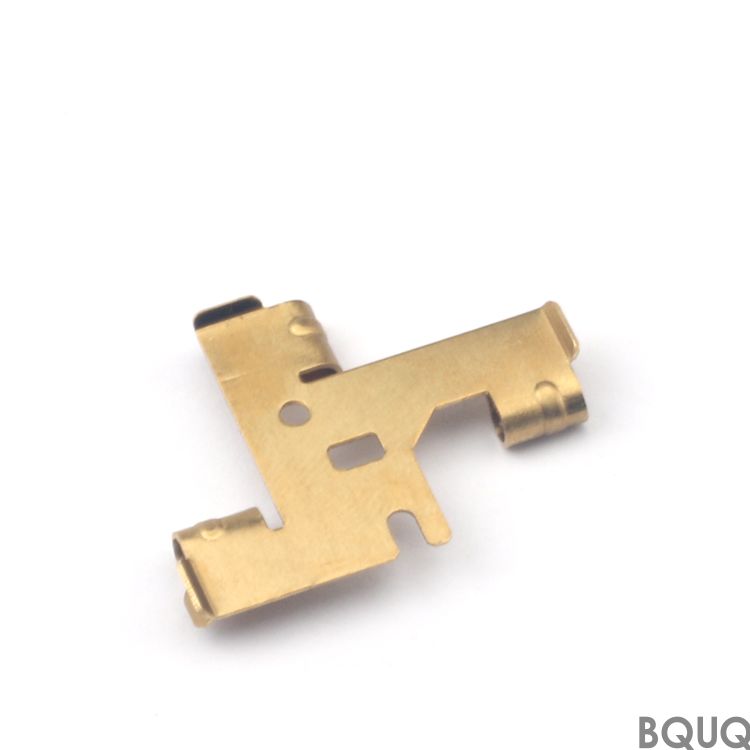
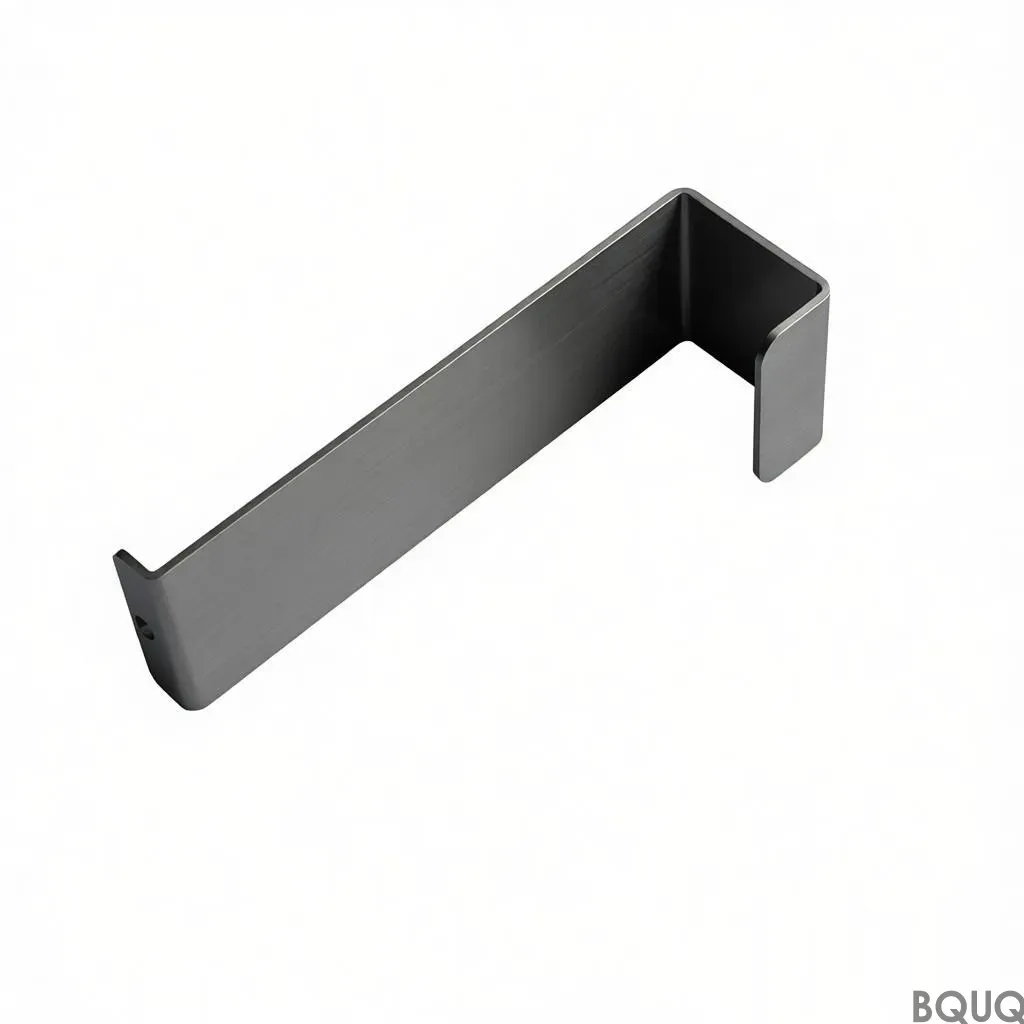
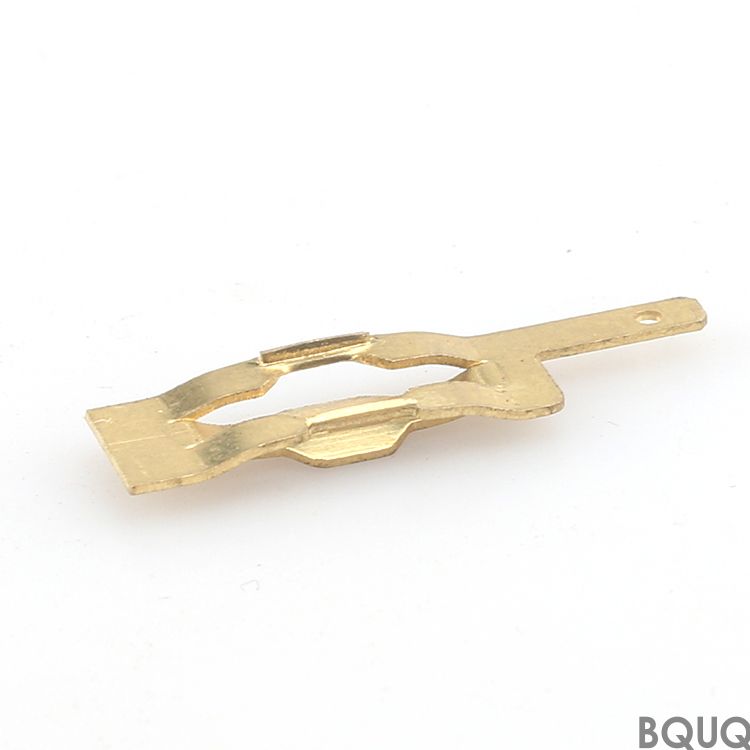
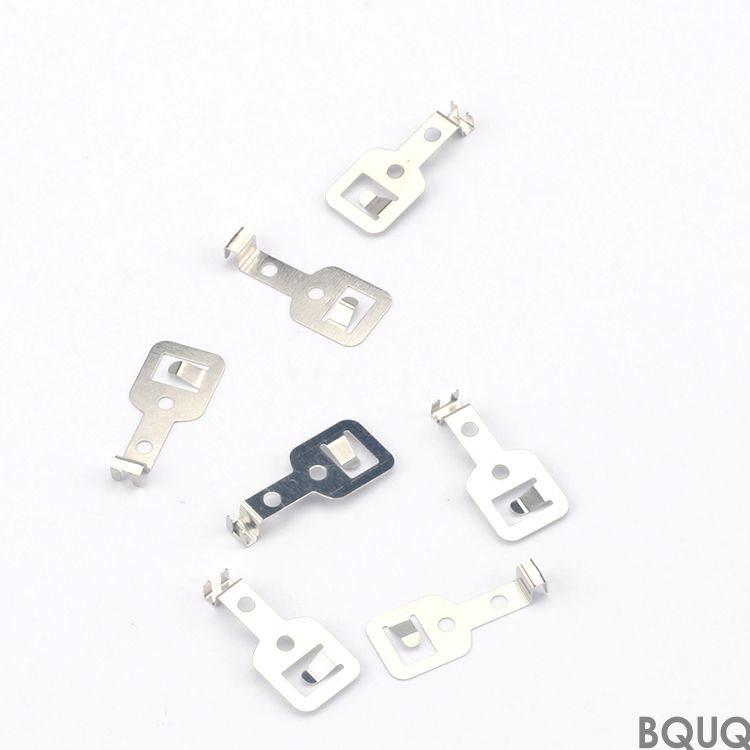
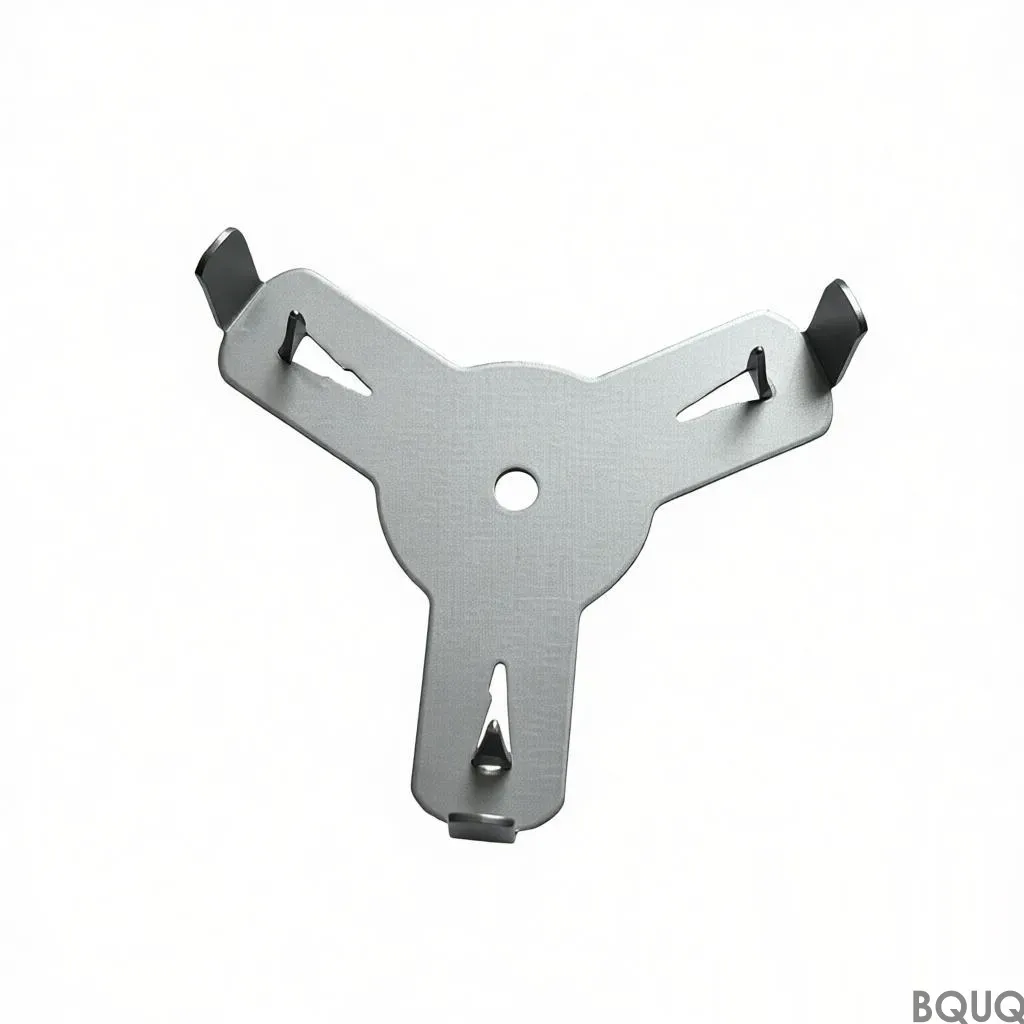
This is a metal stamping shrapnel — a precision-formed spring contact made from high-carbon steel or beryllium copper, used to hold, ground, or conduct in switches, battery contact
China Dongguan Hardware Stamping Parts Manufacturer Shrapnel | BQUQ
This is a metal stamping shrapnel — a precision-formed spring contact made from high-carbon steel or beryllium copper, used to hold, ground, or conduct in switches, battery contacts, and EMI shields.
Get a Fast Quote for This Part
Send us your drawing / quantity / material — reply within 24h.
This is a metal stamping shrapnel — a precision-formed spring contact made from high-carbon steel or beryllium copper, used to hold, ground, or conduct in switches, battery contacts, and EMI shields. We hold flatness to 0.02mm, positional tolerance ±0.01mm, and deliver first articles in 12 days from drawing approval. As a China Dongguan Hardware Stamping Parts Manufacturer Shrapnel, we run 25-ton to 200-ton presses with progressive dies, so you get repeatable hardness of 45–50 HRC without secondary heat treatment delays.
How Progressive Die Stamping Keeps Shrapnel Bends Consistent
Shrapnel parts fail when the bend radius varies — contact force drops, resistance spikes. We use progressive dies with 12 to 18 stations, each step cutting, bending, and coining in one pass. Pilot pins hold strip position to ±0.005mm, so every bend angle stays within 0.5 degrees. For a battery contact shrapnel, that means 0.3N to 0.5N contact force repeatability across 100,000 parts. We also add a laser-engraved lot number on the carrier strip, so you can trace any batch back to its die and press settings.
Materials and Heat Treatment We Use for Shrapnel Contacts
We stock three grades for shrapnel: C5210 phosphor bronze (hardness 180–220 HV), SUS301 stainless steel (full hard, 480 HV), and SK5 high-carbon steel (quenched to 45–50 HRC). For conductive contacts, we plate with 0.4–1.0µm gold over nickel. For spring arms, we temper in a continuous belt furnace at 350°C for 90 minutes — this removes residual stress from bending and prevents cracking after 10,000 cycles. If you need a specific alloy like C17200 beryllium copper, we run it, but note the lead time adds 3 days for material sourcing.
Surface Finish and Burr Control on Stamped Edges
Shrapnel edges must be burr-free — a 0.05mm burr can catch on mating parts or cut wires. We control die clearance at 5–8% of stock thickness, which keeps rollover and burr below 0.03mm. For critical sealing surfaces, we add a micro-grinding pass to achieve Ra 0.4µm. The piecing surface on the punch side is held to Ra 0.8µm, which is standard for stamped contacts. We measure burr height on every first article using a 3D optical profilometer, not a visual check.
Inspection Before Every Shipment: CMM and Hardness Reports
Every shrapnel batch goes through a coordinate measuring machine (CMM) with a 1µm resolution probe. We check the critical bend angle, hole position, and overall length on 5 parts per 10,000. Hardness is verified on a Rockwell tester (scale B or C depending on material) at three points: the spring arm, the base, and the bend zone. We ship a PDF report with each lot, including SPC charts for thickness and spring force. If you order 50,000 parts, we sample 25 parts — that's AQL 0.65 for critical dimensions.
Parameter
Specification
Material options
C5210, SUS301, SK5, C17200
Thickness range
0.08 – 2.0 mm
Hardness (SK5)
45 – 50 HRC
Hardness (SUS301)
480 HV min
Positional tolerance
±0.01 mm
Flatness
0.02 mm over 20 mm length
Burr height
≤ 0.03 mm
Surface finish (critical area)
Ra 0.4 µm
Lead time (first article)
12 days
MOQ
No MOQ — 100 pieces accepted
No MOQ Policy for Prototype Shrapnel Runs
Most Chinese stamping factories set a 10,000-piece minimum. We don't. For a new shrapnel design, we accept 100 to 500 pieces for functional testing. The die cost is the same, but you avoid inventory risk. If you need 50,000 parts later, we keep the die in our tool room for 5 years and can ramp production in 2 weeks. This is ideal for medical device or EV battery applications where you must validate spring force before committing to volume.
Die Maintenance Checklist and Tolerance Guidelines
Our toolroom follows a strict 200,000-stroke maintenance schedule — we replace the punch and die inserts before wear exceeds 0.005mm, not after failure. This is documented in our CNC cutting tool selection guide, which covers how insert grade affects shrapnel edge quality. For your own design, review our CNC machining tolerances guide to see which dims we can hold economically — tight tolerances on every hole add cost, but we can hit ±0.01mm on up to 3 features per part at no extra charge.
Made in China, Precision Manufacturing — What That Means for You
We are a 20-year-old factory in Dongguan, Guangdong, with 15 stamping presses and 40 toolmakers. Our precision manufacturing process is built around Japanese die steels (SKD11) and imported grease — this prevents die galling on thin shrapnel. You get the cost advantage of made in China production without the quality risk. We export to Germany, Japan, and the USA, and our QC team speaks English directly — no agent middleman. Every quote includes a die structure sketch and a tolerance stack-up analysis.
What is the minimum order quantity for shrapnel stamping?
No MOQ — we accept 100 pieces for prototype validation, and volume pricing kicks in above 20,000 pieces.
Can you customize the shrapnel spring force?
Yes, we adjust the bend angle, material thickness, or heat treatment to hit a specific Newton force range, and we verify it with a load tester before shipment.
How do you control quality on high-volume shrapnel orders?
We run 100% dimensional checks on critical features using in-line sensors, plus AQL 0.65 sampling for visual and hardness.
What is the standard lead time for stamped shrapnel parts?
First articles ship in 12 days after drawing approval; production orders of 50,000 pieces ship in 18 days.
Send your drawing for a firm quote within 12 hours. Email sc@bquq.com or WhatsApp +86 13713157787. We'll respond with a die cost estimate, piece price, and a 3D DFM review — no obligation.