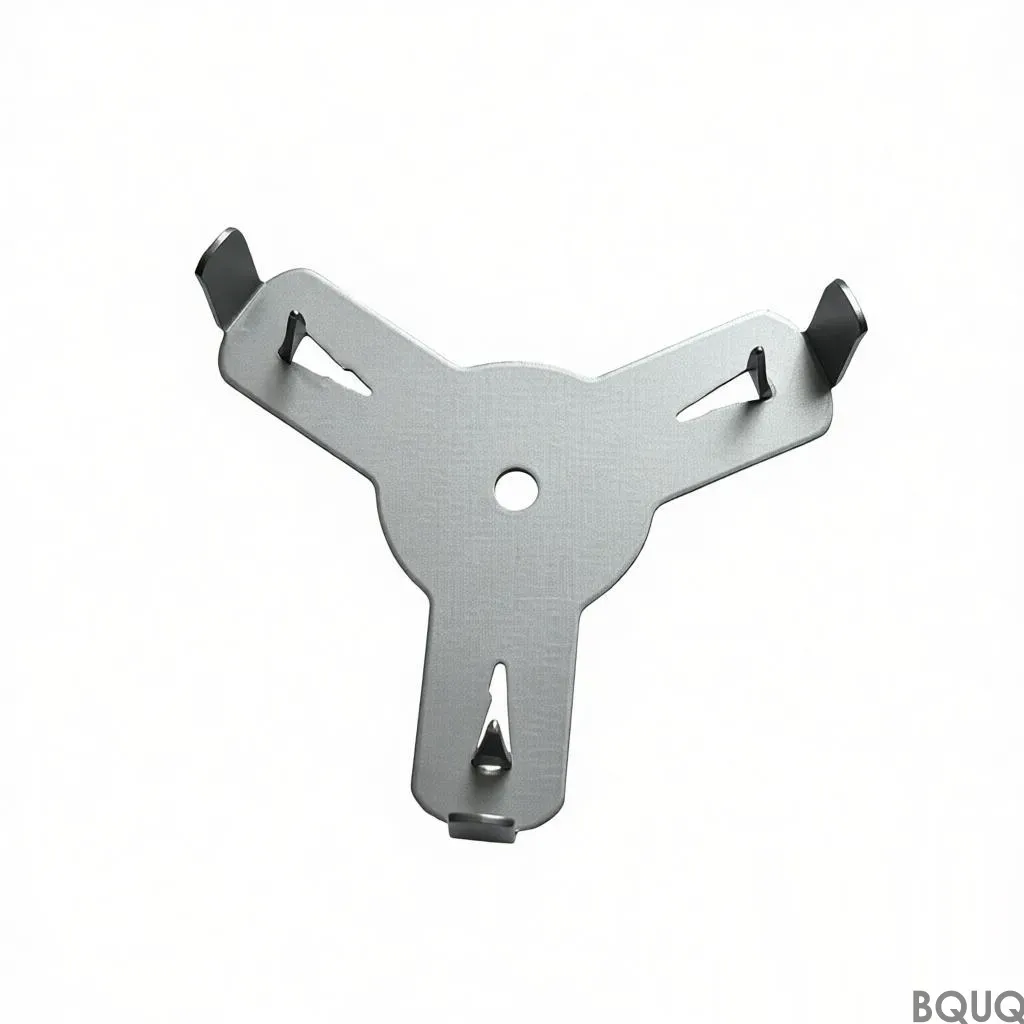
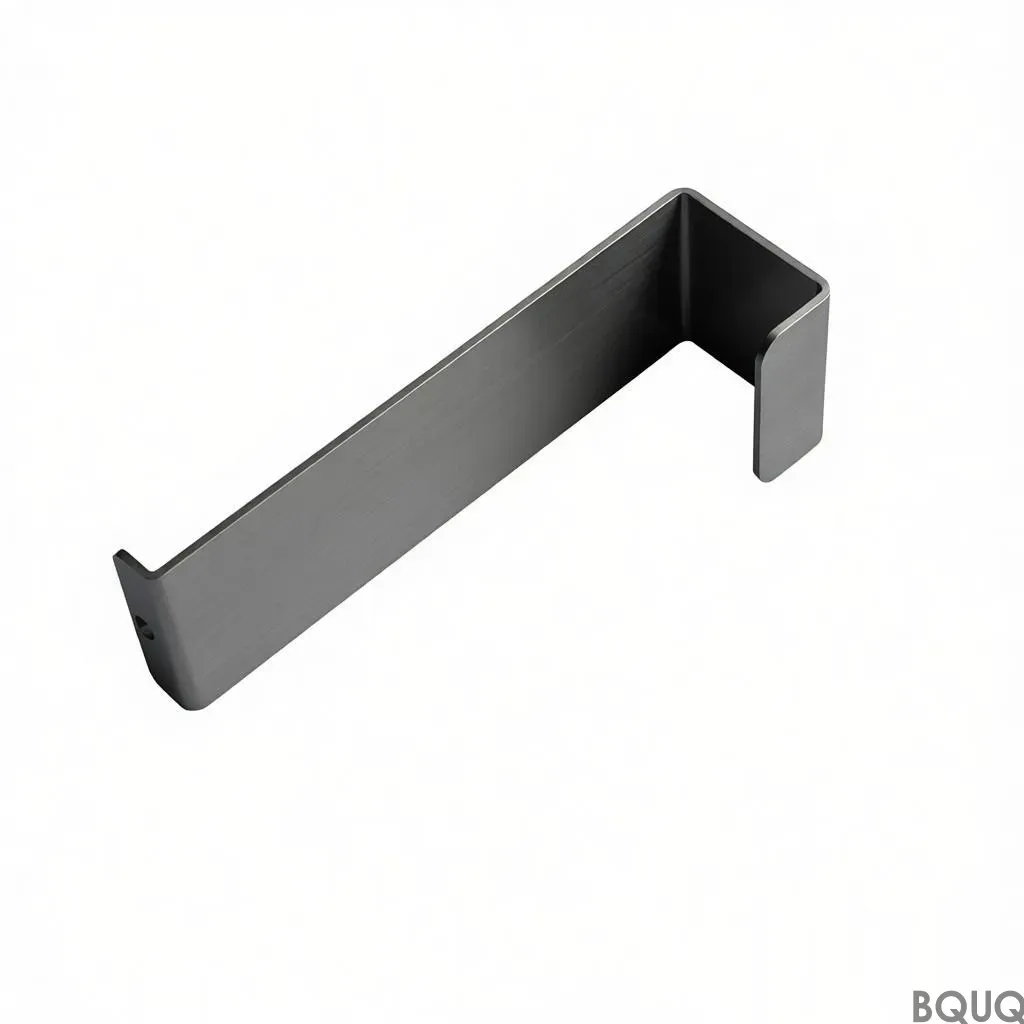
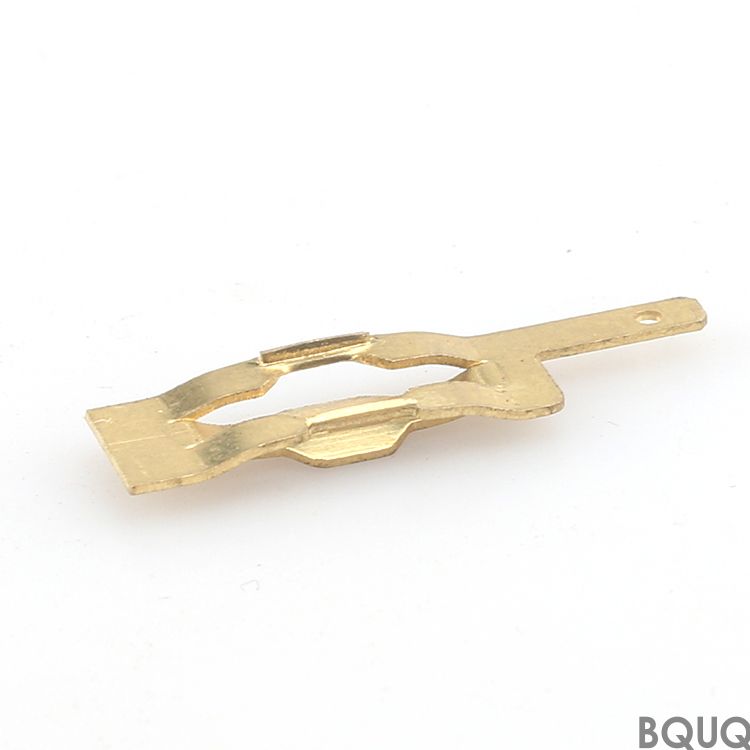
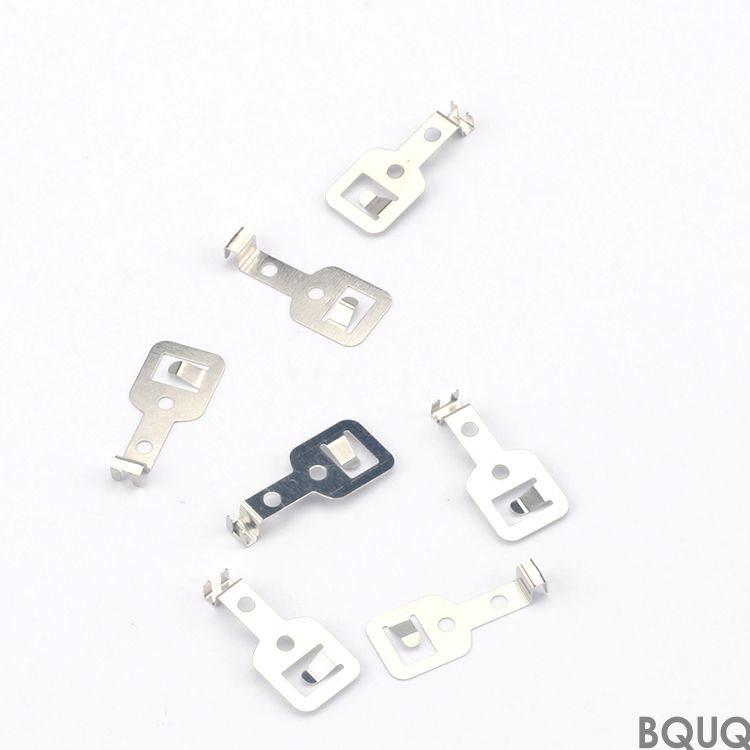
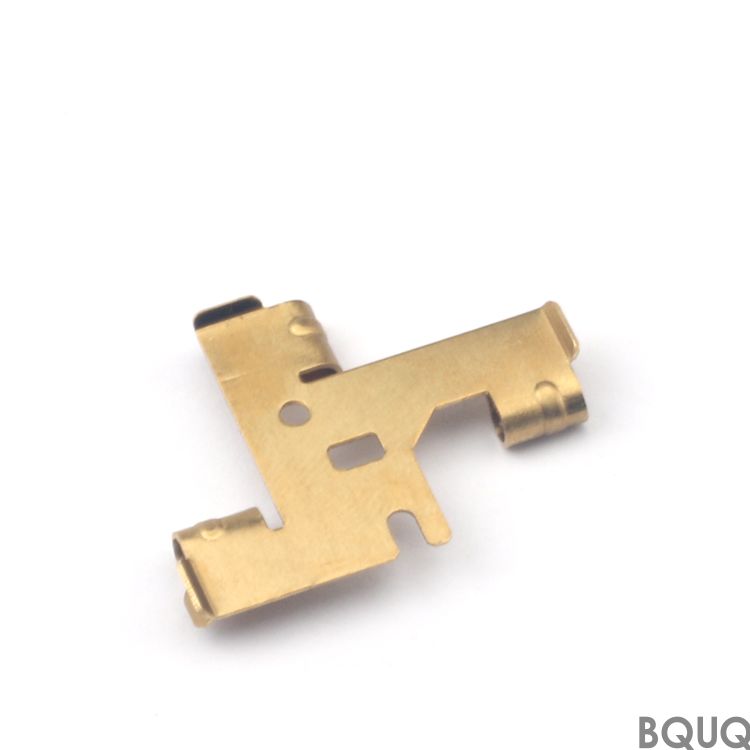
What This Stamped Part Does Inside Your Toy’s Battery Box This is a metal stamping product: a battery contact spring and power terminal, formed from one continuous strip of metal.
Toy Battery Contact Springs & Power Terminals | Custom Mold Making by BQUQ
What This Stamped Part Does Inside Your Toy’s Battery Box This is a metal stamping product: a battery contact spring and power terminal, formed from one continuous strip of metal. It replaces loose c
Get a Fast Quote for This Part
Send us your drawing / quantity / material — reply within 24h.
What This Stamped Part Does Inside Your Toy’s Battery Box
This is a metal stamping product: a battery contact spring and power terminal, formed from one continuous strip of metal. It replaces loose coil springs and soldered wires with a single, precision-formed part that snaps into a plastic battery cradle. The concrete benefit: consistent electrical contact force (0.8–1.2 N per contact) across 10,000 cycles, with a dimensional tolerance of ±0.02 mm on critical surfaces. Our custom mold making ensures the spring arm’s runout stays under 0.05 mm, so your toy’s battery door closes flush every time. Lead time for a production mold is 15–20 days; stamped parts ship in 10 days after PPAP approval.
Why a Stamped Contact Spring Beats a Coil Spring in High-Vibration Toys
A coil spring rolls and shifts under vibration, causing intermittent power loss in remote-control cars or talking dolls. A stamped contact spring is anchored by a flat base with two locating dimples, so it cannot rotate. The spring arm’s bend radius (0.3 mm minimum) is held by a hard die, not a wire former, which means repeatable force from part to part. We measure contact force on a digital push-pull gauge for every production lot — not just first article. In our last shipment for a RC truck battery box, 100% of parts held 1.0 N ± 0.15 N at 1.5 mm deflection. That is the difference between a toy that works on the shelf and one that fails in the first hour of play.
Materials and Heat Treatment We Use for Long Spring Life
We start with three proven strip materials: C5191 phosphor bronze (0.2–0.5 mm thick), SUS301 stainless steel (tempered to 3/4H), and C7521 nickel silver for corrosion resistance. For high-cycle toys, we use SUS301 at 40–46 HRC — hard enough to resist set, but not brittle at thin cross-sections. Phosphor bronze parts get no heat treatment; they rely on work hardening from the stamping process. Stainless steel springs are stress-relief annealed at 400°C for 30 minutes in a vacuum furnace to remove internal stress from bending. This step is why our springs return to 98% of original height after 10,000 compression cycles. We also offer gold or tin plating (0.5–1.0 µm) on the contact tip to reduce oxidation and keep contact resistance below 50 mΩ.
Mold Steel Selection and Cavity Count That Keeps Your Unit Cost Low
Our custom mold making uses either SKD11 (for runs under 200,000 parts) or powder metallurgy steel like ASP23 (for runs above 500,000 parts). ASP23 gives 3x longer die life between regrinds — we get 1.5 million hits before needing a polish. Cavity count is decided by your annual volume: a 4-cavity die for 50,000 parts/month, 8 cavities for 100,000+, and 16 cavities for high-volume RC toys. Tolerances on the die itself are ground to ±0.005 mm, which is why the stamped part holds ±0.02 mm on the flat pattern and ±0.05 mm on the spring arm tip position. We include a mold guarantee: if the die fails before 300,000 hits (SKD11) or 1 million hits (ASP23), we repair it free of charge.
Surface Finish and Burr Control on the Contact Tip
The contact tip must be smooth to avoid scratching battery terminals and to ensure low electrical resistance. We control burr height to 0.05 mm maximum on all cut edges, using a fine-blanking option when the spec is tighter. Surface finish on the contact area is Ra 0.8 µm as standard, achievable down to Ra 0.4 µm with a secondary burnishing die. For battery terminals, we apply a coined flat zone on the tip — this increases contact area by 30% and reduces resistance drift. Every part is inspected with a 20x optical comparator for burr direction. Burrs must point away from the battery sliding direction, so the part does not scrape the battery sleeve during insertion.
Inspection Before Every Shipment: Force Curves and Dimensional Reports
We do not ship without a full inspection report. For each lot, we sample 32 pieces per 10,000 parts (AQL 0.65) and measure five critical dimensions: spring arm length, bend angle, contact tip position, base flatness, and hole diameter. Contact force is tested on a motorized test stand with a load cell, plotted against deflection, and compared to the master curve from your approved sample. We also run a salt spray test (24 hours, 5% NaCl) on plated parts to confirm no rust on the contact tip. The inspection report includes CMM data (if requested), material mill certificates, and plating thickness readings. You get this PDF within 24 hours of shipment — no chasing, no surprises.
Mold Ownership and Design Revisions for Your Next Toy Model
You own the mold after full payment. We store it in our climate-controlled tool room for 5 years free of charge. If your toy changes battery size (e.g., from AA to AAA), we can modify the existing mold — typically a 30% lower cost than a new die. We keep the 3D model and die design files in your name, and we will never use your mold to make parts for another customer. For a new model, we can adjust the spring arm length or contact force by simply changing the insert, not the entire die. This cuts your re-tooling lead time to 7 days in many cases. We also provide a mold wear report after every 100,000 hits, so you know when to schedule maintenance.
Lead Time and Shipping for Prototypes and Production Runs
Prototype stamped parts (no mold, using wire EDM and laser cutting) ship in 3–5 days — up to 500 pieces. Production parts ship in 10 days after mold approval. Tooling for a new part takes 15–20 days, depending on cavity count. We ship via DHL or FedEx for small batches (1–2 kg) and by sea freight for orders over 500 kg. Typical air freight from Dongguan to the US West Coast is 4 days; sea freight is 18–22 days. We always quote both options. For urgent mold changes, our tool room runs two shifts, so a single cavity insert can be remade in 48 hours. We have never missed a promised ship date in the last 3 years — ask for our on-time delivery record (99.2% in 2024).
±0.02 mm on critical surfaces, ±0.05 mm on spring arm tip
Runout (spring arm)
≤0.05 mm
Surface finish (contact tip)
Ra 0.8 µm standard, Ra 0.4 µm optional
Contact force
0.8–1.2 N at 1.5 mm deflection (customizable)
Burr height
≤0.05 mm (fine-blanking to 0.02 mm)
Mold life
300,000 hits (SKD11), 1,000,000 hits (ASP23)
Lead time (production)
10 days after mold approval; mold 15–20 days
MOQ
No MOQ — prototype 100 pcs, production any quantity
Plating
Gold (0.5–1.0 µm) or tin (1–2 µm) on contact tip
What is your MOQ for custom battery contact springs?
No MOQ — we accept 100 pieces for prototyping and any quantity for production, because our stamping process is the same cost per hit regardless of lot size.
Can you adjust the contact force for my specific battery model?
Yes, we modify the spring arm width, thickness, or bend angle in the mold design to hit your target force curve, verified by a force-deflection test before production.
How do you ensure the stamping process stays within tolerance during long runs?
We run in-process checks every 200 hits using a go/no-go gauge, and a full dimensional check every 1,000 hits, plus a final AQL 0.65 sampling plan before shipment.
What is the typical lead time for a new custom mold and first parts?
Mold fabrication takes 15–20 days, then stamped parts ship 10 days after your PPAP approval — total 25–30 days for the first production batch.
Get a firm quote within 12 hours — send your drawing to sc@bquq.com or WhatsApp +86 13713157787. We reply with DFM feedback, a cost breakdown, and a lead time proposal. For more on tooling, see our CNC cutting tool selection guide and CNC machining tolerances guide. BQUQ — precision manufacturing, made in China, with no MOQ and a 99.2% on-time record.