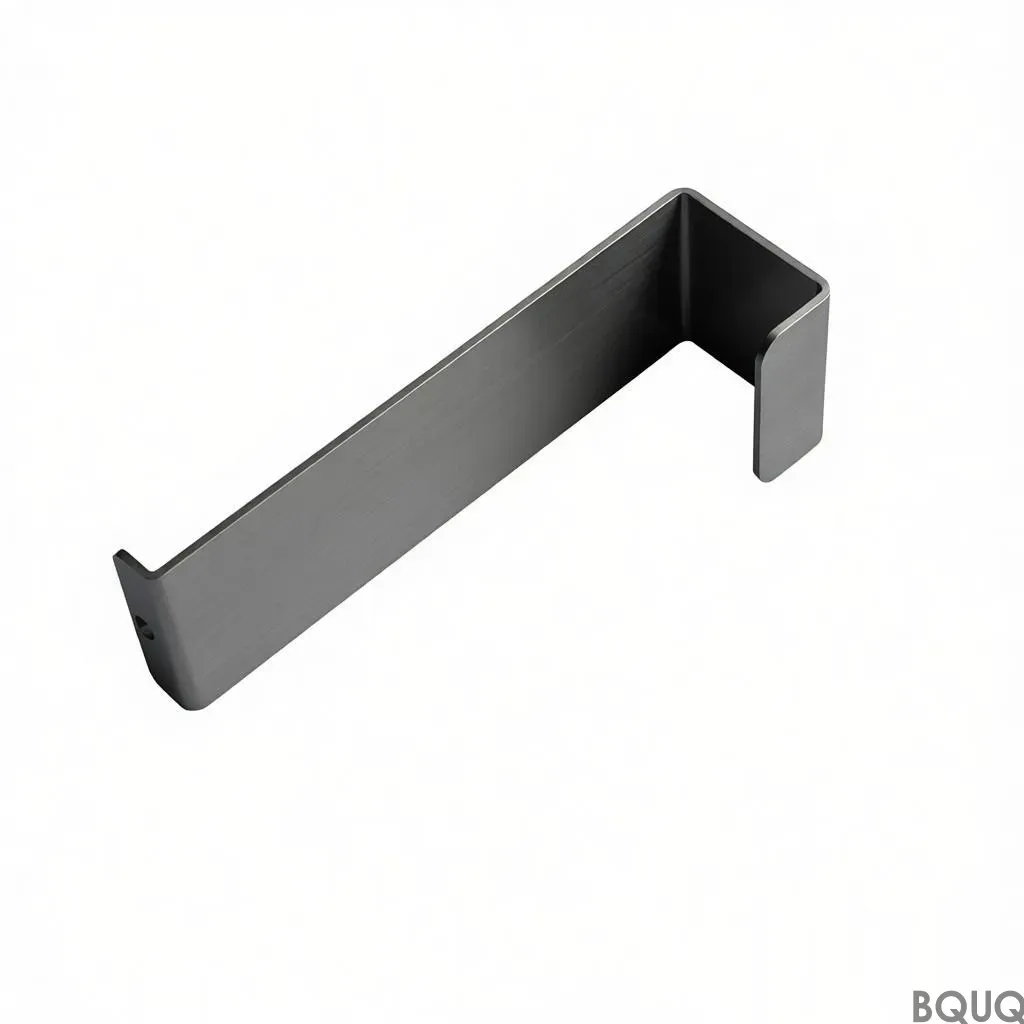
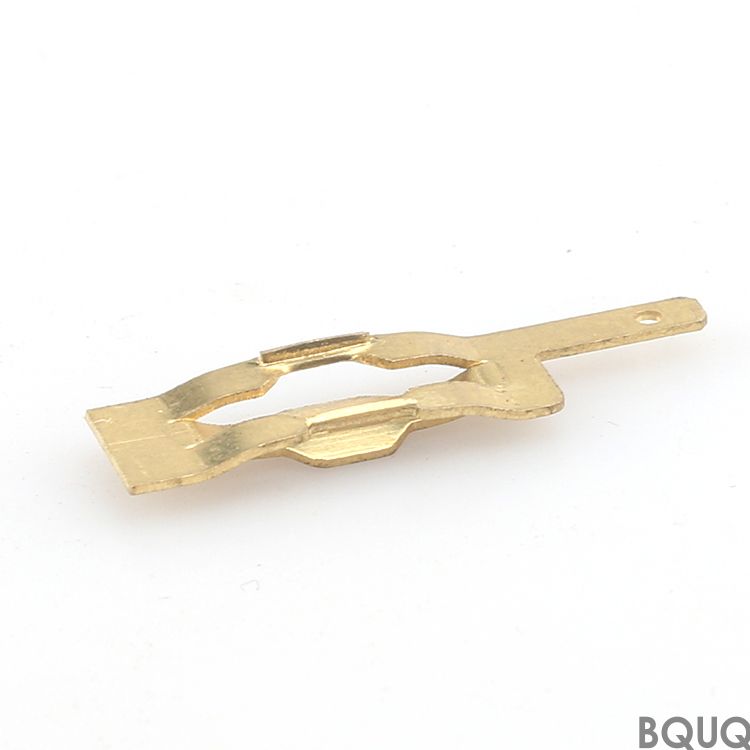
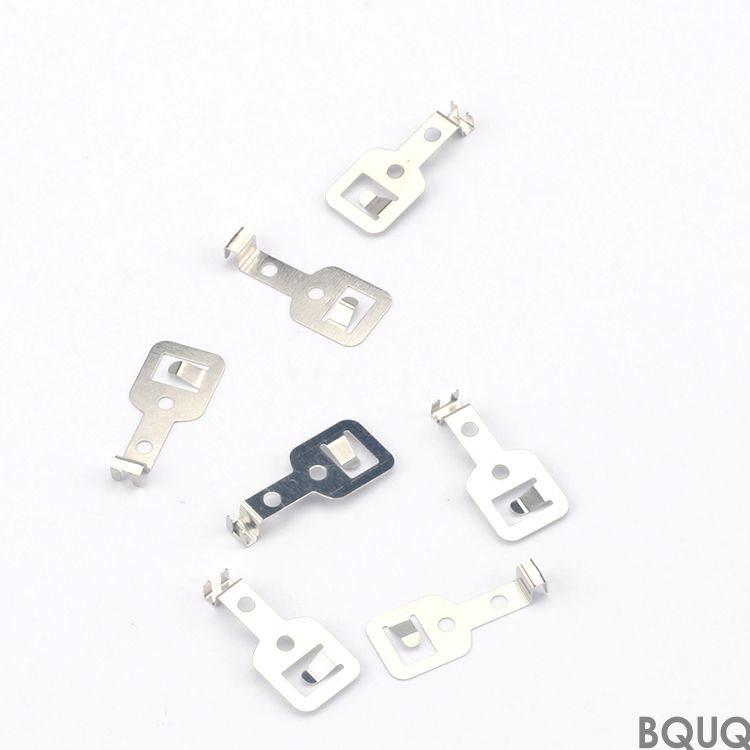
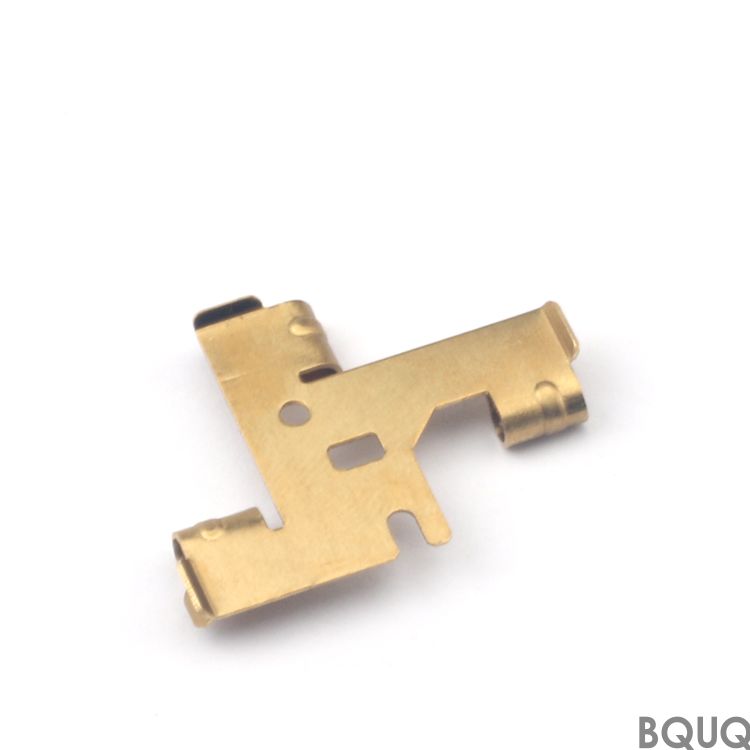
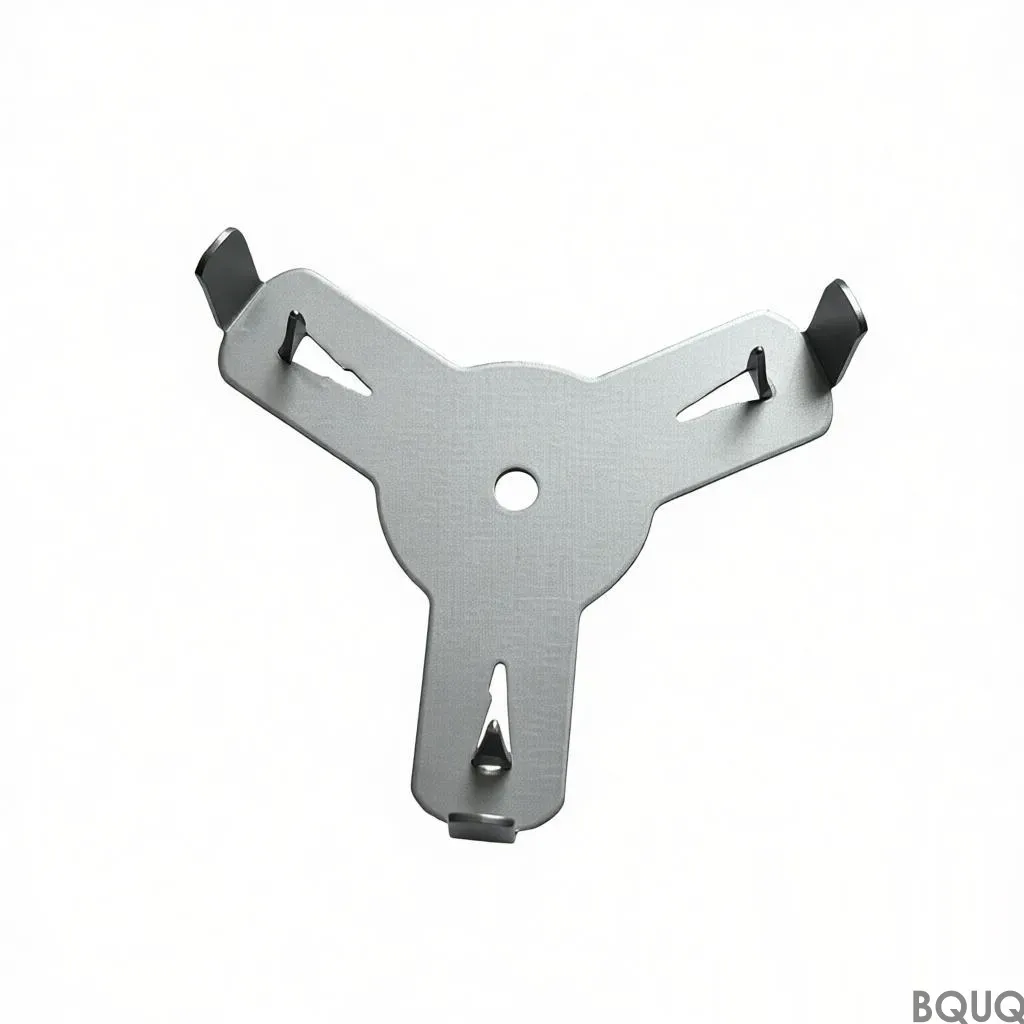
What This Stamped Part Does in Your Toy’s Power Path This is a metal-stamped battery contact spring and power terminal — the small conductive bridge that presses against AA, AAA,
Toy Battery Contact Spring Power Terminal Custom Mold Making | BQUQ
What This Stamped Part Does in Your Toy’s Power Path This is a metal-stamped battery contact spring and power terminal — the small conductive bridge that presses against AA, AAA, or coin cells insid
Get a Fast Quote for This Part
Send us your drawing / quantity / material — reply within 24h.
What This Stamped Part Does in Your Toy’s Power Path
This is a metal-stamped battery contact spring and power terminal — the small conductive bridge that presses against AA, AAA, or coin cells inside toys, remotes, and handheld devices. The spring arm delivers consistent contact force (0.3–0.6N depending on material thickness), while the terminal leg provides a solderable or weldable surface. You get repeatable electrical continuity across 10,000+ insertion cycles without fatigue failure. We hold stamped flatness to ±0.01mm, contact point runout under 0.05mm, and surface finish at Ra 0.4μm on the contact face. Tool steel hardness is 48–52 HRC for the die, so you can run 500,000+ parts before any maintenance.
How We Design the Mold for a Toy Battery Contact Spring That Won’t Creep
Spring contacts fail when the mold produces inconsistent grain flow. We use a progressive die with a minimum bend radius of 0.5× material thickness — not the typical 1.0× — to keep the grain structure aligned along the bend axis. This prevents stress cracking after repeated deflection. For the power terminal leg, we add a coined flat zone on the die to control burr height below 0.03mm. That burr matters: it can scratch battery wrappers and cause short circuits inside your toy housing. We simulate springback in CAD before cutting steel, so the final part angle stays within ±0.5° of your drawing, even for high-yield materials like 301 stainless or phosphor bronze.
Materials and Heat Treatment We Use for Toy Battery Contact Springs
You choose the alloy, we make the mold accordingly. Common options: C5210 phosphor bronze (conductivity 13% IACS, yield strength 420–560 MPa), C17200 beryllium copper (conductivity 22% IACS, yield strength up to 1,200 MPa after precipitation hardening), and 301 stainless steel (conductivity 2.4% IACS, but excellent for spring-back resistance in thin gauges). For nickel-plated contacts, we use 0.8–1.2μm Ni underplate with 0.3–0.5μm Au flash on the contact area — this keeps contact resistance below 20mΩ after 1,000 cycles. The mold core is D2 tool steel hardened to 58–60 HRC, while the punch uses M2 HSS at 62–64 HRC. We never use soft dies for battery contacts because edge wear changes the contact force curve within 50,000 parts.
Inspection Before Every Shipment: Dimensional and Force Testing
Every batch gets a 2.5D optical measurement on the contact point location (X/Y within ±0.02mm) and a digital force gauge test on the spring arm (within ±5% of your specified gram-force at 0.5mm deflection). We also run a 100% visual check under 5× magnification for burrs, scratches, or plating voids — no random sampling. For high-volume orders (over 100k pieces), we include a CMM report on the first article and a capability index (Cpk ≥ 1.33) for the critical bend angle and terminal width. You receive the inspection data sheet with the shipment, not after a request. If you’re doing your own incoming QC, our tolerances are tighter than the drawing — we don’t ship at the limit.
Why Our 15-Day Mold Making Beats Your In-House Tool Room
Custom mold making for a toy battery contact spring usually takes 4–6 weeks at a typical job shop. We finish the die in 15 calendar days for single-stage or two-stage progressive tools, including design approval, wire EDM cutting, grinding, and tryout on our 25-ton high-speed press. The tryout run is 500 parts, all measured, before we ship the mold or start production. If you need the mold only (not parts), we ship the die set with a sample report and a video of the stamping process. For production orders, the first article is ready in 18 days from drawing approval. We’ve done 2,400+ molds since 2004 — most of them for toys, appliances, and automotive electronics, so we know where the tolerance traps are.
Cost Breakdown for Toy Battery Contact Spring Custom Mold Making
Mold price depends on cavity count, material, and feature complexity. A simple single-cavity die for a AAA battery spring (two bends, one coined contact) runs $1,200–$1,800 including tryout. A 4-cavity progressive die with in-die tapping for a power terminal runs $2,800–$4,500. The per-part stamping cost drops as you scale: at 10,000 pieces, expect $0.04–$0.09 per part; at 500,000 pieces, it falls to $0.015–$0.03. There is no MOQ for production — you can order 1,000 pieces after the mold is built. But for mold-only orders, the price is fixed regardless of future part volume. We don’t charge extra for material certification or inspection reports.
0.10 – 0.80 mm (toy battery springs typically 0.15–0.30 mm)
Stamped flatness tolerance
±0.01 mm
Bend angle tolerance
±0.5°
Contact surface finish
Ra 0.4 μm (mirror finish on coined zone)
Contact point runout
≤ 0.05 mm
Mold hardness (D2 tool steel)
48–52 HRC (punch: M2 HSS at 62–64 HRC)
Mold lead time
15 days for standard progressive die (from drawing approval)
First article lead time
18 days (including tryout and CMM report)
Production MOQ
No MOQ (1,000 pieces accepted)
How We Handle Your Drawing Revisions Without Killing the Timeline
Send a PDF or STEP file — we work from both. If you only have a sample part, we reverse-engineer it in 48 hours and send you a 3D model for approval before cutting steel. Revisions during mold making are free if they don’t change the number of stations or material thickness. For example, changing the contact point’s radius from 0.3mm to 0.5mm is a simple electrode edit, no additional cost. Changing from a single spring to a dual-arm design adds one station — we’ll quote the delta within 24 hours. Our engineers flag any geometry that will break during stamping (e.g., a bend radius below 0.3× material thickness) before you pay for the mold. For a deeper look at how cutting parameters affect the die steel, see our CNC cutting tool selection guide — it applies to the mold core machining we do in-house. And if you’re checking our tolerance claims against your own QC, the CNC machining tolerances guide explains how we hit ±0.01mm on thin stamped parts.
What is your MOQ for toy battery contact springs?
No MOQ — you can order 1,000 pieces after the mold is built, and the per-part price stays the same as for 100,000 pieces.
Can you make a custom mold from a physical sample instead of a drawing?
Yes, we reverse-engineer your sample in 48 hours, send a 3D model for approval, and then cut the mold — no drawing required.
How do you ensure the contact force stays consistent across 10,000 cycles?
We use a coined bend zone and control grain flow in the stamping process, then test every batch with a digital force gauge at 0.5mm deflection — you get the data sheet with the shipment.
What is your lead time for a custom mold and first production run?
Mold is ready in 15 days, first article in 18 days; production of 10,000 pieces adds 5–7 working days after your approval of the first article.
Get a Firm Quote Within 12 Hours — Send Your Drawing Today
We respond to every inquiry within 12 hours during China working days (Monday–Saturday, GMT+8). Send your drawing or sample photos to sc@bquq.com — include material, thickness, required force, and quantity if you have them. Or message us on WhatsApp at +86 13713157787 for a faster back-and-forth. We’ll send you a fixed quote with mold cost, per-part price, and lead time — no hidden tooling charges, no surprise shipping fees. This is precision manufacturing from a 20-year Dongguan factory, made in China but with inspection reports you can trust. If your project is urgent, mention “RUSH” in the subject line and we’ll prioritize your quote within 6 hours.