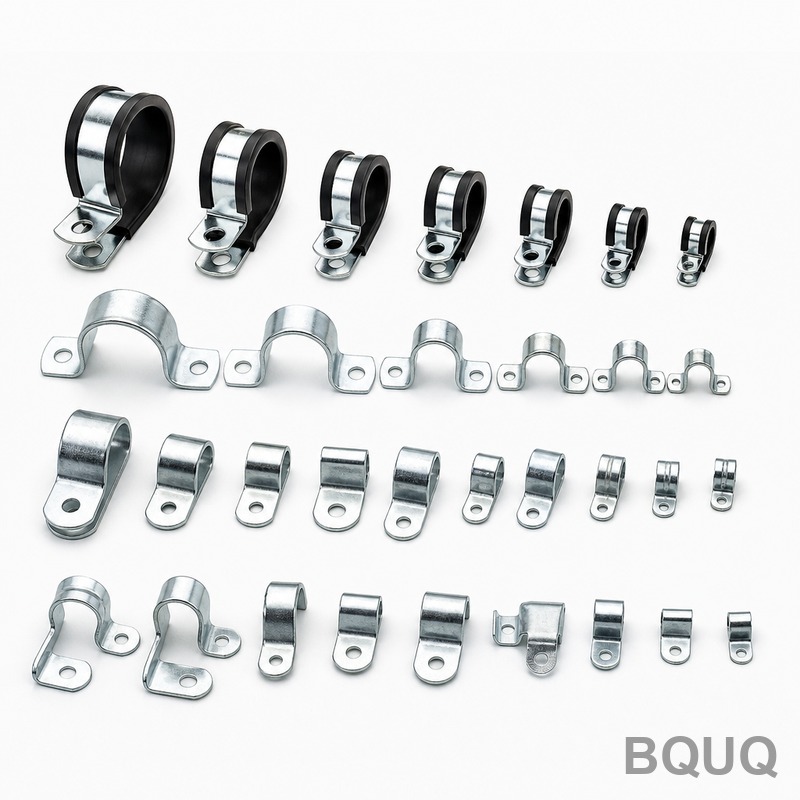
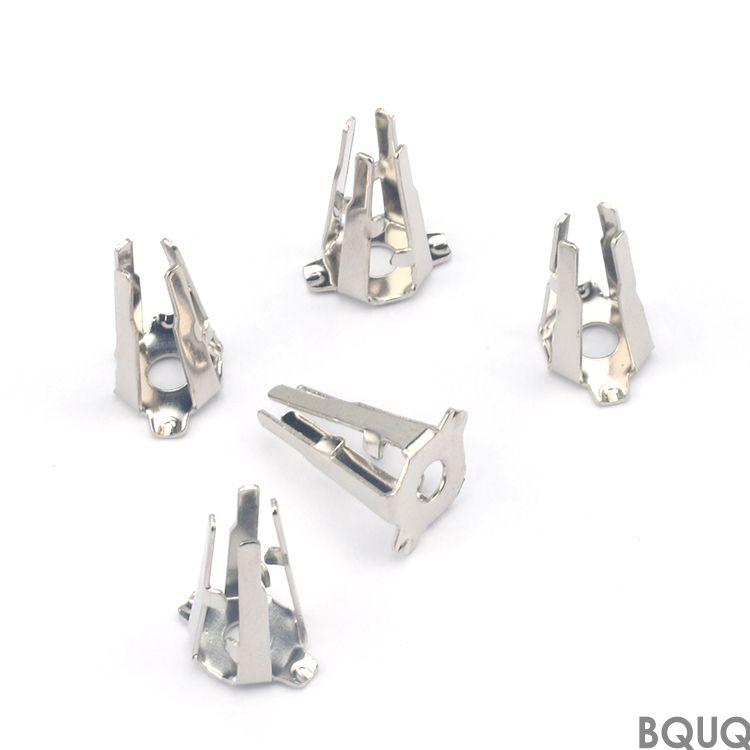
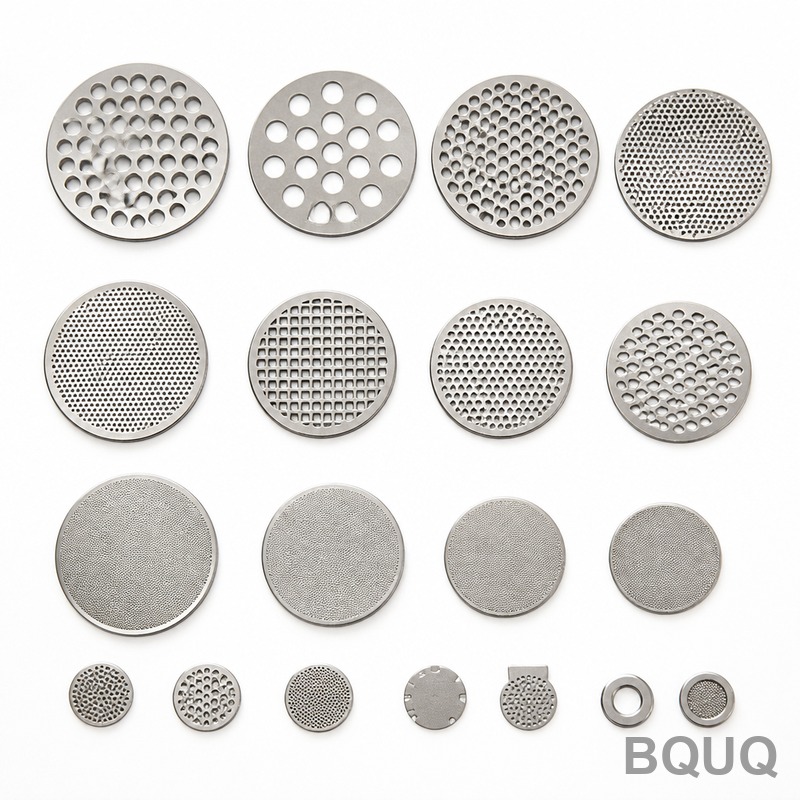
This is the BQUQ Stamped Cable Clamps Conduit Clips Collection — a full range of single-ear, double-ear, and saddle-style clips formed on 25-ton to 80-ton high-speed presses. You g
This is the BQUQ Stamped Cable Clamps Conduit Clips Collection — a full range of single-ear, double-ear, and saddle-style clips formed on 25-ton to 80-ton high-speed presses. You get a consistent flat
Get a Fast Quote for This Part
Send us your drawing / quantity / material — reply within 24h.
This is the BQUQ Stamped Cable Clamps Conduit Clips Collection — a full range of single-ear, double-ear, and saddle-style clips formed on 25-ton to 80-ton high-speed presses. You get a consistent flatness of ±0.05 mm across the mounting hole, a spring-back compensated bend angle of ±0.5°, and a surface finish of Ra 1.6 µm on the outer radius. Typical lead time for standard sizes is 12 working days; custom tooling adds 7 days. All parts are made in China from continuously annealed strip stock, with an optional zinc-nickel plating that passes a 72-hour neutral salt spray test.
How Our Progressive Dies Hold ±0.05 mm Across the Ear
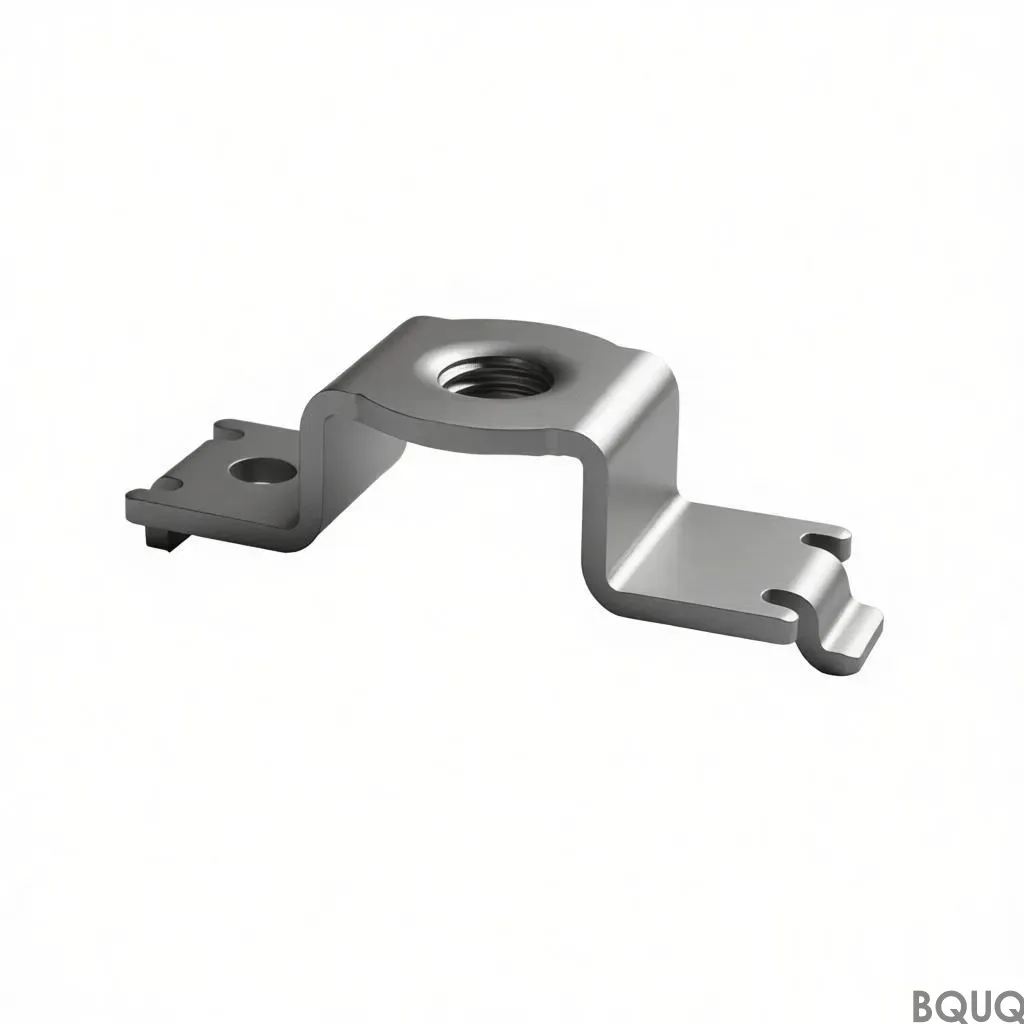
Every clamp in this collection is produced in a single progressive die with 6 to 10 stations. The pilot holes are pierced first, then the ear is formed with a cam-driven lifter that prevents spring-back. This sequence locks the critical ear height to ±0.05 mm, which is what keeps your wire harness from rattling. We do not use secondary bending operations — that is where most stamping shops lose tolerance. Our die maintenance schedule is every 50,000 strokes, with a measured punch wear limit of 0.02 mm before resharpening.
Strip Material Options and Hardness You Can Specify
You are not locked into one metal. We run three base materials for this collection: 304 stainless steel (hardness 80 HRB max), 65Mn spring steel (quenched to 40–45 HRC), and 6061-T6 aluminum (hardness 95 HB). For high-tension conduit clips, the 65Mn option is pre-tempered before stamping, so the final clip retains its grip after 10,000 insertion cycles. If you need electrical conductivity, we offer tinned copper strips (C11000) with a 5 µm tin layer, which keeps contact resistance below 0.5 mΩ.
Surface Finish and Plating That Survives a 72-Hour Salt Spray
Raw stamped edges are deburred to a maximum 0.05 mm radius using a vibratory bowl finisher. Then we apply one of three finishes: clear zinc (8 µm thickness, 72-hour salt spray), yellow zinc (12 µm, 96-hour), or black oxide (for spring steel, 48-hour). For outdoor conduit clips, we recommend the yellow zinc option — it costs $0.02 per part more but doubles the corrosion resistance. We also offer a phosphate base layer before painting if your assembly line uses e-coat.
Grip Force Testing for Every Conduit Clip Lot
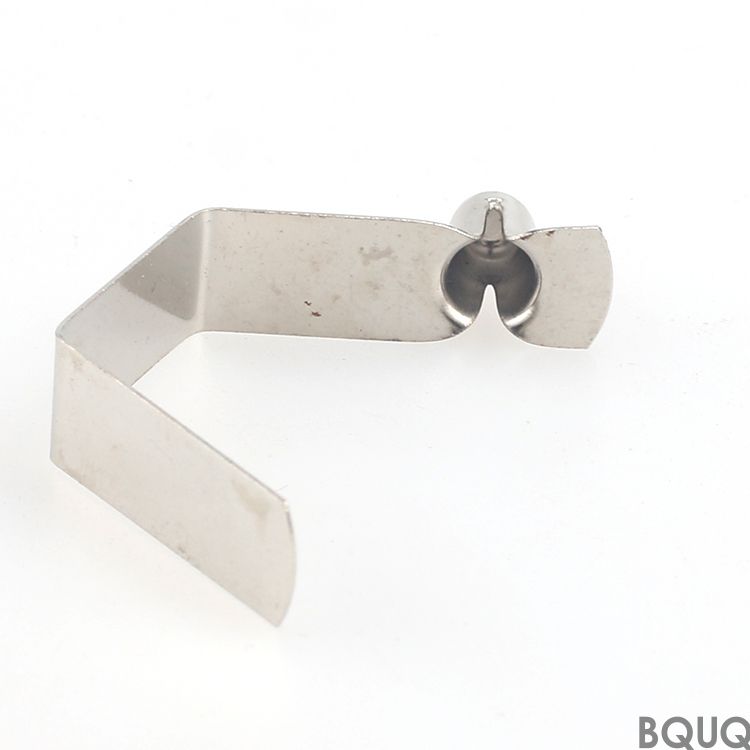
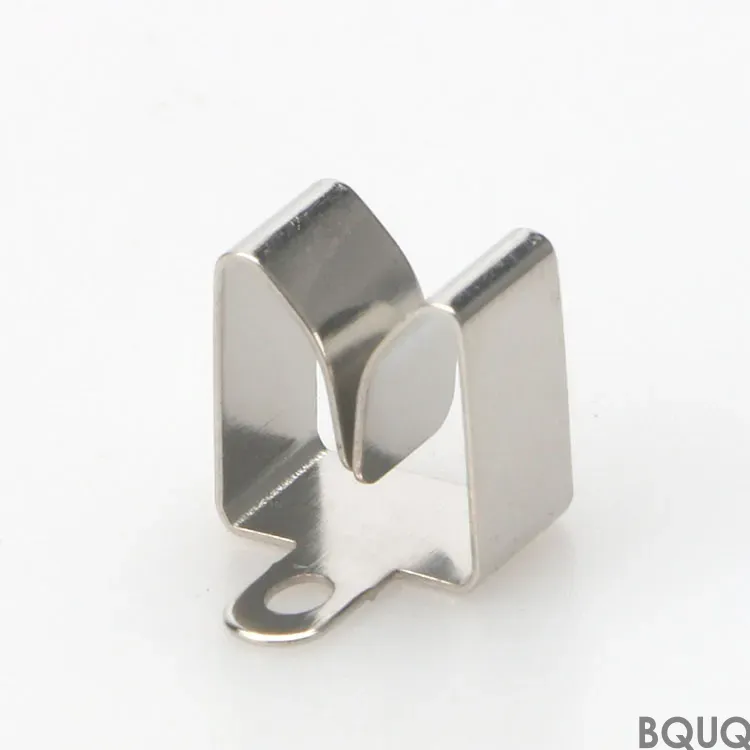
We do not just check dimensions. Every production lot of 1,000 pieces gets a grip force test on a hydraulic pull tester. The clip must hold a 8 mm conduit with a minimum axial pull-out force of 45 N for the standard size, and 70 N for the heavy-duty series. The test fixture records the peak force and the displacement at 0.5 mm. If the average of five samples falls below the spec, the entire lot is rejected and re-worked. This is documented in your lot traceability report.
Packaging and Labeling for Your Assembly Line
Clamps come in anti-static plastic trays with individual cavities — no tangled clips. Each tray holds 200 pieces, and each carton holds 10 trays. We print a label with your part number, our batch number, material heat code, and the date code. If you use automated pick-and-place, we can tape-and-reel the smaller clips (up to 20 mm width) on 330 mm reels with a 4 mm pitch. This eliminates manual sorting on your line.
Inspection Before Every Shipment — Height Gauge and CMM
Before the carton is sealed, we run a final inspection on a coordinate measuring machine (CMM) with a 0.5 µm resolution. We check the ear height, the inner diameter of the conduit opening, and the flatness of the mounting tab. A visual inspection under 2x magnification catches any burrs or die marks. You receive a Certificate of Conformance with every shipment, listing the actual measured values for the batch, not just the nominal values.
How We Compare to a Standard Stamping Shop
Most shops quote a ±0.1 mm tolerance and call it done. We hold ±0.05 mm because our dies are ground with a coordinate grinder, not a surface grinder. We also use a servo press with a 0.01 mm programmable stroke depth, so the bend angle does not drift during a long run. If you need tighter than ±0.05 mm, we can add a coining station — that gets you to ±0.02 mm, but it increases tooling cost by 15%. For a deeper look at how we choose cutting tools for the die work, see our CNC cutting tool selection guide. And if you are designing the mating bracket, review our CNC machining tolerances guide to match your hole positions.
Specification
Value / Range
Materials
304 SS, 65Mn Spring Steel, 6061-T6 Al, C11000 Cu
Standard Sizes (conduit OD)
6 mm, 8 mm, 10 mm, 12 mm, 16 mm, 20 mm
Hardness (65Mn)
40–45 HRC (quenched and tempered)
Tolerance (ear height)
±0.05 mm
Bend angle tolerance
±0.5°
Surface finish (outer radius)
Ra 1.6 µm max
Runout (concentricity of opening)
0.08 mm TIR
Grip force (8 mm conduit)
45 N min (standard), 70 N (heavy-duty)
Lead time (standard size)
12 working days
Custom tooling lead time
+7 working days
MOQ
No MOQ — sample orders accepted
Plating options
Clear zinc, yellow zinc, black oxide, tin
What Is the MOQ for Custom Sizes?
There is no MOQ — we will stamp 100 pieces for your prototype test and 10,000 for production at the same unit price per 1,000.
Can You Change the Ear Width or Hole Diameter?
Yes, any dimension on the drawing can be modified, but the die insert must be re-ground — this takes 7 days and costs $180 per insert.
How Do You Ensure the Grip Force Is Consistent?
We sample five clips per 1,000 and run a pull test; if the force drops below spec, the lot is rejected and the die is inspected for wear.
What Is Your Lead Time for a Repeat Order?
Repeat orders with no drawing changes ship in 10 working days, and we hold your die set in our toolroom for up to 5 years.
Send your drawing for a firm quote within 12 hours. Email sc@bquq.com or WhatsApp +86 13713157787. Attach a PDF or STEP file — our engineers will confirm the die stations and plating cost before you commit.