BQUQ Cnc Machined Agricultural Machinery Parts – Precision, No MOQ
What These Parts Are and the Hard Numbers That Matter These are CNC-machined components for harvesters, planters, sprayers, and soil tillage equipment — brackets, hubs, sprockets, shafts, and linkag
Get a Fast Quote for This Part
Send us your drawing / quantity / material — reply within 24h.
What These Parts Are and the Hard Numbers That Matter
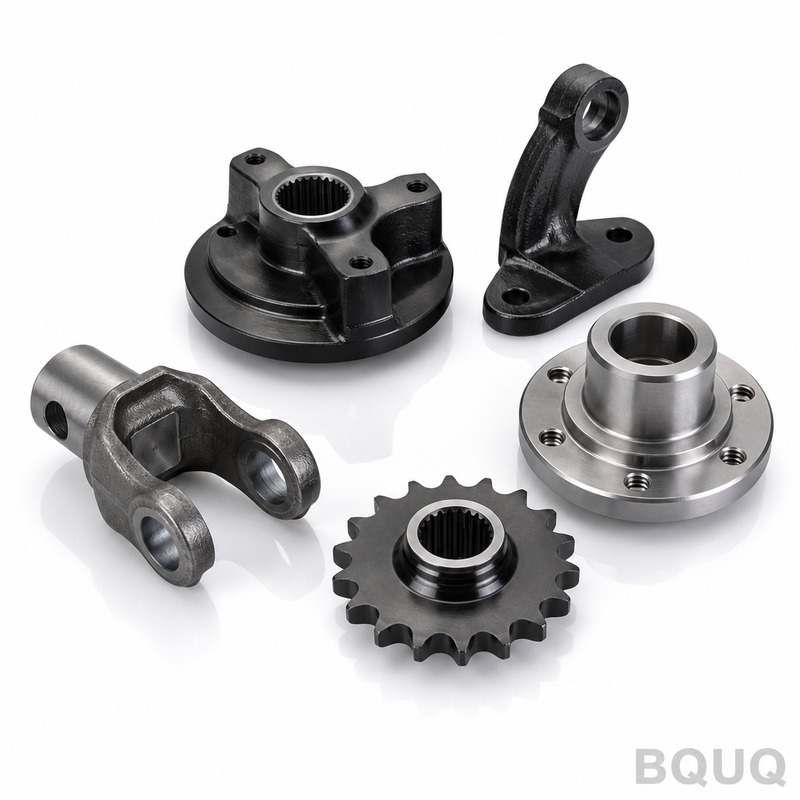
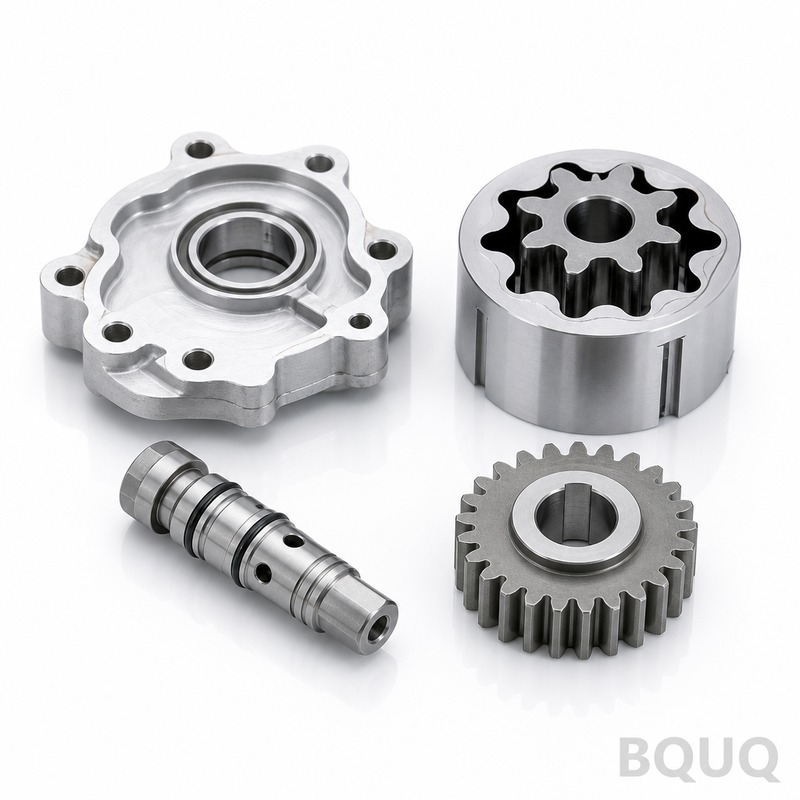
These are CNC-machined components for harvesters, planters, sprayers, and soil tillage equipment — brackets, hubs, sprockets, shafts, and linkage arms. You get ±0.005 mm positional tolerance, 0.01 mm runout on cylindrical features, and surface finish down to Ra 0.8 µm. Material hardness reaches 45 HRC after heat treatment. From drawing to shipment, standard lead time is 5 working days for prototypes, 15 for production runs. This is precision manufacturing, made in China, with no MOQ — order one piece or ten thousand.
Why Your Planter Linkage Arms Need 0.01 mm Runout
Planter linkage arms oscillate thousands of times per season. If the bore runout exceeds 0.01 mm, the bushing wears unevenly — you get slop in the row unit, seed depth varies by 3-5 mm, and yield drops. We machine these arms on 4-axis CNC mills, then check runout on a dial indicator at three points along the bore. We hold that 0.01 mm spec even on hardened steel parts, not just soft aluminum. That’s the difference between a part that lasts 2,000 acres and one that lasts 10,000.
Materials and Heat Treatment We Use for Tillage and Harvest Duty
We start with 42CrMo4 or 4140 steel for shafts and hubs, and 6061-T6 aluminum for lightweight brackets on sprayer booms. For wear parts like tine holders, we use 65Mn spring steel, hardened to 45-50 HRC. Heat treatment is done in-house with vacuum furnaces — no scale, no decarb, no distortion. We also offer electroless nickel plating (0.01 mm thickness) for parts exposed to fertilizer and pesticide, which corrode standard zinc finishes in under 300 hours of salt spray.
How We Machine Thin-Walled Sprayer Boom Brackets Without Warping
Sprayer boom brackets are often 2 mm wall thickness in 6061-T6. Standard machining heats the part, causing distortion of 0.05 mm or more. Our solution: we rough at 8,000 RPM with 30% radial engagement, then let the part cool for 30 minutes in the fixture, then finish at 12,000 RPM with a 0.2 mm depth of cut. This two-step process holds flatness to 0.02 mm across 150 mm length. We documented this method in our CNC cutting tool selection guide — different tool geometries for roughing vs. finishing are key to preventing heat buildup.
Inspection Before Every Shipment — Not Just a Random Sample
Every agricultural part gets a CMM report, not a spot check. We measure critical dimensions on a Zeiss CMM with 0.001 mm resolution. For thread positions, we use a thread gauge. For hardness, we test on a Rockwell tester at three locations. We photograph each part against a calibrated grid for reference. You get a PDF report with batch number, date, and operator stamp. If a dimension is out of spec, the part is scrapped — no rework, because rework changes grain structure and residual stress.
Batch Sizes and Lead Times — From One Prototype to 50,000 Units
No MOQ is not a marketing line. We run a single prototype for a farmer-inventor testing a new coulter design, and we run 50,000-unit annual contracts for OEMs. For prototypes, lead time is 3-5 days — we rush because you need to test before planting season. For production, we quote 15 working days, but we’ve shipped 20,000 pieces in 10 days when a client’s harvest window moved up. We keep 2,000 kg of 4140 steel and 500 kg of 6061-T6 in stock at all times.
Surface Finish and Coating Options for Corrosive Farm Environments
Ra 0.8 µm is standard for sealing surfaces. For shaft ends that run in grease-packed bearings, we go to Ra 0.4 µm — this reduces friction by 15% and extends seal life. Coatings: clear anodize (8-12 µm) for aluminum, black oxide for steel (anti-galling), and zinc-nickel (15 µm) for high-salt areas. We also offer Teflon-impregnated anodize for parts that slide against soil, which reduces drag and wear by 30% compared to bare aluminum.
Parts We’ve Machined Recently — Real Examples
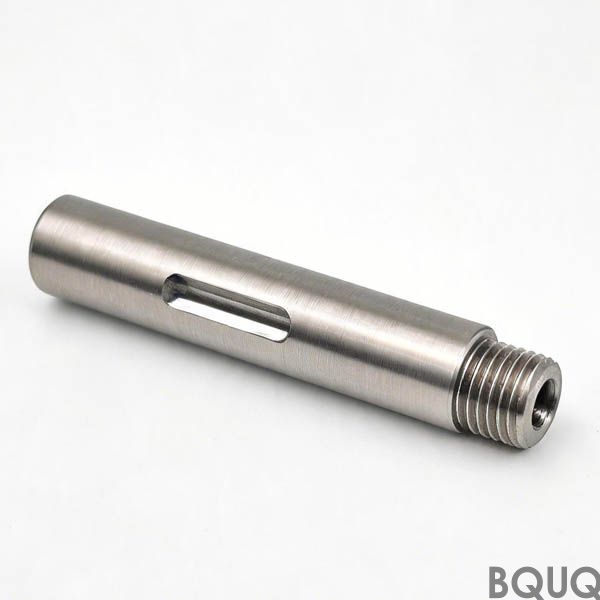
Last month, we shipped 1,200 harvester feeder house drive sprockets in 4140, 40 HRC, with 0.008 mm bore tolerance. Currently, we’re machining 300 sprayer boom hinge pins — 25 mm diameter, 180 mm long, with a 0.01 mm straightness spec. We also did a custom run of 50 planter row cleaner arms in 65Mn, hardened to 48 HRC, with a 0.02 mm flatness on the mounting face. All passed CMM inspection. For tolerance definitions and what you can realistically specify, read our CNC machining tolerances guide before you finalize your drawing.
| Specification | Value | Notes | | --- | --- | --- | | Material | 4140, 42CrMo4, 65Mn, 6061-T6, 7075-T6 | Also 303/304 SS, brass, POM | | Hardness | 25-50 HRC | As-tempered, case-hardened, or thru-hardened | | Dimensional tolerance | ±0.005 mm | On machined bores and critical faces | | Runout | 0.01 mm | On cylindrical surfaces, CMM verified | | Surface finish | Ra 0.4 – 1.6 µm | Ra 0.4 for sealing, Ra 0.8 standard | | Flatness | 0.02 mm / 150 mm | For thin-wall brackets | | Threads | M2 – M30, UNC, UNF | Class 2A/2B, thread gauged | | Max part size | 800 x 500 x 400 mm | Larger via segmented welding | | Lead time | 3-5 days prototype, 15 days production | Rush available | | MOQ | 1 piece | No MOQ, always | | Coating | Anodize, black oxide, zinc-nickel, electroless Ni | Salt spray 300+ hrs |
Is there really no MOQ for Cnc Machined Agricultural Machinery Parts?
Yes, zero minimum — we machine one prototype or one production piece at the same per-unit quality, just with a slightly higher setup cost for single units.
Can you match our existing part number’s dimensions exactly?
Send the drawing or a sample part — we’ll reverse-engineer it with our CMM and match all critical dimensions, threads, and surface finish within the tolerances listed above.
How do you handle quality control for a batch of 5,000 parts?
We do first-article inspection on the first piece, then in-process checks every 50 pieces, and final CMM inspection on 5% of the batch, with full traceability to the heat number and operator.
What is the fastest lead time if I need parts in 3 days?
For prototypes under 10 pieces, we can machine and ship in 3 days using our express lane — this requires a clean 2D drawing and standard material from our stock.
Send your drawing for a firm quote within 12 hours — we’ll confirm material, tolerance, coating, and exact price. Email sc@bquq.com or WhatsApp +86 13713157787. No MOQ, precision manufacturing, made in China, and your parts shipped with a full CMM report.
Straight answers from the factory, not a sales brochure.
How do I get a quote for this part?
Send your drawing (STEP, IGES, DWG, DXF or PDF) with quantity and target material to sc@bquq.com or WhatsApp +86 137 1315 7787. Our engineers review the drawing and reply with price, lead time and tooling cost.
What is your MOQ?
We do not set a fixed MOQ. The minimum is decided per part and per process, so tell us your target quantity and we quote against it. Small trial batches are accepted for new parts.
What is the lead time?
Lead time is agreed per order, based on the date you need, the quantity, the material and whether tooling is required. Send your target date with the drawing and we confirm what is achievable before you commit.
What tolerance can you hold?
CNC machining holds ±0.005 mm. Stamping, spring and extrusion parts are made to the tolerances marked on your drawing, and we confirm achievable values at quotation so there are no surprises at inspection.
Can you manufacture parts to my drawing?
Yes. Every order is made to the customer drawing or sample. We run CNC machining, metal stamping, spring coiling and aluminium heat sink extrusion in-house in Dongguan, so one supplier covers the whole part.
STEP, IGES, DWG, DXF and PDF. A 2D drawing with tolerances and surface finish requirements is preferred alongside the 3D model. Hand sketches can be quoted after our engineers redraw them.
How is quality controlled?
Inspection runs through the process, not only at the end: first article approval, in-process checks and a final report per batch, measured with CMM and optical equipment. Material certificates are available on request.
Where is the factory and do you ship worldwide?
Our factory is in Dongguan, Guangdong, China, operating since 2005. We ship worldwide by express, air and sea, and work with the forwarder nominated by the buyer.