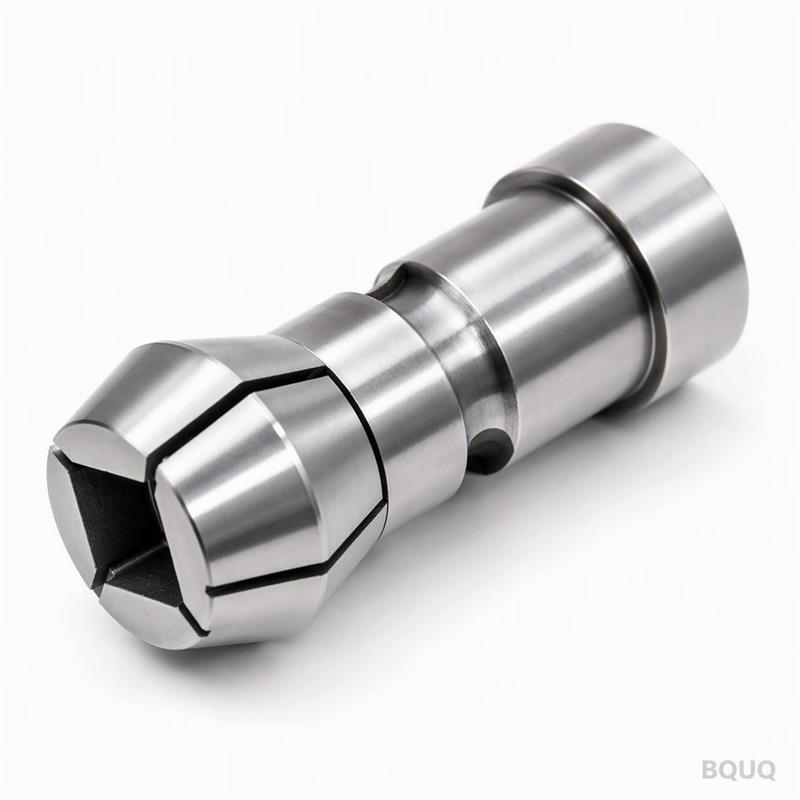
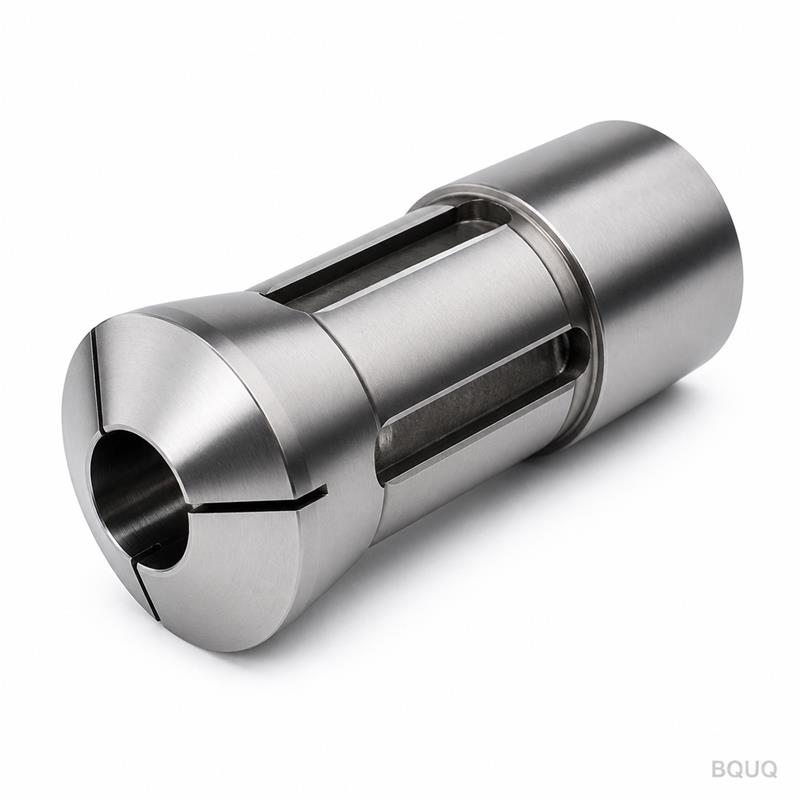
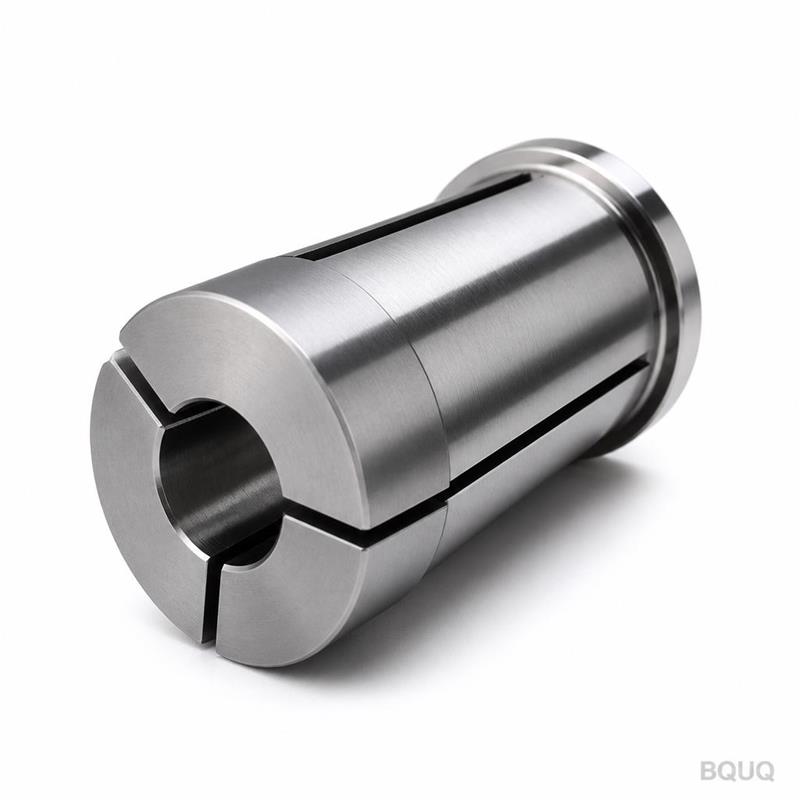
What a 36 Type Collet Does Inside Your Auto Lathe Spindle This is a rear-closeup collet for 36-type auto lathes (Swiss-type and sliding-headstock machines). It grips bar stock from
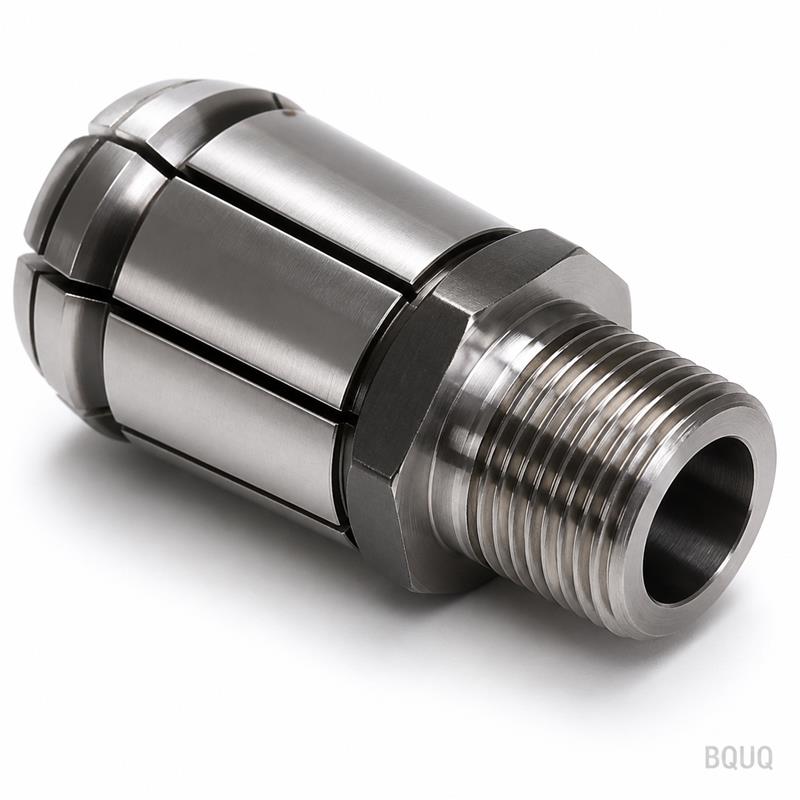
BQUQ CNC Machined Auto Lathe 36 Type Collet External Thread Rear Closeup
What a 36 Type Collet Does Inside Your Auto Lathe Spindle This is a rear-closeup collet for 36-type auto lathes (Swiss-type and sliding-headstock machines). It grips bar stock from the rear of the spi
Get a Fast Quote for This Part
Send us your drawing / quantity / material — reply within 24h.
What a 36 Type Collet Does Inside Your Auto Lathe Spindle
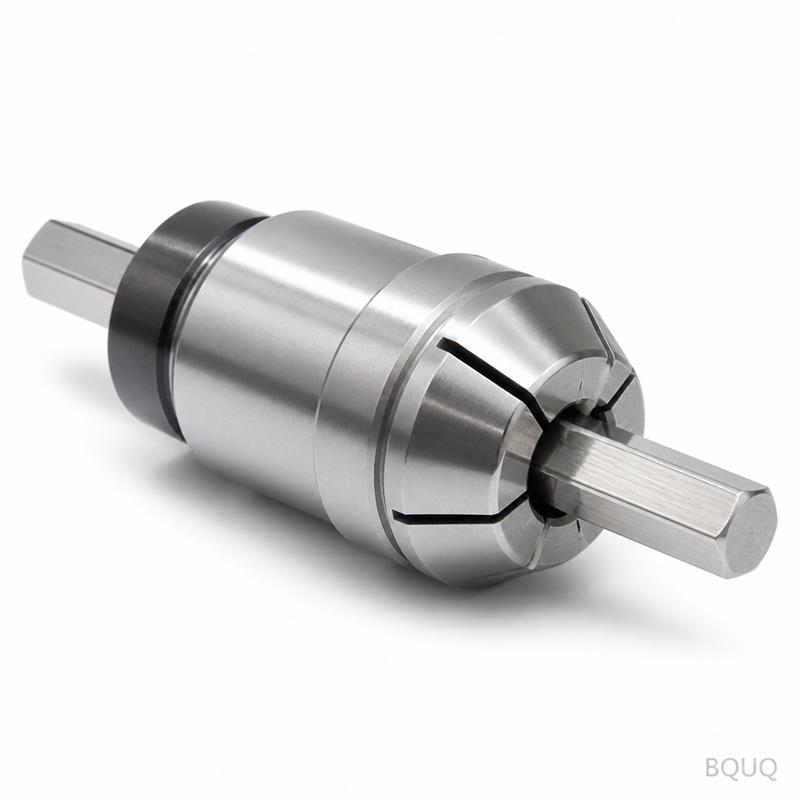
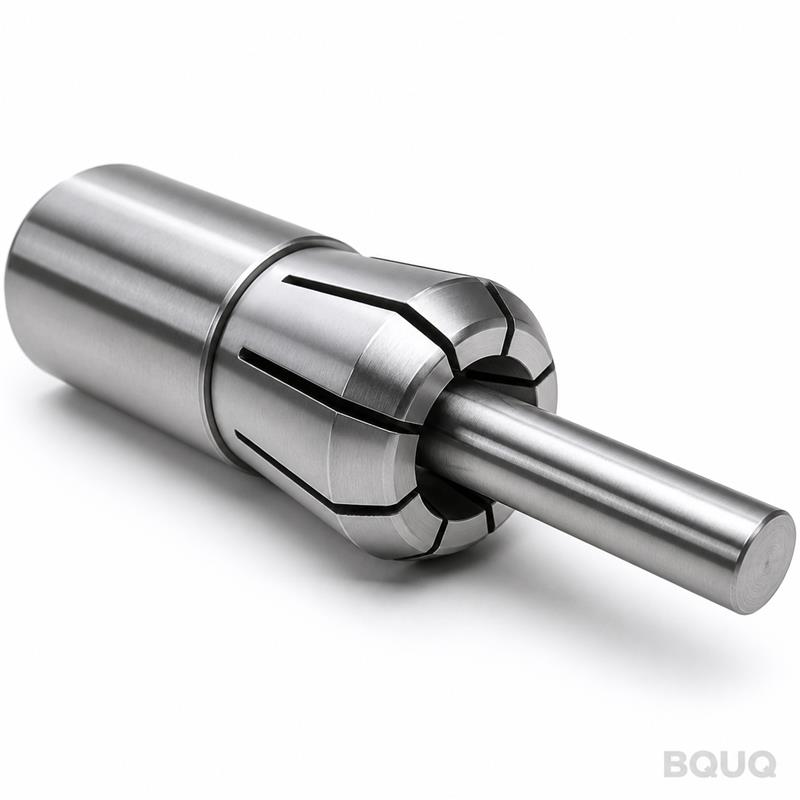
This is a rear-closeup collet for 36-type auto lathes (Swiss-type and sliding-headstock machines). It grips bar stock from the rear of the spindle, using an external thread on the rear body to pull the collet tight against a taper. The result is concentric gripping force that holds round, hex, or square stock without marking it. You get 0.005 mm total indicated runout (TIR) at the nose, which means your turned parts hold ر0.01 mm tolerance across long production runs. Hardness is 58–60 HRC after heat treatment, so the collet survives 200,000+ cycles before wear becomes measurable. Lead time for standard sizes is 7 days; custom bores ship in 10–12 days.
Why Rear External Thread Beats Front Drawbar Tubes for 36 mm Stock
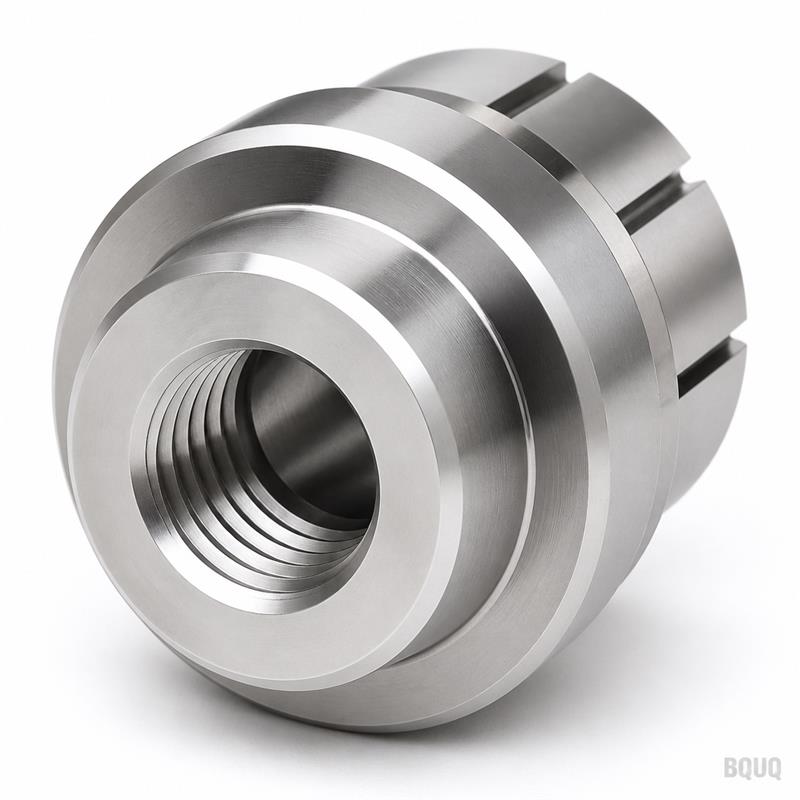
The 36 type collet is not a 5C or ER collet. It uses a rear external thread that screws directly into a drawtube or pullback mechanism. This design shortens the overall tool length by 18 mm compared to front-thread collets. That extra clearance matters when you are machining parts longer than 3× the spindle bore. The external thread pitch is M36 × 1.5, which matches most Japanese and German auto lathe spindles. We machine the thread to class 6g tolerance, so it screws on smoothly without binding, even after thermal expansion during a 10-hour shift. No shims, no adapters, no runout correction needed at installation.
Materials and Heat Treatment We Use for 36 Type Collets
We start with either 65Mn spring steel or 9SiCr alloy tool steel. 65Mn gives you better toughness for interrupted cuts; 9SiCr gives higher wear resistance for abrasive materials like 303 stainless. Both are hardened in a vacuum furnace to 58–60 HRC, then tempered twice to relieve internal stress. The gripping bore is ground after hardening, not before. That is the difference between a collet that holds 0.005 mm TIR and one that drifts to 0.02 mm after 500 parts. The external thread is cut on a CNC lathe before hardening, then the bore is form-ground to final size. We do not use EDM for the bore—it leaves a recast layer that flakes off and ruins concentricity.
How We Achieve 0.005 mm TIR on the Gripping Bore
Runout is not a single number—it is the sum of three errors: bore roundness, bore-to-thread concentricity, and thread pitch error. We control all three. The bore is ground on a jig grinder with a CBN wheel, achieving roundness within 0.002 mm. The thread is cut on a CNC lathe with a live tool, holding pitch error under 0.003 mm over 20 mm of thread length. Finally, we check every collet on a precision mandrel with a dial indicator at 5 points along the bore. If any point exceeds 0.005 mm TIR, the collet is scrapped—not reworked. This is why our 36 type collets hold better than the OEM replacement parts from most machine tool builders.
Inspection Before Every Shipment: Not Just a CMM Report
Every collet gets a three-stage check before it leaves our Dongguan factory. Stage one: dimensional measurement on a CMM for thread pitch, bore diameter, and taper angle. Stage two: functional test—we mount the collet on a 36-type auto lathe spindle and run 50 parts through a real cutting cycle at 6000 RPM. If the parts show more than 0.01 mm diameter variation, the collet fails. Stage three: visual inspection under 10× magnification for edge chipping or grinding burns. You get a signed inspection report with each shipment, including actual measured TIR values for that specific collet. We do not send "typical" or "average" data—we send your numbers.
Why Our 7-Day Lead Time Beats Local Suppliers in the USA and Europe
Most collet suppliers stock only 10–12 popular sizes. For anything else, they quote 4–6 weeks. We run 36 type collets in batches every week because our CNC lathes are dedicated to this product family. We keep raw 65Mn and 9SiCr bar stock in-house, and our heat treatment furnace runs three shifts. So even a custom bore size—say Ø14.2 mm for a special extrusion—takes 10 days, not 40. Shipping from Dongguan to Los Angeles is 5 days by air, 14 days by sea. That means you can have a custom collet in your spindle in 12–15 days total. For urgent breakdowns, we offer 48-hour express machining on standard bore sizes at a 15% surcharge.
Customization: Slotting, Keyways, and Special Bore Profiles
Standard 36 type collets have a round bore with three slots cut at 120°. But your parts may not be round. We cut hex bores (for hex stock), square bores (for broaching blanks), and stepped bores (for shoulder bolts). We also add keyways on the rear thread for anti-rotation—some spindles need this to prevent collet spin under heavy torque. Slot length can be extended from standard 30 mm to 45 mm for longer gripping zones. The only limit is the bore wall thickness: we need at least 1.5 mm between the bore and the outer taper. Send us your drawing and we will quote the exact geometry within 12 hours.
What is your MOQ for a custom 36 type collet?
No MOQ—we accept single-piece orders for custom bore profiles, but you will pay a one-time setup fee of $45 for the custom grinding program.
Can you match the OEM part number from my machine builder?
Yes—send us the part number or a sample, and we will reverse-engineer the thread, taper, and bore dimensions, then produce an interchangeable collet in 7 days.
How do you guarantee 0.005 mm TIR on every collet?
We scrap any collet that measures above 0.005 mm TIR on our mandrel test; our actual reject rate for this product is 2.1%, and we eat that cost rather than ship marginal parts.
What is the fastest I can get a 36 type collet if my machine is down?
We keep Ø6, Ø8, Ø10, Ø12, Ø16, Ø20, Ø25, and Ø32 mm bore collets in stock at our Dongguan warehouse—order before 2 PM China time and we ship the same day by air freight.
How This Collet Fits Into Your Tooling System: Spindle Nose, Guide Bushing, and Bar Feeder
The 36 type collet works with a spindle liner (guide bushing) that supports the bar near the cutting zone. Our collet mates with a 32 mm ID spindle liner and a standard 36 mm drawtube. The external thread pulls the collet into a 20° taper seat in the spindle—this is the same taper as the original Citizen, Star, and Tsugami machines. Bar feeder compatibility is straightforward: the rear closeup design leaves the full bore open, so a bar pusher can load stock without colliding with the collet body. We have tested this with FMB, Iemca, and LNS feeders. The collet runs at speeds up to 8000 RPM without vibration, provided your spindle is dynamically balanced.
Why Precision Manufacturing in China Does Not Mean Lower Quality
We have run this factory for 20 years, and our 36 type collet is used by machine tool builders in Japan and Germany who reject parts at 0.005 mm tolerance. Our quality system is ISO 9001:2015, and our grinding department uses Marposs in-process gauging—the same equipment used in Swiss toolrooms. The difference between us and a low-cost Chinese shop is the inspection discipline: we measure 100% of critical dimensions on 100% of collets. Not a sample, not a batch—every single piece. That is why we can offer a 12-month warranty against manufacturing defects, including premature wear beyond 0.01 mm TIR.
Installation Tips: Torque Specs and Runout Verification
When you install this collet, tighten the external thread to 45 N·m (33 ft·lb) using a spanner wrench on the hex flats—do not use a pipe wrench, which will deform the body. After tightening, check runout at the bore nose with a dial indicator. If you see more than 0.005 mm TIR, the likely cause is debris on the taper seat, not the collet. Clean the spindle taper with a lint-free cloth and re-tighten. For best results, mark the collet's high spot with a felt pen and index the collet 120° in the spindle—this averages out the residual taper error. For more background on how toolholding precision affects your machined parts, read our CNC cutting tool selection guide and our CNC machining tolerances guide.
Cost Breakdown: Why Our Price Beats the OEM by 30–40%
OEM collets for 36 type auto lathes cost $85–$120 each. Our price for a standard round bore is $58–$72, depending on bore size. Custom bore profiles cost $75–$95. The savings come from three places: we buy 65Mn steel in 5-ton coils, we grind bores on a 4-spindle jig grinder (4 parts at once), and we do not pay import duties or distributor margins. But price is only half the story—our 7-day lead time means you do not need to stock 6 months of inventory. You can order as you go. For a full calculation of cost per part over the collet's 200,000-cycle life, contact us with your annual volume and we will send a spreadsheet.
Get a Firm Quote Within 12 Hours—Not a Range
Send us your drawing, your machine model (Citizen, Star, Tsugami, Hanwha, or generic), and your required bore size. We will reply within 12 working hours with a fixed price, confirmed lead time, and a CAD model of the collet for your review. We do not quote ranges like "$50–$80"—you get one number. If you need a sample, we ship one piece at the full production price, and we refund the sample cost on your first order of 10+ pieces. Email your drawing to sc@bquq.com, or message us on WhatsApp at +86 13713157787. For a deeper look at how toolpath strategies affect cycle time and tool wear, see our CNC programming optimization article. We answer every inquiry within 12 hours, even on weekends.