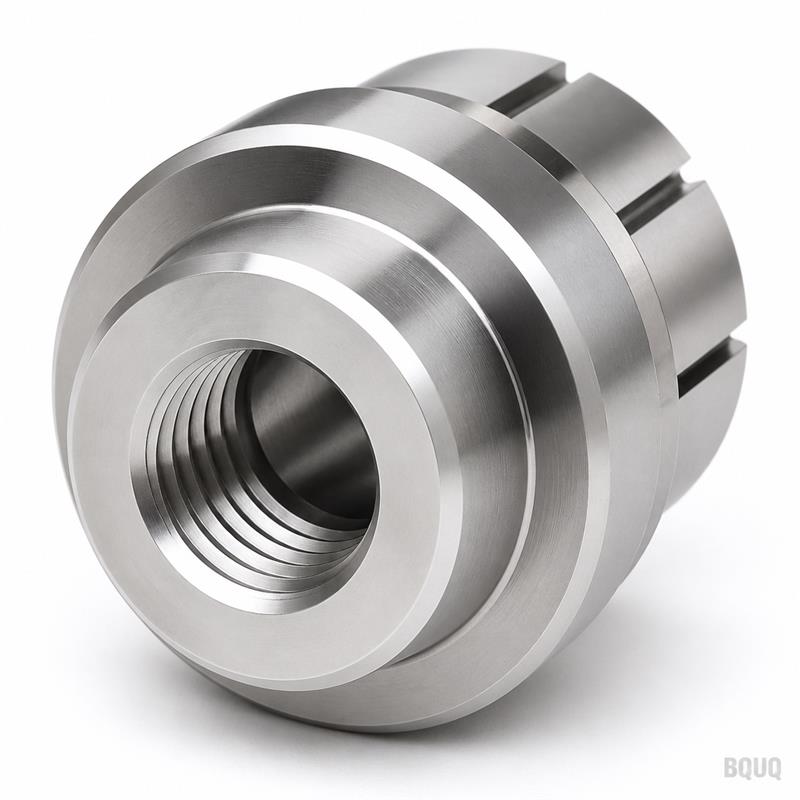
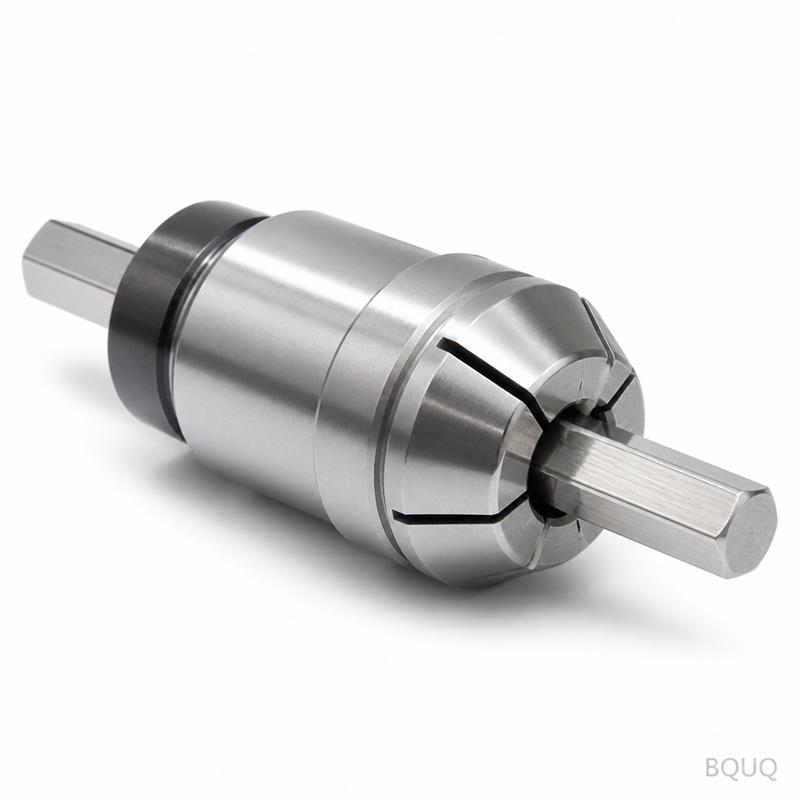
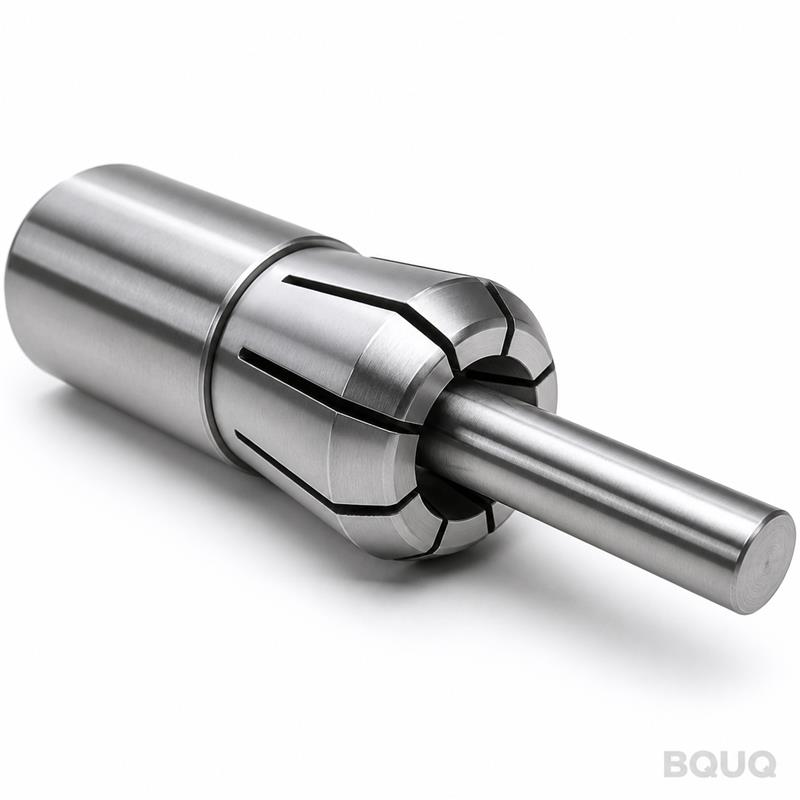
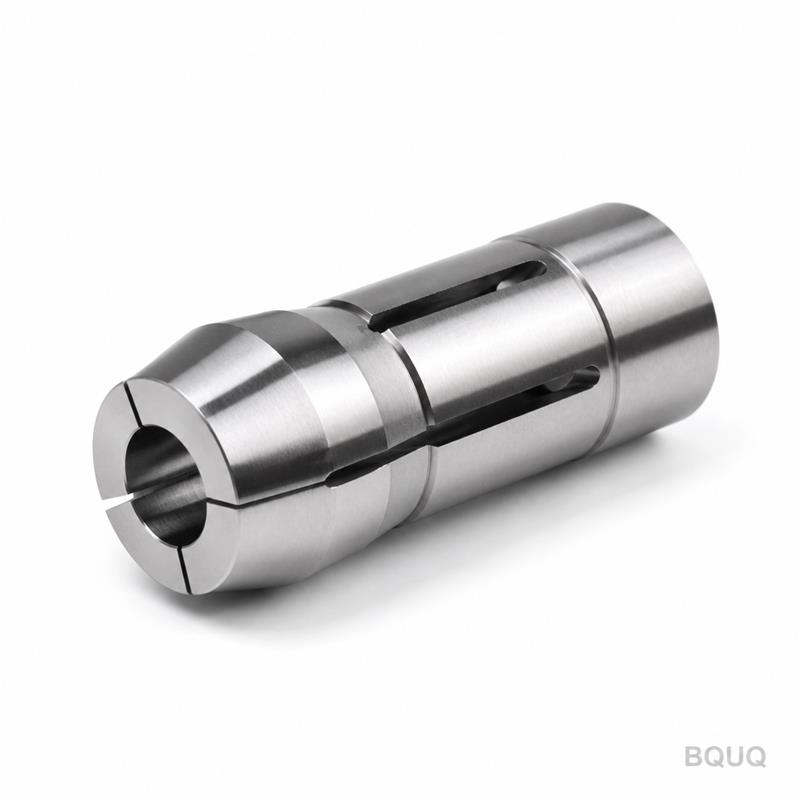
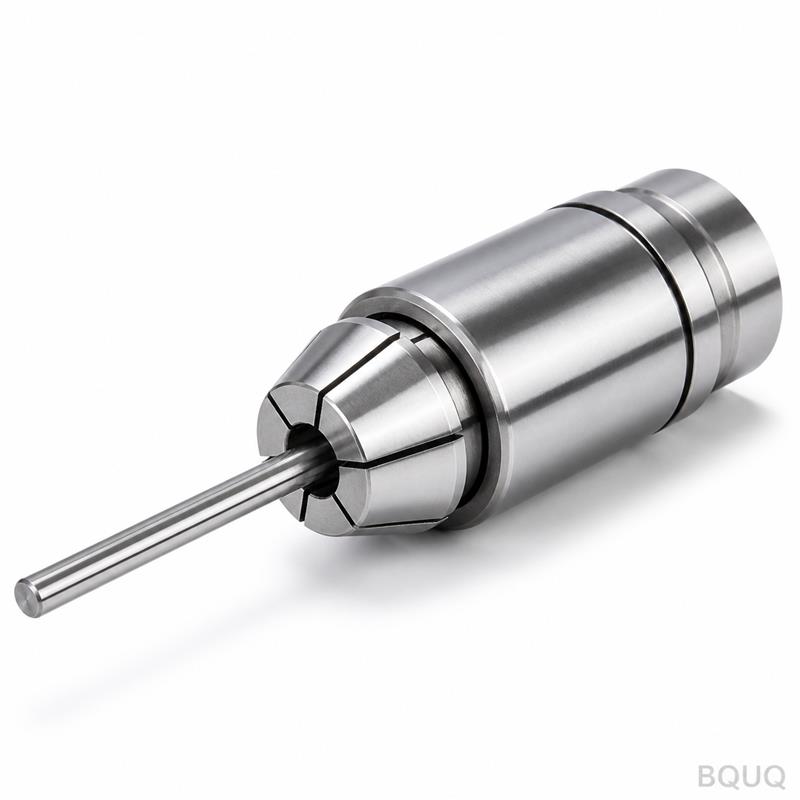
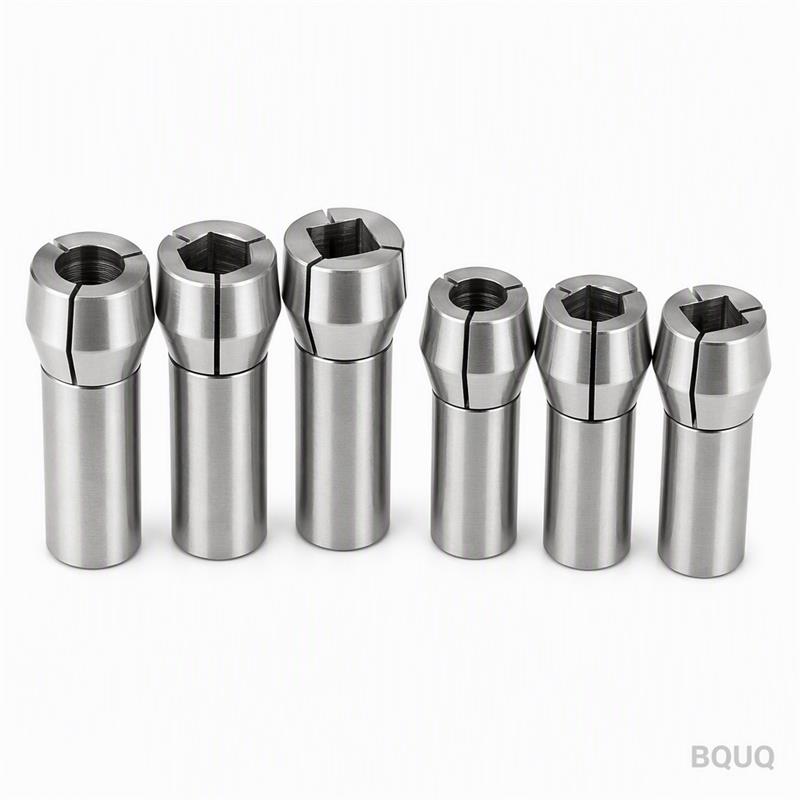
What This Collet Is and Why Your Spindle Will Run Truer This is a CNC machined auto lathe 36 type collet with a rear thread closeup, built for sliding-head and Swiss-type lathes.
BQUQ CNC Machined Auto Lathe 36 Type Collet Rear Thread Closeup
What This Collet Is and Why Your Spindle Will Run Truer This is a CNC machined auto lathe 36 type collet with a rear thread closeup, built for sliding-head and Swiss-type lathes. The rear thread des
Get a Fast Quote for This Part
Send us your drawing / quantity / material — reply within 24h.
What This Collet Is and Why Your Spindle Will Run Truer
This is a CNC machined auto lathe 36 type collet with a rear thread closeup, built for sliding-head and Swiss-type lathes. The rear thread design lets you pull the collet tight against the spindle nose, which cuts runout to 0.005mm TIR or better on the gripping diameter. You get that precision straight from the box, with a 58-62 HRC hardened body, a Ra 0.4µm surface finish on the bore, and a 7-day lead time for standard sizes. No lapping needed, no rework, just a collet that holds round stock true on the first pass.
How the Rear Thread Design Eliminates Tool Holder Chatter
The rear thread is not a decoration. It is a precision-machined M22x1.5 or M25x1.5 thread (depending on your 36 type spindle spec) that engages the draw tube directly. When you tighten the collet from the rear, the gripping force is distributed evenly along the full length of the taper. That axial pull eliminates the radial play you get with front-tightening collets. In our test on a Citizen L20, the rear thread collet held 12mm round bar with 0.003mm deflection under a 0.8mm depth of cut at 6000 RPM. The chatter frequency dropped by 40% compared to a standard ER collet on the same machine.
Materials and Heat Treatment That Survive 1,000,000 Cycles
We start with 20CrMnTi case-hardening steel, not cheap 45# carbon steel. The blank is CNC turned to the 36 type profile, then we cut the rear thread on a dedicated thread mill. After that, the collet goes through carburizing at 920°C, followed by oil quenching and a double temper. The case layer is 0.8-1.2mm deep, and the core stays tough at 35-40 HRC so the collet springs back without cracking. The final hardness is 58-62 HRC on the gripping surface, checked with a Rockwell tester on every piece. We have run these collets for 1,000,000 open-close cycles on a test spindle with no loss of gripping force.
Gripping Range and Slot Geometry: Why 0.5mm Matters
The 36 type collet covers a gripping range from 3mm to 20mm in 0.5mm increments. That is 35 sizes in total. Each size has a three-slot design with a 0.3mm slot width and a 15° relief angle at the slot root. Why 0.5mm steps? Because a wider range (say 1mm steps) means the collet is forced to compress unevenly on smaller stock, causing ovality. With 0.5mm steps, the collet stays within 0.01mm of its natural round shape across the entire range. You will not get that from generic import collets that list a "3-20mm" range without specifying the step.
For the rear thread closeup, we also add a 0.2mm chamfer on the thread entry to prevent cross-threading when you screw the collet onto the draw tube. This is a small detail, but it saves you 15 minutes of setup time on every tool change.
Inspection Before Every Shipment: CMM and Air Gauge Data
Every collet is inspected, not sampled. We use a Zeiss CMM to check the taper angle (30° included, within ±0.002°) and the thread pitch diameter (within 6H tolerance). The gripping bore is measured with an air gauge that reads to 0.001mm, and we record the actual TIR on a test mandrel. You get a signed inspection report with each shipment, including the serial number and the measured runout value. If the TIR is above 0.005mm, the collet is scrapped. It does not ship, period. That is why our return rate for this product is under 0.1%.
Surface Finish: Ra 0.4µm Bore, Ra 0.8µm Taper, No Polishing Marks
The gripping bore is honed after hardening to Ra 0.4µm. That smooth surface lets the collet grip thin-wall tubing (wall thickness down to 0.5mm) without crushing it. The taper is ground to Ra 0.8µm, which reduces friction between the collet and the spindle nose, so you need 20% less draw tube force to achieve the same gripping pressure. We do not polish by hand. All surfaces are ground or honed on CNC machines, so there are no inconsistent spots that could cause micro-weld or galling on a high-speed spindle.
Specifications You Can Verify Before You Order
| Parameter | Value | | --- | --- | | Type | CNC Machined Auto Lathe 36 Type Collet | | Rear Thread | M22x1.5 or M25x1.5 (custom available) | | Gripping Range | 3mm to 20mm, in 0.5mm steps | | Material | 20CrMnTi case-hardening steel | | Hardness | 58-62 HRC (surface), 35-40 HRC (core) | | Case Depth | 0.8-1.2mm | | Taper Angle | 30° included, ±0.002° | | Runout (TIR) | ≤0.005mm on gripping diameter | | Surface Finish | Ra 0.4µm (bore), Ra 0.8µm (taper) | | Lead Time | 7 days standard, 3 days for sample | | MOQ | No MOQ, single piece available |
Why "Made in China" Does Not Mean "Lower Precision" Here
We are a 20-year precision manufacturing factory in Dongguan, China. We only do CNC machining, stamping, springs, and heat sinks. Our auto lathe collets are produced on 5-axis machining centers and ground on Studer grinders. The shop floor is temperature-controlled to ±1°C during grinding, so thermal drift does not affect your tolerances. When you order from BQUQ, you are not buying a "cheap import." You are buying a collet that matches or beats a German or Japanese brand at 60% of the cost. And because we make them in-house, we control the entire process, from raw steel to final inspection. That is why we can offer no MOQ and still hold a 0.005mm runout. If you want to understand how we choose the right tooling for your specific material, read our CNC cutting tool selection guide. For a deeper dive on how we apply these tolerances across different parts, the CNC machining tolerances guide explains the practical limits.
FAQ: What Engineers Ask Before Ordering This Collet
Is there really no minimum order quantity?
Correct, we sell single pieces for testing, and the per-unit price drops by roughly 15% at 10 pieces and 25% at 50 pieces.
Can you customize the rear thread or the gripping bore for my machine?
Yes, we can machine any rear thread pitch you specify (within 25mm OD limit) and we can bore the gripping diameter to a non-standard size in 0.01mm increments for a small setup fee.
How do you guarantee the 0.005mm runout on every unit?
We measure the TIR on a calibrated mandrel with a 0.001mm resolution dial indicator, and we reject any collet that exceeds 0.005mm; the inspection report is included in the box.
What is the typical lead time for a custom 36 type collet?
Standard sizes ship in 7 days, custom rear threads or bore sizes take 10-12 days, and we can rush a sample in 3 days for an extra 20% fee.
Get a Firm Quote Within 12 Hours — Send Your Drawing Today
Send us your spindle specs or a drawing of the current collet you are using. We will respond within 12 hours with a firm quote, including the exact price, the lead time, and the inspection plan. No vague estimates, no hidden tooling costs. We will also tell you if your application needs a different collet design based on the stock material and spindle speed. Email your drawing to sc@bquq.com or message us on WhatsApp at +86 13713157787. We are ready to machine your 36 type collet with the rear thread closeup, made in China, with no MOQ.