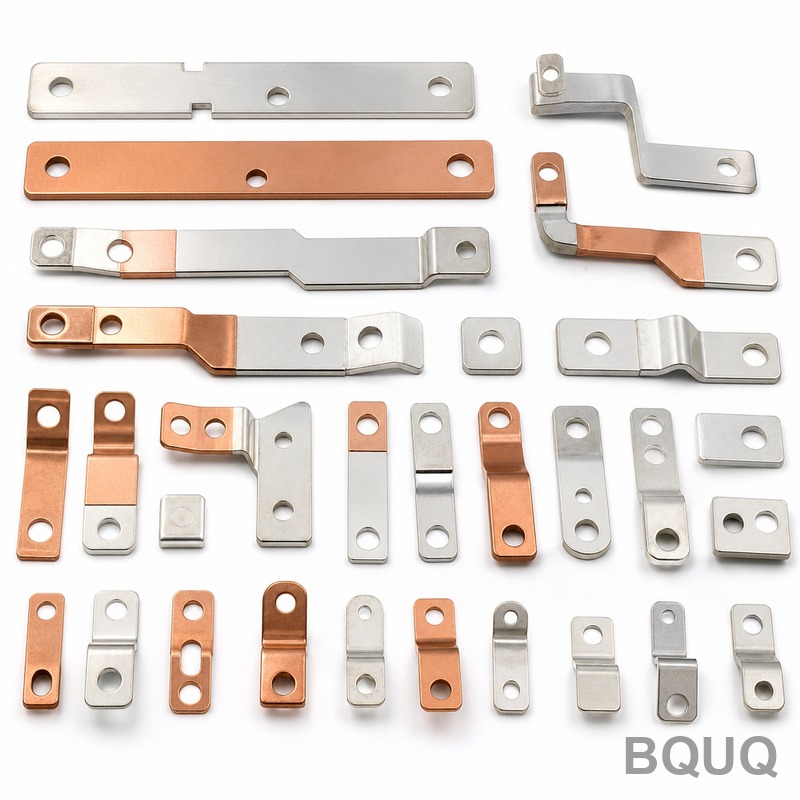
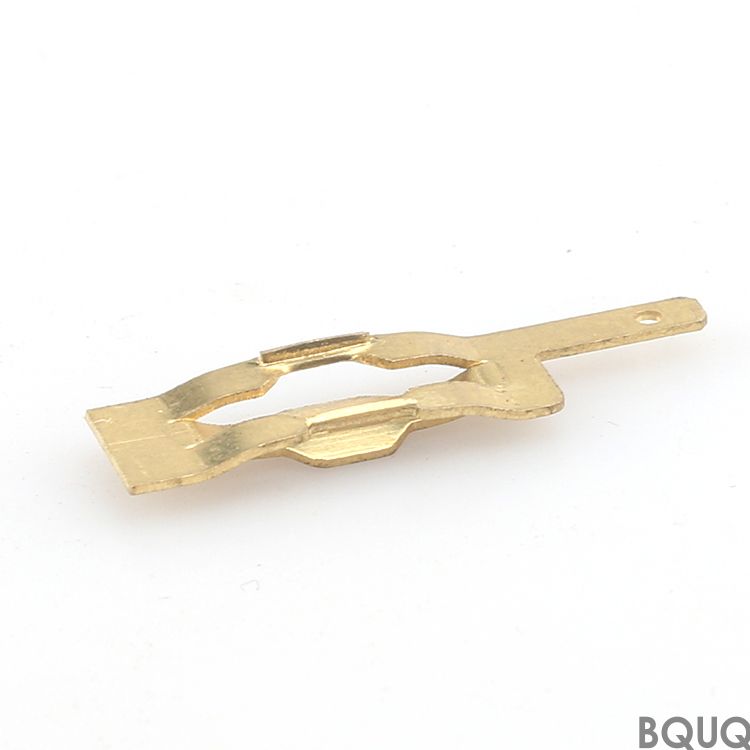
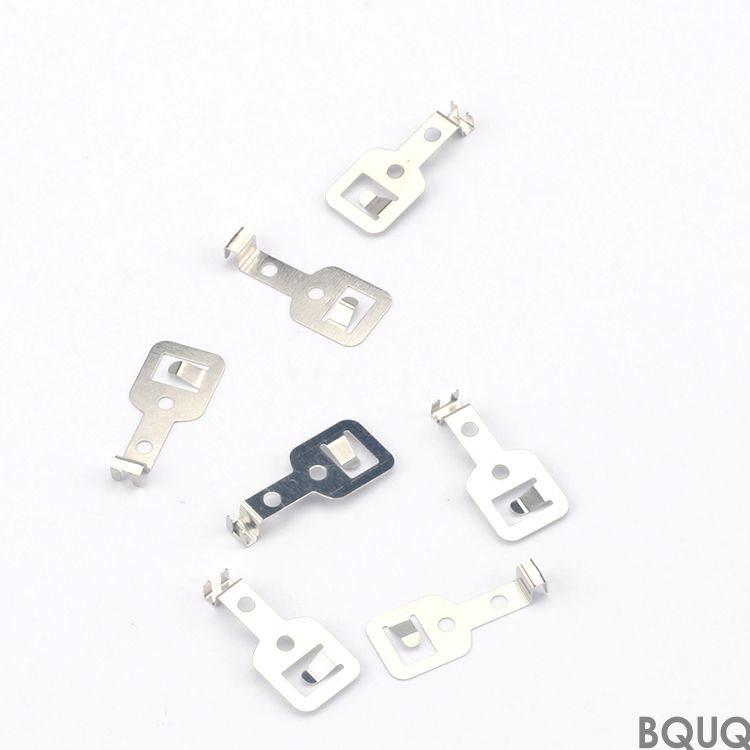
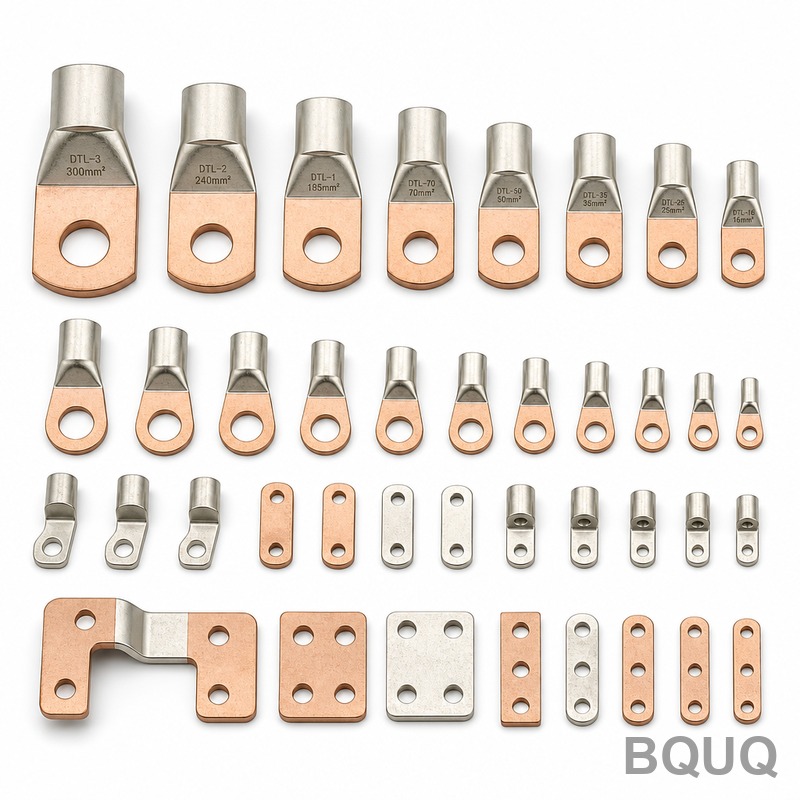
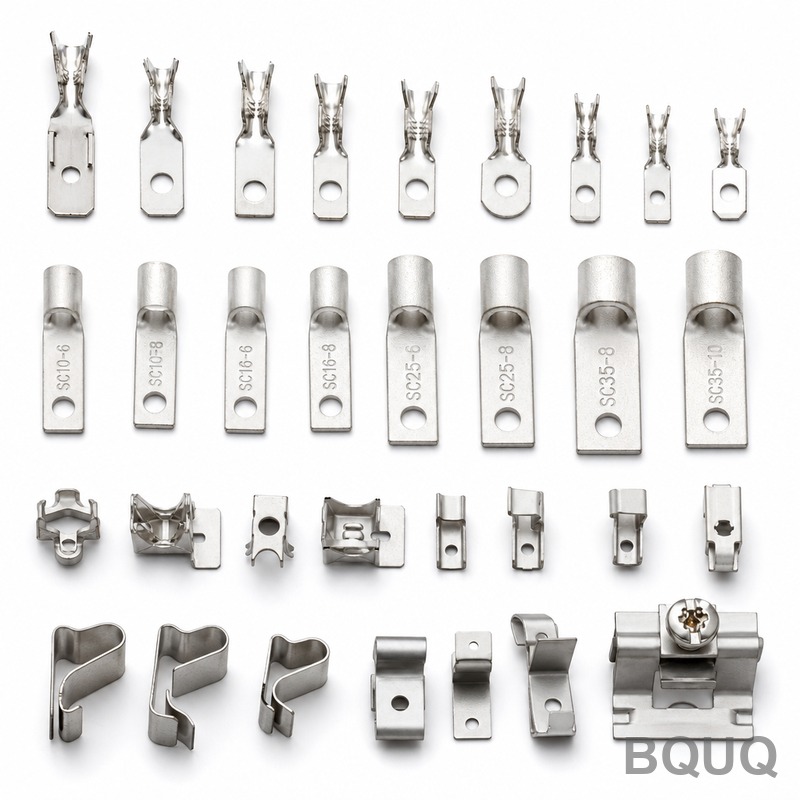
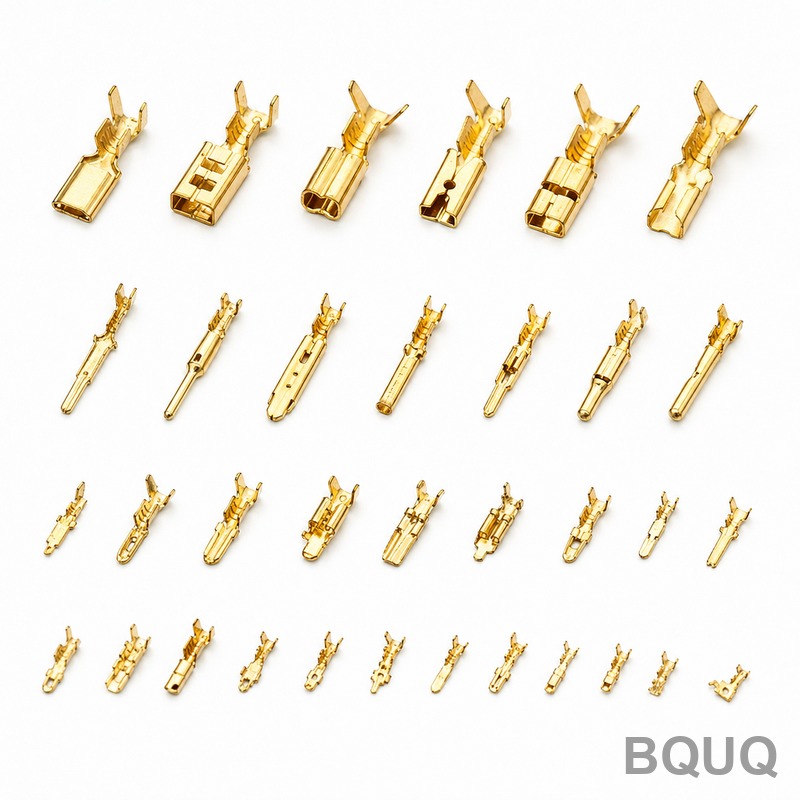
This EV Battery Busbars Collection is a family of stamped copper or aluminum connectors that carry high current between battery cells and modules. You get flatness within 0.05mm, s
EV Battery Busbars Collection | Precision Stamping by BQUQ China
This EV Battery Busbars Collection is a family of stamped copper or aluminum connectors that carry high current between battery cells and modules. You get flatness within 0.05mm, stamping tolerance at
Get a Fast Quote for This Part
Send us your drawing / quantity / material — reply within 24h.
This EV Battery Busbars Collection is a family of stamped copper or aluminum connectors that carry high current between battery cells and modules. You get flatness within 0.05mm, stamping tolerance at ±0.02mm, and surface finish Ra 0.8 or better — every part is ready for welding or bolting without secondary straightening. Our 20-year factory in Dongguan ships standard samples in 7 days and production runs in 15 days, with hardness options from 1/4 hard to full hard depending on your alloy.
How We Control Flatness on Long Busbars Without Warping
Long busbars (up to 600mm) warp easily after stamping due to internal stress from the copper or aluminum coil. We use a progressive die with a built-in coining step that presses the material flat while it is still in the strip. After blanking, we run 100% of parts through a flatness gauge — we hold 0.05mm over the entire length, not just at the ends. For busbars over 300mm, we add a stress-relief anneal at 180°C for 45 minutes before the final calibration pass. This is why our busbars sit flush on battery module terminals without shims or manual hammering.
Materials and Heat Treatment We Use for Busbars
We stamp three standard materials for this collection: C1100 copper (oxygen-free, 99.9% purity), C1020 copper (for higher conductivity), and 6061-T6 aluminum for weight reduction. Copper busbars come in 1/4 hard (HV 80-95) or 1/2 hard (HV 95-110) — you choose based on your bending requirement. Aluminum parts get a T6 temper after stamping if you need HV 95 minimum. We also offer nickel-plated or tin-plated surfaces (3-5 microns) for corrosion resistance in humid battery packs. All material certificates are included with every shipment, showing the exact chemical composition and hardness traceability.
Stamping Die Design That Eliminates Burrs on Contact Edges
Burrs on busbar edges cause two problems: they reduce contact area and they can pierce the insulation layer in a battery pack. Our dies use a fine-blanking technique with a V-ring indenter that holds the material during the cut, producing a shear zone of 100% (no torn zone) on edges up to 3mm thick. We keep the die clearance at 5% of material thickness — for 2mm copper, that is 0.1mm per side. Every die is maintained after 50,000 strokes, and we measure burr height with a digital micrometer before each batch. Your busbars arrive with burr height under 0.03mm, which is below what most EV assemblers specify.
Inspection Before Every Shipment of Busbars
We do not ship blind. Every batch goes through a 3-step inspection: first, a CMM check on 5 samples per 500 parts for hole position and overall length (tolerance ±0.02mm); second, a surface roughness test with a profilometer on the contact areas — Ra 0.8 is standard, Ra 0.4 if you request it; third, a 100% visual check under 2x magnification for burrs, scratches, or discoloration. For copper busbars, we also measure electrical conductivity with a conductivity meter — we guarantee 101% IACS for C1100 and 100% IACS for C1020. You get a full inspection report in PDF with your packing list. If any part fails, we sort it out and re-run before shipping.
Specification
Value
Material options
C1100, C1020 copper, 6061-T6 aluminum
Thickness range
0.5mm to 6.0mm
Max length
600mm (custom longer on request)
Stamping tolerance
±0.02mm (hole position and outer profile)
Flatness
0.05mm over full length
Surface finish
Ra 0.8 (Ra 0.4 available)
Hardness (copper)
HV 80-110 (1/4 hard to 1/2 hard)
Burr height
≤0.03mm
Lead time (samples)
7 days
Lead time (production)
15 days after approval
MOQ
No MOQ for samples, 100 pcs for production
Plating options
Nickel 3-5µm, Tin 3-5µm, Silver on request
Why Our Busbars Fit Your Battery Module Without Rework
Rework is the hidden cost in battery assembly — you spend labor fixing parts that should have been right. Our busbars are stamped with hole-to-hole center distance held at ±0.02mm, which means every busbar lines up with the terminal posts on your module without forcing or filing. The edges are clean (burr ≤0.03mm), so they slide into plastic insulating housings without catching. We also deburr the holes internally — a step many stampers skip — so the bolt threads engage smoothly. If you use laser welding, the flat contact surface (Ra 0.8) gives you a consistent weld seam with no gaps. This is precision manufacturing from a factory that has shipped over 40 million stamped parts to EV customers in Europe and North America.
Custom Shapes and Holes for Your Battery Pack Layout
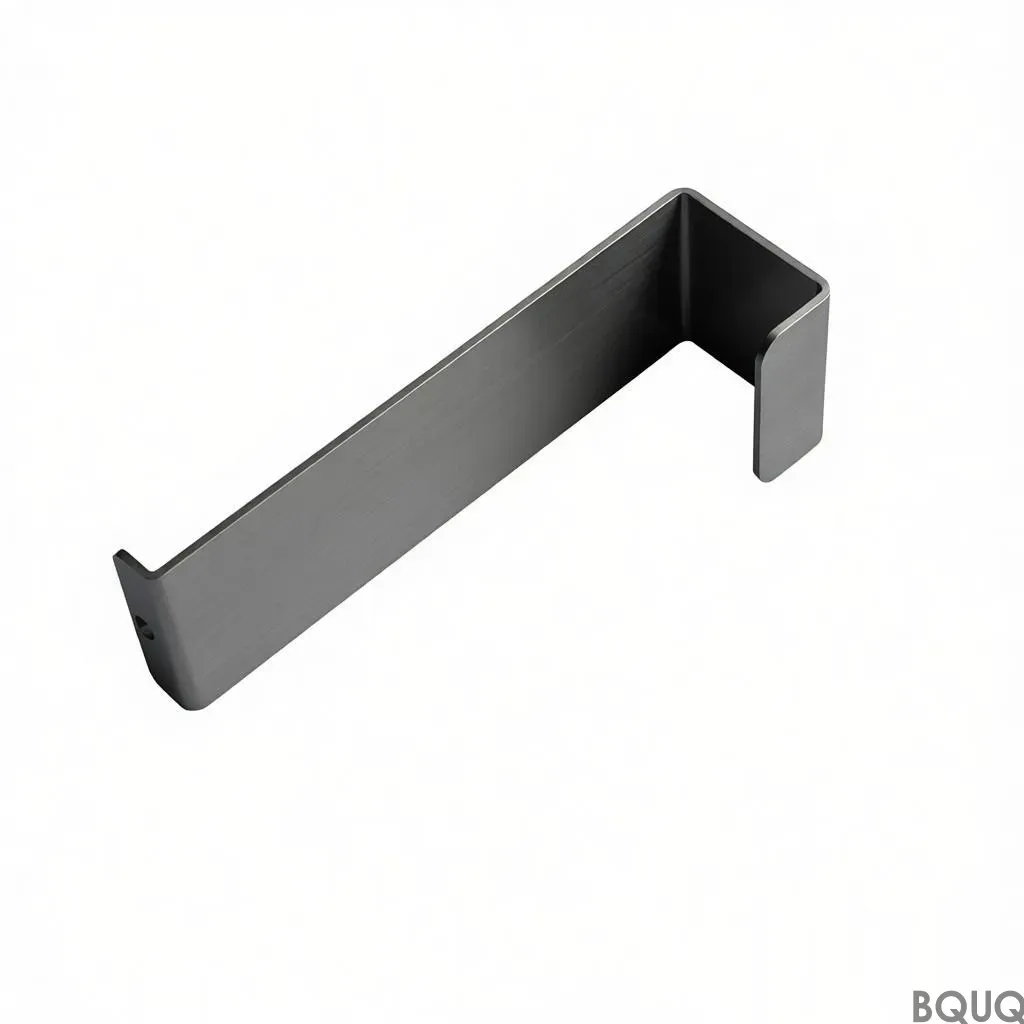
No two battery packs are identical. We cut busbars in L-shapes, Z-shapes, and U-shapes, with any combination of mounting holes, slot holes, or threaded studs. Tell us your current path and mechanical constraints — our engineers will suggest the stamping layout that minimizes material waste (we often hit 85% material utilization on copper, which saves you money on expensive raw material). We can also add a bend angle up to 90 degrees with an inside radius of 0.5x material thickness. Send us your 2D drawing in DXF or PDF, or a 3D STEP file, and we will quote within 12 hours. For design help, our engineers can reference the CNC cutting tool selection guide to ensure your hole features are stamped cleanly, and the CNC machining tolerances guide to understand what is achievable at low cost.
Packing and Traceability for EV Production Lines
Busbars must arrive undamaged and identifiable. We pack each busbar in a separate slot of a corrugated tray, then stack trays in a sealed carton with anti-static foam on top and bottom. Each carton carries a label with the part number, batch number, material heat number, and quantity. For high-volume orders, we use plastic bins that go straight to your assembly line — no repacking needed. We also print a lot code on each busbar (laser marking, 0.5mm height) if you need individual traceability for warranty or recall purposes. This is standard practice for our EV customers, and it costs you nothing extra.
Shipping Times and Costs for Global EV Customers
We ship from Shenzhen port, 30 minutes from our factory. Samples go by DHL or FedEx — 3 to 5 days to the US, 2 to 4 days to Europe. Production orders ship by sea (15-20 days) or air freight (4-6 days) depending on your urgency. For a typical busbar weighing 50 grams, sea freight costs about $0.02 per piece to the US West Coast — negligible compared to the part value. We handle all export documentation including the material certificate, commercial invoice, and packing list. If you need a specific shipping line or incoterm (FOB, CIF, DDP), tell us at the quote stage, and we will lock it into the price.
Do you have a minimum order quantity for busbars?
No MOQ on samples — we make 5 to 10 pieces for your testing at the same unit price as production, and for production we start at 100 pieces with no extra setup fee.
Can you customize the hole pattern and shape?
Yes, we stamp any 2D shape up to 600mm long with holes, slots, and bends up to 90 degrees — just send your drawing and we will confirm the tooling cost (typically $300-$800 one-time) within 12 hours.
How do you ensure quality on every batch?
We run a CMM check on 5 samples per 500 parts, a 100% visual inspection for burrs and scratches, and we include the inspection report with each shipment — no extra charge.
What is your lead time for a custom busbar?
Sample tooling and parts take 7 days, production tooling (if new) takes 12 days, and production runs take 15 days after you approve the sample — all quoted transparently at the start.
Get a Firm Quote for Your EV Battery Busbars Within 12 Hours
We respond to every inquiry within 12 hours — weekends included. Send us your drawing (DXF, PDF, or STEP), the material you want (copper, aluminum, or plated), and the annual quantity. You will receive a firm quote with unit price, tooling cost (if any), and delivery date. No vague estimates, no hidden charges. This is precision manufacturing made in China with 20 years of stamping know-how behind it. Email your drawing to sc@bquq.com or message us on WhatsApp at +86 13713157787. We will get back to you today.