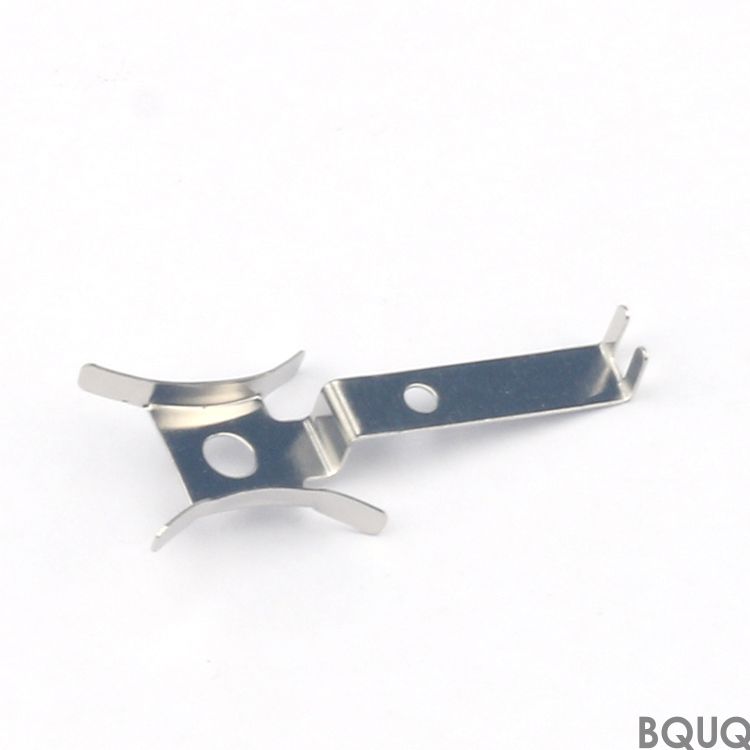
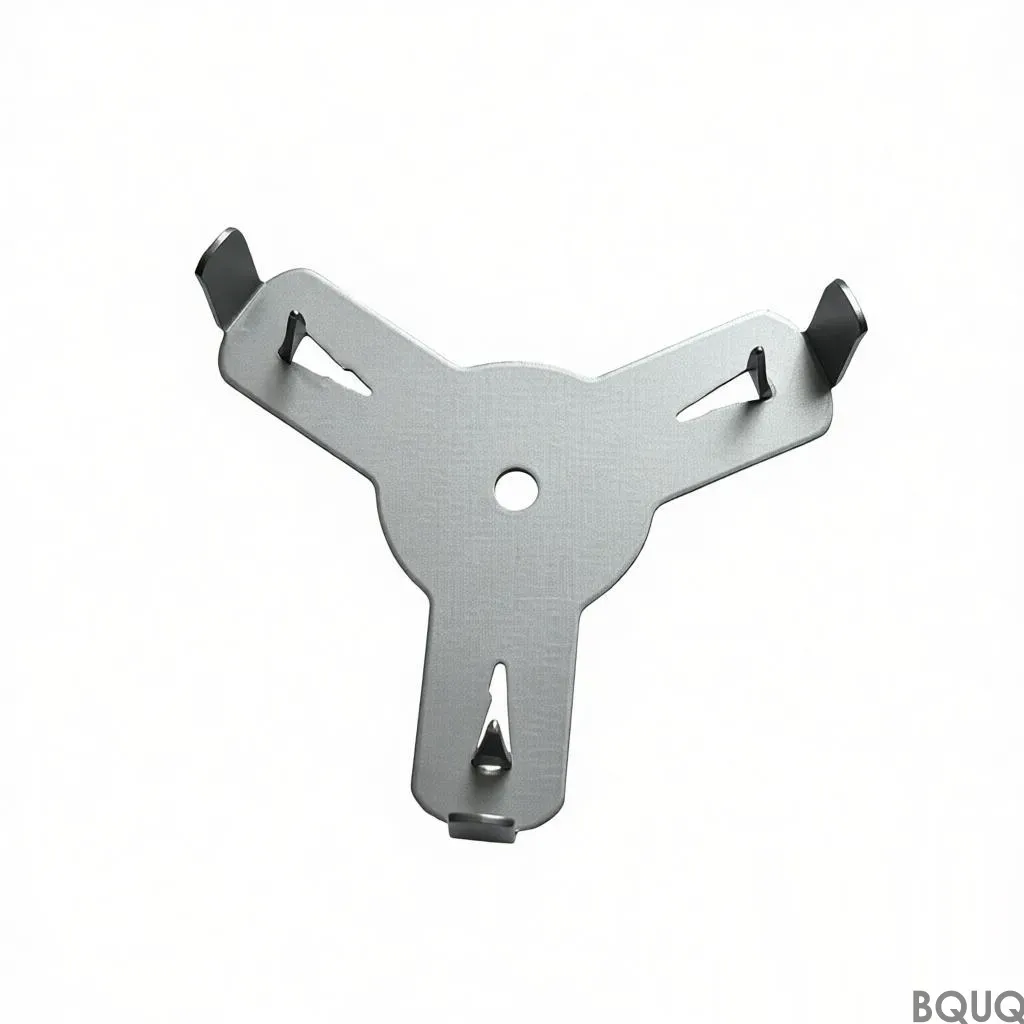
What This Collection Delivers: Terminal Geometry Held to 0.01 mm This is a complete line of stamped brass electrical terminals and contacts for connectors, relays, switches, and b
BQUQ Stamped Brass Electrical Terminals Contacts Collection – Precision Made in China
What This Collection Delivers: Terminal Geometry Held to ±0.01 mm This is a complete line of stamped brass electrical terminals and contacts for connectors, relays, switches, and battery contacts. Eve
Get a Fast Quote for This Part
Send us your drawing / quantity / material — reply within 24h.
What This Collection Delivers: Terminal Geometry Held to ±0.01 mm
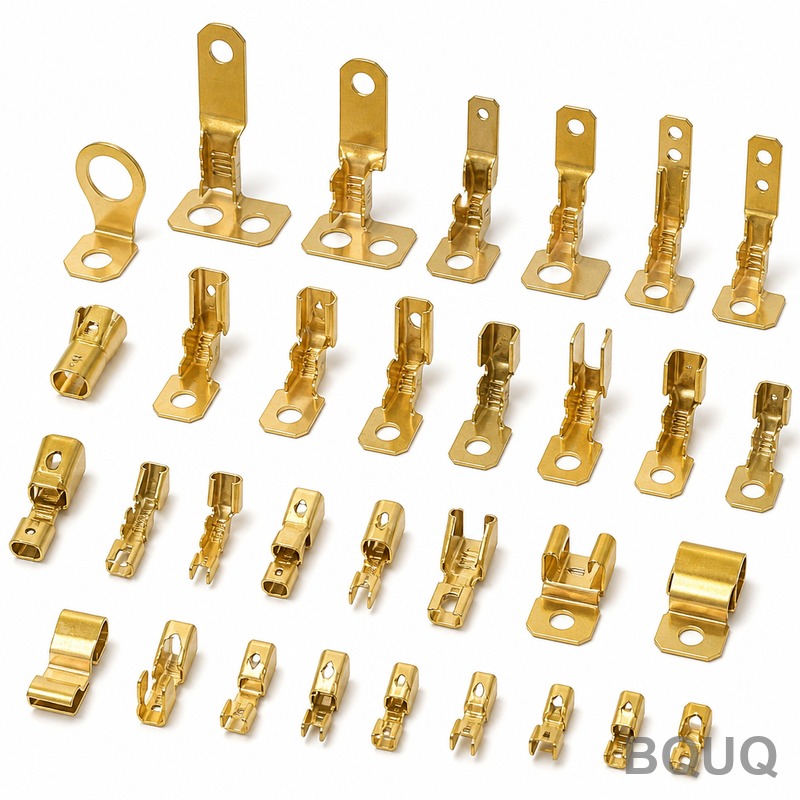
This is a complete line of stamped brass electrical terminals and contacts for connectors, relays, switches, and battery contacts. Every part is blanked, formed, and coined on high-speed presses (25 to 200 tons) with tolerances held at ±0.01 mm on critical dimensions and surface finish down to Ra 0.4 µm. You get burr-free edges, consistent hardness from 80 to 110 HRB, and a production lead time of 15 days from drawing approval – not a promise, our actual schedule.
Brass Alloy Selection: C2600 vs. C2680 vs. C5210 – What Changes in Your Circuit
We stock three brass families for this collection, each with a specific electrical and mechanical role. C2600 (cartridge brass) gives you 70/30 copper-zinc balance for high ductility – ideal for terminals that need repeated bending without cracking. C2680 (yellow brass) adds slightly more zinc for improved spring properties in contact arms. C5210 (phosphor bronze) is our go-to when you need fatigue resistance beyond 10 million cycles; it costs more but your contact force stays stable. For each order, we include a mill certificate confirming copper content and trace impurities – nothing below 99.9% purity on the base alloy.
Die Design That Kills Burr Formation Before It Starts
Burrs on electrical contacts cause arcing, higher contact resistance, and intermittent failures. Our toolroom designs every die with a clearance of 5% to 8% of material thickness per side – not a generic formula. For 0.3 mm thick brass strip, that means 0.015–0.024 mm clearance per side, which produces a clean shear zone and a burr height under 0.03 mm. We also use carbide inserts on the punch tip (not standard tool steel) because carbide holds an edge 8 times longer; this keeps the shear line consistent across a 500,000-part run. If your print calls out a specific burr direction, we add a secondary coining station to fold the burr inward – no extra cost under 1 million parts.
Surface Finish and Plating: From Raw Brass to Selective Gold
Raw stamped brass works for dry circuits but most of your applications need plating. We offer three surface treatments in this collection: matte tin (2–5 µm) for solderability, selective gold (0.1–0.76 µm) over nickel (1–2 µm) for low contact resistance below 10 mΩ, and silver (2–4 µm) for high-frequency signals. The plating process uses a reel-to-reel line, so we plate only the contact area – you do not pay for gold on the crimp barrel. Surface roughness after plating stays under Ra 0.8 µm, verified with a profilometer on every batch, not every 10th part.
Parameter
Value
Notes
Base Materials
C2600, C2680, C5210 brass
Other copper alloys on request
Material Thickness
0.10 – 3.00 mm
Tolerance ±0.01 mm
Part Size Range
2 × 2 mm to 150 × 100 mm
Up to 200 mm with special die
Hardness (as stamped)
80 – 110 HRB
Annealed or spring temper available
Critical Dimension Tolerance
±0.01 mm
Hole-to-hole position ±0.015 mm
Surface Finish (raw)
Ra 0.4 µm
On formed surfaces
Burr Height Max
0.03 mm
Per edge, no secondary deburring
Flatness
0.02 mm per 25 mm
For flat terminal bodies
Lead Time (sample)
3 – 8 business days
From drawing approval
Lead Time (production)
15 business days
After sample sign-off
MOQ
No MOQ
Start with 100 pieces for testing
Inspection Protocol: Every Terminal Measured, Not Just Sampled
We run a 100% inspection on critical dimensions using an automated optical comparator with a resolution of 0.001 mm. For terminal contacts, the three things we measure on every part are: contact gap width (because it determines mating force), plating thickness at the contact point (measured with X-ray fluorescence), and burr height on the cut edges. In addition, we perform a bend test on 5 pieces per lot – bending 90 degrees and back, checking for cracks under a 10× magnifier. Every shipment includes a dimensional report in PDF format, plus Cpk values above 1.33 for all critical features. If you need PPAP Level 3, we can provide that, but it adds two days to the production schedule.
How We Beat the 15-Day Lead Time: In-House Toolroom and Strip Stock
Lead time kills projects. That is why we keep 3 tons of C2600 and C2680 strip in-house in thicknesses from 0.15 mm to 1.0 mm – the most common range for electrical terminals. When your drawing arrives, our toolroom (six toolmakers, average 12 years of stamping die experience) reviews it within 4 hours. If a new die is needed, we cut and wire-EDM the punch and die in parallel; a typical terminal die for a 0.3 mm part is ready in 7 days. For minor modifications to an existing die, samples go out in 3 days. This is not rush service – this is our standard flow, because we build the die while you are still reviewing the quote.
Pricing Structure That Rewards Engineering Iteration
Our stamping die cost for brass terminals starts at $800 for a simple flat blank and goes up to $3,500 for a progressive die with 4 forming stations and coin plating. The piece price for a typical 0.3 mm C2600 terminal at 100,000 pieces is $0.03 to $0.08, depending on plating. We do not charge for engineering changes during the sample phase – you can revise the drawing up to three times without a fee. After production starts, a revision costs $150 per hour of toolroom time, but if the change is due to our error, it is free. For high-volume runs above 500,000 parts per year, we amortize the die cost into the piece price, so you do not pay upfront.
When to Use This Collection vs. Screw Machined Contacts
If you need a simple pin or socket under 6 mm diameter, screw machining might be cheaper. But for any terminal with a flat body, a bend, or a stamped locking lance, this stamping collection wins on cost and speed. A stamped brass terminal is 60% to 80% cheaper than the equivalent machined part at volumes above 50,000 pieces. The trade-off is in edge radius – stamping gives you a sharp corner (minimum 0.05 mm radius) while machining can give you 0.1 mm. If your design requires a smooth edge for wire wrapping, tell us; we can add a coining step that blends the corner without adding a full machining operation.
Shipping and Packaging: Anti-Tarnish Protection for Overseas Orders
Brass tarnishes quickly in humid air, so we pack every terminal in anti-tarnish VCI (vapor corrosion inhibitor) paper, then vacuum-seal the rolls in polyethylene. For reel-fed terminals, we put 5,000 to 20,000 pieces per reel (depending on part size) with leader and trailer tape. Loose parts go in partitioned boxes to prevent surface scratches during transit. All orders ship from our Dongguan factory via DHL, FedEx, or sea freight – your choice. Export packaging per ISTA 2A standard, so you do not get damaged parts after a 10-day ocean crossing.
Do you have a minimum order quantity for the Stamped Brass Electrical Terminals Contacts Collection?
No MOQ – we accept prototype orders as small as 100 pieces for testing, and you only pay the standard piece price plus tooling.
Can you customize the brass alloy or plating thickness for my application?
Yes, we can switch to any copper alloy (like beryllium copper for higher hardness) and adjust plating thickness from 0.1 µm gold up to 5 µm tin without changing die geometry.
What quality control documents do you provide with each shipment?
Every shipment includes a dimensional report, material mill certificate, plating thickness report, and Cpk data for critical features – all in PDF format within 24 hours of dispatch.
How fast can I get a quote and sample for a custom terminal design?
We send a firm quote within 12 hours of receiving your drawing, and samples ship in 3–8 business days depending on whether we need a new die.
For the full picture on keeping your stamping dies in shape, read our CNC cutting tool selection guide – it covers how tool wear directly affects your terminal tolerances. And before you finalize your drawing, check our CNC machining tolerances guide to see which dimensions you can relax to lower your piece price.
Send your drawing for a firm quote within 12 hours. Email sc@bquq.com or WhatsApp +86 13713157787. No MOQ, no pressure – just precision manufacturing made in China for your Stamped Brass Electrical Terminals Contacts Collection.