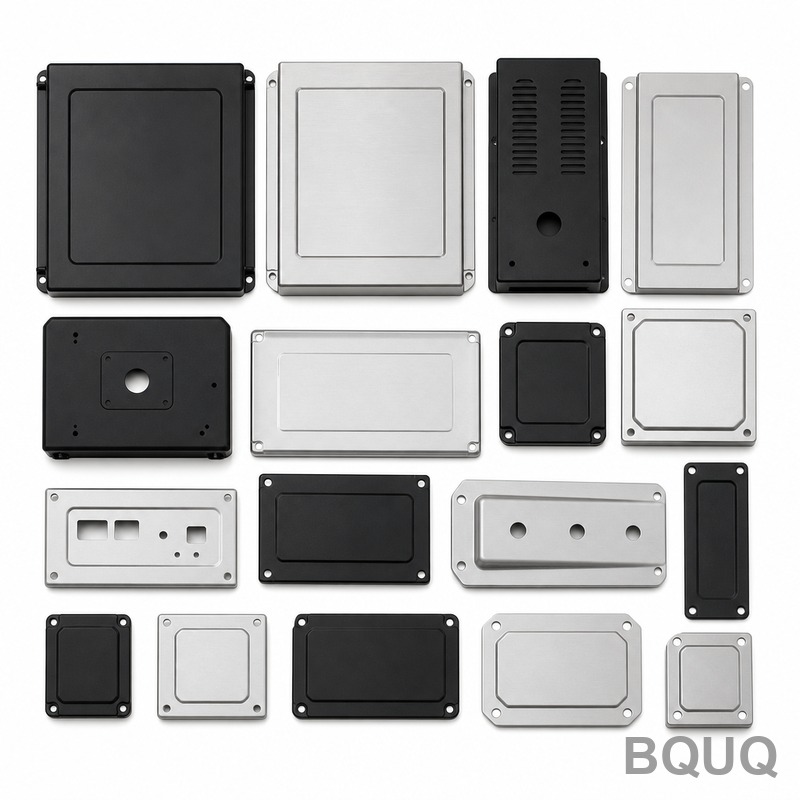
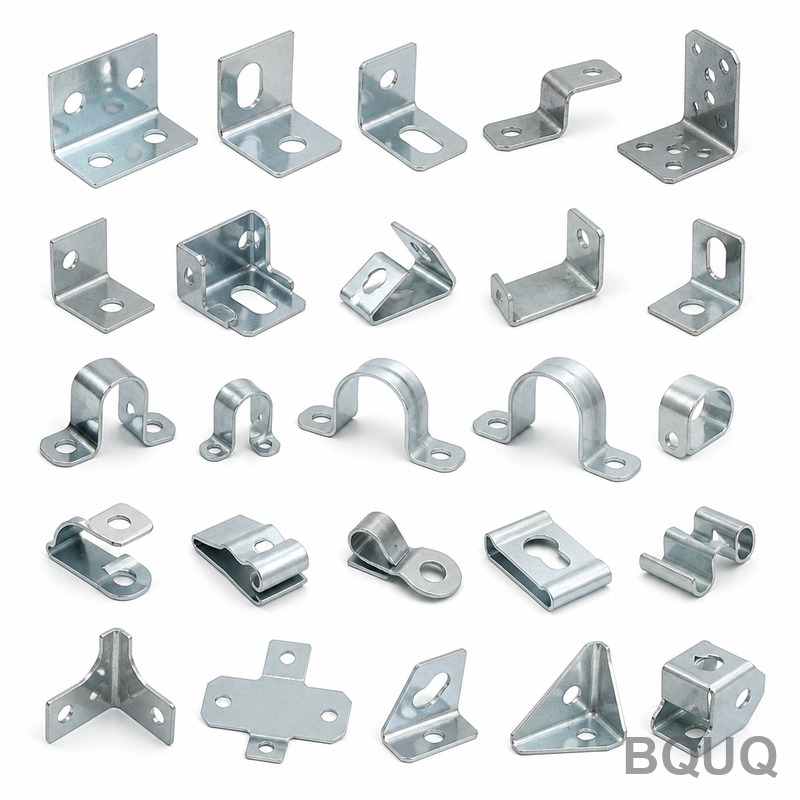
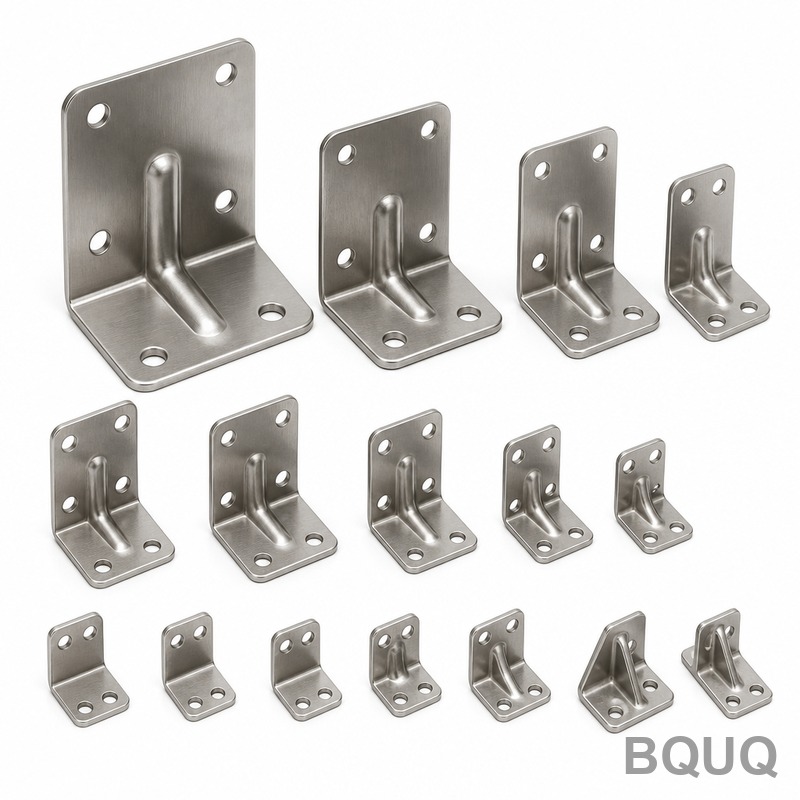
This is a Stamped Sheet Metal Enclosures Covers Collection built for engineers who need repeatable, flat, and burr-free covers without waiting weeks. Every part is stamped on servo
This is a Stamped Sheet Metal Enclosures Covers Collection built for engineers who need repeatable, flat, and burr-free covers without waiting weeks. Every part is stamped on servo-driven presses, hel
Get a Fast Quote for This Part
Send us your drawing / quantity / material — reply within 24h.
This is a Stamped Sheet Metal Enclosures Covers Collection built for engineers who need repeatable, flat, and burr-free covers without waiting weeks. Every part is stamped on servo-driven presses, held to ±0.05 mm dimensional tolerance, and surface ground to Ra 0.8 µm on critical sealing faces. Lead time starts at 48 hours for standard blank sizes, and we run hardness up to HRC 45 on spring-tempered covers—no MOQ, made in China, with full inspection reports shipped alongside every batch.
How We Control Flatness on Covers Up to 600 mm Wide
Large stamped covers warp during cooling and die release. We counter that with a three-step leveling process: primary stamping, then a secondary coining pass (0.02 mm depth control), and finally a stress-relief anneal at 180°C for 2 hours when thickness exceeds 2.0 mm. Measured on a granite surface plate, our covers hold flatness within 0.15 mm over 300 mm length. For EMI gasket grooves, we hold groove depth to ±0.03 mm—so your gasket compresses evenly and your IP rating stays intact.
Die Steel Grades and Hardness That Prevent Burr Growth
We do not use generic D2 for short runs. For this collection, stamping dies are machined from either DC53 (HRC 60-62) or ASP23 powder steel (HRC 64-66) depending on material thickness. DC53 handles 0.5–1.5 mm stainless steel; ASP23 is reserved for abrasive materials like 301 full-hard or 0.8 mm spring steel. Dies are wire-cut, then vacuum heat-treated, and each die is laser-verified for cutting clearance—0.04 mm per side for 1.0 mm sheet. This keeps burr height below 0.05 mm across 50,000 strokes without die sharpening.
Material Options for Stamped Enclosure Covers
You choose from six base materials: 5052-H32 aluminum (lightweight, corrosion-resistant), 304L stainless (for food or marine), 301 full-hard stainless (for spring-back resistance), SPCC cold-rolled steel (lowest cost), C2680 brass (for RF shielding), and 0.8 mm 65Mn spring steel (for clip-on covers). Aluminum covers come with a clear anodize (8-12 µm) or black anodize (15 µm) that meets MIL-A-8625. Steel covers get zinc plating with yellow passivation (8 µm) or powder coat (60-80 µm) in any RAL color.
Specification
Value
Material thickness range
0.4 mm – 4.0 mm (304L up to 3.0 mm)
Max part size
600 mm x 400 mm (single piece)
Dimensional tolerance
±0.05 mm (holes and cutouts), ±0.08 mm (bend-to-hole)
Flatness
0.15 mm over 300 mm length
Burr height
≤ 0.05 mm (visual-free edges)
Surface finish (stamped face)
Ra 0.8 µm (ground), Ra 1.6 µm (as-stamped)
Hardness (tempered covers)
HRC 40 – 45 (65Mn spring steel)
Coining depth accuracy
±0.02 mm
Lead time (tooled parts)
48 hours for blanks, 5 days for custom dies
MOQ
No MOQ – 1 piece accepted for prototyping
Secondary Operations That Make Covers Fit, Not Just Look Right
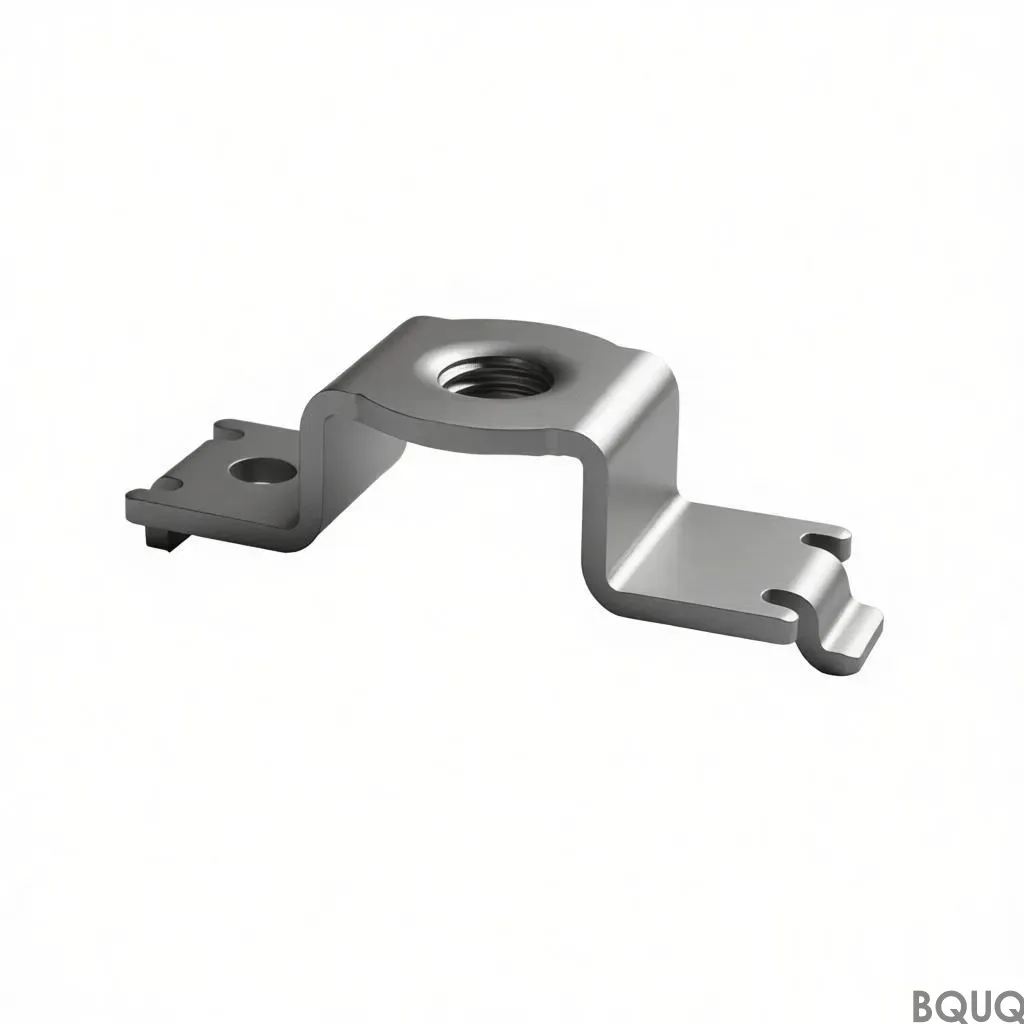
Stamping alone does not create a sealed enclosure. We add tapped holes (M2 to M6, with thread depth verified by go/no-go gauges), PEM self-clinching nuts (installed with 0.05 mm positional accuracy), and countersinks for flat-head screws (82° or 90°, depth held to ±0.05 mm). For covers that need to be watertight, we CNC-machine a gasket groove after stamping—this removes any die-drawn radius and gives you a true 90° wall for a silicone O-ring. We also offer laser engraving of logos or part numbers with 0.3 mm stroke width, readable after plating.
Inspection Before Every Shipment—Not Just a Sampling
Every single cover in this collection is checked, not just the first article. Our QC uses a CMM (accuracy ±0.002 mm) for hole positions and a contour tracer for edge profiles. Flatness is measured on a 0.001 mm resolution dial indicator over a grid of 9 points. Hardness is verified with a portable Leeb tester on each batch of tempered covers. We provide a full dimensional report (PDF) with every shipment—no extra charge. If any dimension deviates beyond your drawing tolerance, we rework or scrap at our cost, not yours.
Packaging and Delivery for Stamped Covers in Production Volumes
Covers are packed in anti-static trays with individual slot separators to prevent surface scratches. For quantities over 500 pieces, we use stacked corrugated cartons with corner protectors—no loose parts. We ship via DHL, FedEx, or sea freight (FOB Shenzhen). For urgent tooling modifications, our in-house toolroom can revise a die within 24 hours. We keep a library of 120+ standard die sets for common cover shapes (rectangular, D-cut, U-channel), which is why we can prototype without tooling cost.
What is the minimum order quantity for this collection?
No MOQ—order one cover for testing or 10,000 for production, pricing adjusts only on material volume.
Can you customize hole patterns, cutouts, or embossing on my stamped cover?
Yes, we modify any die geometry or CNC-machine secondary features—custom holes, slots, louvers, or logos—with a 5-day tooling lead time.
How do you ensure burr-free edges on thin stainless steel?
We use ASP23 die steel with 0.04 mm clearance and a secondary deburring process that removes edges to a radius of 0.05 mm max.
What is the typical lead time for a custom stamped cover from drawing to delivery?
Standard parts ship in 48 hours; custom dies take 5 days plus 2 days for stamping and QC, total 7 days to your door.
Send your drawing for a firm quote within 12 hours—including die cost, piece price, and lead time. Email sc@bquq.com or WhatsApp +86 13713157787. We respond within one business hour, and we speak fluent English and Mandarin.