What Is Thermal Grease vs Thermal Pad? Which Should You Use?
For most electronics and power-dense applications, thermal grease (paste) is the better choice for long-term thermal performance, offering a thermal conductivity range of 1.0 to 8.
For most electronics and power-dense applications, thermal grease (paste) is the better choice for long-term thermal performance, offering a thermal conductivity range of 1.0 to 8.
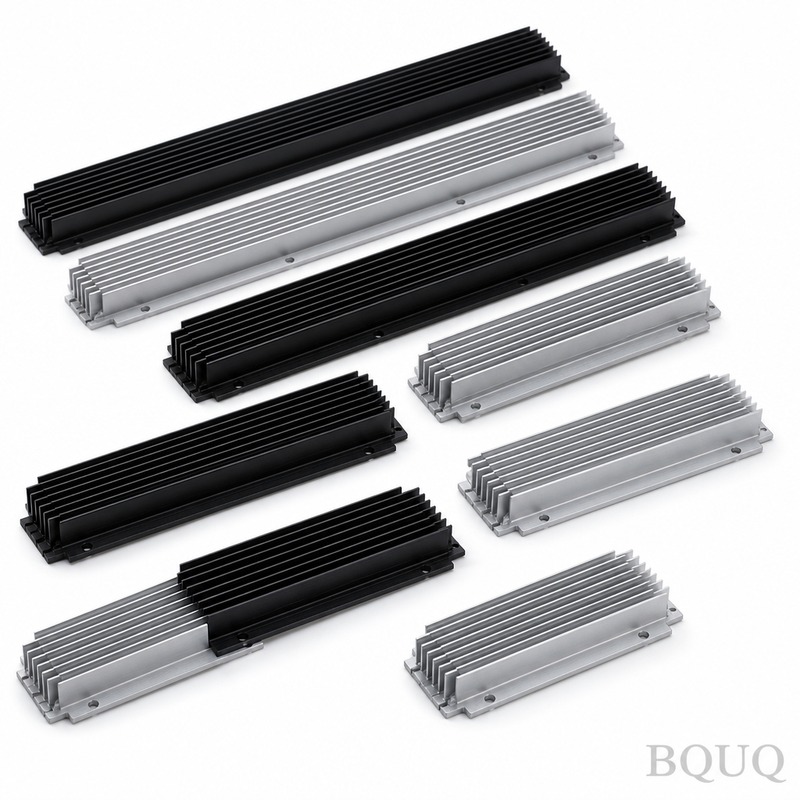
A skived heat sink is a cooling component manufactured by a process called skiving, where a sharp cutting tool peels thin, continuous layers of metal from a solid block to form den
Spreading resistance is the additional thermal resistance encountered when heat flows from a small, concentrated heat source into a larger, thicker heat sink base, causing the heat
Progressive die stamping typically holds tolerances of ±0.05 mm to ±0.125 mm, fine blanking achieves ±0.01 mm to ±0.025 mm, and deep drawing generally maintains ±0.10 mm to ±0.25 m
For high-volume production of terminals, contacts, and connector parts, metal stamping is the most cost-effective manufacturing method, achieving tolerances of ±0.01 mm at producti