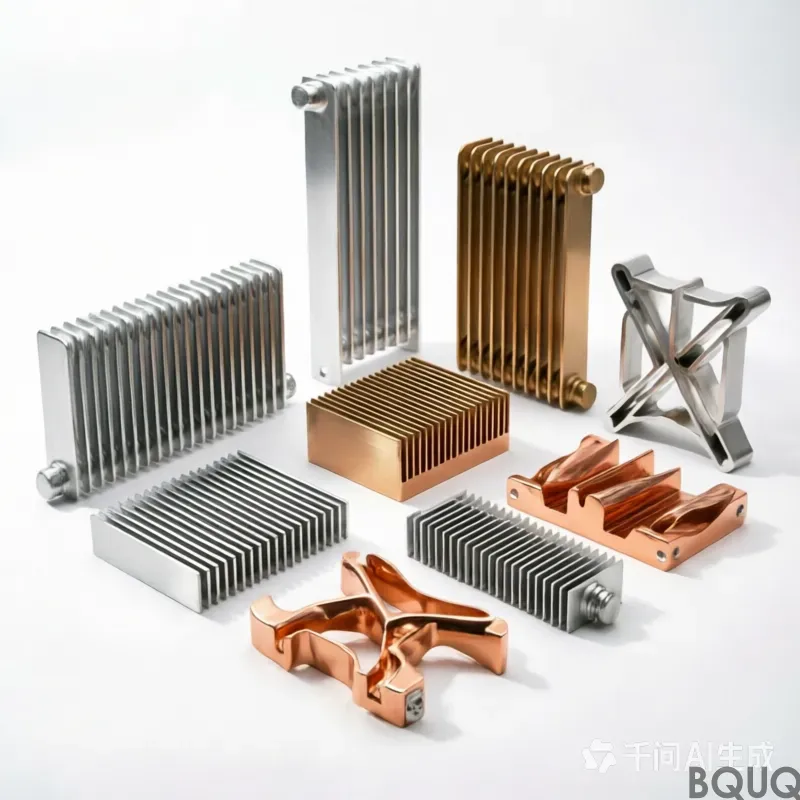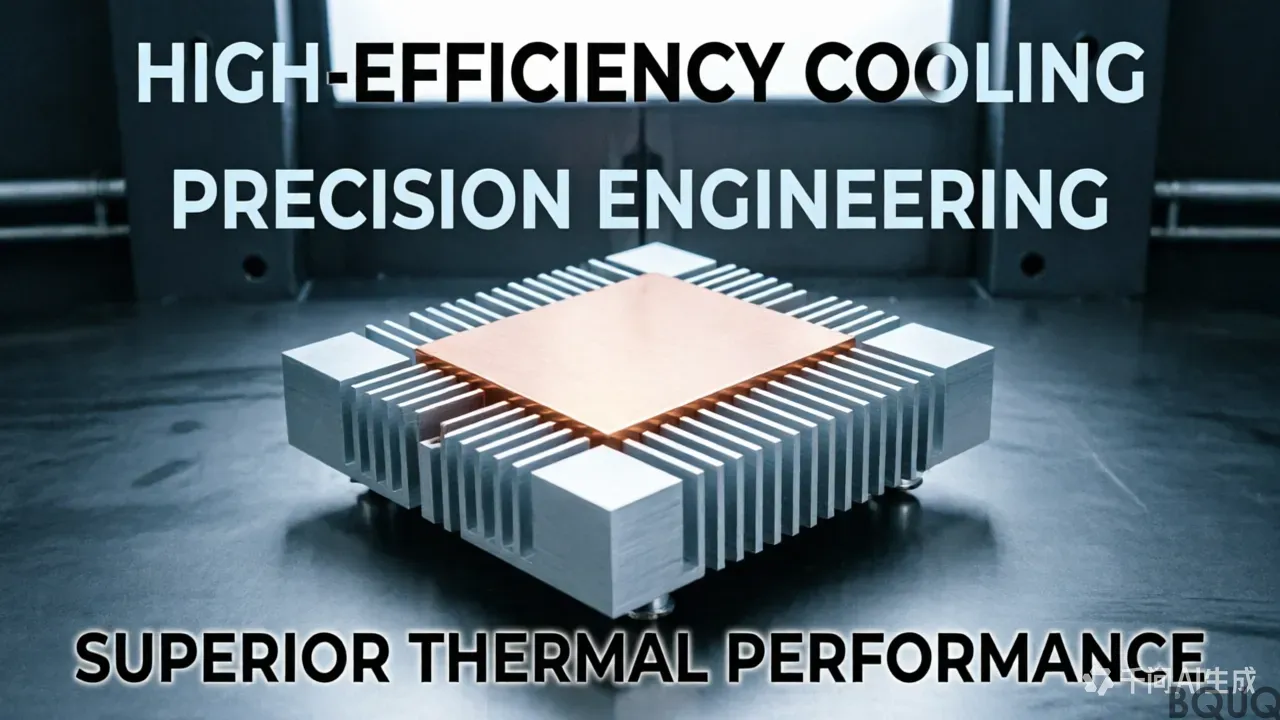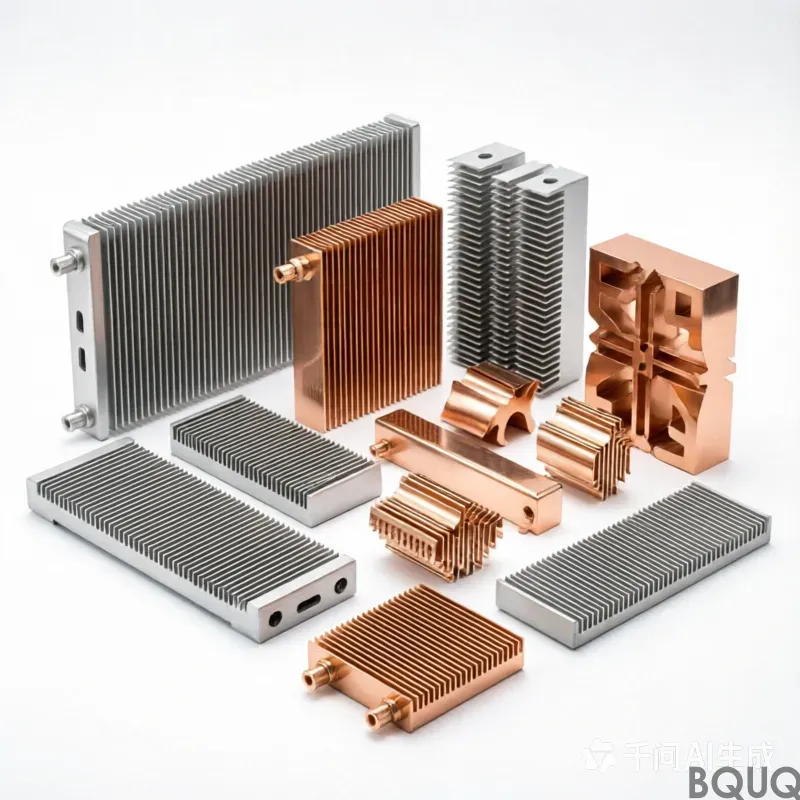
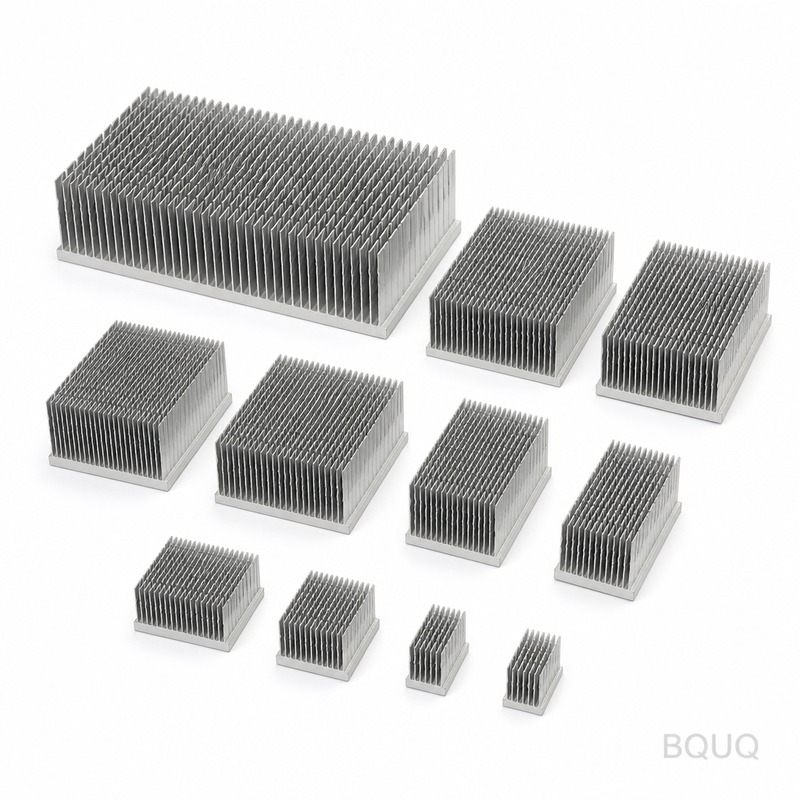
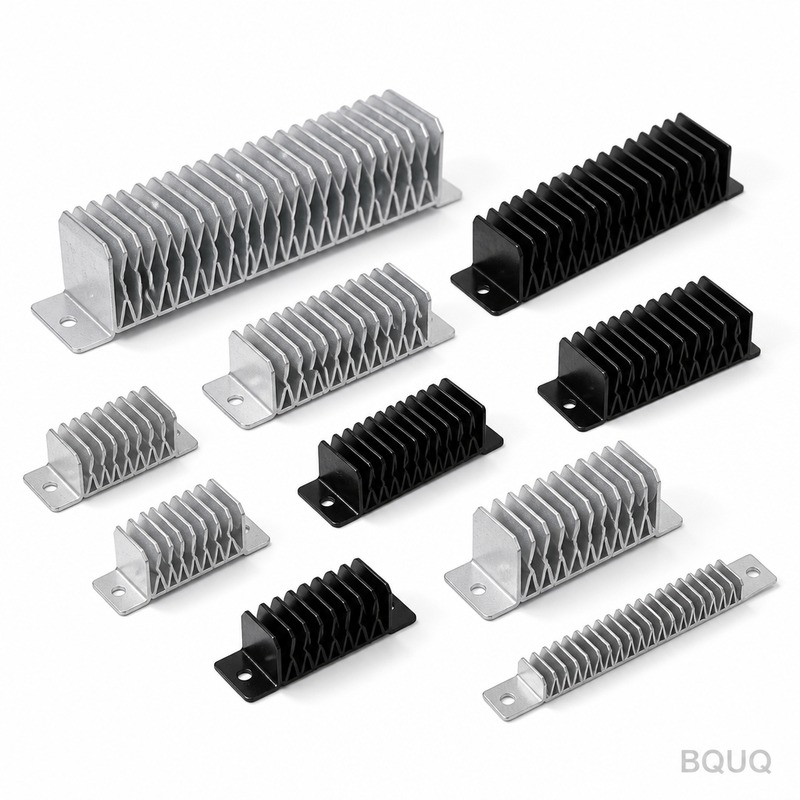
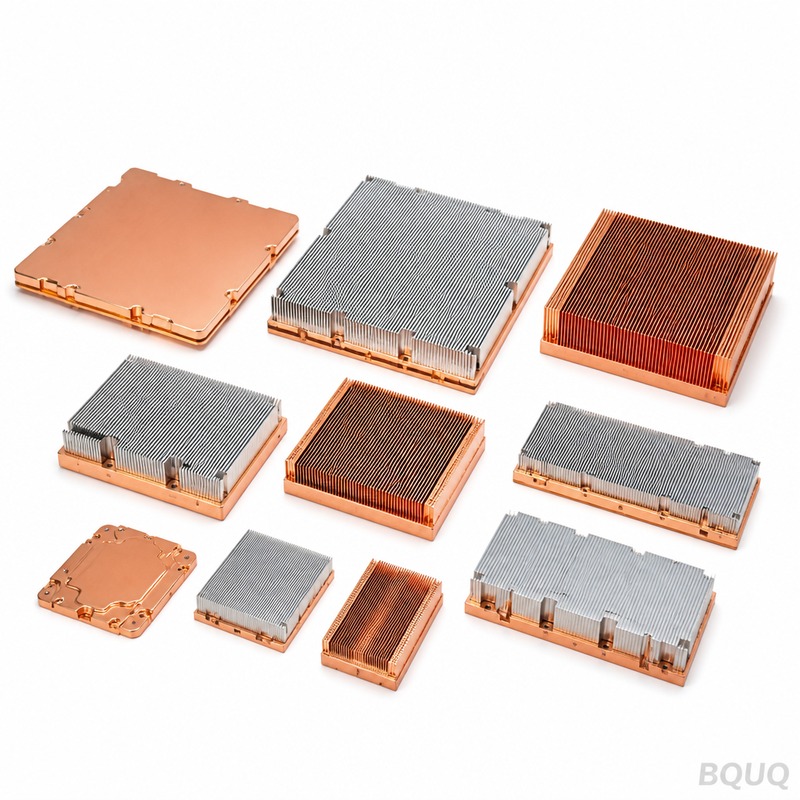
heat sink fan: 1050A aluminium, tolerance 0.20 mm, surface zinc-nickel plating, trivalent passivation, lead time 12 working days, MOQ 2000 pcs. Capacity 300,000 pcs for industrial PLC and control cabinet. Drawing review and first-article report included.
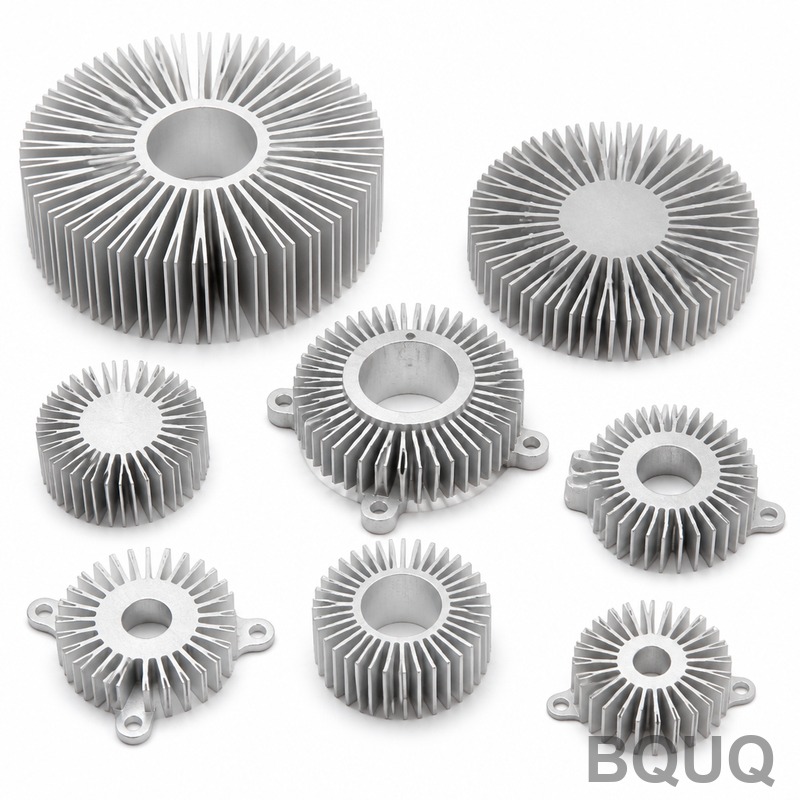
heat sink fan
Key Takeaway
Heat sink fan assemblies from BQUQ use 6061-T6 aluminium with 0.8 mm fin thickness and 4.0 mm fin pitch, delivering 0.35 K/W thermal resistance. General tolerance is ±0.15 mm, protected by tooling geometry and process capability. Zinc-nickel plating with trivalent passivation extends service life. Documentation including material certificates, first-article reports, and PPAP-style records is available at 5000 pcs, with 10 working days lead time when tooling repair is needed.
There is no shortage of suppliers who can quote heat sink fan. The shortage is in suppliers who can explain why ±0.15 mm was chosen, what zinc-nickel plating, trivalent passivation does to service life, and how 10 working days is protected when tooling needs repair.
Related reading: aluminum heat sink plate.
Key Specifications at a Glance
| Parameter | Value / Range |
|---|---|
| Material | 6061-T6 aluminium |
| Fin thickness | 0.8 mm |
| Fin pitch | 4.0 mm |
| Thermal resistance | 0.35 K/W |
| Surface finish | zinc-nickel plating, trivalent passivation |
| General tolerance | ±0.15 mm |
Market and Technical Context
Demand in IGBT power module has shifted from single-source standard parts toward qualified custom parts, which pushes documentation requirements upstream. Material certificates, first-article reports, and PPAP-style records are now requested at 5000 pcs rather than at mass production.
Cost pressure in IGBT power module rarely comes from the raw material. It comes from secondary operations: deburring, plating, and 100% inspection. Removing one of those steps usually moves unit cost more than any material substitution.
See also: Standard Heat Sink Sizes for TO-220, TO-247 and Other Power Packages.
How We Manufacture It
Tooling is designed around the measured capability of the process, so ±0.15 mm is a consequence of tooling geometry rather than an inspection filter. That is why 10 working days is realistic instead of optimistic.
In production, heat sink fan runs with in-process checks at fixed intervals. Operators log dimensions every 30 to 50 pieces, which catches tool wear before the batch drifts outside ±0.15 mm.
Learn more about What Is Heat Sink Thermal Interface Material? TIM Selection Guide.
Final inspection for heat sink fan is sampling-based for general dimensions and 100% for critical features. The split is agreed before tooling, because moving a feature from general to critical changes cost and 10 working days.
Further technical detail: IATF 16949 Certification Benefits for Metal Stamping Suppliers.
Material and Surface Finish
Surface specification for heat sink fan is zinc-nickel plating, trivalent passivation, chosen for the service environment in IGBT power module. Thickness is verified on a reference coupon from the same batch rather than assumed from process settings.
Recommended reading: aluminum heat sink for seeed studio xiao.
Substitution requests are common when 6061-T6 aluminium goes on allocation. We qualify any substitute against the same ±0.15 mm and zinc-nickel plating, trivalent passivation criteria before shipping, and provide the certificate with the change.
Recycled content and RoHS/REACH declarations are available for heat sink fan on request. If your IGBT power module customer audits material origin, ask for the mill certificate at quote stage, not at delivery.
Tolerance and Inspection
General dimensions on heat sink fan are held to ±0.15 mm; critical features are identified on the drawing and controlled separately with a tighter band.
Measurement method is part of the specification. A feature measured on a CMM and the same feature measured with a gauge can disagree, so heat sink fan drawings state how each critical dimension is verified.
Compare it with What Are the Optimal Heat Sink Fin Spacing, Thickness and Height Trade-offs?.
Traceability is kept by heat lot and production date. If a field issue ever appears with heat sink fan, we can identify which batch, which tooling set, and which inspection record applies.
Where It Is Used
IGBT power module is the largest application area for heat sink fan, where the part typically sees continuous load and a wide temperature range rather than laboratory conditions.
Vibration and cycling are the usual life limiters for heat sink fan. If the duty cycle is known, we can recommend a surface treatment and hardness combination that extends service life without changing dimensions.
Related reading: BQUQ CNC Machined Auto Lathe 50 Type Round Bore Spring Collet Chuck.
What to Confirm Before Ordering
Define critical features at quote stage. Moving a feature from general ±0.15 mm to critical after tooling adds cost and extends 10 working days, which is the most avoidable delay in custom sourcing.
See also: Heat Sink Thermal Resistance: How to Read Specs and Select Correctly.
Packaging is part of the specification. Parts arriving with edge damage or mixed lots cost more than the packaging difference, especially for heat sink fan with finished surfaces.
FAQ: Your Questions Before Ordering
What is the minimum order quantity for heat sink fan?
General dimensions are held to ±0.15 mm. Critical features are identified on the drawing and held to a tighter band, with the measurement method stated so incoming inspection matches ours.
How long does production take for heat sink fan?
Prototype quantities start well below production minimums. Production runs for heat sink fan start at 5000 pcs, which is where the process window is proven and unit cost stabilises.
Learn more about Comparing Quotes From Chinese Suppliers: Line by Line.
Can you work from our existing drawing?
Standard lead time for heat sink fan is 10 working days after drawing approval and tooling sign-off. Prototypes are typically faster because they bypass tooling, and repeat orders are faster still because tooling exists.
What surface finishes are available for heat sink fan?
Yes. Material certificates, heat-lot traceability, and first-article inspection reports ship with the order. If your IGBT power module customer requires additional documentation, specify it at quote stage.
How do you handle a design change mid-program?
Changes are documented against the original first-article report. We identify which dimensions are affected, requote only the affected operations, and tell you whether existing stock of heat sink fan remains usable.
Send the drawing and the annual volume. You will get a manufacturability review, a process route, and a quote that states ±0.15 mm, 10 working days, and 5000 pcs explicitly rather than by implication.
Further technical detail: How Can Heat Sink Design Optimize Thermal Performance for Electronics?.
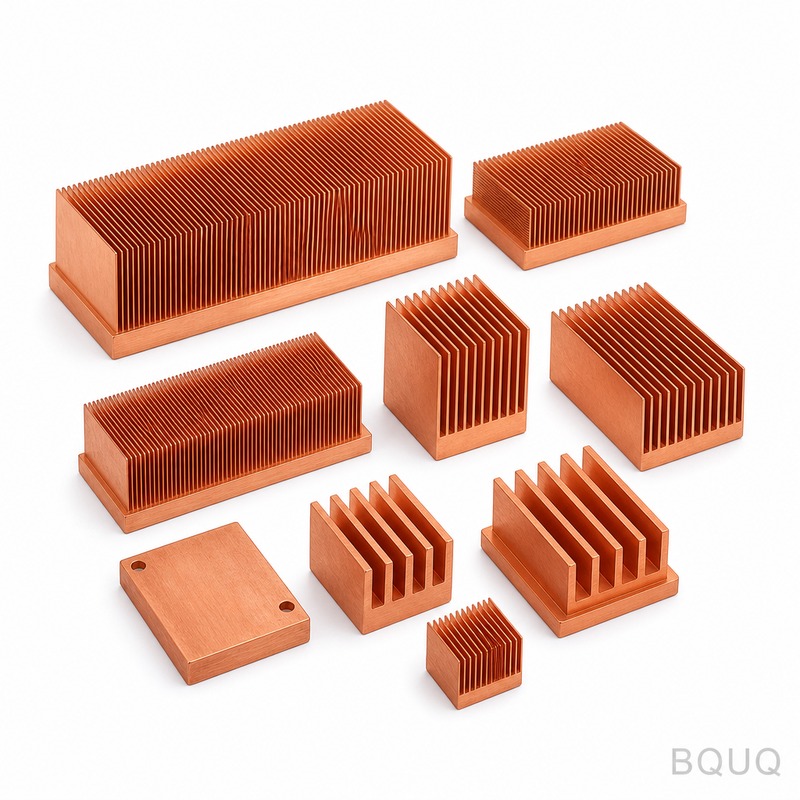
Key Specifications and Selection Guide
Spec comparison
| Parameter | Value / Range |
|---|---|
| Material | 6061-T6 aluminium |
| Tolerance | ±0.15 mm |
| Lead time | 10 working days |
| MOQ | 5000 pcs for full documentation |
| Capacity | Not specified in excerpt |
Selection / comparison
| Option | Best for | Trade-off |
|---|---|---|
| Standard single-source part | Low initial cost, quick availability | Limited documentation, less design flexibility |
| Qualified custom part | IGBT power module, high reliability | Higher upfront tooling and qualification cost |
| Zinc-nickel plating + trivalent passivation | Extended service life, corrosion resistance | Added secondary operation cost |
| As-machined without plating | Prototyping or low-corrosion environments | Reduced service life, no passivation benefit |
| 100% inspection | Critical tolerance and safety applications | Higher unit cost than sampling inspection |
Process / inspection
| Stage | Control | Record |
|---|---|---|
| Tooling design | Based on measured process capability | Tooling geometry documentation |
| Machining | Fin thickness 0.8 mm, fin pitch 4.0 mm | In-process dimensional checks |
| Deburring | Secondary operation for edge quality | Visual and tactile inspection |
| Plating | Zinc-nickel plating with trivalent passivation | Plating thickness and adhesion records |
| Final inspection | General tolerance ±0.15 mm | First-article report, PPAP-style records at 5000 pcs |
Frequently Asked Questions
What is the thermal resistance of your heat sink fan?
Our heat sink fan achieves 0.35 K/W thermal resistance using 6061-T6 aluminium with 0.8 mm fin thickness and 4.0 mm fin pitch. This performance is validated through tooling designed around measured process capability, ensuring consistent heat dissipation for IGBT power modules and similar applications.
Why is the tolerance ±0.15 mm and not tighter?
The ±0.15 mm general tolerance is a direct consequence of tooling geometry and measured process capability. Attempting tighter tolerances would require secondary operations or slower machining, increasing cost without functional benefit for most heat sink fan applications. We can discuss tighter tolerances if your design requires them.
Recommended reading: BQUQ Cnc Turned Precision Shafts.
What does zinc-nickel plating with trivalent passivation do?
Zinc-nickel plating with trivalent passivation significantly extends service life by improving corrosion resistance compared to bare aluminium or standard zinc plating. This surface finish is applied as a secondary operation and is one of the cost drivers in heat sink fan production, but it protects the part in harsh environments.
Compare it with How Should You Size and Mount a Heat Sink for Raspberry Pi and SBCs?.
What documentation is available and at what order quantity?
Material certificates, first-article reports, and PPAP-style records are available. Due to demand shifts in IGBT power modules, these documents are now requested at 5000 pcs rather than at mass production. We recommend confirming documentation requirements before placing your order.
How do you protect the 10 working day lead time if tooling needs repair?
We design tooling around measured process capability and maintain repair protocols to minimize downtime. The 10 working day lead time assumes normal production conditions. If tooling repair is needed, we prioritize it within our schedule, but actual lead time may vary. Please confirm current lead time at order placement.
What are the main cost drivers for heat sink fan production?
Cost pressure rarely comes from raw material. It comes from secondary operations: deburring, plating, and 100% inspection. Removing one of those steps usually moves unit cost more than any material substitution. For example, eliminating 100% inspection reduces cost but may increase risk of escaping defects.
Can you supply heat sink fans for IGBT power modules?
Yes, our heat sink fans are suitable for IGBT power modules. Demand in this sector has shifted from single-source standard parts toward qualified custom parts. We provide the required documentation, including material certificates and first-article reports, typically at 5000 pcs, and can discuss your specific technical requirements.