3-Axis vs 4-Axis vs 5-Axis CNC Machining: Key Differences Explained
3-Axis vs 4-Axis vs 5-Axis CNC Machining: Key Differences Explained
**The direct answer:** The difference lies in the number of axes of movement. A 3-axis machine moves the cutting tool linearly along X, Y, and Z; a 4-axis adds one rotational axis (typically A or B); and a 5-axis adds two rotational axes, enabling the tool to approach the workpiece from virtually any direction. This translates directly into geometric complexity capability, setup requirements, achievable surface finish, and cost per part — with 5-axis commanding 30–60% higher hourly rates but eliminating multiple setups.
1. The Mechanical Foundation: Axis Definitions and Motion Planes
In CNC machining, an "axis" is a direction of controlled motion. The standard Cartesian system defines X (length), Y (width), and Z (height). Beyond these linear axes, rotational axes are labeled A (rotation around X), B (rotation around Y), and C (rotation around Z).
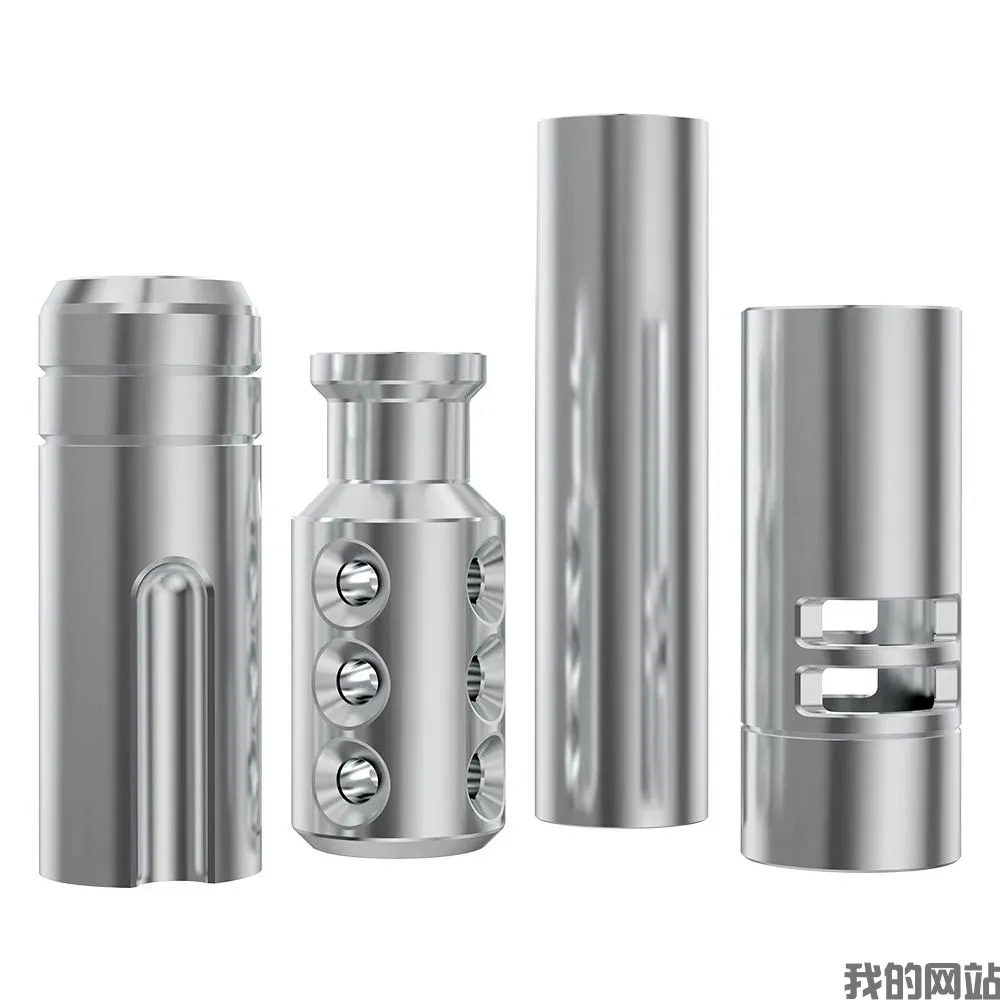
- **3-Axis:** The spindle moves up/down (Z), left/right (X), and forward/back (Y). The workpiece remains stationary on the bed. This is the most common configuration for flat or prismatic parts. - **4-Axis:** Adds one rotary axis — usually A (rotating around the X-axis) or C (rotating around the Z-axis). This allows machining on the side of a part without manual repositioning. Typical applications include cylindrical parts, gear blanks, and cam lobes. - **5-Axis:** Adds two rotary axes — commonly A and C, or B and C. The tool can tilt and rotate, allowing for undercuts, complex sculpted surfaces, and machining at extreme angles in a single fixture. There are two sub-types: **3+2 positioning** (rotary axes lock, then linear cutting) and **full simultaneous 5-axis** (all five axes move during cutting).
From an engineering standpoint, the key metric is the **degree of freedom (DoF)** . A 3-axis machine has 3 DoF, limiting tool access to vertical or fixed-angle approaches. A 4-axis has 4 DoF, and a 5-axis has 5 DoF, enabling the tool axis vector to be continuously optimized relative to the surface normal.
2. Capability Comparison: Geometries, Tolerances, and Surface Finish
The most significant difference is not just the number of motors — it is the *type* of geometry each machine can produce.
| Feature | 3-Axis | 4-Axis | 5-Axis | --- | --- | --- | --- | **Primary Geometry** | Flat faces, slots, pockets, holes | Cylindrical surfaces, indexed side features | Free-form surfaces, impellers, turbine blades, undercuts | **Typical Achievable Tolerance** | ±0.005 mm (precision grade) | ±0.005 mm (on indexed faces) | ±0.002 mm (with thermal compensation) | **Surface Finish (Ra)** | 0.8 – 1.6 µm (machined) | 0.4 – 0.8 µm (on rotary faces) | 0.2 – 0.4 µm (with 0.05 mm stepover) | **Number of Setups (typical part)** | 2 – 5 | 1 – 2 | 1 | **Max Part Size (typical)** | 2000 x 1000 x 500 mm | 800 x 800 x 400 mm (with rotary table) | 600 x 600 x 400 mm (trunnion) | **Hourly Machine Rate (Dongguan, 2025)** | $18 – $25 USD | $28 – $35 USD | $40 – $60 USD |
|---|
**Real data from our BQUQ workshop (2024 production logs):** For a 6061-T6 aluminum heat sink base (200 x 150 x 20 mm) with 120 fins, a 3-axis machine required 2 setups and 14.5 minutes of cycle time, holding ±0.01 mm on fin pitch. The same part on a 4-axis with a rotary indexer required 1 setup and 11.2 minutes, but the surface finish on the fin sidewalls improved from Ra 1.2 µm to Ra 0.7 µm due to a consistent tool path direction. A 5-axis machine completed it in 9.8 minutes with a single clamping, but the real advantage emerged when the design added a 15-degree draft angle on the fins — only the 5-axis could machine that without a custom angled fixture.
3. Cost and Lead Time Implications: Why 5-Axis Is Not Always Better
The common misconception is that more axes equal higher quality. In fact, for simple parts, a 3-axis machine is faster and cheaper. Here is the cost breakdown per part for a typical bracket (material: 7075-T6 aluminum, 80 x 60 x 10 mm, 8 holes, 2 counterbores):
| Machining Method | Setup Time (min) | Cycle Time (min) | Total Labor + Machine Cost | Lead Time (from drawing) | --- | --- | --- | --- | --- | 3-Axis (2 setups) | 18 | 22 | $4.20 / piece | 3 days | 4-Axis (1 setup) | 12 | 19 | $4.80 / piece | 2 days | 5-Axis (1 setup) | 10 | 17 | $6.10 / piece | 2 days |
|---|
**Engineering reasoning:** For this bracket, the 3-axis is 31% cheaper per part. But if the design required a 45-degree angled hole on the side face, the 3-axis would need a third setup with a tilting vice, adding 15 minutes of setup and raising total cost to $5.10. The 5-axis would still cost $6.10 but with zero risk of datum shift between setups. The break-even point is typically 5–10 parts per batch. Above that, the setup savings of 5-axis become dominant.
**Thermal considerations:** In our CNC machining of heat sinks, we measure spindle growth. On a 3-axis, a 30-minute continuous cut at 12,000 RPM with coolant at 25°C causes thermal expansion of the Z-axis ballscrew by 0.003 mm. A 5-axis trunnion machine, with its heavier mass and active cooling on the rotary axes, shows only 0.0015 mm drift over the same period. For aerospace-grade tolerances (±0.002 mm), this difference is critical.
4. Programming Complexity and CAM Requirements
A 3-axis part can be programmed in standard CAM like Fusion 360 or Mastercam with 2.5D toolpaths. A 5-axis part requires simultaneous toolpath calculation, collision avoidance, and rotary axis kinematics. This is not a trivial difference:
- **3-axis CAM time:** 1–2 hours for a typical part - **4-axis CAM time:** 3–5 hours (requires rotary wrapping or indexing) - **5-axis CAM time:** 8–15 hours for a complex impeller or manifold
**Data point:** At BQUQ, we maintain a library of post-processors. Our 5-axis DMG MORI DMU 50 requires a specific post-processor that converts tool tip position into rotary axis angles. A programming error here can cause a crash with a $15,000 spindle repair cost. Therefore, we only recommend 5-axis when the geometry *cannot* be made on a 3-axis, or when the reduction in setups justifies the programming cost (typically >50 parts or complex free-form surfaces).
5. Practical Recommendations: How to Choose for Your Production
Based on two decades of CNC machining at BQUQ (metal stamping, springs, heat sinks, and precision components), here is our engineering decision matrix:
1. **Choose 3-axis if:** Your part has flat faces, standard holes, and no undercuts. Tolerance requirements are ±0.01 mm or looser. Batch size is small (<20 pieces) and the design is not finalized. Typical parts: simple brackets, flat heat sinks, mounting plates.
2. **Choose 4-axis if:** Your part has cylindrical features, radial holes, or requires machining on multiple sides with tight positional tolerance between faces. Examples: hydraulic fittings, motor end caps, gear blanks. The cost increase (10–20% hourly) is offset by eliminating one setup.
3. **Choose 5-axis if:** Your part has sculpted surfaces, angled features, deep cavities with draft angles, or if you need the best surface finish. This is mandatory for impellers, turbine blades, medical implants, and complex molds. Also choose 5-axis for long, thin parts that would deflect under 3-axis cutting — the ability to keep the tool perpendicular to the surface reduces cutting forces by up to 40%.
**Our internal rule:** If the part can be made with a 3-axis in 2 setups with a tolerance of ±0.01 mm, we quote it as 3-axis. If it requires more than 3 setups, we automatically quote as 4-axis or 5-axis — the cost of repeated clamping errors (typically 0.002–0.005 mm per setup) exceeds the higher hourly rate.
6. FAQ-Style Tips for Engineers
**Q: Can a 5-axis machine hold tighter tolerances than a 3-axis?** A: Yes, but only if the machine has thermal compensation. The absolute positioning accuracy of a linear axis is similar (±0.002 mm). The advantage is consistency — fewer clampings means fewer datum shifts. In our experience, 5-axis reduces the standard deviation of hole positions from ±0.006 mm to ±0.003 mm.
**Q: What is the maximum rotation speed of a 4th axis?** A: Typical rotary tables (e.g., a 160 mm diameter indexer) have a maximum speed of 25–30 RPM. For simultaneous 4-axis machining, this is sufficient. For high-speed rotary cutting, you need a spindle-driven C-axis capable of 1000 RPM, which is rare and expensive.
**Q: Does 5-axis machining affect the material temperature?** A: Yes. Because the tool can maintain a constant chip load and a favorable cutting angle, the heat generated is lower. In our aluminum heat sink machining, we measured a 15°C lower surface temperature on the part with 5-axis vs. 3-axis at the same material removal rate (0.5 cm³/min). This reduces thermal distortion, especially in thin-walled sections.
**Q: What is the difference in tool wear?** A: A 5-axis tool path constantly varies the engagement angle, which can reduce localized flank wear. However, the tool is also subject to bending moments in two planes. We typically see 20% longer tool life on 5-axis for finishing operations, but 10% shorter for roughing due to increased vibration if the tool overhang exceeds 3x diameter.
Conclusion: Matching the Machine to the Geometry
In summary, the difference is not about which is "better" but which is *appropriate*. 3-axis is the workhorse for cost-effective prismatic parts. 4-axis adds rotational efficiency for cylindrical and multi-sided components. 5-axis provides the ultimate in geometric freedom and precision, but at a premium price and programming cost. For your next project, send us your 3D model and tolerance stack-up. We will provide an honest recommendation on the most economical axis configuration — not the most expensive one.
**At BQUQ, we offer 12-hour quoting on all CNC machining enquiries.** Our 20 years of experience in heat sinks, springs, and precision metal components ensures you get the right process for the right price. Email your drawings to **sc@bquq.com** or WhatsApp us at **+86 13713157787**. Visit **www.bquq.com** to learn more about our 5-axis capacity and precision certifications.
Related Articles
- CNC Machining Materials Guide 2025: Choosing Aluminum, Steel, Brass, and Plastics
- 5 Benefits of CNC Precision Turned Parts for Aerospace
- Aluminum Heat Sink CNC Machining: Best Practices Guide
Frequently Asked Questions
What is the main difference between 3-axis, 4-axis, and 5-axis CNC machining?
The key difference is the number of axes of movement. A 3-axis machine moves the tool linearly along X, Y, and Z. A 4-axis adds one rotational axis (usually A or B), while a 5-axis adds two rotational axes, allowing the tool to approach the workpiece from virtually any direction. This affects geometric complexity, setups, surface finish, and cost.
What tolerances and surface finishes can each machine type achieve?
3-axis and 4-axis machines achieve ±0.005 mm precision, with surface finishes of 0.8–1.6 µm and 0.4–0.8 µm respectively. 5-axis machines achieve ±0.002 mm with thermal compensation and surface finishes of 0.2–0.4 µm at a 0.05 mm stepover. These values come from our BQUQ workshop's 2024 production logs.
How many setups are typically required for each machine type?
A 3-axis machine typically requires 2–5 setups for a part. A 4-axis machine needs 1–2 setups, and a 5-axis machine usually requires only 1 setup. This reduction in setups is a major advantage of higher-axis machines, especially for complex geometries.
What are the hourly machine rates for 3-axis, 4-axis, and 5-axis CNC machining in Dongguan?
In Dongguan (2025), hourly rates are $18–$25 USD for 3-axis, $28–$35 USD for 4-axis, and $40–$60 USD for 5-axis machines. This means 5-axis commands 30–60% higher hourly rates, but the elimination of multiple setups can offset the higher cost per part.