Aluminum vs Copper Heat Sink: Which Should You Choose?
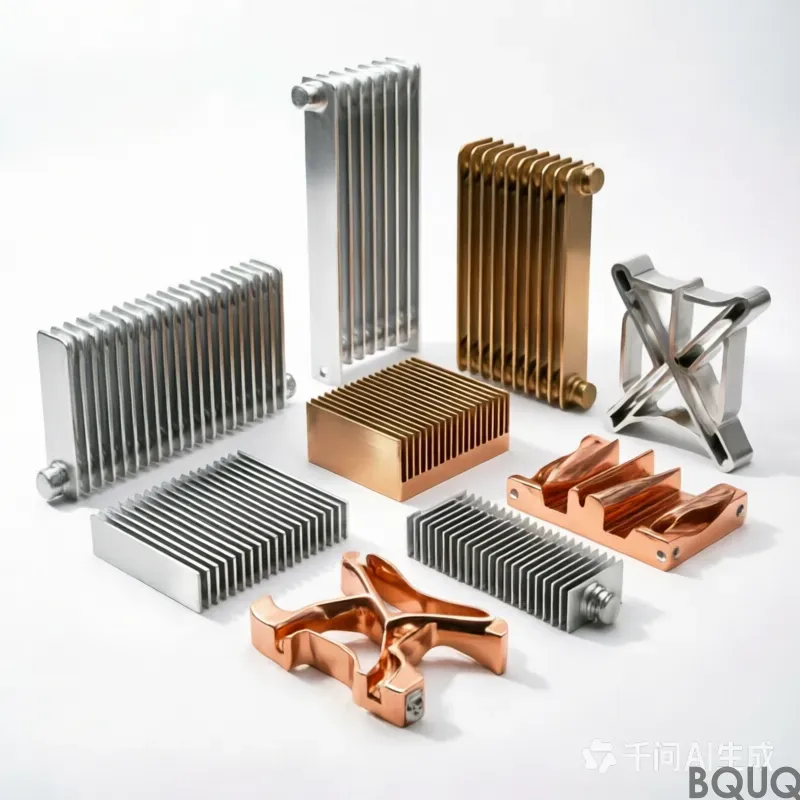
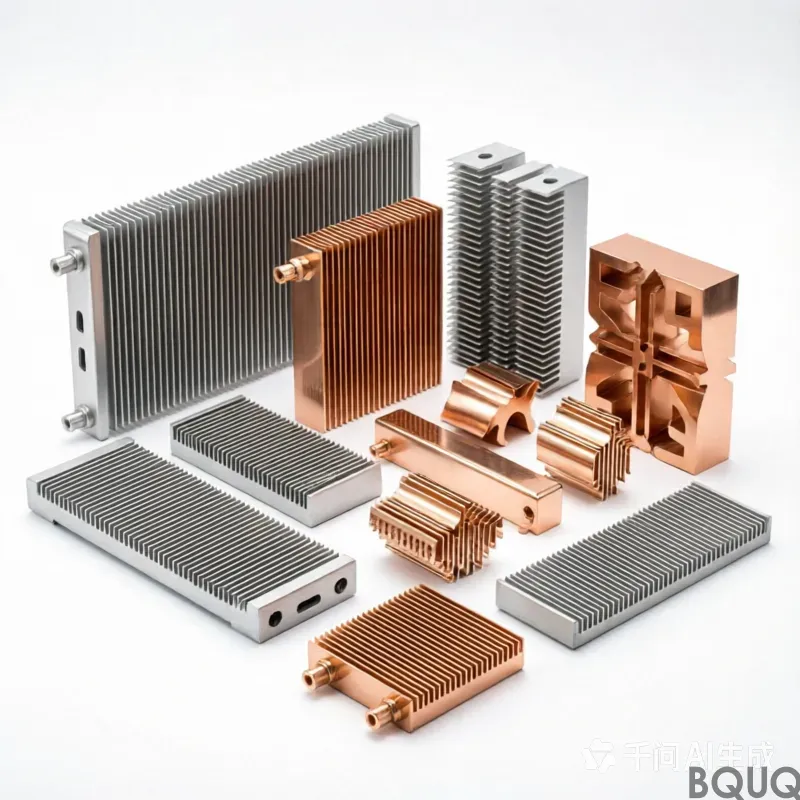
For most commercial and consumer electronics applications, aluminum is the superior choice for heat sinks due to its lower cost, lighter weight, and adequate thermal conductivity. However, copper becomes the mandatory selection when space is critically constrained and thermal dissipation requirements exceed aluminum’s physical limits. This article provides a quantitative comparison of thermal performance, manufacturability, cost, and weight to guide your engineering decision.
Thermal Conductivity and Performance Limits
The fundamental difference lies in material properties. Pure copper has a thermal conductivity of approximately 401 W/m·K, while aluminum alloys (typically 6063-T5 or 6061-T6) range from 167 to 201 W/m·K. This means copper conducts heat roughly 2 to 2.4 times more efficiently than aluminum.
In practical terms, a copper heat sink can achieve the same thermal resistance as an aluminum heat sink with approximately 40-50% less volume. For example, a 100mm x 100mm x 40mm aluminum heat sink with a thermal resistance of 0.35°C/W can be replaced by a 100mm x 100mm x 20mm copper heat sink with a similar resistance of 0.30°C/W. However, the copper unit will weigh approximately 1.8 kg compared to the aluminum unit's 1.1 kg, representing a 64% weight increase.
The performance crossover point occurs when the thermal resistance requirement falls below 0.20°C/W for a given footprint. At this level, aluminum requires either active cooling (fans) or a significantly increased surface area, which may not fit within the enclosure. Copper allows a compact passive solution where aluminum cannot.
Weight and Structural Considerations
Aluminum has a density of approximately 2.70 g/cm³, while copper has a density of 8.96 g/cm³. This 3.3x difference directly impacts both the final product weight and the mechanical mounting requirements.
For a typical heat sink with a base thickness of 8mm and 25 fins of 1.5mm thickness at 15mm height, the weight difference is substantial. An aluminum version of this geometry (120mm x 90mm x 25mm) weighs approximately 320 grams. The identical copper geometry weighs approximately 1,060 grams. This weight difference affects: - PCB solder joint reliability under vibration (copper requires additional mechanical fasteners) - Thermal cycling stress on mounting points - Shipping costs and logistics - Handling safety in production (ergonomic considerations)
For applications exceeding 200 grams of heat sink weight, aluminum is recommended unless thermal requirements dictate otherwise, as copper's mass can cause mechanical failure in vertical mount orientations.
Cost Breakdown: Material and Fabrication
Material cost is the dominant factor. As of 2025 pricing, aluminum 6063-T5 extrusion billet costs approximately $2.80-$3.50 per kilogram, while copper C11000 (electrolytic tough pitch) costs $9.50-$12.00 per kilogram. This represents a 3.4x to 3.7x material cost difference.
Fabrication processes also differ significantly. Aluminum heat sinks are predominantly produced via extrusion, which offers high throughput and low tooling costs. A standard aluminum extrusion die costs $800-$1,500, and the extrusion process can produce profiles at a rate of 20-40 meters per hour. CNC machining on aluminum is fast, with typical spindle speeds of 12,000-18,000 RPM and feed rates of 3,000-5,000 mm/min.
Copper heat sinks require different manufacturing approaches. Copper cannot be extruded as easily due to its higher melting point (1,084°C vs 660°C for aluminum) and work-hardening characteristics. Common methods include: - CNC machining from solid copper billet (material waste 60-70%) - Skiving (for finned profiles) with slower feed rates - Die-casting (limited to simple geometries due to porosity issues) - Forging (high tooling cost, $5,000-$15,000 for dies)
CNC machining copper requires reduced speeds (6,000-9,000 RPM) and specialized tooling with diamond-like coatings. Machining time increases by 40-60% compared to aluminum for identical geometries.
| Parameter | Aluminum 6063-T5 | Copper C11000 |
| Material Cost (USD/kg) | $2.80 - $3.50 | $9.50 - $12.00 |
| Thermal Conductivity (W/m·K) | 167 - 201 | 385 - 401 |
| Density (g/cm³) | 2.70 | 8.96 |
| Tensile Strength (MPa) | 160 - 200 | 220 - 250 |
| Hardness (Brinell) | 60 - 70 | 80 - 90 |
| Melting Point (°C) | 660 | 1,084 |
| Typical Machining Cost (USD/hr) | $55 - $75 | $85 - $110 |
| Surface Finish (Ra, μm) | 0.8 - 1.6 | 1.6 - 3.2 |
| Corrosion Resistance | Excellent (native oxide) | Requires coating (Ni or Sn) |
| Lead Time (extruded, days) | 7 - 14 | 14 - 21 (machined) |
| Tooling Cost (extrusion die, USD) | $800 - $1,500 | N/A (machining fixtures $500+) |
Corrosion and Environmental Performance
Aluminum forms a protective oxide layer (Al₂O₃) naturally when exposed to air, providing excellent corrosion resistance. This oxide layer is insulating but does not degrade thermal performance significantly when the heat sink is mounted with proper thermal interface material.
Copper, however, oxidizes readily to form cuprous oxide (Cu₂O), which is a poor thermal conductor. Without surface treatment, a copper heat sink will degrade in thermal performance by 5-15% over 6-12 months in humid environments. Standard mitigation includes: - Nickel plating (electroless or electrolytic, 5-10 μm thickness) - Tin plating (for soldering applications) - Clear organic coating (chromate conversion or OSP)
These coatings add $0.50-$1.20 per heat sink to the cost and typically increase thermal resistance by 1-3% due to the added interface layer. Aluminum heat sinks can be used bare with an anodized finish (costing $0.10-$0.30 per unit) that improves both corrosion resistance and surface emissivity.
For outdoor applications or environments with high humidity or salt content, aluminum with hard anodizing (25-50 μm) is recommended. Copper requires a minimum of 8 μm nickel plating under the same conditions, adding significant cost and lead time.
Application-Specific Recommendations
For LED lighting modules operating at 70-90°C junction temperature, aluminum heat sinks are standard. The thermal budget is typically 0.5-0.8°C/W, which aluminum can achieve with a fin height of 25-40mm and natural convection. Copper offers no advantage in this range.
For high-power IGBT modules in inverters with heat flux exceeding 50 W/cm², copper is required. At this heat flux, the spreading resistance within the heat sink base becomes dominant. A 5mm copper base has a spreading resistance of 0.12°C/W, while a 5mm aluminum base has 0.28°C/W. This 0.16°C/W difference can mean the difference between a junction temperature of 125°C (acceptable) and 145°C (failure threshold).
For automotive applications, weight is critical. A copper heat sink for a 5kW motor controller weighs 2.4 kg, while an aluminum equivalent weighs 0.9 kg. The aluminum solution with a 12V fan can achieve the same thermal performance with 0.3 kg additional fan weight, resulting in a 1.2 kg system weight saving.
Manufacturing Tolerances and Quality Control
Precision requirements differ between materials. Aluminum extrusion can hold tolerances of ±0.1mm on base thickness and ±0.05mm on fin pitch for profiles up to 200mm width. CNC machined aluminum can achieve ±0.02mm tolerances. Copper machining holds similar tolerances but with a higher risk of burr formation due to its ductility. Deburring requirements for copper add 5-10 minutes per part in secondary operations.
The flatness of the mounting surface is critical for thermal interface material performance. For aluminum, lapping or fly-cutting can achieve a flatness of 0.02mm over 100mm². Copper achieves 0.015mm with the same processes due to its higher rigidity. However, copper's higher coefficient of thermal expansion (17 ppm/°C vs 23 ppm/°C for aluminum) must be considered when mounting to ceramic substrates or different CTE materials.
For volume production above 1,000 units, aluminum extrusion with CNC finishing is the most cost-effective process. For copper, production quantities above 500 units require careful process planning to manage machining cycle times. A typical aluminum heat sink for a 100W application requires 8-12 minutes of CNC time; copper requires 14-18 minutes.
FAQ-Style Engineering Tips
What is the maximum thermal resistance achievable with aluminum? With optimal fin geometry (1.2mm fin thickness, 6mm fin spacing, 40mm fin height) and forced air at 3 m/s, aluminum can achieve 0.15°C/W. Below this, copper is necessary.
Can I retrofit an aluminum heat sink to a copper design? Yes, but you must increase the surface area by 50-60% or increase airflow by 30-40%. Mounting hole patterns and base flatness requirements remain identical.
How do I decide for a prototype? Start with aluminum for functional testing. If junction temperatures exceed specifications by more than 10°C, switch to copper. This approach saves prototype costs while validating the thermal design.
Is copper worth the cost for consumer electronics? Only if the product requires a fanless design with power dissipation above 25W in a volume under 50cm³. Otherwise, aluminum with a small fan is more cost-effective.
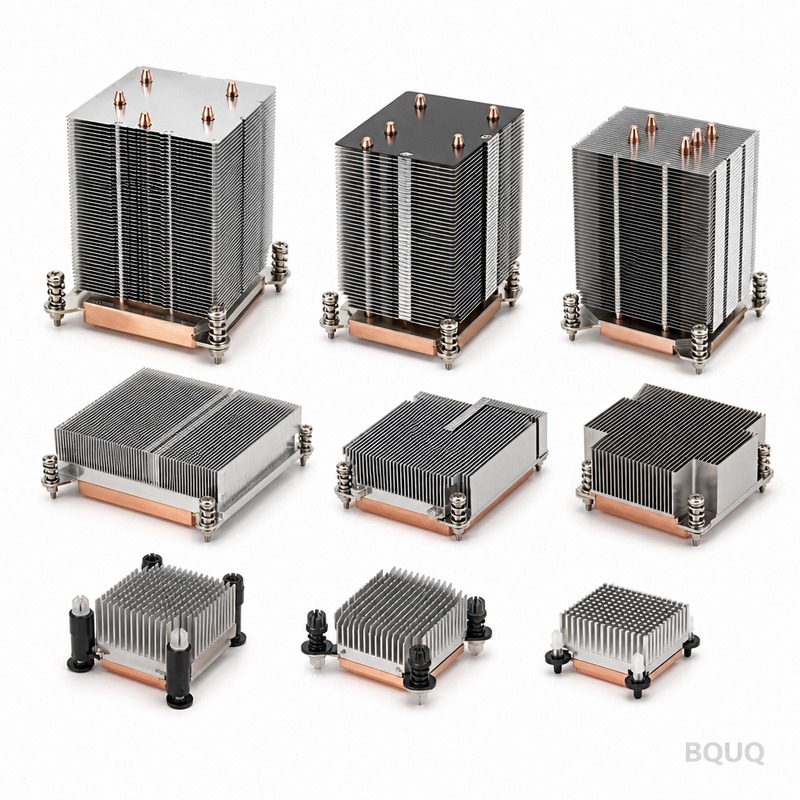
What about copper-aluminum hybrid heat sinks? Copper base with aluminum fins can offer a 20-30% performance improvement over pure aluminum at only 15-20% cost increase. However, the bi-metallic interface requires careful soldering or thermal epoxy application to avoid additional thermal resistance.
Conclusion and Manufacturing Recommendation
Select aluminum when your thermal resistance target is above 0.20°C/W, weight is a concern, or budget is constrained. Choose copper when footprint is limited, heat flux is above 30 W/cm², or you require passive cooling in a compact enclosure. For most industrial, telecom, and consumer applications, aluminum provides the best value-to-performance ratio. Copper should be reserved for high-performance power electronics, laser diodes, and military/aerospace applications where thermal density is the primary design constraint.
BQUQ has 20 years of experience manufacturing both aluminum and copper heat sinks via CNC machining, extrusion, and stamping processes. Our engineers can review your thermal requirements and recommend the optimal material and geometry within 24 hours. We provide free DFM feedback and thermal simulation for your design.
For a rapid quotation and material recommendation, contact our engineering team. We respond within 12 hours with pricing, lead time, and manufacturing feasibility analysis.
| Email: sc@bquq.com | WhatsApp: +86 13713157787 | www.bquq.com |
Related Articles
- Stamped Metal vs Die Cast Heat Sinks: Cost & Quality Comparison
- New energy vehicle IGBT heat dissipation, heat sink reliability engineering, heat pipe and temperature plate integrated heat sink, surface treatment and heat radiation enhancement: anodic oxidation, black coating and micro-nano structure, graphene/3D printing/intelligent thermal management: 2030 heat sink technology roadmap
- 5G Base Station Outdoor AAU Cooling: The Climate Adaptation Challenge of Fanless Passive Design