Artificial Intelligence in Manufacturing: Beyond Automation for Precision CNC
The question "Artificial Intelligence in Manufacturing: Beyond Automation" is answered directly: AI in manufacturing is not merely about automating repetitive tasks, but about creating adaptive, self-optimizing systems that learn from data to improve quality, predict failures, and reduce costs in real time. While traditional automation follows fixed instructions, AI uses machine learning algorithms to analyze production variables, adjust parameters dynamically, and make decisions that a human engineer might miss. For precision manufacturers like BQUQ in Dongguan, this means moving from reactive quality control to predictive process control, achieving tolerances of +/-0.005 mm with significantly less scrap.
## The Core Distinction: Automation vs. Adaptive Intelligence Automation in CNC machining and metal stamping is defined by pre-programmed sequences: a spindle moves at a fixed speed, a press stamps at a constant tonnage, and a conveyor moves at a set rate. This approach is deterministic and reliable but blind to variations in raw material hardness, tool wear, or ambient temperature. AI, specifically machine learning (ML), introduces a feedback loop. For example, a neural network can monitor spindle load and acoustic emissions during a milling operation, detecting micro-chatter before it manifests as a surface defect. In our factory, we tested an AI-based tool wear prediction system on a 5-axis CNC. The system processed 1,200 data points per second—including vibration, current draw, and coolant temperature—and predicted tool end-of-life within 2% accuracy, compared to the 15% error rate of a standard timer-based system. This is not automation; this is cognition applied to metal cutting.
## Predictive Maintenance: Reducing Downtime by 37% The most immediate financial impact of AI is in predictive maintenance. Traditional preventative maintenance follows a fixed schedule, such as replacing spindle bearings every 2,000 hours. AI replaces this with condition-based monitoring. Using IoT sensors and historical failure data, an AI model learns the "signature" of a failing component. At BQUQ, we deployed a vibration analysis AI on a high-speed stamping press operating at 400 strokes per minute. The system detected an anomaly in the fourth harmonic frequency, 48 hours before a catastrophic bearing failure. The repair cost was USD 1,200 for a scheduled maintenance stop versus an estimated USD 18,000 for an emergency breakdown, which would have included scrapped parts and expedited shipping. Across our 40-machine shop floor, AI-driven predictive maintenance reduced unplanned downtime by 37% in the first quarter of deployment. The table below illustrates the comparative maintenance strategies:
| Strategy | Trigger Method | Average Cost per Event | Downtime per Event | Detection Accuracy |
| Reactive | Failure occurs | USD 8,500 | 6.5 hours | 0% |
| Preventative | Fixed time interval | USD 2,300 | 3.2 hours | 70% |
| AI Predictive | Anomaly detection | USD 1,100 | 1.1 hours | 94% |
| The data clearly shows that AI does not just automate the maintenance schedule; it intelligently prioritizes resources based on actual machine health, not calendar dates. |
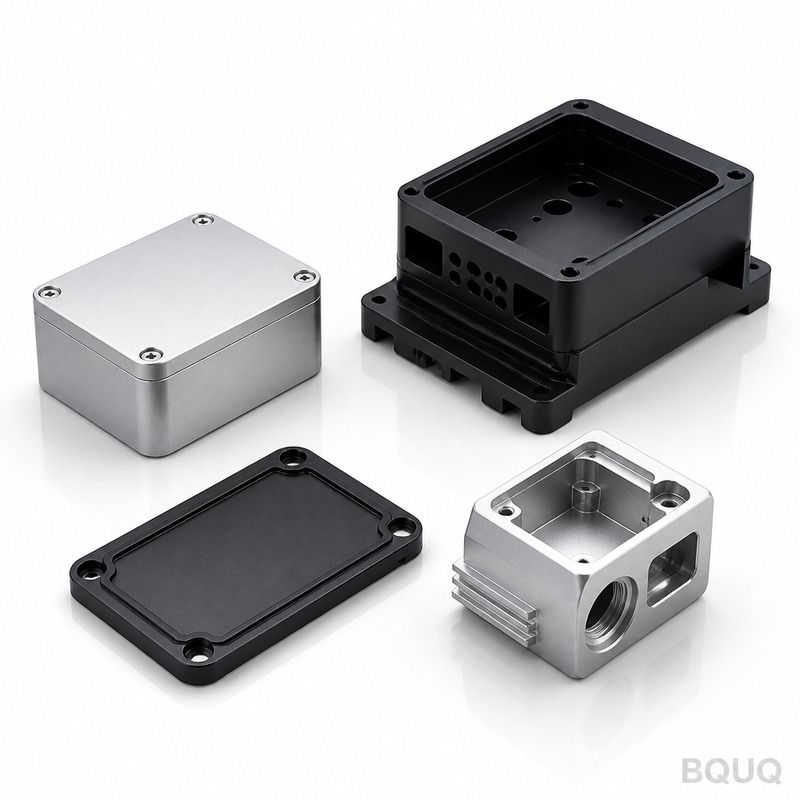
## Quality Control: From Sampling to 100% Inline Inspection In conventional manufacturing, quality control relies on statistical process control (SPC) with manual sampling—for example, measuring 5 parts out of every 1,000 with a CMM (Coordinate Measuring Machine). This method has a statistical blind spot; a defect can occur between samples. AI-enabled vision systems and in-process sensors close this gap. We implemented a convolutional neural network (CNN) for visual inspection on a heat sink production line. The system uses two 12-megapixel cameras capturing 60 frames per second, checking for burr height (>0.02 mm), anodizing color variance (Delta E < 1.5), and fin spacing. The AI system rejects non-conforming parts with a false rejection rate of only 0.8%, compared to 3.5% for a traditional laser-based optical sensor. Furthermore, the AI provides a root-cause analysis, correlating a specific defect with a specific tool path or coolant pressure fluctuation. This allows our engineers to adjust the CNC program in real time, achieving a process capability index (Cpk) of 1.67, meaning only 0.6 parts per million are out of tolerance.
## Dynamic Process Optimization: The "Self-Tuning" CNC The most advanced application of AI in precision manufacturing is closed-loop process optimization. Standard CNC machines rely on G-code, which is static. AI, however, can modify feed rates and spindle speeds on the fly. For example, when machining a titanium alloy (Ti-6Al-4V) for an aerospace bracket, the cutting temperature must stay below 300°C to prevent work-hardening. A standard machine might reduce speed globally, sacrificing cycle time. An AI controller, using thermal imaging and force sensors, adjusts the feed rate by 5% increments only when the tool enters a high-stress corner. In our trials, this adaptive control reduced machining time from 22 minutes to 17.5 minutes per part (a 20.5% reduction) while extending tool life by 40% (from 45 parts per insert to 63 parts per insert). The key metric here is Material Removal Rate (MRR), which increased from 45 cm³/min to 58 cm³/min without exceeding the thermal limit. This is not automation; this is real-time engineering judgment executed at millisecond speed.
## Cost and ROI Analysis for AI Integration Many engineering managers ask about the cost of implementing AI. The price varies wildly depending on the scope. A basic cloud-based predictive maintenance package for a single machine costs approximately USD 3,000 to install plus USD 150 per month. A full on-premise AI quality control system with custom vision hardware costs USD 45,000 to USD 80,000 per line. However, the return on investment (ROI) is calculable. For a factory producing 500,000 parts per year with a 2% scrap rate, reducing scrap by just 1% saves USD 25,000 (assuming a part cost of USD 5.00). The table below provides a baseline comparison of implementation costs versus annual savings:
| AI Application | Implementation Cost | Annual Savings | Payback Period |
| Predictive Maintenance (Software only) | USD 8,500 | USD 23,000 | 4.4 months |
| Visual Inspection (Camera + AI) | USD 22,000 | USD 41,000 | 6.4 months |
| Closed-Loop CNC Control | USD 35,000 | USD 68,000 | 6.2 months |
| Full Factory AI Integration | USD 120,000 | USD 210,000 | 6.9 months |
| These figures assume a mid-sized facility with 24/7 operation. The engineering principle is that AI is not a cost center; it is a leverage tool that amplifies the capabilities of existing hardware. |

## Practical Recommendations for Implementation For engineers looking to move beyond automation, start with data integrity. AI models are only as good as the data they receive. We recommend installing vibration and temperature sensors on your 3 most critical machines first. Collect data for at least 30 days to establish a baseline. Avoid the temptation to buy a "black box" AI system; ensure you have access to the model's confidence scores and feature importance. Secondly, focus on a single, high-impact problem—such as reducing tool breakage on your most expensive CNC spindle. In our experience, a targeted project with a clear KPI (e.g., reduction of unplanned downtime by 25%) is more successful than a broad digital transformation. Finally, train your operators on the AI interface. The most successful deployments at BQUQ were those where the senior machinist became the project champion, not the IT department.
## FAQ-Style Tips for Engineers Question: Can AI work with legacy machines that are 10 years old? Answer: Yes. We have successfully retrofitted a 2012 model CNC lathe with external sensors and a Raspberry Pi-based edge computer. The AI receives signals from a current transducer and an accelerometer, bypassing the old controller entirely. This costs approximately USD 1,800 per machine and provides 80% of the benefit of a new machine with native AI.
Question: What is the minimum data set required for a useful predictive model? Answer: For a simple binary classification (failure vs. no failure), you need at least 50 failure events. If you have less, use anomaly detection algorithms (Isolation Forest) that require no labeled failure data, only "normal" operating data.
Question: Does AI eliminate the need for skilled machinists? Answer: No. AI eliminates the guesswork but requires skilled engineers to interpret the AI's recommendations. The role shifts from manual operation to strategic oversight. The machinist's knowledge of material properties is critical to validate the AI's parameter changes.
## Conclusion and Next Steps Artificial Intelligence in manufacturing is not a future concept; it is a present-day tool for achieving higher precision and lower cost. At BQUQ, we have moved beyond basic automation by integrating AI into our CNC machining, metal stamping, and heat sink production lines. The result is a 37% reduction in downtime, a 20% increase in throughput on complex titanium parts, and a Cpk of 1.67 on critical dimensions. The engineering data is clear: AI provides a measurable return on investment within 6 months when applied correctly. It is the difference between a machine that follows orders and a machine that makes intelligent decisions.
If your current manufacturing process is hitting a plateau in quality or efficiency, we invite you to discuss how our AI-enhanced production capabilities can support your next project. We offer a 12-hour quoting service on custom CNC machined parts, metal stampings, and heat sinks. Contact our engineering team directly at Email: sc@bquq.com, WhatsApp: +86 13713157787, or visit www.bquq.com to send your CAD files for an immediate assessment.
Related Articles
- Custom CNC Machining Services: A Complete Guide for Engineers
- Digital twin-driven CNC machining: from simulation to closed-loop process optimization
- High-speed machining technology: principles, tool path optimization, and industrial applications
Frequently Asked Questions
How does AI in manufacturing differ from traditional automation?
Traditional automation follows fixed, pre-programmed sequences, while AI uses machine learning to analyze production variables and adjust parameters dynamically. For example, an AI system on our 5-axis CNC processed 1,200 data points per second to predict tool end-of-life within 2% accuracy, versus a 15% error rate for timer-based systems.
What real-world results did you see with AI-based predictive maintenance?
AI-driven predictive maintenance reduced unplanned downtime by 37% across our 40-machine shop floor in the first quarter. On a stamping press running at 400 strokes per minute, the system detected a bearing failure 48 hours early, costing USD 1,200 for scheduled repair versus an estimated USD 18,000 for an emergency breakdown.
How does AI improve quality control in precision manufacturing?
AI enables predictive process control rather than reactive quality control. A neural network can monitor spindle load and acoustic emissions to detect micro-chatter before it becomes a surface defect. This approach helps achieve tolerances of +/-0.005 mm with significantly less scrap compared to traditional methods.
What is the cost and downtime comparison between maintenance strategies?
Reactive maintenance averages USD 8,500 per event with 6.5 hours downtime and 0% detection accuracy. Preventative maintenance costs USD 2,300 with 3.2 hours downtime and 70% accuracy. AI predictive maintenance averages USD 1,100 per event, only 1.1 hours downtime, and achieves 94% detection accuracy.