CNC Machining Cost in 2026: Hourly Rates and Per-Part Pricing
**Direct Answer:** In 2026, the average CNC machining cost per hour ranges from $65 to $120 for standard 3-axis work, with per-part costs varying from $15 for simple aluminum brackets to over $500 for complex 5-axis titanium aerospace components. The final price depends on material, tolerance, quantity, and setup complexity, with high-volume production reducing per-part costs by up to 70%.
---
The 2026 CNC Machining Rate Landscape
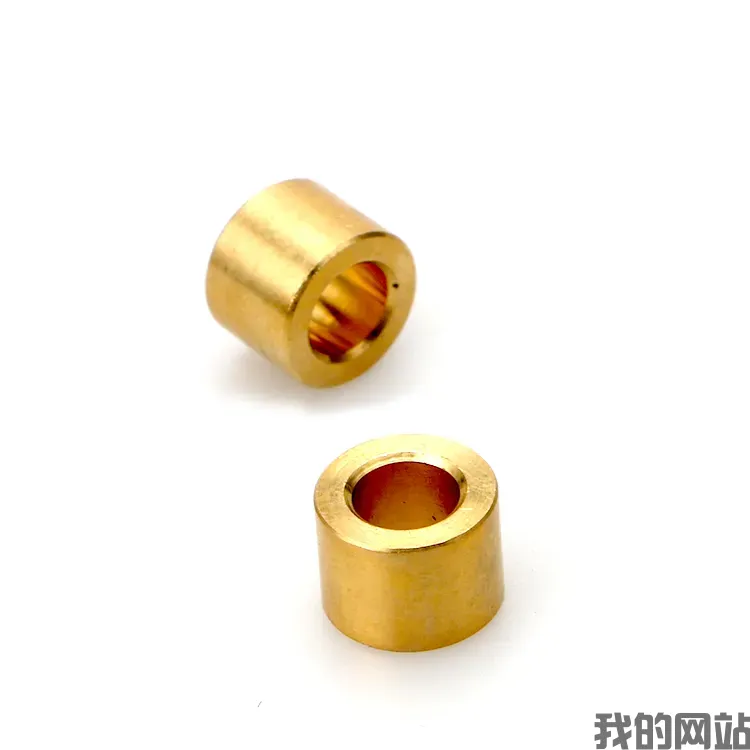
CNC machining pricing in 2026 reflects a market shaped by post-pandemic supply chain realignment, rising energy costs, and increased automation. For engineers and procurement specialists, understanding these rates is critical for accurate budgeting and supplier negotiation.
Machine-hour rates vary significantly by region and machine capability. The table below provides a benchmark for 2026 pricing across common machine types and geographic regions.
Table 1: Average CNC Machining Hourly Rates by Machine Type (2026)
| Machine Type | Axis Count | Hourly Rate (USD) | Typical Tolerance | Common Applications | -------------- | ------------ | ------------------- | ------------------- | --------------------- | 3-Axis Vertical Mill | 3 | $65 - $95 | ±0.005" (0.127 mm) | Brackets, housings, prototypes | 4-Axis Mill | 4 | $85 - $120 | ±0.004" (0.102 mm) | Rotary components, impellers | 5-Axis Mill | 5 | $110 - $160 | ±0.003" (0.076 mm) | Aerospace, medical implants | CNC Lathe (2-Axis) | 2 | $55 - $80 | ±0.005" (0.127 mm) | Shafts, bushings, fasteners | Swiss-Type Lathe | 5-7 | $90 - $140 | ±0.002" (0.051 mm) | Precision pins, medical parts | Wire EDM | 2-5 | $75 - $110 | ±0.001" (0.025 mm) | Dies, molds, intricate cutouts |
|---|
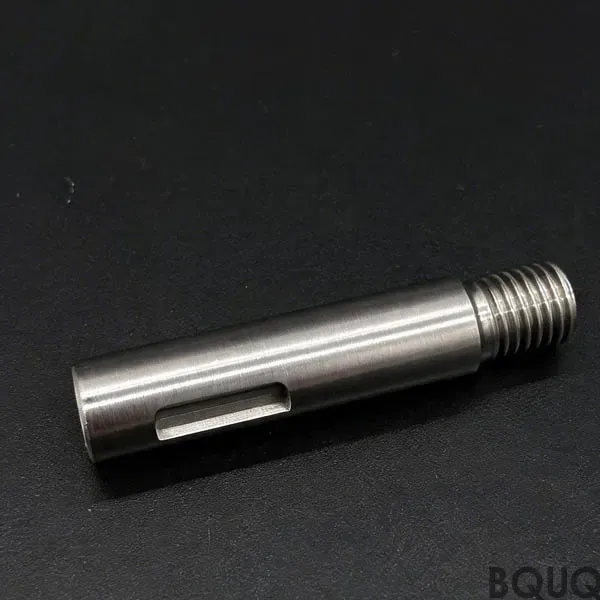
*Note: Rates include machine operation, standard tooling, and basic programming. Setup, material, and finishing are typically quoted separately.*
---
Per-Part Cost Breakdown: What Drives the Final Number
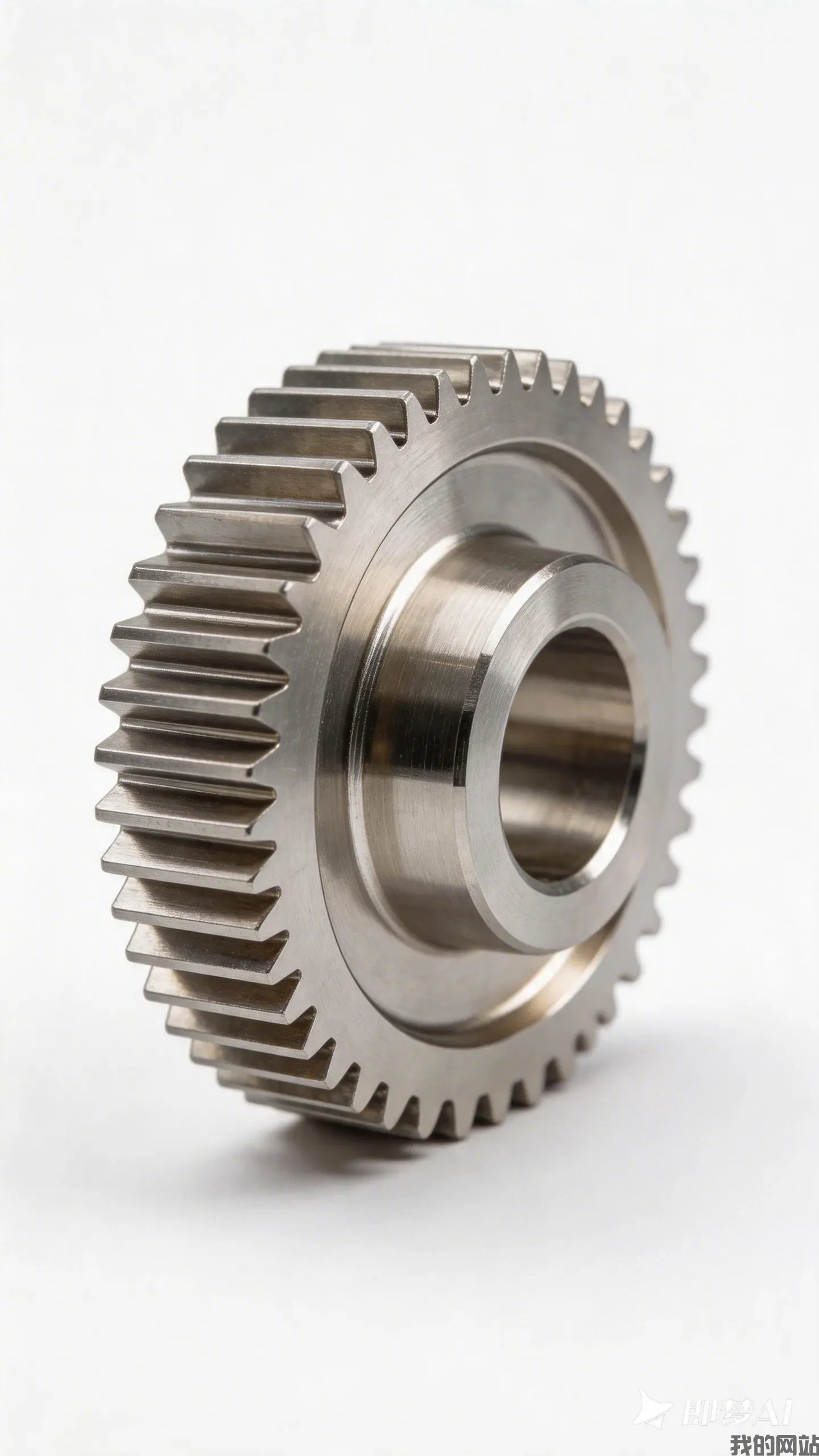
While hourly rates provide a baseline, per-part pricing is the figure that matters for your budget. In 2026, the following cost components dominate:
**Material Cost (20-35% of total):** Aluminum 6061-T6 remains the most economical choice at $3.50-$5.00 per kg. Stainless steel 304 costs $4.50-$7.00 per kg, while titanium Grade 5 (Ti-6Al-4V) commands $35-$50 per kg. Material utilization is critical—machining a part from a 50mm bar stock that only yields a 30mm diameter part wastes 64% of the material.
**Setup and Programming (15-25% of total):** A standard 3-axis setup requires 1-2 hours at $65-$95/hour. Complex 5-axis jobs with custom fixturing can require 4-8 hours of setup time. For low-volume runs (1-10 pieces), setup dominates the cost per part. At 100 pieces, setup cost per part drops by 90%.
**Machining Time (30-45% of total):** This is the actual spindle time. A simple aluminum bracket with 6 holes and a pocket might take 8-12 minutes. A complex aerospace housing with tight tolerances and thin walls could require 2-4 hours of machining time.
**Finishing and Secondary Operations (10-20%):** Anodizing costs $0.50-$1.50 per part for small runs. Powder coating runs $2.00-$5.00 per part. Heat treatment for steel parts adds $1.00-$3.00 per kg. For critical applications, CMM inspection adds $10-$50 per part depending on feature count.
Table 2: Representative Per-Part Costs for Common Scenarios (2026)
| Part Description | Material | Quantity | Tolerance | Per-Part Cost (USD) | ------------------ | ---------- | ---------- | ----------- | ------------------- | Simple Bracket (50x30x5mm) | Aluminum 6061 | 1 | ±0.005" | $45 - $65 | Same Bracket | Aluminum 6061 | 100 | ±0.005" | $12 - $18 | Same Bracket | Aluminum 6061 | 1,000 | ±0.005" | $7 - $10 | Precision Shaft (Ø10mm x 50mm) | Stainless 304 | 50 | ±0.002" | $28 - $40 | Aerospace Housing | Aluminum 7075 | 10 | ±0.003" | $180 - $250 | Medical Implant Prototype | Titanium Grade 5 | 1 | ±0.001" | $450 - $600 | Gear (Module 2, 20 teeth) | Steel 4140 | 25 | ±0.002" | $75 - $110 |
|---|
---
The Quantity Discount Curve: When to Order More
The relationship between quantity and per-part cost follows a predictable curve in 2026. Understanding this curve can save you 50-70% on your machining budget.
- **1-5 pieces:** Prototype pricing. Setup cost dominates at 40-60% of total. Expect to pay 1.5-2.5x the "standard" per-part rate. - **10-50 pieces:** Low-volume production. Setup cost drops to 15-25% of total. Per-part pricing stabilizes. - **100-500 pieces:** Economical range. Setup is amortized to 5-10%. Machine efficiency improves as operators optimize tool paths. - **1,000+ pieces:** High-volume. Per-part costs approach the theoretical minimum, driven primarily by material and cycle time. Consider multi-spindle machines or dedicated fixtures.
**Key Insight:** The break point between "setup-limited" and "material-limited" pricing occurs around 50-100 pieces for most parts. Below this quantity, adding more parts to your order provides minimal per-unit savings. Above 500 pieces, additional quantity yields diminishing returns without process changes.
---
Material Selection: The Hidden Cost Multiplier
Material choice impacts cost beyond just the raw material price. Machinability, tool wear, and cycle time all vary significantly by material.
**Aluminum 6061-T6:** The baseline. Machines at 3-4x faster than steel, extends tool life by 5-10x, and generates easily removable chips. Ideal for prototypes and production.
**Stainless Steel 304:** Requires 2-3x longer machining time than aluminum. Work hardening increases tool wear. Expect 30-50% higher per-part cost than the same part in aluminum.
**Titanium Grade 5:** The costliest common material. Machines at 10-15% the speed of aluminum. Requires specialized tooling and coolant systems. A part that costs $50 in aluminum could cost $300-$400 in titanium.
**Brass C360:** Machines nearly as fast as aluminum but costs $8-$12 per kg. Excellent for threaded components and electrical applications. Per-part costs are 10-20% higher than aluminum.
**Engineering Plastic (Delrin/PEEK):** Delrin machines at 2x aluminum speed with excellent dimensional stability. PEEK costs $50-$80 per kg but offers high temperature resistance up to 260°C (500°F) continuous service.
---
Geographic Rate Variations and Hidden Costs
In 2026, CNC machining rates vary significantly by region due to labor costs, energy prices, and regulatory burdens.
- **United States:** $80-$150/hour for 3-axis machining. Higher compliance costs (ITAR, ISO 9001) add 10-20% to quoted rates. Lead times average 2-4 weeks. - **Western Europe (Germany, Switzerland):** $90-$170/hour. Premium rates for precision and certification. Typical lead times 3-5 weeks. - **Eastern Europe (Poland, Czech Republic):** $55-$90/hour. Growing capability with 25-40% savings vs. Western Europe. Lead times 2-4 weeks. - **China (Dongguan, Shenzhen):** $35-$65/hour for comparable 3-axis work. High-volume production can achieve 40-60% cost savings vs. Western suppliers. Lead times 2-3 weeks including shipping.
**Hidden Costs to Watch For:**
1. **Material sourcing fees:** Some suppliers add 5-15% markup on raw material. 2. **Tolerance surcharges:** Tight tolerances (±0.001" vs. ±0.005") can add 30-100% to machining time. 3. **Surface finish requirements:** Ra 32 finish is standard. Ra 16 or better adds 15-30% cost. 4. **Inspection and documentation:** PPAP, First Article Inspection, and material certifications add $50-$200 per job. 5. **Expediting fees:** Rush orders (under 5 days) typically add 25-50% to the total quote.
---
2026 Cost Optimization: Practical Engineering Strategies
Based on our 20 years of CNC machining experience in Dongguan, these strategies deliver the highest return on engineering effort:
**1. Design for Manufacturability (DFM) Review:** Reduce wall thickness by 1mm on a 100-piece aluminum run can cut 10-15% of machining time. Simplify internal radii to standard tool sizes (3mm, 6mm, 10mm) to reduce tool changes. Each tool change costs 0.5-2 minutes of machine time.
**2. Consolidate Operations:** A part requiring both milling and turning can be completed on a mill-turn center, saving setup time and improving accuracy. This reduces per-part cost by 10-20%.
**3. Request Multiple Quotes with Clear Specifications:** Provide a complete engineering drawing with GD&T, surface finish requirements, and acceptable material alternatives. Vague specifications lead to conservative (read: expensive) quotes.
**4. Consider Material Substitution:** If your application permits, replacing 7075 aluminum with 6061 can save 5-10% on material cost with a 10-15% reduction in strength. For non-structural parts, consider 5052 aluminum at 15% lower cost.
**5. Optimize Batch Sizes:** For annual volumes under 500 pieces, order the full year's quantity in one batch to minimize setup costs. For volumes above 1,000 pieces, consider blanket orders with scheduled releases to manage inventory costs.
---
Frequently Asked Questions About CNC Machining Costs
**Q: How much does a simple CNC machined part cost in 2026?** A: A simple aluminum bracket (50x30x5mm) with basic features costs $45-$65 for a single prototype and drops to $7-$10 per part at 1,000 units. The key variable is how many parts you order.
**Q: Why are 5-axis machining rates 40-70% higher than 3-axis?** A: 5-axis machines cost $200,000-$500,000 more than 3-axis equivalents. They require more skilled operators, longer programming time, and higher maintenance. The premium is justified by the ability to machine complex geometries in a single setup.
**Q: How much does material cost affect the final part price?** A: Material typically represents 20-35% of the total part cost. However, the machinability of the material can double or triple the machining time, making the effective cost multiplier 2-4x the raw material price difference.
**Q: What is the minimum order quantity (MOQ) for economical CNC machining?** A: Most shops have no MOQ, but economic viability starts at 10-20 pieces for simple parts and 5-10 pieces for complex parts. Below these quantities, setup costs dominate the price.
**Q: How can I reduce CNC machining costs without sacrificing quality?** A: Relax non-critical tolerances, use standard stock sizes to minimize material waste, simplify geometries to reduce machining time, and provide complete, unambiguous drawings to avoid revision cycles.
---
Conclusion: Making Informed Cost Decisions in 2026
CNC machining costs in 2026 remain predictable when you understand the underlying drivers: machine-hour rates, material selection, setup amortization, and geometric complexity. A standard 3-axis aluminum part costs $65-$95 per machine hour, translating to $15-$500 per part depending on size and quantity.
For maximum cost efficiency, design with manufacturability in mind, choose materials based on total machining cost rather than raw material price, and leverage volume discounts by consolidating your orders. When comparing suppliers, look beyond the hourly rate—consider setup charges, material markups, inspection costs, and shipping terms.
At BQUQ, we have manufactured precision components for global clients across automotive, medical, and industrial sectors for over 20 years. Our Dongguan facility combines competitive rates (30-50% below Western benchmarks) with ISO 9001:2015 quality systems and average 12-day lead times. Whether you need 5 prototype parts or 50,000 production units, our engineers provide free DFM feedback to optimize your design for manufacturability.
**Get your 12-hour quote today:** Email your drawings to sc@bquq.com or message us on WhatsApp at +86 13713157787. Visit www.bquq.com to learn more about our CNC machining, metal stamping, spring manufacturing, and heat sink production capabilities.
Related Articles
- CNC Machining Materials Guide 2025: Choosing Aluminum, Steel, Brass, and Plastics
- 5 Benefits of CNC Precision Turned Parts for Aerospace
- Aluminum Heat Sink CNC Machining: Best Practices Guide
Frequently Asked Questions
What is the average CNC machining cost per hour in 2026?
In 2026, standard 3-axis CNC machining costs between $65 and $95 per hour. More advanced machines cost more: 4-axis mills run $85-$120/hour, 5-axis mills run $110-$160/hour, and Swiss-type lathes run $90-$140/hour. These rates include machine operation, standard tooling, and basic programming, but exclude setup, material, and finishing.
How much does it cost to machine a simple aluminum bracket?
A simple aluminum bracket with 6 holes and a pocket typically costs around $15 per part. This assumes a machining time of 8-12 minutes on a 3-axis mill at $65-$95/hour. Material costs for aluminum 6061-T6 are $3.50-$5.00 per kg, and setup time for standard 3-axis work is 1-2 hours.
Why do complex 5-axis titanium parts cost over $500 each?
Complex 5-axis titanium aerospace components exceed $500 per part due to multiple factors. Titanium Grade 5 (Ti-6Al-4V) costs $35-$50 per kg, and machining time for tight-tolerance aerospace housings can reach 2-4 hours at $110-$160/hour. Setup for 5-axis jobs with custom fixturing requires 4-8 hours, adding significant cost, especially for low volumes.
How can I reduce per-part CNC machining costs for high-volume orders?
High-volume production reduces per-part costs by up to 70%. At 100 pieces, setup cost per part drops by 90% compared to 1-10 piece runs. Material utilization also matters—machining a 30mm part from 50mm bar stock wastes 64% of material. Finishing costs range from $0.50-$1.50 for anodizing to $2.00-$5.00 for powder coating per part.