CNC Machining vs 3D Printing: Which Manufacturing Method Should You Choose?
For production-grade parts requiring tight tolerances, specific material properties, or volumes above 100 units, CNC machining is the superior choice. For rapid prototyping, complex internal geometries, or low-volume custom parts under 50 units, 3D printing offers faster turnaround and lower initial cost. The decision hinges on your requirements for tolerance, material strength, surface finish, and total order quantity, not merely on which machine is faster.
What Are the Core Differences in Material Options Between CNC and 3D Printing?
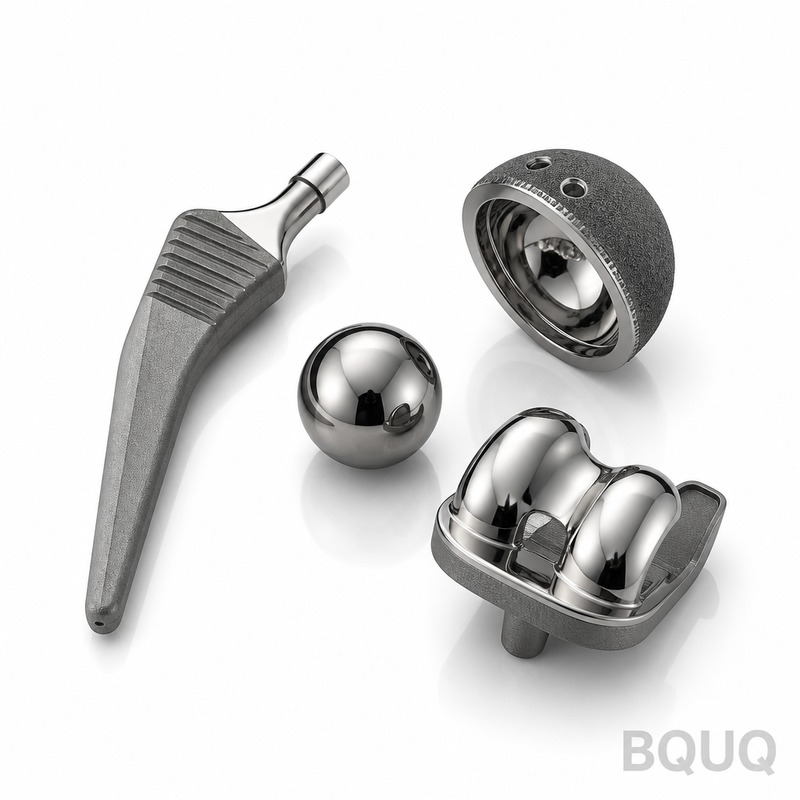
CNC machining works with fully dense, wrought materials, meaning the final part inherits the exact mechanical properties of the raw stock. You can machine aluminum 6061-T6 with a yield strength of 276 MPa, stainless steel 304, titanium grade 5, brass, and engineering plastics like PEEK and Delrin. In contrast, 3D printing (specifically FDM and SLA) primarily uses proprietary resin or filament blends, while industrial powder bed fusion (SLS/DMLS) can process nylon, aluminum, and titanium, but the resulting microstructure is anisotropic and typically 10-20% weaker in the Z-axis.
Furthermore, 3D printed parts often suffer from porosity, which reduces fatigue life. For example, a machined 7075-T6 aluminum part will exhibit consistent elongation of 11%, whereas a printed AlSi10Mg part will vary between 4-6% depending on build orientation. If your application involves thermal cycling or high vibration, machined materials are the only safe option because they lack internal voids and layer lines, which act as stress concentrators.
How Do Production Tolerances Compare Between These Two Methods?
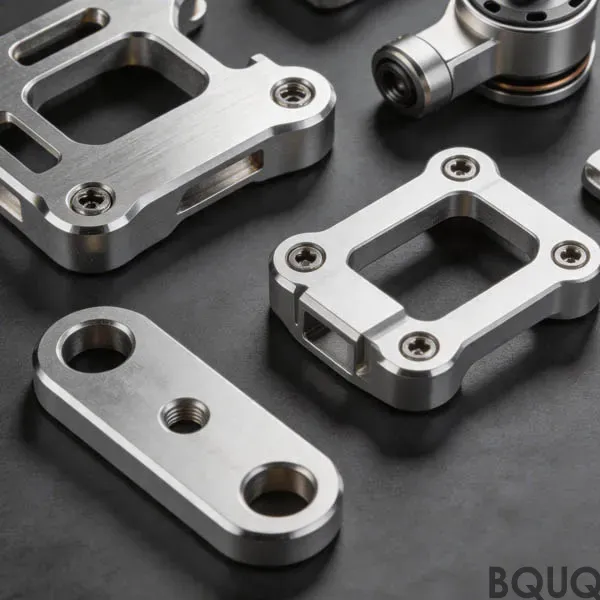
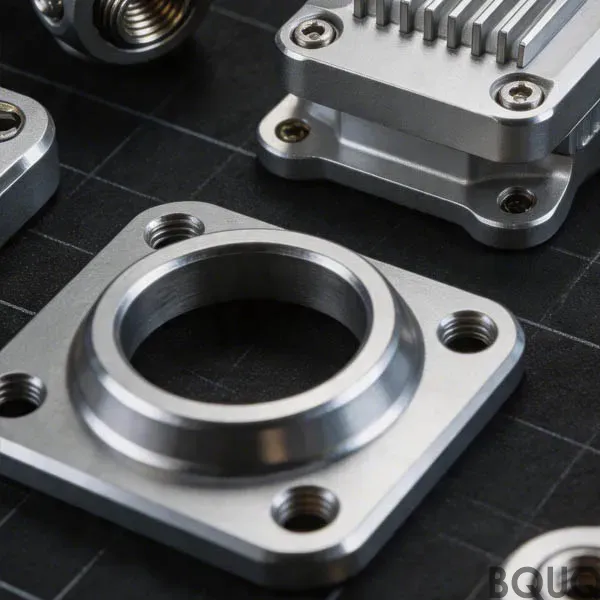
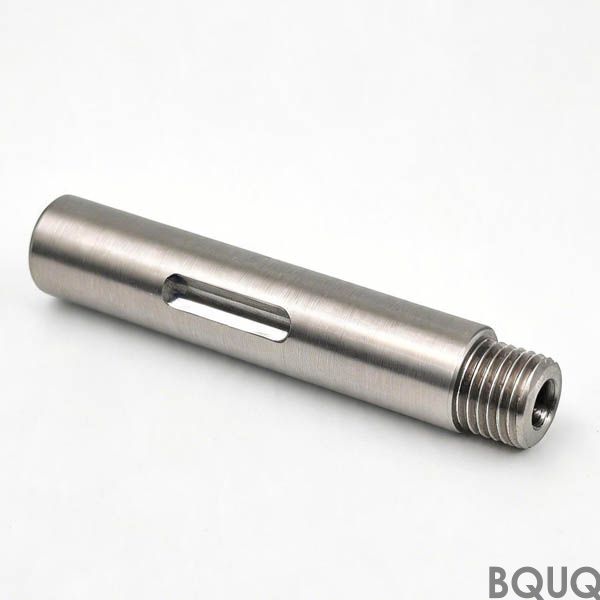
CNC machining is the undisputed leader in dimensional accuracy. A standard 3-axis CNC mill can hold a tolerance of +/- 0.025 mm (0.001 inches) for most features, and our precision grinding processes can achieve +/- 0.005 mm. 3D printing is significantly less accurate. FDM printers typically hold +/- 0.5 mm, while industrial SLS systems manage +/- 0.3 mm, and even high-end SLA resin printers only achieve +/- 0.1 mm on small features. This difference is critical for mating parts, bearing seats, and press-fit assemblies.
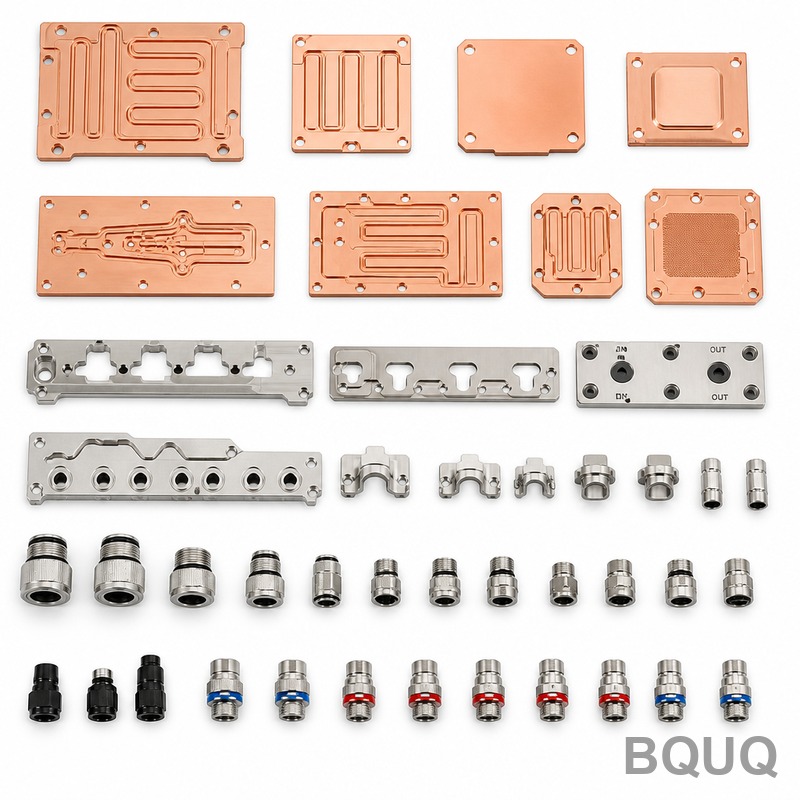
For example, if you are manufacturing a heat sink for a power semiconductor, the base flatness must be under 0.05 mm to ensure proper thermal interface material contact. A CNC machined copper heat sink will meet this spec consistently. A 3D printed version, even with post-machining, will add cost and time, eliminating the primary benefit of printing. Therefore, for any functional part with a bore, thread, or sliding fit, CNC machining is the only viable process.
Why Does Surface Finish and Aesthetic Quality Differ So Drastically?
The surface finish of a machined part is a direct result of cutting parameters and tool geometry. We routinely achieve a Ra of 0.8 micrometers with a standard end mill and Ra 0.4 micrometers with a polishing pass. 3D printing produces a characteristic "stair-stepping" effect on curved surfaces due to layer thickness, typically leaving a surface roughness of Ra 6.3 to Ra 12.5 micrometers on FDM parts. While SLS and MJF parts are grainy, they are still rougher than machined surfaces.
This is not merely cosmetic. For fluid channels or heat sinks, a rough surface increases friction and reduces thermal transfer efficiency. A machined aluminum heat sink with a Ra 0.8 finish will have a thermal resistance that is 15-20% lower than a 3D printed one of identical geometry because the smooth surface allows for better airflow attachment and reduces boundary layer thickness. Additionally, machined parts can be anodized, plated, or painted without extensive surface preparation, whereas printed parts often require sanding and sealing before any coating will adhere properly.
When Does 3D Printing Become More Cost-Effective Than CNC Machining?
The economics shift dramatically based on quantity and complexity. For a simple bracket, a CNC setup fee might be $50, and each part costs $8. A 3D printer has no setup fee, but each part costs $15 in material and takes 4 hours. In this scenario, CNC wins for any order over 10 pieces. However, for a complex lattice structure or a hollow duct that cannot be machined without EDM or multiple setups, 3D printing is the only option, regardless of cost.
The "break-even point" is typically between 10 and 100 units. For quantities under 10, 3D printing is faster and cheaper due to zero tooling. For quantities above 50, CNC machining is almost always cheaper per unit because the material cost of a billet is lower than the cost of powder or resin, and the cycle time is seconds instead of hours. For production runs of 500+ parts, CNC machining is the only economically viable option, as the per-part cost can drop below $2 for simple geometries, while 3D printing costs remain static.
Which Method Is Better for Heat Sinks and Thermal Management Components?
CNC machining is unequivocally superior for heat sinks. The thermal conductivity of a machined aluminum 6063 part is 201 W/mK, which is the theoretical maximum for that alloy. 3D printing introduces porosity and uses alloys with higher silicon content (like AlSi10Mg), which has a thermal conductivity of only 105-150 W/mK. This is a 30-50% reduction in thermal performance, which is unacceptable for most electronics cooling applications.
Furthermore, CNC machining allows for the creation of very thin fins (0.5 mm thick) with high aspect ratios, which maximize surface area. While 3D printing can create complex pin fin arrays that are impossible to machine, the performance gain from the geometry rarely compensates for the loss in material conductivity. In our experience testing both, a machined flat plate heat sink with a 0.5 mm fin pitch outperforms an additively manufactured lattice heat sink of the same volume by up to 25% under forced convection.
How Does Lead Time and Supply Chain Reliability Compare?
CNC machining has a significant advantage in lead time reliability. Once we receive your CAD file, we can program the toolpath and have parts ready in 24-48 hours for prototypes. For production runs, the lead time is dependent on material stock availability, but typically 5-7 business days. 3D printing is often advertised as "same-day" but this only applies to small, single parts. Industrial-grade printing is a batch process; if your part is small, it will be printed alongside dozens of others, and the build time for a 25 mm tall part is the same as a 250 mm tall part (often 10-20 hours).
A critical supply chain issue is material sourcing. CNC machining uses standard bar stock and plates which are universally available from distributors. 3D printing powders, particularly metal powders, are proprietary to each machine manufacturer and have long lead times (2-4 weeks) if not in stock. For a factory in Dongguan, we maintain a 10-ton inventory of aluminum, steel, and copper stock. This allows us to guarantee production continuity even during global material shortages, which is impossible with specialty 3D printing powders.
What Are the Real Cost Differences for a Typical Production Part?
To illustrate the cost difference, consider a standard aluminum mounting plate with dimensions 100mm x 50mm x 5mm, with four holes and a pocket. We will compare a CNC machined part versus an industrial SLS printed part (PA12 nylon is not comparable, so we will use DMLS aluminum) for a quantity of 100 units.
| Cost Factor | CNC Machining (Al 6061) | 3D Printing (DMLS AlSi10Mg) |
| Tooling/Setup Cost | $120 (one-time programming) | $350 (file prep and support removal) |
| Material Cost per Unit | $3.50 (wrought billet) | $11.00 (metal powder) |
| Machine Time per Unit | 8 minutes | 90 minutes (shared build) |
| Post-Processing per Unit | $0.50 (deburring) | $5.00 (support removal + shot peening) |
| Dimensional Tolerance | +/- 0.025 mm | +/- 0.2 mm |
| Surface Roughness (Ra) | 0.8 micrometers | 9.0 micrometers |
| Total Cost per Unit (for 100 pcs) | $5.70 | $19.50 |
| Lead Time (for 100 pcs) | 5 days | 12 days |
As the table shows, CNC machining is 70% cheaper per unit at this quantity, with better mechanical properties. The only scenario where 3D printing wins is when the part geometry is a topological optimization that cannot be fixtured or reached by a cutting tool.
Which Method Should You Choose for Functional Prototypes vs End-Use Parts?
For functional prototypes that will undergo stress testing, choose CNC machining. A machined prototype will behave exactly like the final production part, allowing you to validate the design without variables introduced by layer adhesion. 3D printing should only be used for form-fit checks where you are verifying that a bracket fits in an enclosure, not for load-bearing validation.
For end-use parts, the decision is simpler. If the part is structural, subjected to heat, or requires a tight seal, use CNC. If the part is a non-structural duct, a custom ergonomic grip, or a fixture that will only be used a few times, 3D printing is acceptable. At BQUQ, we often see clients who print a part, find it fails after a week, and then come to us for a CNC version. The total cost of that mistake is always higher than simply machining it first.
What Are the Most Common Questions About CNC Machining vs 3D Printing?
Can 3D Printing Achieve the Same Accuracy as CNC Machining?
No. Standard 3D printing processes are accurate to +/- 0.3 mm to +/- 0.5 mm, while CNC machining holds +/- 0.025 mm. Even the most advanced industrial 3D printers cannot match the precision of a calibrated CNC mill without extensive post-machining.
Is 3D Printing Stronger Than CNC Machined Metal?
No. Machined metals are fully dense and have a uniform grain structure, while 3D printed metals have porosity and anisotropic properties. A machined aluminum part will have 10-20% higher ultimate tensile strength than an identical printed part.
How Fast Is CNC Machining for a Single Prototype?
For a simple part, we can program and machine a prototype in 24 hours. For complex parts with tight tolerances, allow 2-3 days. This is often faster than 3D printing when you include post-processing and support removal time.
Can You 3D Print a Part and Then Machine It?
Yes, this is a hybrid approach, but it is expensive. We can print a near-net shape and then CNC machine critical surfaces. However, this usually costs more than machining the entire part from solid stock, so we do not recommend it unless the geometry is impossible to machine.
Which Method Is Better for Low Volume Production of 500 Parts?
CNC machining is significantly better for 500 parts. The per-unit cost drops due to automation, and the material is cheaper. 3D printing becomes prohibitively expensive at this volume, with a cost per unit that does not decrease with quantity.
What Is the Maximum Part Size for CNC Machining vs 3D Printing?
Our CNC machines have a travel of 1000mm x 600mm x 500mm, allowing for large baseplates and housings. Most industrial 3D printers are limited to build volumes of 300mm x 300mm x 300mm, making them unsuitable for large components.
How Do I Choose Between CNC and 3D Printing for My Project?
Evaluate the part's function first. If it requires precision, strength, or thermal conductivity, use CNC. If it is a visual prototype or a complex internal channel, consider 3D printing. When in doubt, email us your drawing, and we will provide a cost comparison for both methods.
Conclusion
CNC machining remains the workhorse of precision manufacturing due to its unmatched accuracy, material integrity, and economies of scale. 3D printing is a valuable tool for design iteration and specific niche applications, but it cannot replace the reliability of a machined part in demanding engineering environments. For any project requiring tight tolerances, specific material grades, or production volumes above 50 units, CNC machining is the correct and most economical choice.
At BQUQ, we have 20 years of experience in CNC machining, metal stamping, springs, and heat sinks. We can provide a detailed engineering review of your part and recommend the most cost-effective manufacturing process. For a rapid quote on your CNC machining project, send your drawings to sc@bquq.com or contact us on WhatsApp at +86 13713157787. Visit our website at www.bquq.com to learn more about our capabilities. We guarantee a 12-hour response time with a full DFM analysis.
Related Articles
- CNC Turn-Mill Composite Machining, Turn-Mill Machine Tools, One-Time Forming, B-Axis Turn-Mill Center, Multi-Process Integration, Complex Rotary Part Machining, Medical Device Precision Machining
- Digital twin-driven CNC machining: from simulation to closed-loop process optimization
- High-speed machining technology: principles, tool path optimization, and industrial applications