CNC Machining vs Injection Molding 2025: Material Cost and Performance Comparison
CNC Machining vs Injection Molding 2025: Material Cost and Performance Comparison
Selecting the right manufacturing process for a plastic or metal component is a decision that directly impacts unit cost, lead time, mechanical performance, and long-term reliability. For engineers at OEMs and contract manufacturers, the choice between CNC machining and injection molding is rarely about "which is better" in absolute terms. Instead, it is a function of production volume, geometric complexity, material requirements, and tolerance specifications.
This article provides a data-driven comparison of CNC machining and injection molding, focusing specifically on material options, typical achievable tolerances, cost-per-unit breakpoints, and thermal/mechanical performance trade-offs. We will reference real production data from a 20-year-old precision manufacturing facility in Dongguan, China, to ground the discussion in practical shop-floor reality.
1. Process Fundamentals: How Material Choice Affects the Decision
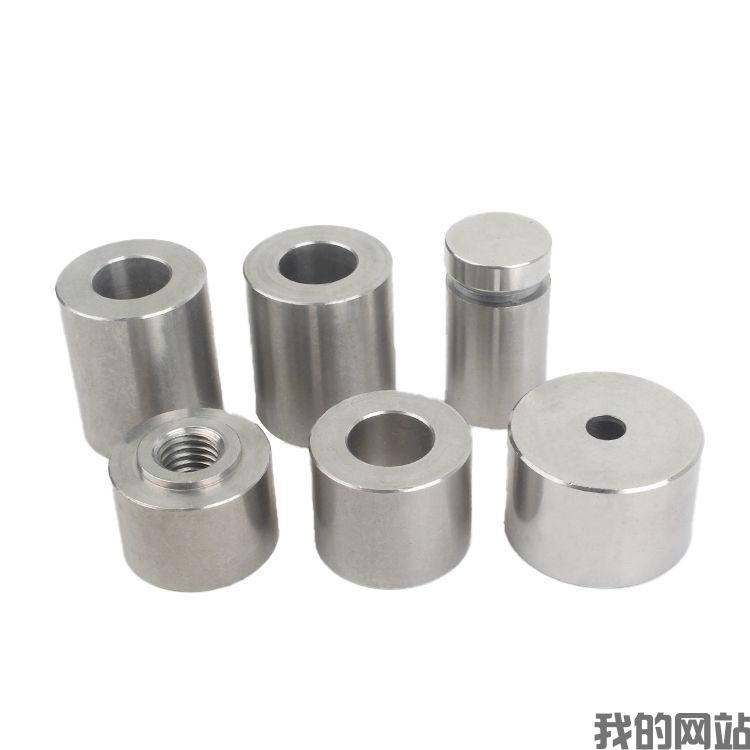
CNC machining is a subtractive process. Material is removed from a solid billet (bar, plate, or rod) using rotating cutting tools. The process is limited by tool access, machine rigidity, and the machinability of the chosen material. Injection molding, conversely, is a formative process. Molten thermoplastic (or thermoset) is injected under high pressure (typically 500–2,000 bar) into a steel mold cavity, where it cools and solidifies.
The material implications are profound:
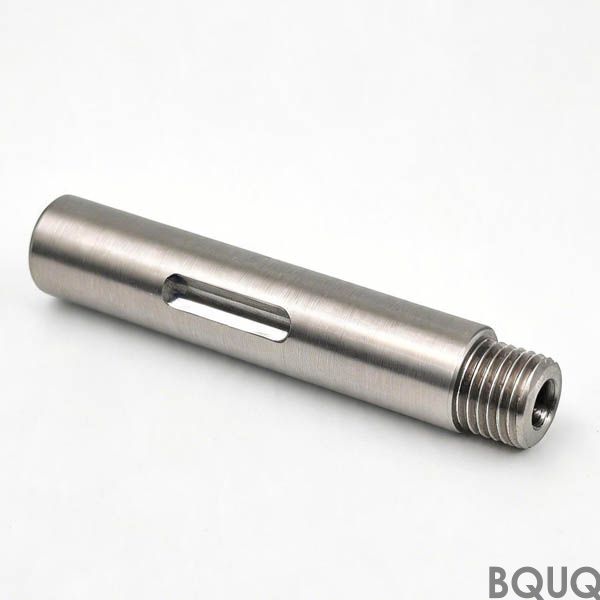
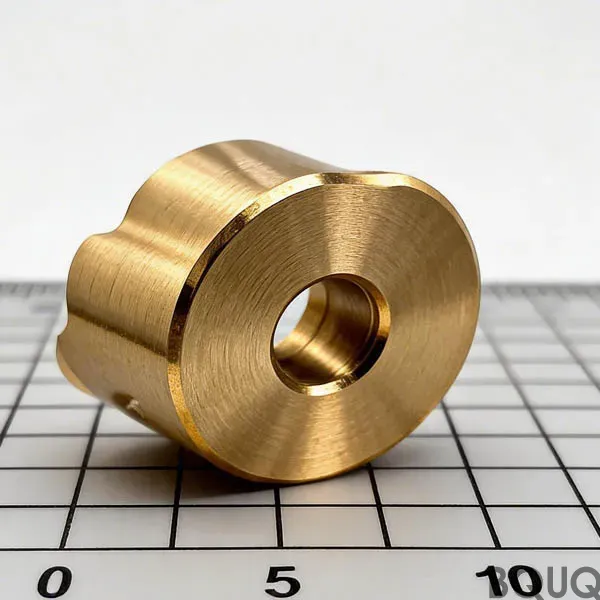
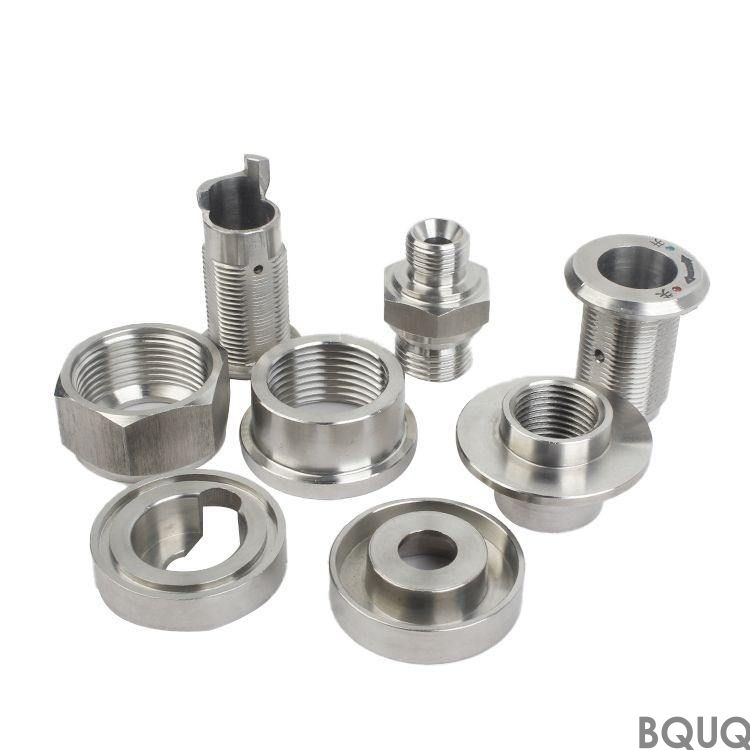
- **CNC machining** can work with any solid material that can be cut: aluminum 6061-T6, stainless steel 304, brass, PEEK, Delrin (POM), PTFE, and even titanium. There is no need for the material to flow or shrink predictably in a cavity. - **Injection molding** requires materials with specific melt flow index (MFI) values, typically between 5 and 30 g/10 min for standard thermoplastics, to ensure complete cavity fill. Material shrinkage (e.g., 0.4%–2.0% for unfilled plastics) must be compensated in the mold design.
For a low-volume prototype, machining a part from a PEEK billet costs roughly USD 80–150 per hour of machine time. For a production run of 50,000 parts, injection molding the same PEEK geometry will have a mold cost of USD 15,000–40,000, but a per-part cost of only USD 3–8, assuming a cycle time of 30–60 seconds.
2. Material Options: A Direct Comparison Table
The following table compares common engineering materials across both processes. Values are based on 2025 market rates from a Chinese Tier-2 supplier, including material cost, typical tolerance, and relative thermal performance.
| Material | CNC Machining Feasibility | Injection Molding Feasibility | Typical Tolerance (CNC) | Typical Tolerance (Molded) | Max Service Temp (°C) | Relative Cost per kg (USD) | ---------- | --------------------------- | ------------------------------- | ------------------------- | ---------------------------- | ------------------------- | ---------------------------- | ABS | Good (machines cleanly) | Excellent | ±0.05 mm | ±0.15 mm (shrinkage 0.5–0.7%) | 80 | 2.5–4.0 | Nylon 66 (PA66) | Good (hygroscopic, needs drying) | Excellent (low melt viscosity) | ±0.05 mm | ±0.20 mm (shrinkage 1.0–1.5%) | 120 | 3.0–5.0 | PEEK | Excellent (rigid, stable) | Good (high temp mold needed) | ±0.025 mm | ±0.10 mm (shrinkage 0.5–1.0%) | 250 | 60–90 | Aluminum 6061-T6 | Excellent (high speed) | Not applicable (die casting only) | ±0.02 mm | N/A | 400 (melting) | 3.0–5.0 (billet) | Stainless Steel 304 | Good (slower feeds) | Not applicable (MIM only) | ±0.03 mm | N/A | 800 | 6.0–10.0 | PTFE (Teflon) | Good (soft, gummy) | Fair (requires special tooling) | ±0.10 mm | ±0.30 mm (high shrinkage 2–4%) | 260 | 10–15 | PC (Polycarbonate) | Good (tends to chip) | Excellent (low shrinkage) | ±0.05 mm | ±0.10 mm (shrinkage 0.5–0.7%) | 130 | 3.0–5.0 |
|---|
Note: CNC tolerances are achievable on a 3-axis vertical machining center with a precision spindle (runout < 0.005 mm). Molded tolerances include standard production conditions without post-processing. For tight-tolerance molded features (e.g., 0.05 mm), you will need secondary operations or a multi-cavity mold with precision inserts, which raises tooling cost by 20–40%.
3. Cost Break-Even Analysis: When Does Molding Win?
The classic rule of thumb is that injection molding becomes economical at volumes above 1,000–5,000 units, depending on part size and material. However, a more precise calculation is required.
Consider a simple ABS housing, 50 mm x 40 mm x 20 mm, with 2 mm wall thickness.
- **CNC machining**: Machine time is 25 minutes per part. At an hourly rate of USD 60, that is USD 25 per part. Material cost (ABS billet) is USD 3. Total per-part = USD 28. No tooling cost. - **Injection molding**: Mold cost for a single-cavity mold is USD 8,000 (P20 steel, standard finish). Cycle time is 40 seconds, so machine rate at USD 50/hour gives USD 0.55 per part. Material cost is USD 0.80. Total per-part = USD 1.35, plus amortized tooling.
Break-even point = 8,000 / (28 – 1.35) = 300 parts. Beyond 300 units, molding is cheaper.
For a PEEK part, the break-even point shifts dramatically due to material cost. PEEK billet costs USD 90/kg; molded PEEK is USD 70/kg (volume discount). CNC per-part cost might be USD 80, while molded per-part is USD 6. But the mold costs USD 25,000. Break-even = 25,000 / (80 – 6) = 338 parts. So even for high-performance polymers, molding is viable above 350 units.
4. Performance Limits: Thermal, Mechanical, and Dimensional
**Thermal performance**: Machined parts retain the full mechanical properties of the bulk material because no flow lines or weld lines exist. A machined PEEK part can sustain continuous service at 250°C with minimal creep. A molded PEEK part, however, may have a weld line at the gate or where flow fronts meet, which reduces tensile strength by 10–15% and can become a stress concentration point under cyclic loading.
**Dimensional stability**: CNC machining offers the best tolerance per cost. A machined aluminum 6061-T6 part can hold ±0.02 mm on a 100 mm feature. Injection molding of the same part will yield ±0.15 mm due to shrinkage variation and cooling warpage. If your design requires a press-fit bearing bore with 0.01 mm tolerance, you are better off machining the housing, even at high volume, unless you plan a secondary reaming operation.
**Surface finish**: CNC milling can achieve Ra 0.8 µm with a fine finish pass; grinding can reach Ra 0.2 µm. Molded surfaces replicate the cavity finish; a polished mold (SPI A-2) gives Ra 0.1 µm, but you pay for that polish in tooling cost (add USD 1,500–3,000 for a small mold).
5. Design Rules for Material Selection
Use these practical rules to avoid costly redesigns:
1. **Wall thickness**: For injection molding, keep uniform wall thickness between 1.5 mm and 4.0 mm for ABS/PC. Avoid thick sections above 6 mm, which cause sink marks and long cycle times. CNC has no such constraint; you can machine a 20 mm solid block easily. 2. **Draft angles**: Molded parts require 0.5–1.0 degree draft for ejection. CNC parts require zero draft. If your design has vertical walls (e.g., a lens holder), machining is the only option without adding a secondary operation. 3. **Internal threads**: Tapping threads in CNC is standard (M2–M12). In molding, you need unscrewing cores or insert molding, which adds 10–20% to tool cost and slows cycle time by 20%. 4. **Undercuts**: Injection molding can handle side actions (slides) but each slide adds USD 2,000–5,000 to the mold. CNC can machine an undercut with a T-slot cutter or EDM, but the feature cost is limited to programming time.
6. Lead Time and Flexibility
For a new product development cycle, CNC machining offers a lead time of 3–5 business days for prototypes. Injection molding requires 3–6 weeks for mold fabrication, plus 1–2 weeks for sampling and adjustments (T1/T2 trials). In 2025, with rapid mold technologies (aluminum molds for <1,000 parts), you can get molded parts in 2 weeks, but the mold life is limited to 5,000–10,000 shots.
If your design is still evolving, start with CNC. You can iterate 5 versions in the time it takes to finalize a mold design. Once the design is frozen and volumes are confirmed, transition to molding for cost reduction.
FAQ-Style Tips for Engineers
**Q: Can I use CNC for a production run of 20,000 parts?** A: Technically yes, but the cost per part will be 10–20 times higher than molding. You should only do so if the part has extreme tolerance requirements (e.g., optical components) or if you need immediate delivery before the mold is ready.
**Q: What is the cheapest material for both processes?** A: For CNC, aluminum 6061-T6 is the most cost-effective metal (USD 3/kg). For molding, polypropylene (PP) or high-density polyethylene (HDPE) are the cheapest, at USD 1.5–2.0/kg. However, both have low strength and temperature limits.
**Q: How do I choose between PEEK and aluminum for a high-temperature fixture?** A: If service temperature is below 200°C and weight is not critical, aluminum is cheaper and stiffer. If you need electrical insulation or chemical resistance, PEEK is the choice, but accept a 15x material cost increase.
**Q: What is the minimum order quantity (MOQ) for injection molding in China?** A: For standard materials (ABS, PC), many molders accept 500–1,000 parts initially. For engineering polymers (PEEK, PPSU), expect an MOQ of 2,000–5,000 to amortize material waste during process setup.
Conclusion
Neither process is universally superior. CNC machining is the winner for low volumes, complex geometries, tight tolerances, and a broad range of materials including metals. Injection molding is the winner for high volumes, consistent part-to-part repeatability, and lower per-unit costs above a break-even point that typically falls between 300 and 1,000 units.
For a typical engineering component, the decision matrix is straightforward: below 300 units, machine it; above 1,000 units, mold it; between these ranges, evaluate your tolerance requirements and lead time. With 20 years of experience in precision machining and stamping, we have seen both processes succeed and fail based on material selection alone. Always prototype with CNC to validate fit and function, then commit to molding only after the design is frozen.
If you have a part drawing and need a rapid cost estimate, our engineering team can provide a comparison quote for both processes within 12 hours. Send your CAD file and target volume to our quoting desk: Email: sc@bquq.com, WhatsApp: +86 13713157787, or visit www.bquq.com for instant material and tolerance guidelines.
Related Articles
- CNC Machining for Marine Metal Components | Expert Guide
- Aluminum Heat Sink CNC Machining: Best Practices Guide
- Spring Manufacturing with CNC Precision: How It Works
Frequently Asked Questions
What are the typical tolerances achievable with CNC machining versus injection molding for materials like ABS?
For ABS, CNC machining achieves a typical tolerance of ±0.05 mm, while injection molding offers a slightly looser tolerance. The article notes that CNC is generally more precise, with the exact molded tolerance depending on material shrinkage and mold design.
How do material costs compare between CNC machining and injection molding for a high-performance plastic like PEEK?
CNC machining PEEK costs roughly USD 80–150 per hour of machine time for low-volume prototypes. In contrast, injection molding PEEK for a 50,000-part run involves a mold cost of USD 15,000–40,000 but a per-part cost of only USD 3–8, assuming a 30–60 second cycle time.
What materials are suitable for CNC machining but not necessarily for injection molding?
CNC machining can work with any solid material that can be cut, including aluminum 6061-T6, stainless steel 304, brass, PEEK, Delrin (POM), PTFE, and titanium. Injection molding requires materials with a melt flow index (MFI) between 5 and 30 g/10 min and predictable shrinkage of 0.4%–2.0% for unfilled plastics.
What is the typical injection molding pressure range mentioned in the article?
Injection molding involves injecting molten thermoplastic under high pressure, typically between 500 and 2,000 bar, into a steel mold cavity where it cools and solidifies. This pressure is critical for ensuring complete cavity fill with materials that have appropriate melt flow properties.