CNC Machining vs Injection Molding: Which Process Offers Better Cost and Performance?
Choosing between CNC machining and injection molding depends entirely on your production volume and performance requirements: for quantities under 1,000 units, CNC machining is typically 50-80% cheaper with superior material strength, while injection molding becomes cost-effective above 5,000-10,000 units despite requiring a $3,000-$50,000 mold investment. For precision parts requiring tolerances of ±0.005 mm, CNC machining is the only viable option; for high-volume consumer products with looser tolerances, injection molding offers unmatched repeatability and speed. This article provides a direct, data-driven comparison of cost structures, mechanical performance, lead times, and application suitability to help you make the right engineering decision.
What Are the Exact Cost Differences Between CNC Machining and Injection Molding?
CNC machining costs range from $15 to $150 per part depending on complexity, material, and batch size, with no upfront tooling fees beyond simple fixturing ($50-$200). Injection molding costs $0.50 to $10 per part at high volumes, but the mold itself costs $3,000 (simple, aluminum prototype mold) to $50,000+ (multi-cavity steel production mold). The break-even point typically falls between 1,500 and 3,000 units for simple geometries; below this quantity, CNC machining wins on total cost. For example, a 50 mm aluminum bracket machined in a batch of 100 costs approximately $18 per part ($1,800 total), while the same part injection molded requires a $8,000 mold plus $2.50 per part, totaling $8,250—4.5 times more expensive.
How Do Material Properties and Mechanical Performance Compare?
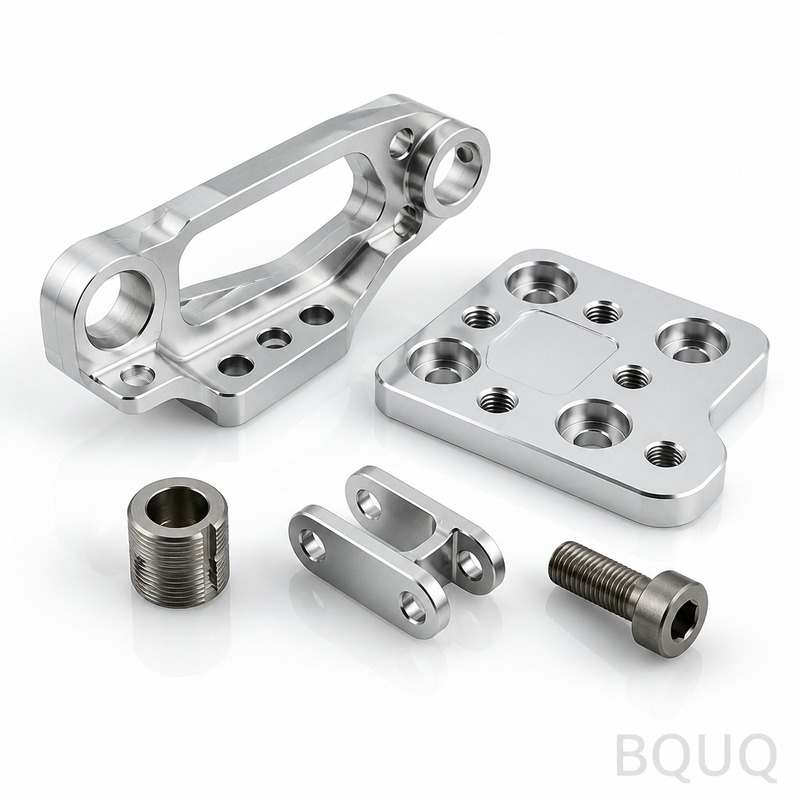
CNC machining preserves the full mechanical integrity of the raw material because it removes material from solid stock without melting or reheating, retaining original grain structure and hardness. In contrast, injection molding introduces molecular orientation and internal stresses during the cooling phase, which can reduce tensile strength by 10-30% compared to the same polymer in machined form. For metals, the comparison is even more stark: CNC-machined 6061-T6 aluminum achieves a yield strength of 276 MPa, while die-cast or metal-injection-molded alternatives typically reach only 150-200 MPa. Injection molding is also limited to thermoplastics and certain metal powders with binder systems, whereas CNC machining works with over 100 engineering materials including titanium, Inconel, PEEK, and hardened steels.
Which Process Achieves Better Dimensional Accuracy and Surface Finish?
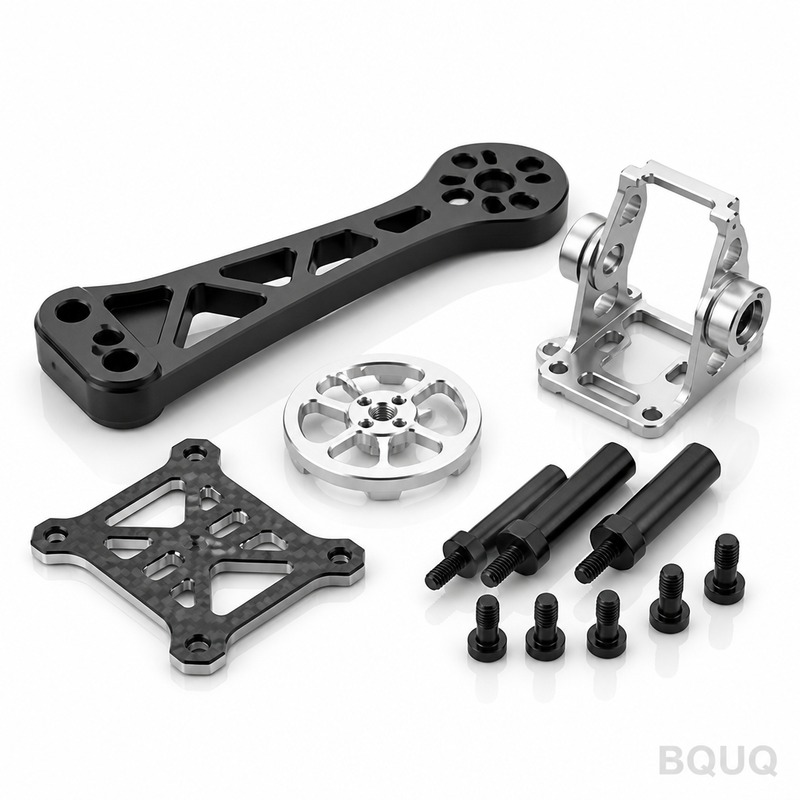
CNC machining routinely achieves tolerances of ±0.005 mm to ±0.025 mm on standard features, with surface finishes as fine as Ra 0.4 μm using fine finishing passes. Injection molding typically holds ±0.1 mm to ±0.25 mm for general tolerances, and even premium molds struggle to exceed ±0.05 mm due to shrinkage variability and thermal expansion during cooling. Surface finish in injection molding depends heavily on mold polish quality; standard tooling produces Ra 0.8-1.6 μm, while high-polish cavities reach Ra 0.2 μm but add 10-20% mold cost. For optical components, precision bearings, or mating surfaces that require tight fits, CNC machining is the only process that can deliver repeatable sub-10 micron accuracy without secondary operations.
Why Is Lead Time So Different Between CNC Machining and Injection Molding?
CNC machining offers lead times of 1-5 business days for prototypes and 2-3 weeks for production runs of 100-500 parts, because no tooling is required and programming is straightforward. Injection molding requires 2-6 weeks for aluminum prototype molds, 4-8 weeks for steel production molds, plus 1-2 weeks for mold trials and process optimization before the first acceptable part is produced. Once the mold is qualified, injection molding cycle times are 15-60 seconds per shot versus 5-20 minutes per CNC part, making molding dramatically faster for ongoing production. However, if you count total time from design freeze to first shipment, CNC machining is faster for the first 500 parts, while injection molding only becomes time-competitive after the tooling investment is amortized.
When Does Injection Molding Become More Economical Than CNC Machining?
Injection molding becomes more economical than CNC machining at production volumes above 3,000-5,000 units for simple geometries, and above 1,000-2,000 units for complex, thin-walled parts that would require extensive machining time. The crossover point shifts based on part complexity: a simple flat washer crosses over at 2,000 units, while a complex housing with internal threads and bosses may require 8,000 units to justify molding. Mold lifespan is a critical factor: a hardened P20 steel mold can produce 500,000-1,000,000 cycles, while an aluminum mold (for prototyping) survives only 5,000-10,000 shots. If your total production over the product lifecycle exceeds 10,000 units, injection molding will almost always deliver lower per-part cost, even including the amortized mold expense.
What Are the Design Constraints That Favor One Process Over the Other?
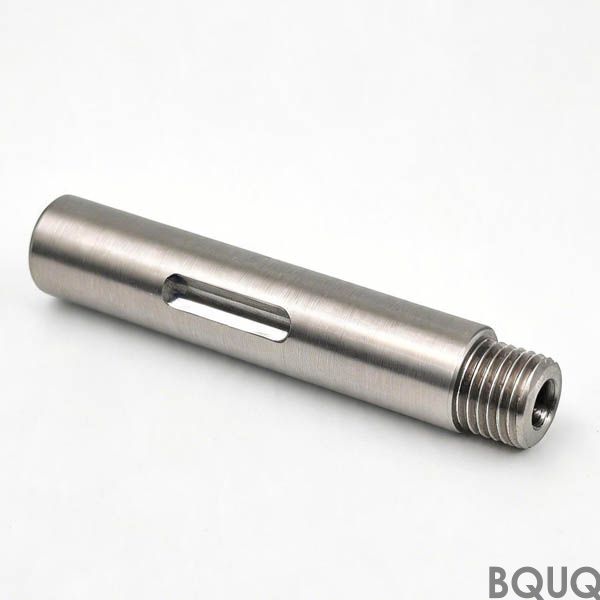
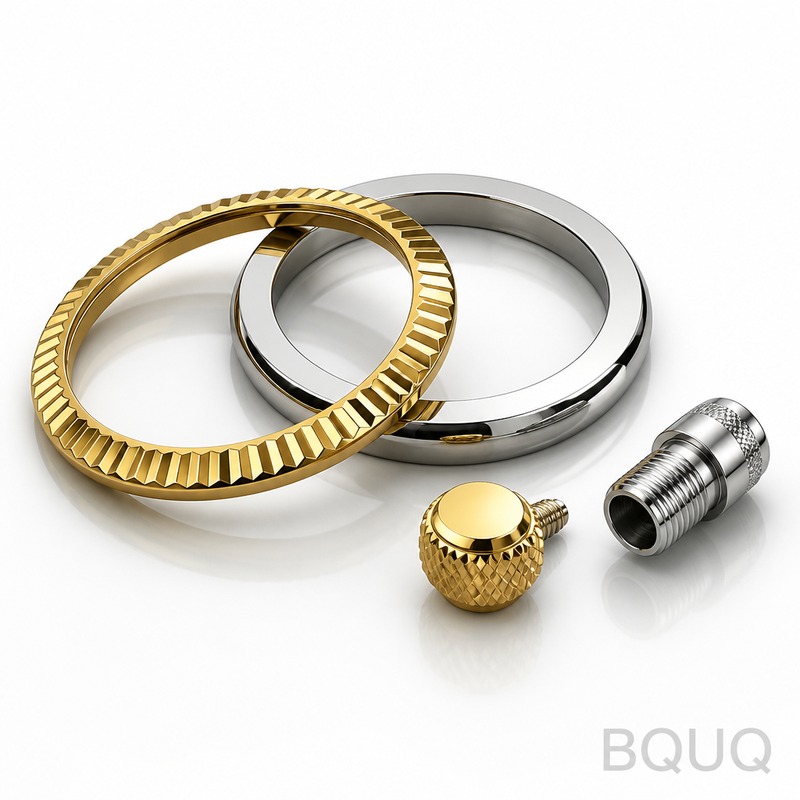
CNC machining allows deep undercuts, internal threads, and sharp internal corners that are impossible to mold, because cutting tools can approach the part from multiple angles. Injection molding requires draft angles of 0.5-2 degrees on all vertical walls, uniform wall thickness (typically 1.5-3.0 mm for thermoplastics), and generous fillets to promote polymer flow and prevent sink marks. CNC machining can produce wall thicknesses as thin as 0.5 mm in aluminum or 0.8 mm in steel, while injection molding struggles below 1.0 mm due to fill pressure limitations. For parts with high aspect ratios (length-to-diameter over 10:1), CNC machining is preferred because injection molding creates weld lines and weak points where polymer fronts meet.
How Do Production Speed and Scalability Compare for Ongoing Manufacturing?
Injection molding achieves cycle times of 15-60 seconds per part, yielding 60-240 parts per hour per cavity, and multi-cavity molds (up to 32 cavities) can push this to 7,000 parts per hour. CNC machining produces 1-10 parts per hour per machine, meaning a single CNC center is 50-200 times slower than an equivalent molding setup. However, CNC machining offers immediate scalability by adding more machines (each $50,000-$150,000), while injection molding scalability requires building additional cavities at $2,000-$8,000 per cavity. For production volumes above 50,000 parts per year, injection molding is 10-30 times faster and 60-90% cheaper per part, making it the clear choice for mass production.
| Parameter | CNC Machining | Injection Molding |
| Unit cost (low volume, 100 pcs) | $15-$150 per part | $85-$500 per part (including mold amortization) |
| Unit cost (high volume, 50,000 pcs) | $12-$120 per part | $0.50-$10 per part |
| Tooling cost | $50-$200 (fixtures only) | $3,000-$50,000 (mold) |
| Lead time (first part) | 1-5 business days | 3-8 weeks |
| Tolerance | ±0.005 mm to ±0.025 mm | ±0.1 mm to ±0.25 mm |
| Surface finish | Ra 0.4 μm to Ra 3.2 μm | Ra 0.2 μm to Ra 1.6 μm (with mold polish) |
| Material options | 100+ (metals, plastics, composites) | 20-30 (thermoplastics, MIM metals) |
| Production speed | 1-10 parts/hour/machine | 60-240 parts/hour/cavity |
| Design complexity | High (undercuts, threads, sharp corners) | Limited (draft, uniform walls, fillets) |
| Mechanical strength | 100% of raw material | 70-90% of raw material |
Which Applications Are Best Suited for Each Process?
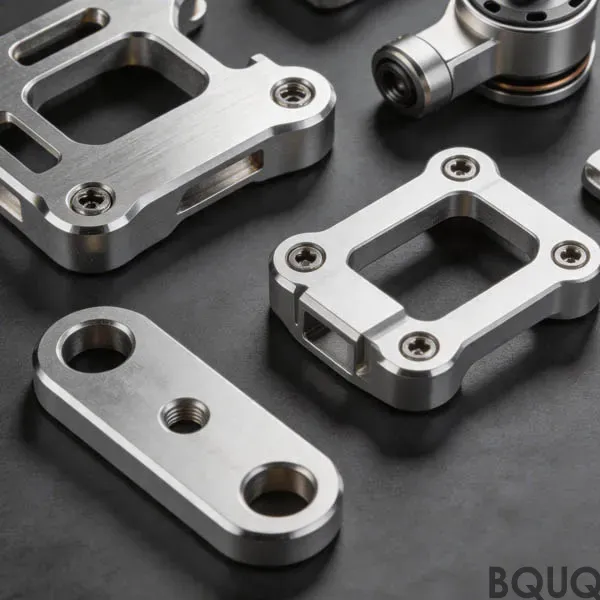
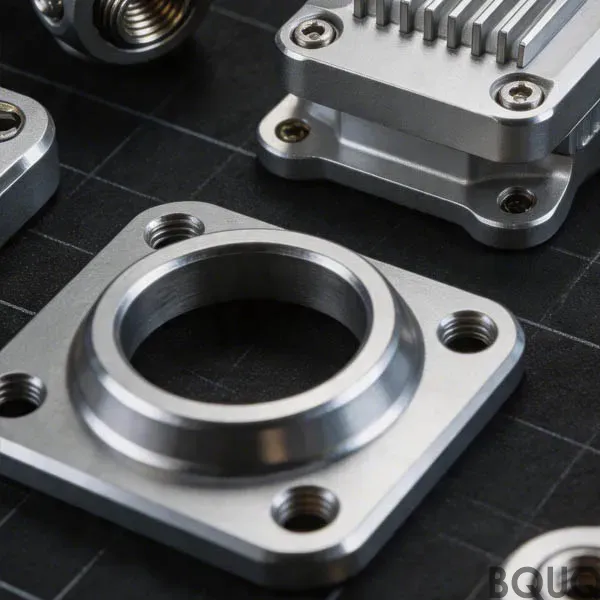
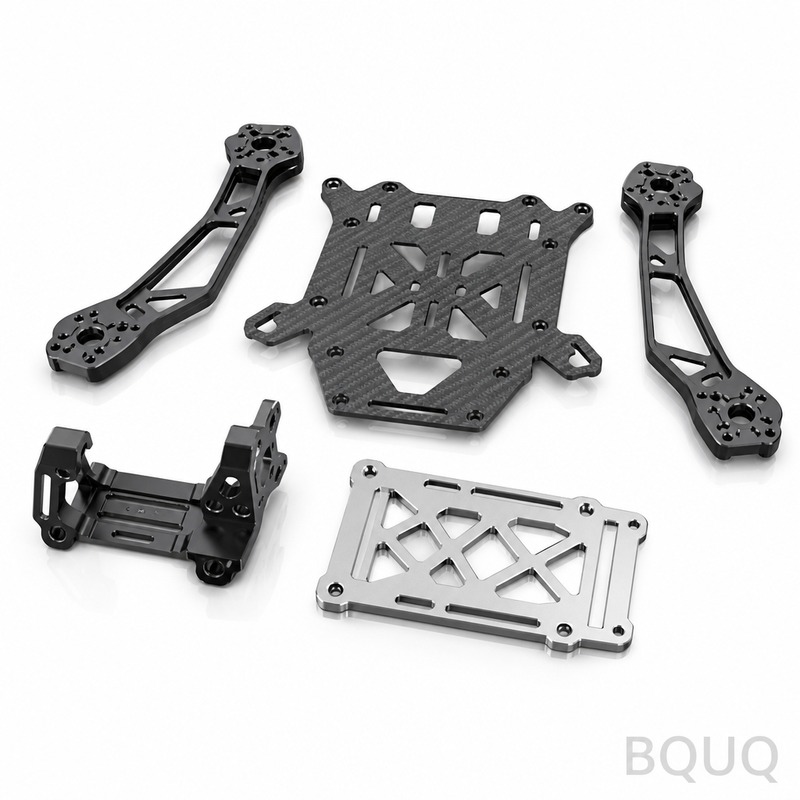
CNC machining is ideal for aerospace brackets, medical implants, custom tooling, low-volume robotics components, and any part requiring tight tolerances, high strength, or exotic materials like titanium or PEEK. Injection molding is best for consumer electronics housings, automotive interior trim, bottle caps, medical syringes, and any product requiring millions of identical parts with consistent quality. A practical rule: if the part has a volume of less than 10 cm³ and annual demand exceeds 100,000 units, injection molding is almost always correct. If the part has complex geometry, requires high strength, or will be produced in fewer than 5,000 units per year, CNC machining provides superior performance at lower total cost.
Can I Use Both Processes Together for the Same Product?
Yes, hybrid manufacturing is common: CNC machining can produce the injection mold itself (mold machining is a precision CNC operation), and after molding, secondary CNC operations can be used to achieve critical tolerances that molding cannot hold. For example, a molded plastic housing can be CNC-machined on mating surfaces to achieve ±0.01 mm alignment for optical components, combining molding's low cost with machining's precision. This hybrid approach typically adds $2-$5 per part in secondary costs but eliminates the need for an expensive high-precision mold, reducing overall tooling investment by 30-50%.
FAQ
What Is the Minimum Quantity for Injection Molding to Be Cost-Effective?
Injection molding becomes cost-effective at approximately 3,000 units for simple parts and 5,000-10,000 units for complex geometries, depending on mold cost and part complexity. Below these quantities, the mold amortization cost per part exceeds the savings in per-part material and cycle time. For quantities under 1,000, CNC machining is always more economical.
How Long Does an Injection Mold Last Compared to CNC Tooling?
A hardened steel injection mold lasts 500,000 to 1,000,000 cycles, while an aluminum prototype mold lasts only 5,000 to 10,000 shots. CNC machining uses standard cutting tools that wear out after 30 minutes to 8 hours of cutting, but replacement inserts cost only $10-$50 each. Mold maintenance includes periodic polishing and repair, typically every 100,000 cycles.
Which Process Produces Stronger Parts for Load-Bearing Applications?
CNC machining produces stronger parts because it preserves the original grain structure of the material, while injection molding introduces molecular orientation and internal stresses that reduce tensile strength by 10-30%. For metals, CNC-machined 6061-T6 aluminum reaches 276 MPa yield strength, while metal injection molding achieves only 150-200 MPa. Always choose CNC machining for structural or load-bearing components.
Can Injection Molding Achieve the Same Surface Finish as CNC Machining?
Injection molding can achieve Ra 0.2 μm with high-polish mold cavities, but this requires additional mold polishing time and cost, typically adding 10-20% to mold price. Standard injection molding produces Ra 0.8-1.6 μm, while standard CNC machining produces Ra 1.6-3.2 μm and can reach Ra 0.4 μm with fine finishing. For cosmetic surfaces, molding is often better; for functional precision surfaces, machining wins.
What Materials Are Available for Each Process?
CNC machining supports over 100 materials including aluminum (6061, 7075), stainless steel (304, 316), titanium (Grade 5), brass, copper, PEEK, Delrin, and carbon fiber composites. Injection molding is limited to thermoplastics (ABS, PC, PP, PA, POM, PBT) and metal injection molding (MIM) with specific alloys. CNC machining offers far greater material flexibility, especially for high-temperature or high-strength applications.
How Do I Choose Between CNC Machining and Injection Molding for My Product?
Evaluate your annual production volume, required tolerances, material strength needs, and budget for tooling. If volume is under 3,000 units per year, choose CNC machining; if over 10,000 units, choose injection molding; for volumes in between, request quotes for both and compare total cost including tooling amortization. Also consider lead time: if you need parts in under 2 weeks, CNC machining is the only option.
What Is the Typical Cost for a Production Injection Mold?
A simple two-plate aluminum mold costs $3,000-$8,000, a standard steel mold for medium complexity costs $10,000-$25,000, and a multi-cavity, fully automated steel mold with hot runners costs $30,000-$50,000 or more. Mold cost is driven by part size, number of cavities, complexity of geometry, and required lifespan. For comparison, CNC machining requires zero tooling cost, only $50-$200 for custom fixtures.
Choosing between CNC machining and injection molding requires careful analysis of your production volume, performance requirements, and timeline. For low-volume precision parts, CNC machining offers superior strength, tighter tolerances, and faster delivery at lower total cost. For high-volume production, injection molding provides unbeatable per-part economics and speed, provided you can justify the mold investment. At BQUQ, we operate both CNC machining centers and injection molding machines in our Dongguan factory, so we can provide unbiased recommendations based on your specific part geometry and volume. Send us your drawings today for a free cost comparison and engineering review. We respond with detailed quotes within 12 hours. Email: sc@bquq.com, WhatsApp: +86 13713157787, www.bquq.com.
Related Articles
- How Much Does CNC Machining Cost in 2026? A Complete Pricing Guide
- CNC Turn-Mill Composite Machining, Turn-Mill Machine Tools, One-Time Forming, B-Axis Turn-Mill Center, Multi-Process Integration, Complex Rotary Part Machining, Medical Device Precision Machining
- Adaptive Control and AI Real-Time Optimization in CNC Machining: From Experience to Algorithm