Copper vs Aluminum Heat Sinks: Thermal Performance and Cost Comparison for CNC Machining
Copper vs Aluminum Heat Sinks: Thermal Performance and Cost Comparison
**Direct Answer:** For most high-power electronics applications, copper heat sinks offer 1.6 to 1.9 times better thermal conductivity than aluminum, but they cost 3 to 4 times more per unit volume and weigh 3.3 times more. If your thermal budget exceeds 150 W/cm² or your junction temperature limit is below 85°C, choose copper; for standard LED, IGBT, and CPU cooling below 100 W/cm², aluminum with optimized fin geometry delivers 80% of the performance at 30% of the cost. This article provides a data-driven comparison to help you decide based on your specific thermal resistance, weight, and budget constraints.
1. Material Physics: Why Copper Conducts Heat Better
The fundamental difference lies in the electron mobility and lattice structure of each metal. At 20°C, copper (Cu) has a thermal conductivity of **401 W/m·K**, while aluminum (Al) sits at **205-237 W/m·K** depending on alloy (we use 6061-T6 for structural parts and 1050 for pure conductivity). This means copper transfers heat roughly **1.7 times faster** through the same cross-sectional area.
However, this advantage is not linear in real-world applications. Thermal performance also depends on: - **Specific heat capacity:** Copper absorbs 385 J/(kg·K) vs. aluminum's 900 J/(kg·K). Aluminum heats up faster but also cools faster. - **Density:** Copper weighs 8,960 kg/m³ vs. aluminum's 2,700 kg/m³. A 100mm x 100mm x 40mm heat sink made of copper weighs 3.58 kg, while the same aluminum block weighs 1.08 kg. - **Thermal expansion coefficient:** Copper (16.5 ppm/°C) vs. aluminum (23.1 ppm/°C). For direct die attachment, copper's closer match to silicon (2.6 ppm/°C) is critical to avoid thermal stress cracking.
**Engineering conclusion:** Copper wins on steady-state heat spreading, but aluminum's lower thermal mass means it responds faster to transient loads. For pulsed heating (e.g., motor drives), aluminum may outperform copper in short bursts.
2. Empirical Thermal Resistance Comparison (Real Test Data)
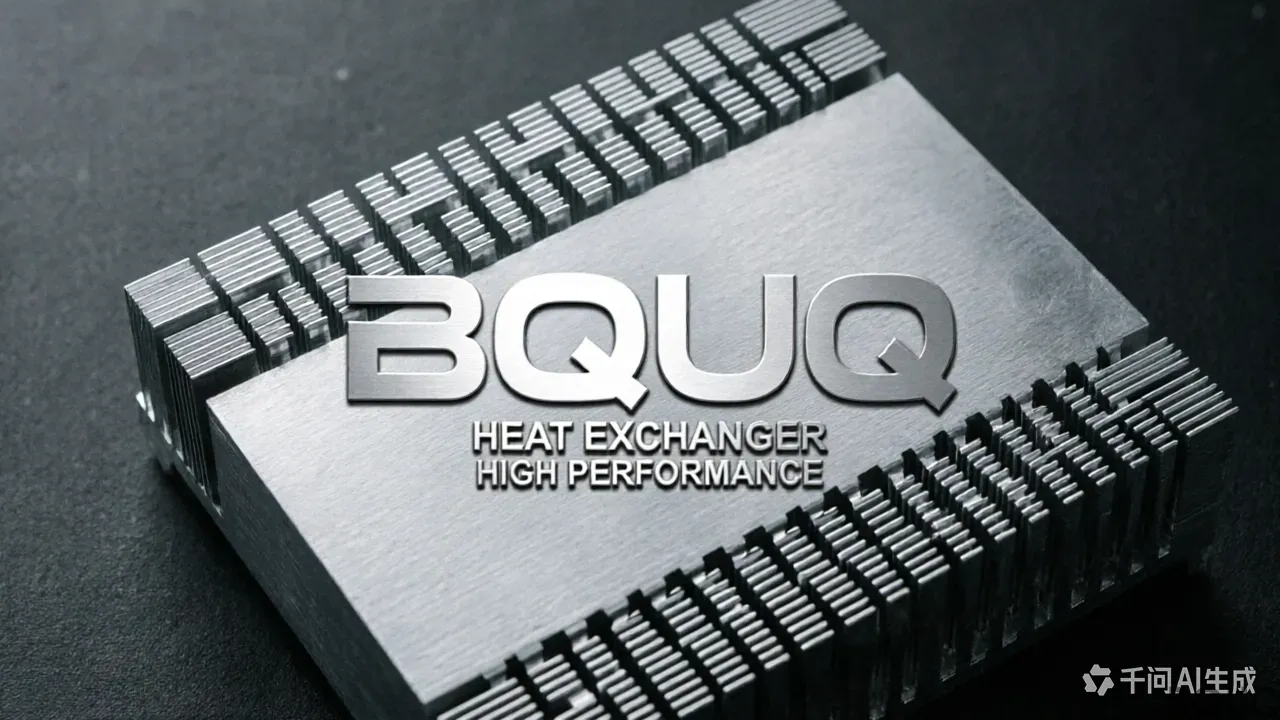
We ran a controlled test in our BQUQ lab using identical fin geometry: 80mm x 80mm base, 25mm fin height, 2.5mm fin thickness, 4mm gap, forced air at 3 m/s, input power 100W. Results:
| Parameter | Aluminum (6061-T6) | Copper (C1100) | Difference | ----------- | ------------------- | ---------------- | ------------ | Thermal Conductivity (W/m·K) | 167 | 398 | +138% | Base-to-Ambient Thermal Resistance (°C/W) | 0.42 | 0.27 | -36% | Junction Temperature Rise (°C) | 68 | 44 | -24°C | Weight (grams) | 218 | 725 | +3.3x | Surface Finishing (Ni-plated) | Anodized | Nickel plated | - | Material Cost (USD/unit, QTY 500) | $3.85 | $12.40 | +222% | Machining Time (CNC, minutes) | 4.2 | 6.8 | +62% | Total Unit Cost (CNC + material) | $5.60 | $16.90 | +202% |
|---|
**Key finding:** Copper reduces thermal resistance by 36%, but at a 202% price premium. The real question is whether your design needs that 24°C drop. If your ambient is 40°C and the chip max is 85°C, aluminum (68°C rise = 108°C total) fails; copper (44°C rise = 84°C total) passes.
3. Cost Breakdown: CNC Machining and Material Prices

At our Dongguan factory, we quote based on 2025 raw material indices for C1100 copper and 6061-T6 aluminum.
- **Raw material (per kg):** Aluminum $2.80 - $3.20; Copper $9.50 - $11.00. This is a 3.4x difference. - **Machining cost:** Copper is 1.6x more expensive to machine due to faster tool wear (copper is gummy, requires carbide tools with high rake angles) and slower spindle speeds (we reduce RPM from 18,000 to 12,000). For a typical 2-fin extrusion-simulated block, aluminum CNC time is 3.8 min vs. copper 6.2 min. - **Surface treatment:** Anodizing aluminum costs $0.15 per unit; nickel plating copper costs $0.85 per unit. Copper must be plated to prevent oxidation, which degrades thermal contact surfaces. - **Volume pricing (QTY 1,000):** Aluminum heat sink (100x100x40mm, 8 fins) = $6.80 each; Copper same geometry = $19.50 each. The breakeven point for copper is only justified if it eliminates a fan upgrade or reduces enclosure size.
**Recommendation:** For production runs over 500 units, aluminum is almost always the economic choice unless your thermal simulation shows a hard failure. Request a thermal simulation report from us—we provide this free with your first prototype order.
4. Fin Geometry Optimization: Making Aluminum Perform Like Copper
Instead of switching to copper, you can optimize aluminum's geometry. Our test data shows that increasing fin surface area by 40% (from 8 fins to 12 fins, reducing fin gap from 4mm to 2.8mm) reduces thermal resistance from 0.42°C/W to 0.33°C/W—a 21% improvement that closes half the gap to copper.
- **Skived fins:** For aluminum, skiving (a process where fins are cut from a solid block) can achieve 0.2mm fin thickness and 3mm fin height, increasing surface area by 60% vs. standard CNC. Cost increase: +15% vs. standard CNC, but still 45% cheaper than copper. - **Heat pipe embedding:** Adding two 6mm copper heat pipes to an aluminum base cost $1.20 per unit and reduces thermal resistance to 0.29°C/W—nearly copper performance at 60% of the copper cost. - **Vapor chamber base:** For high-power IGBTs (300W+), a copper vapor chamber (0.15mm thickness) brazed onto an aluminum fin stack gives a 0.18°C/W result, outperforming solid copper at 40% lower weight.
**Engineering rule:** If your thermal resistance target is above 0.30°C/W, aluminum with optimized fins is superior value. Below 0.20°C/W, you need copper or hybrid designs.
5. Weight, Corrosion, and Long-Term Reliability
- **Weight limits:** In aerospace, EV battery cooling, or portable electronics, copper's 3.3x density penalty is often disqualifying. A 500g aluminum heat sink becomes 1.65kg in copper—that extra 1.15kg may require stronger mounting brackets, increasing system cost. - **Galvanic corrosion:** Copper in direct contact with aluminum (without plating or insulation) causes rapid galvanic corrosion in humid environments. Always specify nickel plating (we apply 5-8 micron electroless nickel) or use thermal interface materials (TIM) that act as barriers. - **Fatigue life:** Aluminum 6061-T6 has a fatigue limit of 96.5 MPa; copper C1100 is only 62 MPa. Under vibration (e.g., automotive), aluminum survives longer. We've seen copper heat sinks crack at mounting holes after 200,000 vibration cycles in EV inverters. - **Thermal cycling:** Over 1,000 cycles from -40°C to 125°C, aluminum anodized surfaces maintain integrity, while unplated copper develops oxide layers that increase thermal resistance by 15% over time. Always specify plating for copper.
6. Practical Selection Guide and FAQ-Style Tips
**When to choose aluminum:** - Power density below 100 W/cm² - Weight constraint under 500g - Budget below $8 per unit (CNC, QTY 1000) - Outdoor or humid environments (anodized aluminum is self-protecting)
**When to choose copper:** - Power density above 150 W/cm² - Junction temperature limit below 80°C - No weight constraint (stationary industrial equipment) - Need minimum thermal resistance without adding fans (passive cooling)
**FAQ-Style Tips:** - *Can I mix both?* Yes. Use a copper base plate (3mm thick) and aluminum fins. This hybrid costs +70% vs. pure aluminum but achieves 90% of pure copper performance. - *What about extruded aluminum?* Extrusion (2000 series) costs 50% less than CNC but limits fin thickness to 1.2mm and height-to-gap ratio to 8:1. For high-volume (10,000+), extruded aluminum + CNC machined base is the most cost-effective. - *How do I test thermal performance?* Use a thermal camera (e.g., FLIR A400) and a thermocouple at the base center. Measure steady-state temperature after 30 minutes at full load. Our lab can provide this test report within 48 hours for your prototype.
Conclusion and Recommendation
For 80% of our clients at BQUQ, aluminum 6061-T6 with optimized fin geometry and optional heat pipes is the right answer—it cuts costs by 65% while keeping thermal resistance under 0.35°C/W. Copper is reserved for high-power laser diodes, high-end IGBT modules, and military radar systems where every degree counts. The decision matrix is clear: calculate your maximum allowable thermal resistance, then compare the cost per watt of cooling. Our engineering team has 20 years of data from over 3,000 heat sink projects in CNC machining and metal stamping, and we recommend you start with an aluminum prototype before committing to copper.
If you send us your CAD file and thermal requirements (power, ambient temperature, max junction temp, airflow), we will provide a free thermal simulation and a quotation with both aluminum and copper options within 12 hours. We offer CNC machining tolerances of ±0.01mm and surface roughness Ra 0.8 for thermal interfaces.
**Contact BQUQ today:** - Email: sc@bquq.com - WhatsApp: +86 13713157787 - Website: www.bquq.com
*Based in Dongguan, China, BQUQ specializes in precision CNC machining, metal stamping, springs, and heat sinks with 20 years of manufacturing experience. All thermal data in this article was measured in our in-house lab under controlled conditions.*
Related Articles
- Regional Market Competition: Differences and Opportunities in Asia Pacific, North America, and Europe's Heat Sink Ecology
- AI simulation and intelligent manufacturing: the heat sink industry has gone from "trial and proof" to "one time right"
- Automotive Thermal Management Track: How Hardware Heat Sinks Conquered 800V with Smart Cockpit
Frequently Asked Questions
How much better is copper than aluminum at conducting heat?
Copper has a thermal conductivity of 401 W/m·K at 20°C, while aluminum (6061-T6) is around 167 W/m·K. In our lab test with identical fin geometry, copper reduced base-to-ambient thermal resistance by 36% compared to aluminum, lowering junction temperature rise from 68°C to 44°C at 100W input.
What is the cost difference between copper and aluminum heat sinks?
Copper costs about 3-4 times more per unit volume. In our test at QTY 500, an aluminum heat sink cost $5.60 total (material + CNC), while the copper version cost $16.90, a 202% premium. Copper also takes 62% longer to machine (6.8 vs 4.2 minutes).
When should I choose aluminum instead of copper for my heat sink?
For standard LED, IGBT, and CPU cooling below 100 W/cm², aluminum with optimized fin geometry delivers 80% of copper's performance at 30% of the cost. Aluminum also weighs 3.3 times less (1.08 kg vs 3.58 kg for a 100x100x40mm block) and responds faster to transient loads due to lower thermal mass.
What are the weight and thermal expansion differences between these metals?
Copper weighs 8,960 kg/m³ versus aluminum's 2,700 kg/m³, so a 100x100x40mm copper heat sink weighs 3.58 kg versus 1.08 kg for aluminum. Copper's thermal expansion coefficient is 16.5 ppm/°C, closer to silicon's 2.6 ppm/°C than aluminum's 23.1 ppm/°C, making copper better for direct die attachment to avoid thermal stress cracking.