Copper vs Aluminum Heat Sinks: Thermal Performance and Cost Comparison
Direct Answer: Which Material Should You Specify?
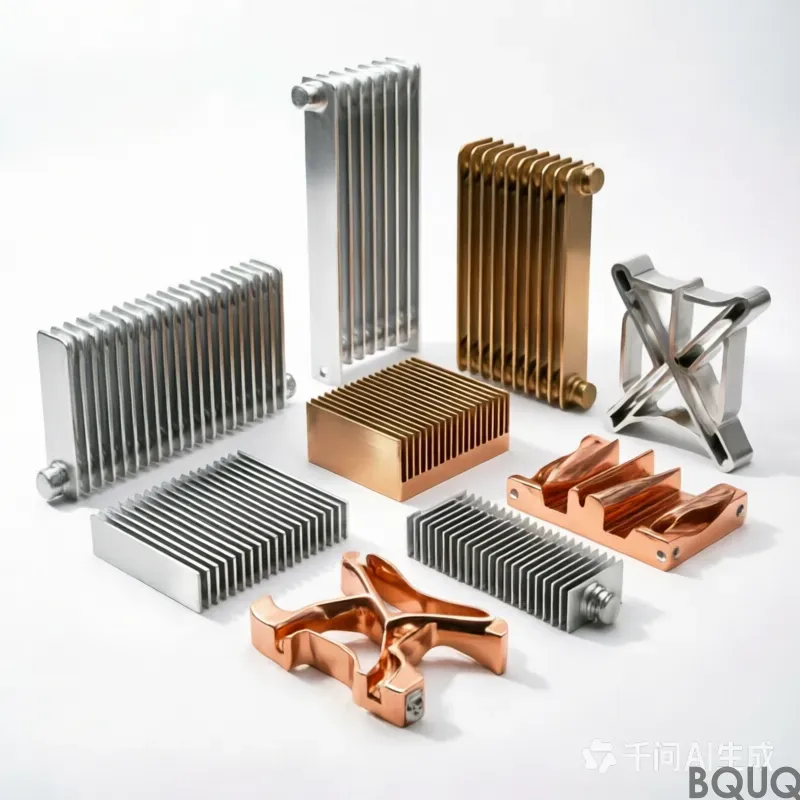
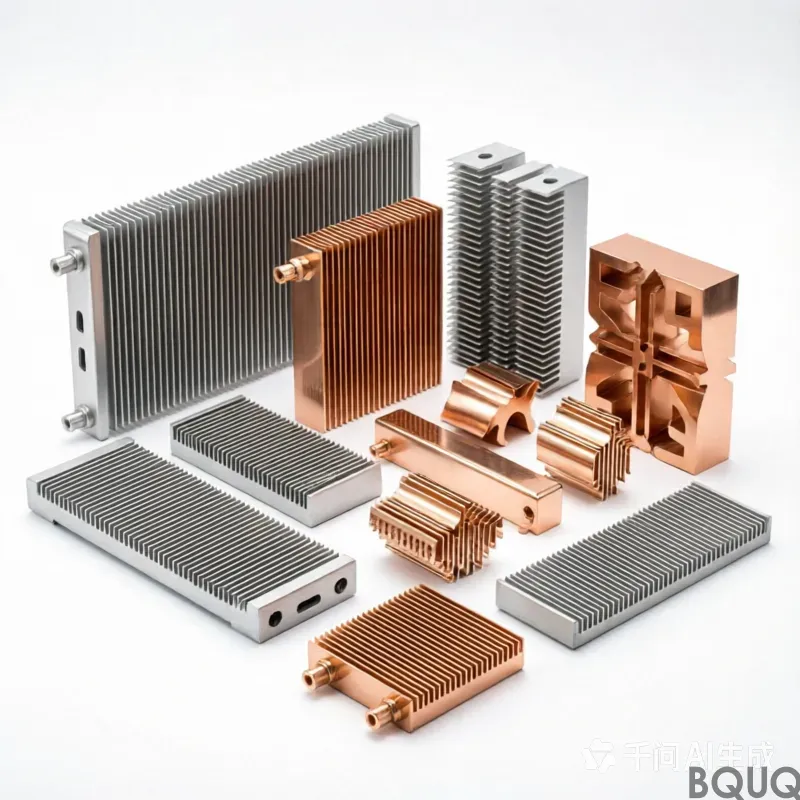
For most forced-convection applications, aluminum heat sinks are the correct engineering choice due to their 50-60% lower cost, 70% lower density, and adequate thermal conductivity of 150-230 W/m·K. Copper heat sinks, with 385-400 W/m·K thermal conductivity, only become economically justified when natural convection is the sole cooling method, the heat flux exceeds 15 W/cm², or the envelope volume is severely constrained. At BQUQ, we machine both materials daily; the decision hinges on your specific thermal resistance target (C/W), volumetric constraints, and production volume.
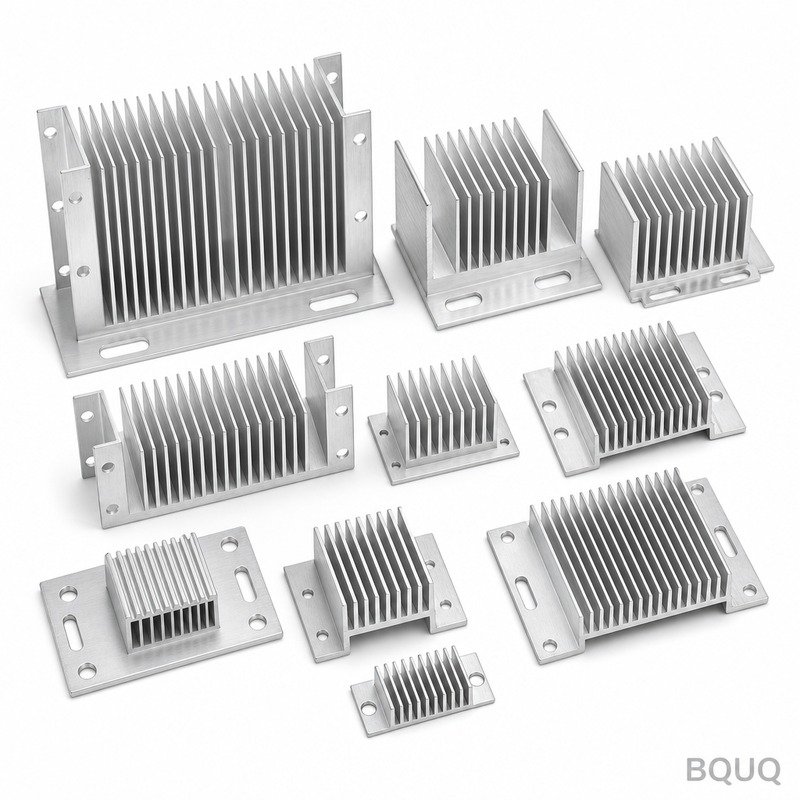
Thermal Conductivity and Real-World Performance
The raw thermal conductivity numbers tell only part of the story. Pure copper (C11000) offers 398 W/m·K, while extruded aluminum alloy 6063-T5 offers 201 W/m·K. However, the effective performance in a finned heat sink depends on fin efficiency, which is a function of material conductivity, fin thickness, and fin height.
For a typical heat sink with 40 mm fins and 1.5 mm fin thickness, the fin efficiency of aluminum is approximately 62%, while copper achieves 82%. This translates to a thermal resistance reduction of roughly 25-30% for copper at identical geometry. But here is the critical engineering trade-off: to match copper's performance, you simply increase aluminum's surface area by 30-40%, which adds negligible cost compared to the material price differential.
In natural convection applications, copper's advantage is more pronounced because the heat transfer coefficient is low (5-10 W/m²·K), and the spreading resistance within the base plate dominates. A copper base plate with aluminum fins (a hybrid design) can reduce overall thermal resistance by up to 35% compared to a solid aluminum unit, while keeping weight down. BQUQ manufactures these hybrid units using brazing or thermal epoxy, achieving bond-line thickness of 0.05-0.1 mm with thermal interface resistance below 0.1 cm²·K/W.
Cost Breakdown and Material Pricing
Raw material prices fluctuate, but the ratio remains stable. As of Q3 2025, the market prices are:
| Material | Thermal Conductivity (W/m·K) | Density (g/cm³) | Material Cost (USD/kg) | Machining Difficulty | Typical Lead Time |
| Copper C11000 | 398 | 8.94 | 9.50 - 11.00 | Moderate, tool wear high | 20 - 25 days |
| Aluminum 6063-T5 | 201 | 2.70 | 3.20 - 3.80 | Easy, high speeds | 10 - 15 days |
| Aluminum 6061-T6 | 167 | 2.70 | 3.00 - 3.50 | Easy, slightly harder than 6063 | 10 - 15 days |
| Copper-Tungsten (90/10) | 180 | 16.5 | 85.00 - 120.00 | Very difficult, diamond tooling | 30 - 40 days |
For a typical CNC-machined heat sink measuring 100 mm x 100 mm x 25 mm with 10 fins, the aluminum version weighs 675 grams and costs 3.10 USD in material. The identical copper version weighs 2,235 grams and costs 21.50 USD in material alone. Add machining costs: aluminum CNC machining runs 35-55 USD per hour, while copper machining runs 55-80 USD per hour due to 40% slower cutting speeds and higher tool replacement frequency. The total per-unit cost for a 100-unit batch is approximately 12.50 USD (aluminum) versus 38.00 USD (copper), a 3x difference.
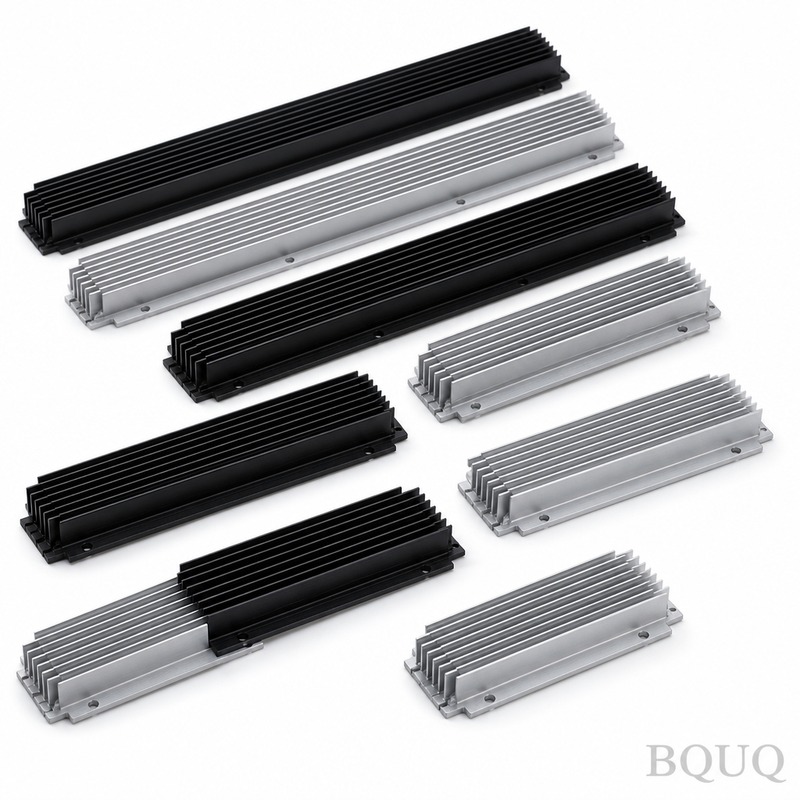
Weight and Structural Considerations
Weight is often the decisive factor in aerospace, automotive, and portable electronics. Copper is 3.31 times denser than aluminum. A copper heat sink that replaces an aluminum one will add significant mass to your assembly, possibly requiring additional mounting brackets or changing the center of gravity. For a server CPU cooler, a typical aluminum unit weighs 620 grams; the copper equivalent weighs 2,050 grams. This weight increase also affects thermal cycling fatigue, as the coefficient of thermal expansion (CTE) for copper is 16.5 ppm/°C versus 23.0 ppm/°C for aluminum. The mismatch between a copper heat sink and an aluminum chassis can induce stress at bolted joints; using spring washers or compliant thermal interface materials becomes mandatory.
From a manufacturing standpoint, copper's high ductility causes burr formation during machining. BQUQ employs specialized tooling with positive rake angles and high-pressure coolant (70 bar) to achieve a surface finish of Ra 1.6 micrometers on copper, versus Ra 0.8 micrometers on aluminum. If your drawing specifies a flatness tolerance of 0.05 mm on the base plate, aluminum is easier to hold in production. Copper's thermal expansion during machining can cause dimensional drift, requiring a 20% longer cycle time and more frequent in-process inspection.
Application-Specific Selection Criteria
The decision matrix below provides practical guidance based on operating environment and thermal load.
| Application Condition | Recommended Material | Reasoning |
| Forced convection (fan > 2 m/s), heat flux < 10 W/cm² | Aluminum 6063-T5 | Airflow overcomes aluminum's lower conductivity; cost savings dominate |
| Natural convection, heat flux 5-15 W/cm² | Aluminum with heat pipes | Heat pipes spread heat efficiently; aluminum fins suffice |
| Natural convection, heat flux > 15 W/cm² | Copper or copper-base hybrid | Spreading resistance is critical; copper base reduces hot spots |
| Sealed enclosure, no airflow, high ambient (70°C+) | Copper | Maximum conductivity needed to minimize temperature rise |
| Weight-sensitive (aerospace, handheld devices) | Aluminum 6061-T6 | 3.3x lighter, adequate performance with optimized fin geometry |
| High vibration environment | Aluminum 6061-T6 | Higher yield strength (276 MPa) vs 6063 (145 MPa) resists fatigue |
For LED lighting modules with a 50 W power dissipation and a junction temperature limit of 85°C, an aluminum heat sink with a thermal resistance of 1.2 C/W is typical. Switching to copper reduces resistance to 0.85 C/W, dropping junction temperature by 10.5°C. If the LED driver and optics are rated for 85°C ambient, this 10.5°C margin may extend lifetime from 50,000 to 80,000 hours. However, if the same 50 W source is actively cooled with a 40 mm fan, aluminum achieves 0.9 C/W at a fraction of the cost.
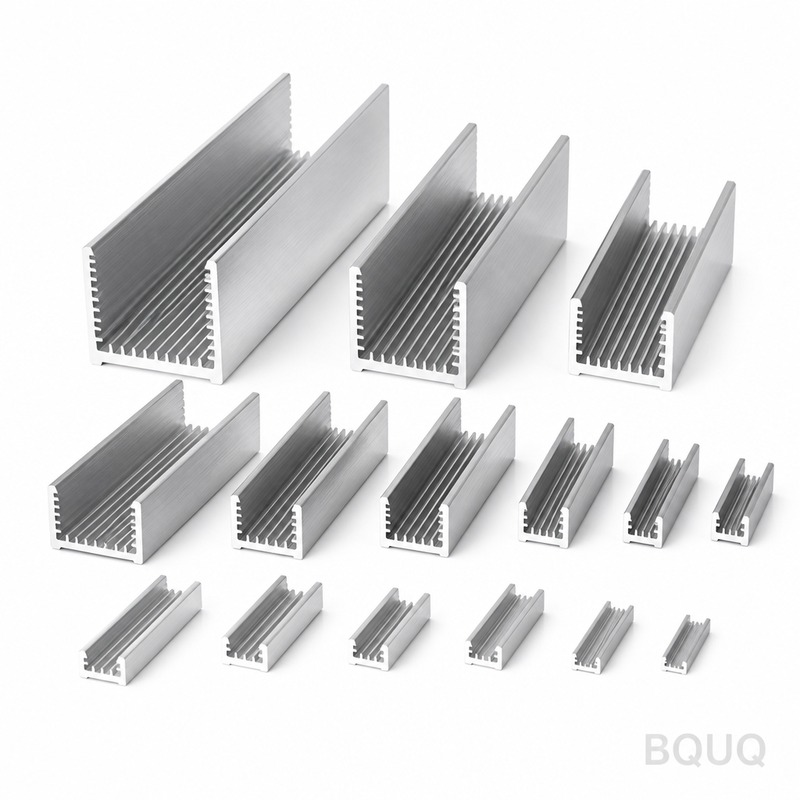
Surface Treatment and Corrosion Considerations
Aluminum requires surface treatment to prevent galvanic corrosion when mated with copper or steel components. Hard anodizing (type III, 25-50 micrometers) improves surface emissivity to 0.85, which enhances radiative heat transfer in natural convection by 15-20%. Copper, in contrast, oxidizes naturally, and the oxide layer reduces emissivity to 0.30-0.50. A nickel plating (5-10 micrometers) on copper improves corrosion resistance and maintains solderability for heat pipe attachment.
BQUQ recommends clear anodizing for aluminum heat sinks in indoor applications, costing 1.80-2.50 USD per square meter. For outdoor or marine environments, specify chromate conversion coating on copper to prevent verdigris formation. The cost of surface treatment for copper is typically 30% higher due to the need for acid pickling and nickel plating. In humid environments, untreated copper heat sinks can fail within 6 months due to corrosion, while anodized aluminum lasts 10+ years.
Practical Recommendations and FAQ-Style Tips
For 80% of your projects, choose aluminum 6063-T5 with anodized finish. It offers the best balance of thermal performance, cost, and manufacturability. Only request copper when you have exhausted fin height and airflow optimization, or when the product thickness is constrained to under 15 mm.
When comparing quotes, ask for the thermal resistance at your specific airflow rate, not at the manufacturer's standard condition. A heat sink rated at 1.0 C/W at 200 LFM may perform at 1.8 C/W at 100 LFM. Always request a thermal simulation report (CFD) from your supplier; BQUQ provides free simulation for orders above 500 units, validating that the aluminum version meets your junction temperature target.
If you must use copper, optimize the design by using a copper base plate (5-8 mm thick) with aluminum fins. This hybrid approach captures 70% of copper's performance benefit at 45% of the cost of a solid copper unit. Ensure the interface between copper and aluminum is a metallurgical bond (brazing) rather than a mechanical press-fit, as the thermal contact resistance of a press-fit joint can negate your performance gains.
For prototype validation, machining aluminum is 30% faster than copper, allowing you to iterate on fin spacing and base thickness within a 3-day turnaround. BQUQ stocks both 6063-T5 and C11000 plate in thicknesses from 5 mm to 60 mm, enabling same-day material cutting for urgent samples.
Conclusion and Final Specification Guidance
Select aluminum for cost-driven applications with active cooling, and select copper for performance-critical, space-constrained passive designs. Document your thermal budget in watts and maximum allowable temperature rise, then provide your supplier with the airflow rate and ambient temperature. A well-specified aluminum heat sink will satisfy 90% of commercial requirements. For the remaining 10%, copper or hybrid designs deliver the necessary thermal headroom. The key to a successful project is specifying the thermal resistance requirement, not the material, and letting your manufacturing partner optimize the geometry.
For a rapid assessment of your heat sink requirement, send your thermal load, airflow, and space constraints to our engineering team. BQUQ provides a 12-hour quotation with thermal simulation and cost breakdown for both copper and aluminum versions. Contact us at Email: sc@bquq.com, WhatsApp: +86 13713157787, or visit www.bquq.com. With 20 years of CNC machining and metal stamping experience in Dongguan, we have produced over 2 million heat sinks across telecommunications, medical, and automotive sectors. Let our engineers help you select the material that maximizes performance per dollar.