Custom Stamping vs Standard Parts: When to Choose Custom
Introduction
In the world of metal stamping and precision manufacturing, engineers and procurement managers often face a critical decision: should they opt for custom stamping parts or rely on standard off-the-shelf components? This choice impacts cost, lead time, performance, and product differentiation. In this comprehensive comparison, we dissect the key differences between custom and standard stamping parts, helping you determine the best path for your project. We'll examine factors like design flexibility, volume requirements, cost implications, and quality control. By the end, you'll have a clear framework to make an informed decision.
What Are Standard Stamping Parts?
Standard stamping parts refer to pre-designed, mass-produced components that are readily available from suppliers. These parts are manufactured to common specifications (e.g., washers, brackets, clips) and are often standardized across industries. They are ideal for applications where specific dimensions or performance traits are not critical. Standard parts typically have shorter lead times and lower upfront costs because tooling (dies) already exists. However, they offer limited customization and may not fit unique design requirements.
What Are Custom Stamping Parts?
Custom stamping parts are designed and manufactured exclusively for a particular application. The process involves creating new tooling (progressive dies, transfer dies, or compound dies) tailored to the part's geometry, material, and tolerances. Custom parts provide maximum design freedom, allowing engineers to optimize for strength, weight, or functionality. While initial tooling costs are higher and lead times longer, custom parts can reduce assembly costs, improve product performance, and create intellectual property advantages.
Comparison Table: Custom vs Standard Stamping Parts
| Feature | Custom Stamping Parts | Standard Stamping Parts |
|---|---|---|
| Design Flexibility | Unlimited – part is made to your exact specs | Limited – only available in predefined shapes/sizes |
| Tooling Cost | High (new dies required) | Low (existing dies used) |
| Unit Cost (High Volume) | Very competitive (amortized tooling) | Low (but may have premium per piece) |
| Lead Time | Longer (4-8 weeks for tooling + production) | Short (usually in stock or 1-2 weeks) |
| Minimum Order Quantity (MOQ) | Variable (can be low if tooling is shared) | Often high (to justify inventory) |
| Quality Control | Tight tolerances possible (0.01 mm) | Standard tolerances (0.1-0.5 mm typical) |
| Material Options | Virtually any metal (steel, aluminum, brass, etc.) | Limited to common stock materials |
| IP Protection | Yes – exclusive design | No – design is public |
| Suitability for Prototypes | Good (but cost may be high) | Fair (may not meet exact needs) |
When to Choose Custom Stamping Parts
1. Unique Performance Requirements
If your product demands specific mechanical properties (e.g., high strength-to-weight ratio, corrosion resistance, or electrical conductivity), custom stamping allows you to select the optimal material and geometry. For example, a custom heat sink for a high-power LED can have intricate fins that maximize thermal dissipation, something standard parts cannot achieve.
2. Complex Geometry or Tight Tolerances
Applications in aerospace, medical devices, or automotive often require precise dimensions and complex shapes. Custom stamping with progressive dies can produce parts with multiple bends, holes, and forms in one operation, holding tolerances as tight as ±0.01 mm. Standard parts seldom offer such precision.
3. High-Volume Production
When you need millions of parts, the upfront tooling investment pays off. For instance, a custom spring clip for an automotive assembly might cost $10,000 in tooling but reduce per-piece cost from $0.50 (standard) to $0.05. Over 1 million parts, you save $450,000.
4. Intellectual Property and Brand Differentiation
Custom parts can be patented or kept as trade secrets, giving your product a competitive edge. Standard parts are available to everyone, so your product risks being generic.
5. Optimized Assembly and Reduced Waste
Custom parts can be designed to eliminate secondary operations (welding, fasteners) and streamline assembly. For example, a custom bracket that snaps into place reduces labor time and eliminates screws.
When to Choose Standard Stamping Parts
1. Low Volume or Prototyping
If your annual volume is under 10,000 pieces, the tooling cost for custom parts may be hard to justify. Standard parts can be sourced quickly at low cost. For prototypes, consider using standard parts to validate your design before committing to custom tooling.
2. Common, Non-Critical Applications
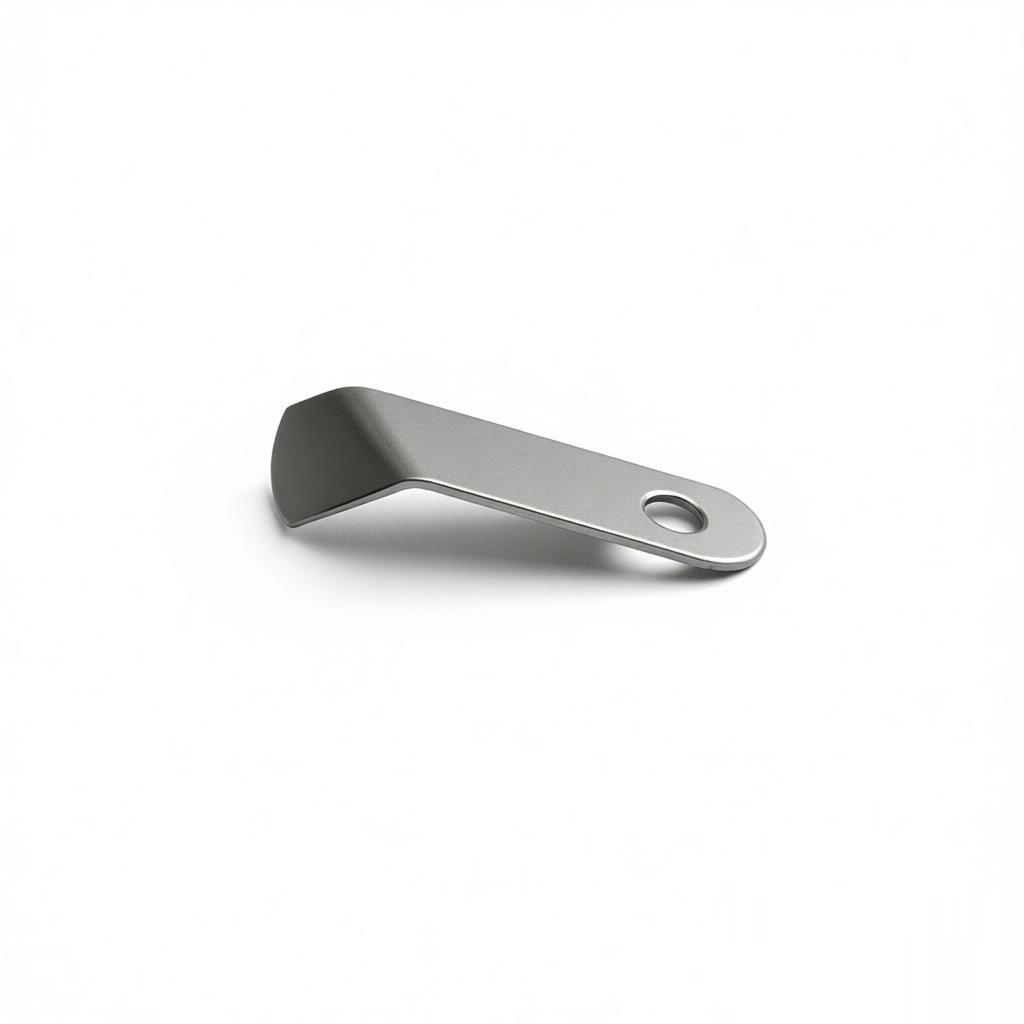
For general-purpose washers, spacers, or simple brackets, standard parts are sufficient. They meet basic functional requirements without the need for customization.
3. Fast Time-to-Market
When you need to launch a product quickly, standard parts are readily available. Custom stamping requires weeks for tooling fabrication and first articles.
4. Budget Constraints
If capital is limited and you cannot afford the tooling investment, standard parts keep upfront costs low. You can always upgrade to custom later if volume increases.
5. Replacement or Maintenance
For repairing existing equipment, using standard parts ensures compatibility and easy sourcing. Custom parts would require reverse engineering and longer downtime.
Cost Analysis: Custom vs Standard
Let's break down a typical scenario: a steel bracket required for an industrial machine.
| Cost Factor | Custom Stamping | Standard Stamping |
|---|---|---|
| Tooling (one-time) | $8,000 | $0 |
| Unit cost at 100 pcs | $5.00 | $2.50 |
| Total at 100 pcs | $8,500 | $250 |
| Unit cost at 50,000 pcs | $0.12 | $2.00 |
| Total at 50,000 pcs | $14,000 | $100,000 |
| Break-even volume | ~4,500 pcs | – |
Clearly, custom stamping becomes more economical at higher volumes. For volumes below the break-even point, standard parts win on cost.
Quality and Tolerances
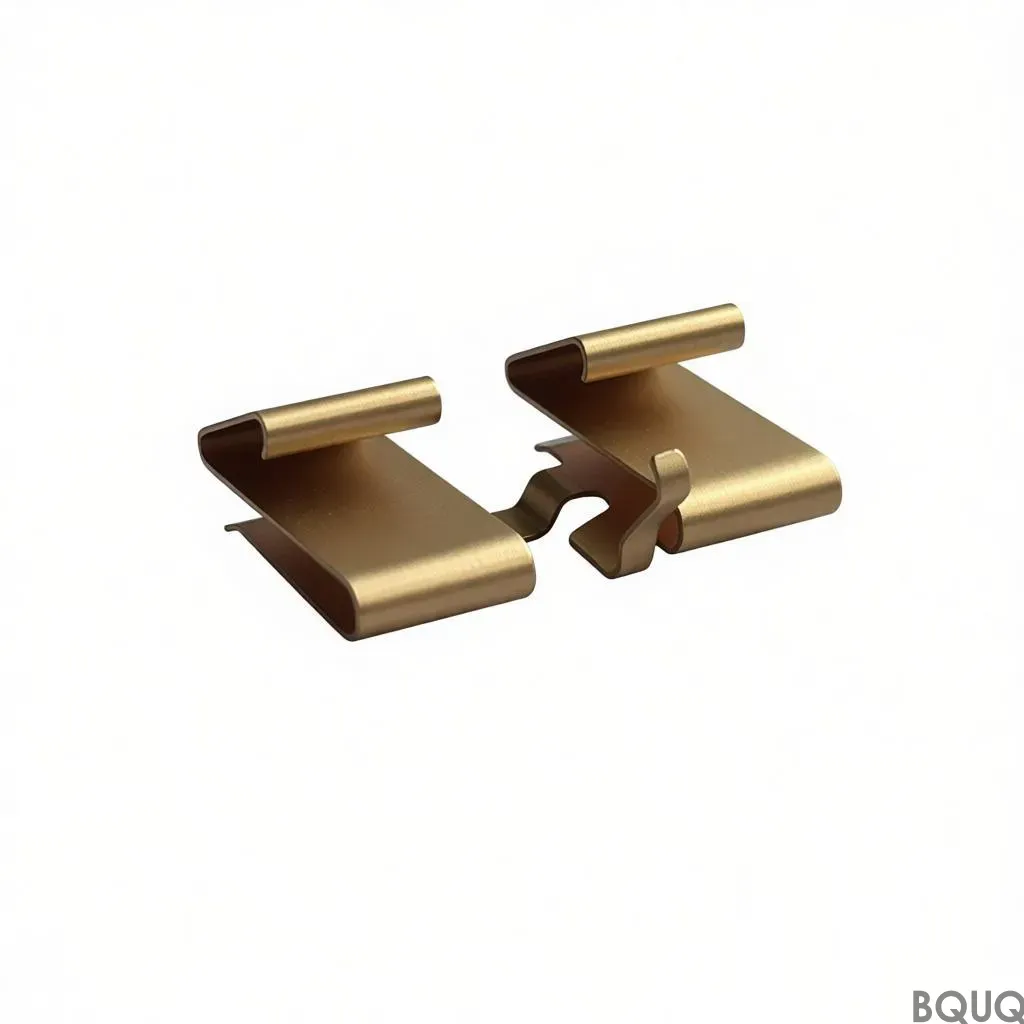
Custom stamping allows for tighter tolerances because the dies are made to exact specifications and can be maintained more precisely. Standard parts are made to industry norms (e.g., ISO 2768) which may be too loose for critical applications. For example, a custom shrapnel (contact spring) for a switch requires consistent force over millions of cycles; standard springs may fail early.
Material and Finishes
Custom parts give you complete control over material grade (e.g., 301 stainless steel full-hard vs 304 half-hard) and surface finish (plating, powder coating, passivation). Standard parts offer only the supplier's default options, which may not suit your environment (e.g., corrosion resistance in marine settings).
Our Recommendation
For most engineering projects, we recommend a hybrid approach: start with standard parts for prototyping and low-volume runs, then transition to custom stamping once the design is validated and volumes exceed the break-even point. However, if your product's performance depends on unique geometry, tight tolerances, or proprietary design, invest in custom stamping from the outset. At our facility, we specialize in custom metal stamping, offering rapid tooling fabrication and precision production. Contact us for a free design review and cost estimate to see how custom parts can elevate your product.
Conclusion
The choice between custom and standard stamping parts hinges on volume, criticality, budget, and time. By evaluating these factors against the comparison table, you can make a decision that optimizes cost and performance. Whether you choose standard or custom, ensure your supplier has robust quality control and responsive support. For custom stamping needs, we are here to help.
Frequently Asked Questions
What are the main differences in lead time between custom and standard stamping parts?
Custom stamping parts have longer lead times of 4-8 weeks because new tooling (dies) must be created before production. Standard stamping parts are usually in stock or available within 1-2 weeks since existing dies are used. This makes standard parts better for urgent projects, while custom parts require more planning time.
How do tolerances compare between custom and standard stamping parts?
Custom stamping parts can achieve tight tolerances of 0.01 mm, allowing for precise engineering requirements. Standard stamping parts typically have looser tolerances of 0.1-0.5 mm. If your application demands high precision, custom parts are necessary, while standard parts suffice for less critical dimensions.
When is it more cost-effective to choose custom stamping parts over standard ones?
Custom stamping parts are more cost-effective at high volumes because the initial tooling cost is amortized across production, making unit costs very competitive. Standard parts have low upfront costs but may carry a premium per piece. For large production runs where design optimization matters, custom parts offer better long-term value.
What material options are available for custom stamping parts?
Custom stamping parts can be made from virtually any metal, including steel and aluminum, giving you full control over material selection. Standard stamping parts are limited to predefined materials and specifications. This flexibility allows custom parts to be optimized for strength, weight, or specific performance requirements.