Deburring Techniques for Precision Machined Parts: A Complete Engineering Guide
Deburring is the controlled removal of residual material, or burrs, from machined edges and surfaces. For precision machined parts, the correct deburring method preserves dimensional tolerances down to ±0.005 mm while eliminating sharp edges that cause assembly failures and safety hazards. This guide details the five primary industrial deburring techniques, their measurable outcomes, and the cost-performance tradeoffs you must evaluate before selecting a process.
Why Burr Control Matters in Precision Machining
A burr is a plastically deformed protrusion, often 0.01 mm to 0.5 mm in height, formed when a cutting tool exits a workpiece. In CNC machining, burrs form on 100% of machined edges, but their severity depends on material, tool geometry, and feed rate. For aerospace, medical, and automotive components, uncontrolled burrs cause three critical failures: dimensional interference in press-fit assemblies, stress concentration points that initiate fatigue cracks, and contamination from loose metallic particles in fluid systems. Industry data from the International Manufacturing Technology Show indicates that deburring accounts for 9% to 14% of total manufacturing cost for precision parts, yet improper deburring causes up to 30% of field failures in moving assemblies.
Manual Deburring: Precision and Limitations
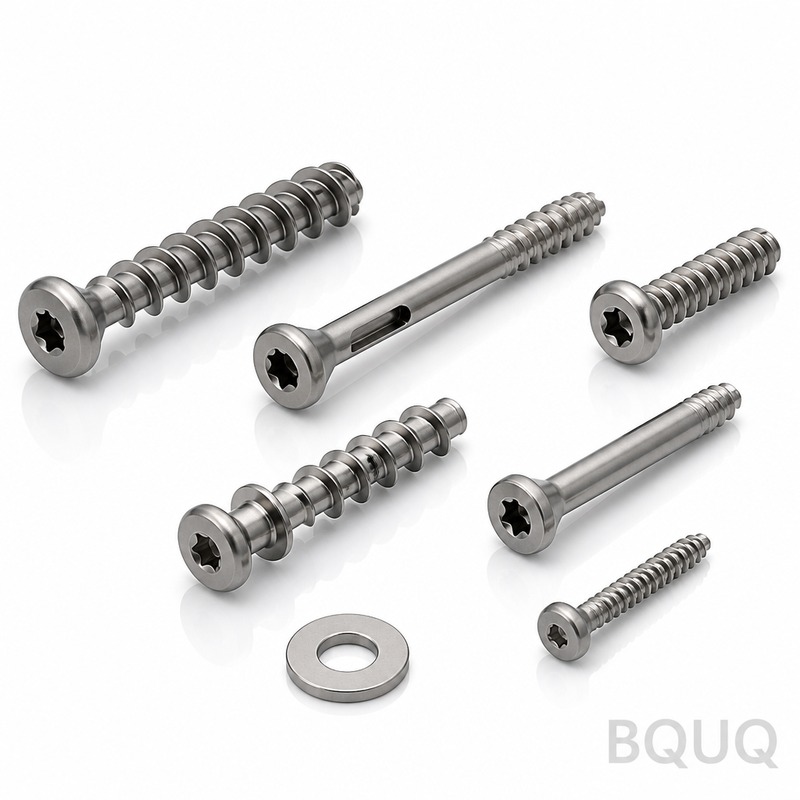
Manual deburring using carbide scrapers, abrasive files, or rotary burs remains the standard for prototypes and low-volume runs. A skilled operator can remove burrs from an aluminum part with a 0.02 mm edge radius while holding a tolerance of ±0.05 mm. The process is flexible, requiring no fixture changeover, and is ideal for complex internal features inaccessible to automated systems. However, manual deburring is operator-dependent, with typical cycle times of 2-8 minutes per part for a 100 mm x 100 mm component. The labor cost in Dongguan ranges from $0.50 to $1.50 per part depending on complexity. For quantities above 500 pieces, manual methods become economically unviable and inconsistent, with edge radius variation of ±0.08 mm between operators.
Mechanical Deburring: Tumbling and Vibratory Finishing
Mechanical deburring uses abrasive media in rotating barrels or vibrating bowls to abrade burrs from all accessible surfaces. For precision parts, vibratory finishing with ceramic or plastic media achieves a uniform edge break of 0.05 mm to 0.10 mm while maintaining part tolerances of ±0.02 mm. The process works at 1,500 to 3,000 vibrations per minute with media sizes ranging from 3 mm to 20 mm. Cycle times for aluminum parts are 15-45 minutes; for hardened steel (HRC 45-60), cycle times extend to 60-120 minutes. The key limitation is edge radius consistency: vibratory finishing rounds all edges equally, including functional edges, so parts requiring a sharp reference edge must be masked or processed before final machining. Cost per part for batches of 1,000 units is $0.10 to $0.30, making it the most economical option for high volumes.
Thermal Deburring: High-Energy Burr Removal
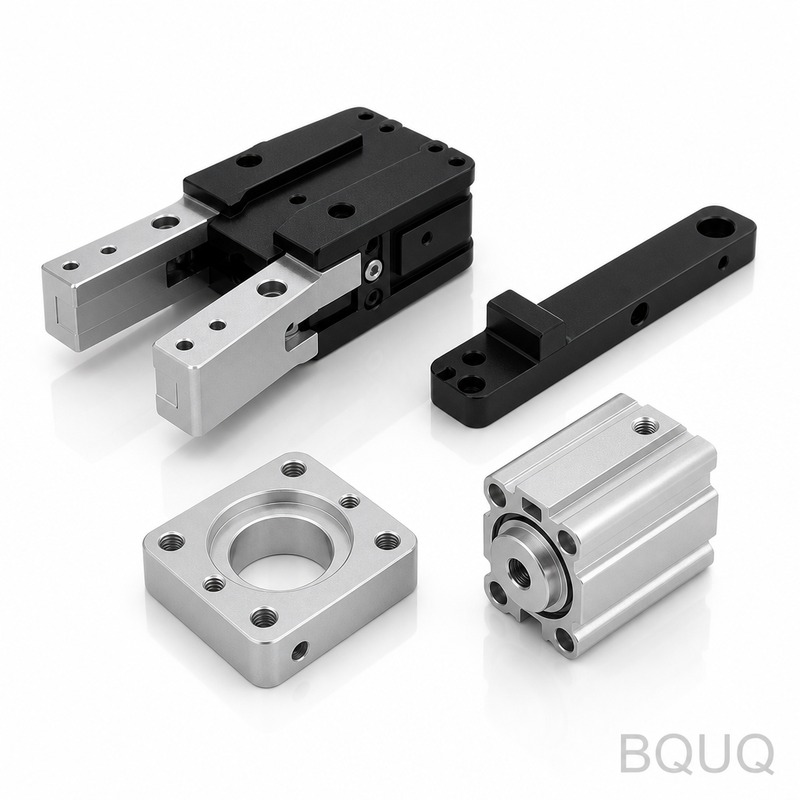
Thermal deburring, also known as TEM (Thermal Energy Method), combusts burrs in a sealed chamber using a mixture of oxygen and natural gas ignited at temperatures of 2,500°C to 3,000°C. The process selectively burns away thin burrs (under 0.1 mm thickness) because their surface-to-volume ratio is high, while the bulk part remains unaffected. Thermal deburring is the only method that reaches internal cross-holes, threaded passages, and intersecting bores without disassembly. Tolerances remain unaffected at ±0.01 mm, and the process is fully automated with cycle times of 20-40 seconds per chamber load. The capital cost is high at $150,000 to $400,000 per machine, and per-part cost is $0.50 to $2.00 for typical loads of 50-200 parts. This method is unsuitable for parts with thin walls under 1.5 mm, as thermal shock can induce distortion.
Electrochemical Deburring: Precision for Hard Materials
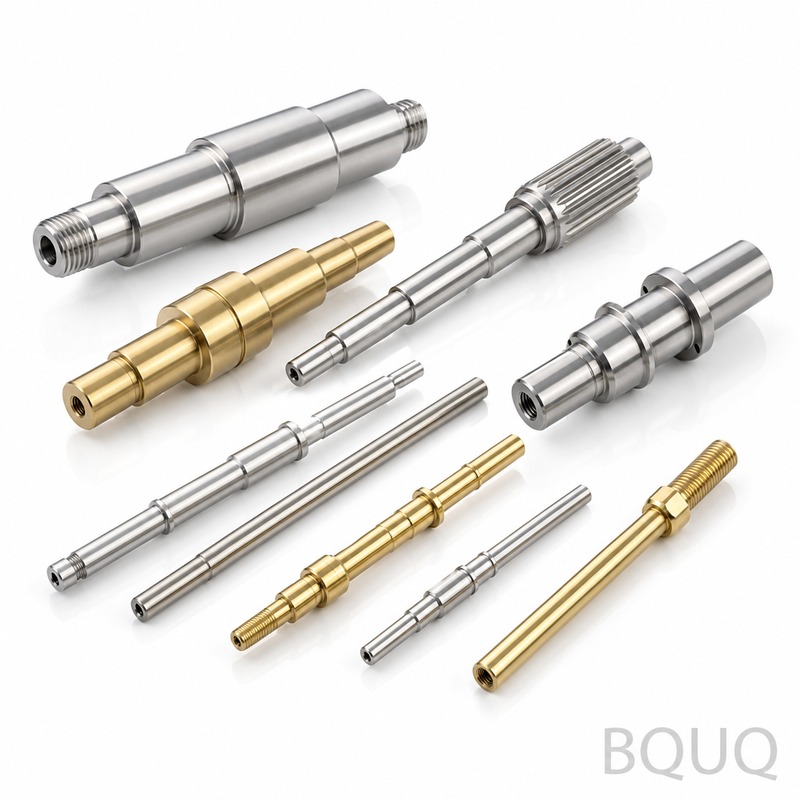
Electrochemical deburring (ECD) dissolves burr material using a conductive electrolyte and a shaped cathode tool. The process applies a DC current of 5-20 volts and 50-500 amps, removing material at a rate of 0.1 mm to 0.5 mm per minute. ECD is the preferred method for hardened steels (HRC 60+), stainless steel, and titanium alloys where mechanical methods are impractical. The edge radius achieved is consistently 0.10 mm ± 0.02 mm, and the process leaves a micro-finished surface of Ra 0.2 µm. ECD is non-contact, so there is zero tool wear and no mechanical stress on the part. Tooling costs are significant at $500 to $3,000 per part geometry, but per-part operating cost is low at $0.20 to $0.80. Cycle times range from 30 seconds to 3 minutes per feature.
Cost Comparison and Process Selection Data
| Process | Edge Radius Achieved | Tolerance Retention | Cycle Time per Part | Cost per Part (1000 qty) | Best Material | Suitable Features |
| Manual | 0.02 - 0.10 mm | ±0.05 mm | 2-8 minutes | $0.50 - $1.50 | All | Complex, low volume |
| Vibratory | 0.05 - 0.10 mm | ±0.02 mm | 15-120 minutes (batch) | $0.10 - $0.30 | Aluminum, brass | External edges, bulk |
| Thermal | 0.03 - 0.08 mm | ±0.01 mm | 20-40 seconds (batch) | $0.50 - $2.00 | Steel, cast iron | Internal cross-holes |
| Electrochemical | 0.08 - 0.12 mm | ±0.01 mm | 30-180 seconds | $0.20 - $0.80 | Hardened steel, Ti | Precise, hard materials |
| Robotic | 0.03 - 0.08 mm | ±0.03 mm | 1-3 minutes | $0.40 - $1.00 | All | Medium volume, complex |
Practical Recommendations for Process Selection
For precision parts, select deburring based on three criteria: material hardness, feature accessibility, and annual volume. For aluminum and brass parts under 50,000 units annually, vibratory finishing is the default choice, provided no critical edges require sharpness. When internal intersecting holes are present, thermal deburring is mandatory because no other method can access those geometries. For hardened steel components with tight tolerances, electrochemical deburring offers the best repeatability and zero mechanical stress. Manual deburring remains valid only for first-article inspection and pre-production samples. Always specify the maximum allowable edge radius on your drawing, as an unspecified deburr requirement leads to inconsistent results. A standard specification of "0.05 mm to 0.10 mm edge break" is achievable across all five methods and should be your baseline.
Frequently Asked Questions on Deburring Precision Parts
- How do I measure edge radius after deburring? Use an optical comparator at 20x magnification or a stylus profilometer across the edge. Acceptable measurement uncertainty is ±0.01 mm for radii under 0.10 mm. - Can deburring remove material from critical surfaces? Yes, if process parameters are uncontrolled. Vibratory and thermal methods remove material uniformly, so always mask or re-machine critical surfaces after deburring. - What is the standard deburring tolerance for ISO 13715? ISO 13715 defines edge conditions with a symbol indicating burr direction and size. A value of 0.05 mm is a typical default for precision parts. - Does deburring affect surface finish? Mechanical and thermal methods can alter surface roughness by 10-20%. Electrochemical deburring improves finish to Ra 0.2 µm or better.
Conclusion
The correct deburring technique is determined by material, geometry, volume, and tolerance requirements. For most precision CNC machined parts in aluminum or steel with external edges, vibratory finishing at $0.10 to $0.30 per part offers the best balance of cost and consistency. For internal features or hardened materials, thermal or electrochemical deburring is non-negotiable. Manual deburring should be reserved for prototyping only. Specify edge radius limits on your drawing and validate with optical measurement to ensure your supplier meets your engineering requirements.
BQUQ Precision Manufacturing has 20 years of experience in CNC machining, metal stamping, springs, and heat sink production with in-house deburring capabilities for all five processes. Our engineers will review your part geometry and recommend the most economical deburring method that holds your tolerances. Send your drawings today for a 12-hour quotation. Email: sc@bquq.com, WhatsApp: +86 13713157787, www.bquq.com.
Related Articles
- CNC Turn-Mill Composite Machining, Turn-Mill Machine Tools, One-Time Forming, B-Axis Turn-Mill Center, Multi-Process Integration, Complex Rotary Part Machining, Medical Device Precision Machining
- Digital twin-driven CNC machining: from simulation to closed-loop process optimization
- Adaptive Control and AI Real-Time Optimization in CNC Machining: From Experience to Algorithm