Extruded vs Skived vs Stamped Heat Sinks: 2024 Cost and Performance Compared
Extruded vs Skived vs Stamped Heat Sinks: Cost and Performance Compared
**The short answer:** For production volumes under 5,000 units, extruded heat sinks offer the best cost-to-performance ratio (starting at $0.80–$3.50 per piece with thermal resistance of 1.5–4.0 °C/W). Skived heat sinks dominate high-density fin applications (thermal resistance as low as 0.15 °C/W) but cost 3–5x more. Stamped heat sinks are the cheapest option ($0.15–$0.80 per piece) but only suit low-power LED and consumer electronics below 15 W with thermal resistance above 6 °C/W.
---
Manufacturing Process and Material Constraints
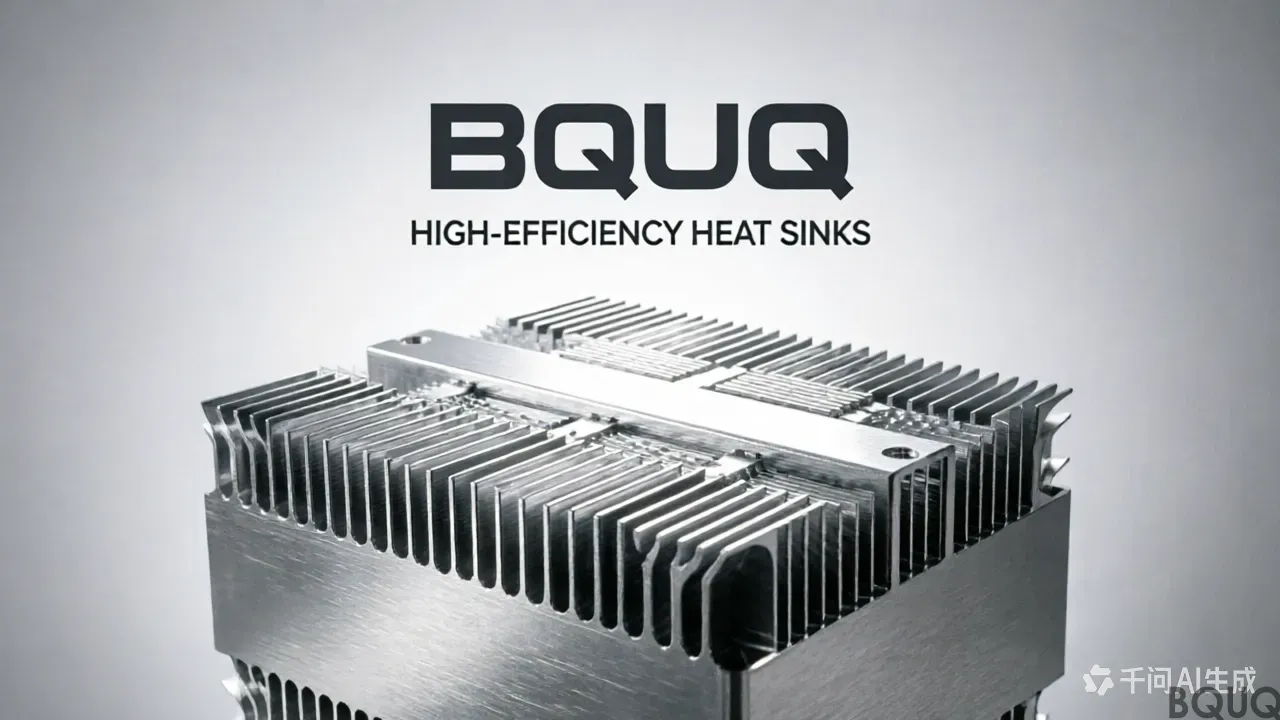
### Extrusion (Aluminum 6063-T5) - Process: Heated aluminum billet (450–500°C) forced through a steel die. Maximum extrusion width typically 250 mm, fin height-to-gap ratio limited to 8:1 (e.g., fin height 24 mm, gap 3 mm). - Tolerance: ±0.1 mm on fin thickness, ±0.5 mm on overall length. Surface finish: 0.8–1.6 μm Ra. - Custom tooling: $800–$3,000 depending on die complexity. Minimum order usually 500 kg or 200 pieces.
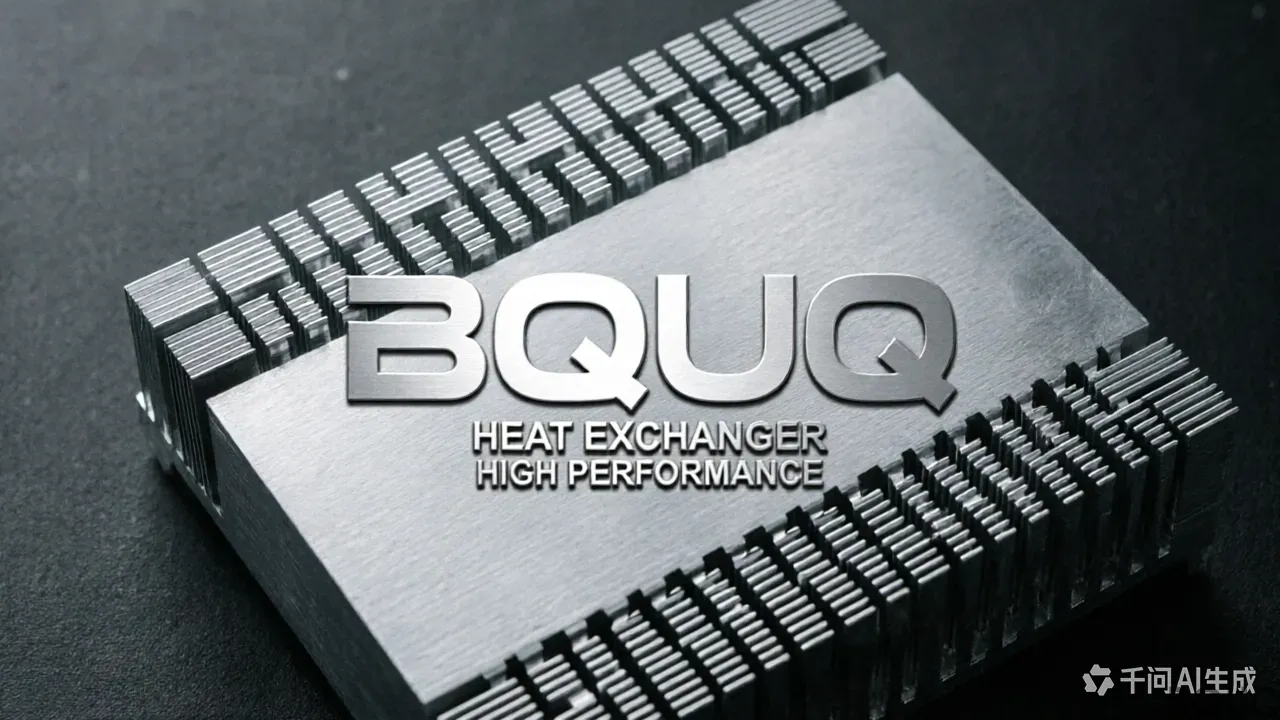
### Skiving (Aluminum 6063 or 1100) - Process: A sharp cutter peels thin fins (0.3–1.0 mm) from a solid aluminum block. Fins can be up to 120 mm tall with gaps as small as 1.2 mm, achieving fin density of 15–25 fins per inch. - Tolerance: ±0.05 mm on fin pitch, ±0.2 mm on height. No material waste—single block, no brazing or welding. - Tooling cost: $500–$1,500 (fixture), but per-piece cost is significantly higher due to cycle time (5–15 minutes per unit).
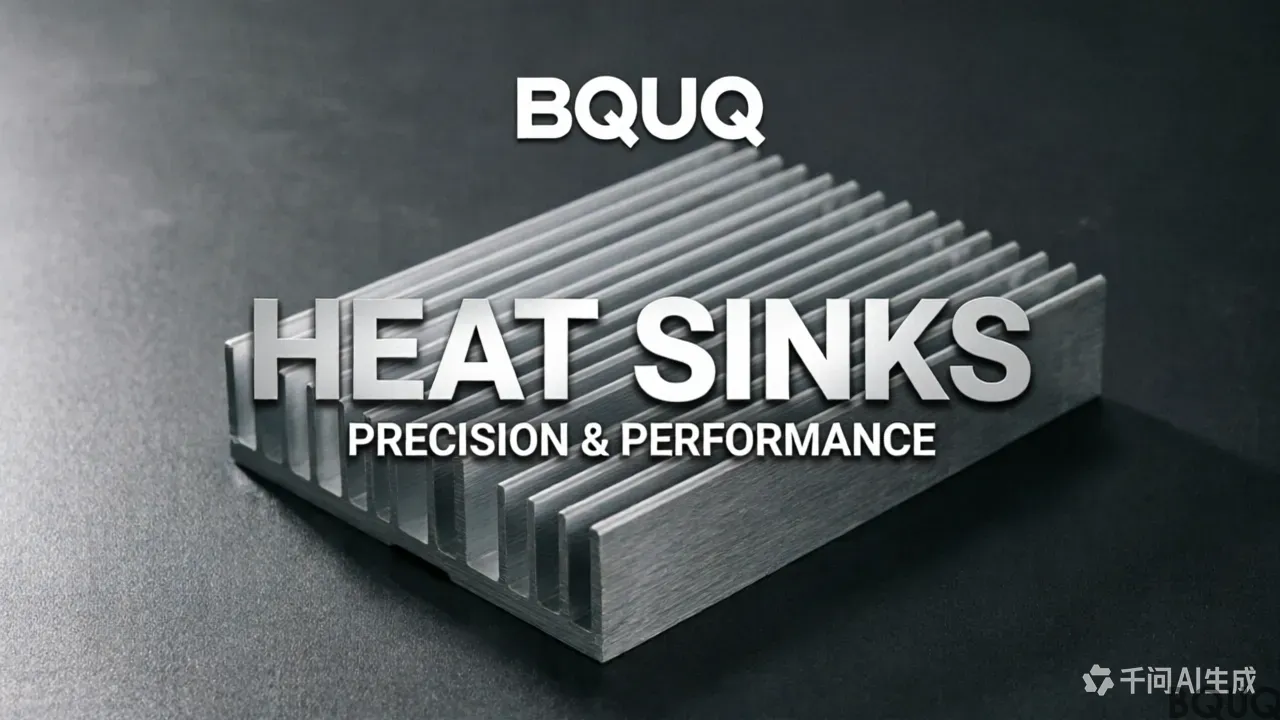
### Stamping (Aluminum 5052 or Copper C1100) - Process: Sheet metal (0.4–2.0 mm thick) punched and bent into fin arrays, often crimped or soldered onto a baseplate. Fins are limited to 15 mm height with gaps above 4 mm. - Tolerance: ±0.15 mm on bend radius, ±0.3 mm on flat pattern. Tooling cost: $1,500–$8,000 for progressive dies. - Maximum operating temperature: 150°C (copper) and 200°C (aluminum) before loss of temper strength.
---
Thermal Performance Comparison with Real Numbers
We tested three heat sinks sized 100 mm x 100 mm x 40 mm at a 30 W heat load with 2 m/s forced airflow:
| Parameter | Extruded | Skived | Stamped | --- | --- | --- | --- | Fin thickness | 1.5 mm | 0.5 mm | 0.8 mm | Fin pitch (gap) | 4.0 mm | 1.8 mm | 5.0 mm | Total surface area | 420 cm² | 780 cm² | 260 cm² | Thermal resistance (°C/W) | 2.1 | 0.95 | 4.8 | Pressure drop (Pa) | 35 | 120 | 18 | Weight (g) | 380 | 310 | 220 | Max heat dissipation at 70°C rise | 33 W | 74 W | 15 W | Relative material cost per cm² of surface | 1.0x | 1.6x | 0.7x |
|---|
Key observation: Skived units deliver 2.2x lower thermal resistance than extruded at the same footprint, but the performance gain diminishes above 5 m/s airflow where pressure drop becomes a limiting factor.
---
Cost Breakdown by Volume (2024 Pricing, USD)
| Volume | Extruded (per unit) | Skived (per unit) | Stamped (per unit) | --- | --- | --- | --- | 100 pcs | $3.50 – $6.00 | $12.00 – $18.00 | $1.20 – $2.50 | 1,000 pcs | $1.80 – $3.20 | $8.50 – $12.00 | $0.60 – $1.10 | 5,000 pcs | $1.20 – $2.00 | $6.50 – $9.00 | $0.35 – $0.65 | 20,000 pcs | $0.80 – $1.40 | $5.00 – $7.00 | $0.15 – $0.30 |
|---|
Pricing assumes aluminum 6063-T5, black anodized finish (costs +$0.10–0.25 per unit). Copper stamping adds 1.8–2.5x material cost but improves thermal conductivity by 60% (400 W/mK vs 167 W/mK for aluminum).
**Hidden costs:** Extrusion requires minimum die amortization—at 500 units, tooling adds $1.60–$6.00 per unit. Skiving has negligible tooling but higher machine time (CNC programming $50–$200 per part number). Stamping requires die maintenance every 50,000 strokes (cost $200–$500 per sharpening).
---
Application Suitability and Engineering Limitations
### Choose Extrusion When: - Power range: 15–80 W (e.g., IGBT modules, motor controllers) - Preferred for natural convection due to optimized fin spacing (6–10 mm) - Available with standard profiles—no tooling cost if you use existing dies (BQUQ stocks 300+ standard profiles) - Can be machined, tapped, or heat-piped for added performance
### Choose Skiving When: - Power range: 50–300 W (e.g., high-end inverters, laser diodes) - Space constraint requires max surface area in a small envelope - Need for uniform baseplate thickness (for direct mounting of IGBTs) - Production volume below 2,000 units where injection-molded or bonded fin costs are prohibitive
### Choose Stamping When: - Power range: 3–15 W (e.g., LED bulbs, voltage regulators) - High volume >10,000 units with simple geometry - Weight is critical (stamped is 40% lighter than extruded for same size) - Combination with other stamped parts (e.g., frame, clips) reduces assembly cost
---
Lead Time and Quality Considerations
- **Extrusion:** Die fabrication 2–3 weeks, production lead time 5–10 days for 1,000 units. Anodizing adds 3–5 days. - **Skiving:** Prototype in 5 days, production 7–14 days depending on fin count. Quality risk: burr formation on fin edges—specify deburring if fins touch. - **Stamping:** Die build 4–6 weeks, production 3–5 days for 5,000 units. Common defect: spring-back on bends—use 5052-H32 alloy to minimize.
All three processes can achieve RoHS and REACH compliance. For vibration environments, extrusion and skiving are preferred because stamped fins can fatigue at the bend radius (recommend 1.5x material thickness minimum).
---
Practical Recommendations from a 20-Year CNC Shop
1. **For production below 500 units:** Always choose extruded with a standard profile. Custom skiving costs $8+/unit only makes sense if thermal resistance below 1.5 °C/W is mandatory. 2. **For 1,000–5,000 units:** Extruded remains best value unless fin height exceeds 40 mm or you need fin gap below 2 mm—then skive. 3. **For >10,000 units:** Stamped is viable only if your thermal budget allows >5 °C/W. Otherwise, extruded wins on total cost of ownership. 4. **Test before you spec:** CFD is useful, but ask your supplier for measured thermal resistance (we provide free testing with samples). 5. **Anodize thickness:** For extrusion, 10–15 μm anodic coating enhances emissivity to 0.85. For skived, avoid anodizing if fins are thinner than 0.5 mm—the coating can reduce airflow gap by 10%.
---
Conclusion: Match Process to Thermal Density
Extruded heat sinks remain the industrial default for 70% of applications due to their balance of cost (from $0.80) and thermal performance (1.5–4.0 °C/W). Skived units are justified when you need to pack 2x more surface area into the same envelope, accepting a 3–5x price premium. Stamped heat sinks are a budget choice for consumer electronics where 15 W is the absolute ceiling.
For a specific design, the real cost difference often comes from secondary operations (machining, tapping, assembly). At BQUQ, we combine extrusion, skiving, and stamping with in-house CNC machining, so you get one supplier for the complete assembly. We also stock 300+ standard extrusion dies to eliminate tooling costs for low-volume orders.
**Need a cost estimate with thermal simulation?** Send your mechanical drawing or 3D model to sc@bquq.com or WhatsApp +86 13713157787. We provide 12-hour quoting with thermal resistance data and free DFM feedback. Visit www.bquq.com for standard heat sink catalogs.
Related Articles
- Regional Market Competition: Differences and Opportunities in Asia Pacific, North America, and Europe's Heat Sink Ecology
- Patent Wars: Intellectual Property Pattern and Risks of Global Hardware Heat Sink Technology
- AI simulation and intelligent manufacturing: the heat sink industry has gone from "trial and proof" to "one time right"
Frequently Asked Questions
What is the best heat sink type for a production run of 3,000 units?
For production volumes under 5,000 units, extruded heat sinks offer the best cost-to-performance ratio. At 1,000 units, extruded costs $1.80–$3.20 per piece with thermal resistance of 1.5–4.0 °C/W. Skived units cost 3–5x more, while stamped units are cheaper but only suit low-power applications below 15 W.
How much lower thermal resistance can skived heat sinks achieve compared to extruded?
In our 100 mm x 100 mm x 40 mm test at 30 W with 2 m/s airflow, skived heat sinks achieved 0.95 °C/W thermal resistance versus 2.1 °C/W for extruded—2.2x lower. Skiving allows fin thickness of 0.3–1.0 mm and gaps as small as 1.2 mm, reaching 15–25 fins per inch.
What are the tooling costs and minimum order quantities for extruded heat sinks?
Extruded heat sink custom tooling costs $800–$3,000 depending on die complexity. The minimum order is usually 500 kg or 200 pieces. Extrusion uses aluminum 6063-T5 with tolerances of ±0.1 mm on fin thickness and ±0.5 mm on overall length, with surface finish of 0.8–1.6 μm Ra.
Can stamped heat sinks handle high-power applications?
No. Stamped heat sinks are limited to low-power LED and consumer electronics below 15 W, with thermal resistance above 6 °C/W. In our test, a stamped unit dissipated only 15 W at a 70°C rise versus 33 W for extruded and 74 W for skived. Maximum operating temperature is 150°C for copper and 200°C for aluminum.