Forged Heat Sinks: Manufacturing Process, Performance Data, and Cost Analysis
Forged heat sinks are manufactured by applying high pressure to a heated aluminum or copper billet, forcing the metal into a die cavity to form near-net-shape fin structures. This process delivers superior grain flow, higher density, and better thermal conductivity (typically 170-200 W/m·K for 6063-T6 aluminum) compared to extruded or skived alternatives, with achievable tolerances of ±0.05 mm on fin thickness. For high-volume applications requiring the best strength-to-weight ratio and thermal performance, forging is the optimal choice despite higher tooling costs.
The Forging Process Step by Step
The manufacturing process for forged heat sinks involves four critical stages, each controlled within tight parameters.
Stage 1 is billet preparation. An aluminum alloy billet, typically 6063 or 6061, is cut to precise weight (within ±2 grams) and preheated to 430-480°C in an induction furnace. The heating time is calibrated at 3-5 minutes per 100 mm of billet diameter to ensure uniform temperature distribution.
Stage 2 is the forging operation. The heated billet is placed into a closed die set mounted on a mechanical or hydraulic press. For aluminum heat sinks, presses with 500-2500 tons of force are used. The ram speed is controlled at 30-60 mm/s to allow proper metal flow into the fin cavities. The dwell time under full pressure is 3-8 seconds to ensure complete die filling.
Stage 3 is trimming and flash removal. Excess material, called flash, is trimmed in a separate die or by CNC machining. The flash weight typically represents 15-20% of the billet weight and is recycled.
Stage 4 is post-processing. The forged part undergoes solution heat treatment (T6: solution at 520°C for 2 hours, water quench, artificial aging at 175°C for 8 hours). This achieves a yield strength of 210 MPa and hardness of 80 HB for 6063-T6. Final operations include shot blasting, anodizing (8-15 μm thickness), and optional CNC machining for mounting holes and critical surfaces.
Performance Comparison: Forged vs Extruded vs Stamped Heat Sinks
The thermal and mechanical performance of forged heat sinks significantly exceeds that of extruded or stamped versions, primarily due to material density and grain structure. Extruded aluminum typically has a density of 2.68 g/cm³, while forged 6063 reaches 2.70 g/cm³ with zero porosity.
| Property | Forged 6063-T6 | Extruded 6063-T6 | Stamped 5052-H32 |
| Thermal Conductivity (W/m·K) | 200 | 190 | 138 |
| Yield Strength (MPa) | 210 | 170 | 193 |
| Fin Thickness Min (mm) | 0.8 | 1.2 | 0.5 |
| Fin Height Max (mm) | 60 | 100 | 15 |
| Surface Finish (Ra, μm) | 1.6 | 3.2 | 6.3 |
| Achievable Flatness (mm) | 0.05 | 0.15 | 0.30 |
| Max Operating Temp (°C) | 250 | 250 | 150 |
| Unit Cost at 10k pcs (USD) | 2.80 | 2.10 | 1.50 |
| Tooling Cost (USD) | 8,000-15,000 | 1,500-3,000 | 2,000-4,000 |
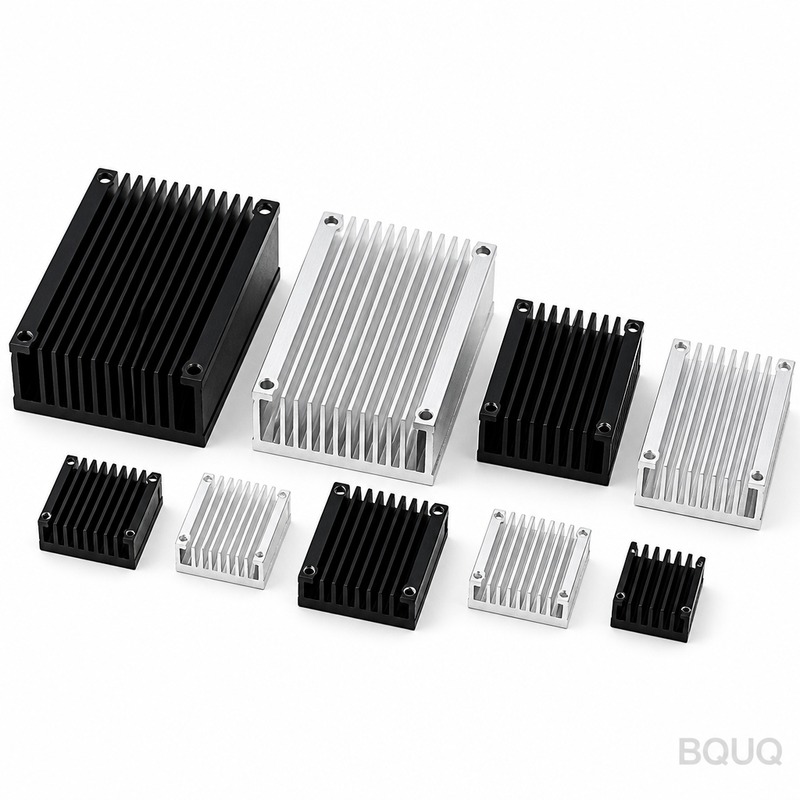
The thermal performance advantage is measurable. In a standard wind tunnel test with a 50W heat source and 2 m/s airflow, a forged heat sink with a 40x40x20 mm base and 25 fins achieves a thermal resistance of 0.85°C/W, versus 1.05°C/W for an equivalent extruded design and 1.40°C/W for a stamped design. This 19% improvement in thermal resistance directly translates to lower junction temperatures, extending LED or IGBT lifespan by up to 30%.
Alloy Selection and Its Impact on Performance
The choice of aluminum alloy determines the ceiling of thermal and mechanical performance. For forged heat sinks, three alloys dominate the market.
6063-T6 is the workhorse alloy. It offers the best combination of thermal conductivity (200 W/m·K), corrosion resistance, and anodizing quality. It is used in 70% of all forged heat sink applications, particularly in LED lighting, automotive electronics, and power modules. The forging temperature range is 430-480°C, and the die life is typically 50,000-80,000 parts.
6061-T6 provides higher strength (yield 240 MPa) but lower thermal conductivity (167 W/m·K). It is specified when the heat sink also serves as a structural component, such as in electric vehicle battery housings or aerospace power converters.
1100-O pure aluminum offers the highest thermal conductivity (222 W/m·K) but is extremely soft. It is used for low-stress applications requiring maximum heat transfer, such as high-frequency rectifiers, but requires careful handling to avoid deformation.
For copper forged heat sinks, C11000 (ETP copper) is standard. It offers 385 W/m·K thermal conductivity but weighs 3.3 times more than aluminum and costs 4-5 times more per unit volume. Copper forging requires higher temperatures (650-750°C) and pressures, with tooling costs typically 40% higher than for aluminum.
Cost Breakdown and Lead Time Analysis
Understanding the cost structure of forged heat sinks is essential for procurement decisions. The total unit cost is composed of material, forging, heat treatment, machining, and surface finishing.
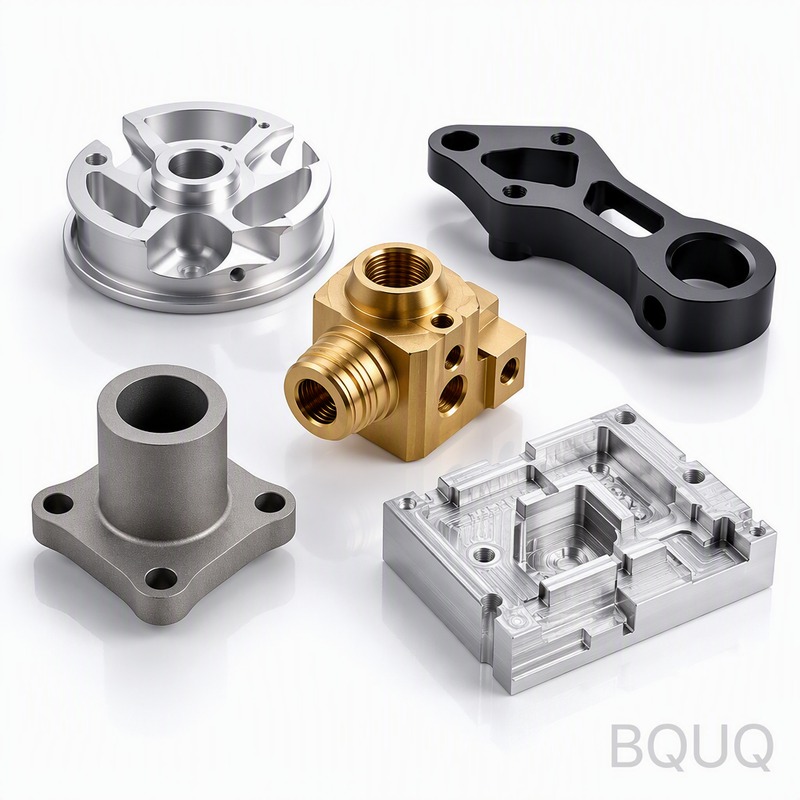
For a typical forged aluminum heat sink weighing 85 grams, at a quantity of 10,000 pieces, the cost breakdown is as follows:
| Cost Component | Cost per Unit (USD) | Percentage of Total |
| Material (billet + scrap loss) | 0.85 | 30% |
| Forging operation (press time + labor) | 0.95 | 34% |
| Heat treatment (T6 cycle) | 0.20 | 7% |
| CNC machining (holes + surface) | 0.50 | 18% |
| Surface finishing (anodizing) | 0.30 | 11% |
| Total Cost per Unit | 2.80 | 100% |
Lead times for forged heat sinks are longer than extruded versions. The die design and fabrication phase takes 3-5 weeks, including simulation and trial runs. Initial sample approval requires 1-2 weeks. Production ramp-up for quantities up to 50,000 units takes 2-3 weeks. Total lead time from design approval to first bulk delivery is typically 6-10 weeks. For urgent orders, a partial delivery of 5,000 units can be expedited in 4 weeks with a 15% surcharge.
Design Guidelines for Forged Heat Sinks
To maximize the benefits of forging, engineers must respect specific design constraints. The minimum fin thickness is 0.8 mm for aluminum, with an optimal range of 1.0-1.5 mm for die life and metal flow. The aspect ratio (fin height to gap width) should not exceed 8:1 to prevent incomplete die filling.
The draft angle required for part ejection is 0.5-1.0 degrees per side. This affects the fin cross-section, so the base of the fin must be designed thicker than the tip. For a 20 mm tall fin, a 0.5-degree draft means a 0.35 mm thickness increase at the root.
Sharp internal corners are prohibited. A minimum fillet radius of 0.5 mm is required, with 1.0-1.5 mm recommended for critical root areas to prevent stress concentration and die cracking. The maximum practical fin height in forging is 60 mm, limited by the press capacity and metal flow resistance.
For bosses and mounting features, maintain a minimum wall thickness of 2.0 mm to avoid sink marks. The maximum diameter for a forged boss is 30 mm without requiring a pre-hole. Tolerances achievable in the as-forged condition are ±0.10 mm on dimensions up to 50 mm, and ±0.20 mm on larger dimensions. Critical surfaces requiring ±0.05 mm tolerance must be CNC machined after forging.
Thermal Performance Validation and Testing
Verifying the performance of forged heat sinks requires standardized testing. The most common method is the thermal resistance measurement per JEDEC JESD51 standards.
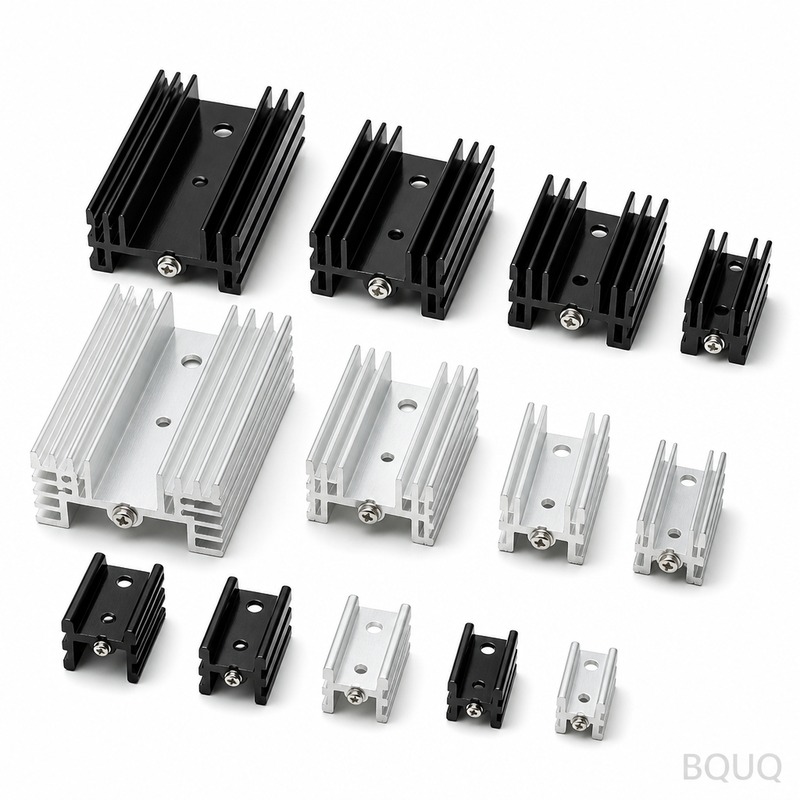
The test setup uses a diode or resistor as the heat source, mounted on the heat sink base with thermal interface material (typically 0.05 mm thermal grease with 3.8 W/m·K conductivity). The assembly is placed in a wind tunnel with controlled airflow from 0.5 to 5.0 m/s. Thermocouples measure the junction temperature, base temperature, and ambient temperature.
For a 60x60x30 mm forged heat sink with 20 fins, the following performance data is typical:
| Airflow (m/s) | Thermal Resistance (°C/W) | Pressure Drop (Pa) | Max Power at 85°C (W) |
| 0.5 | 1.85 | 8 | 27 |
| 1.0 | 1.25 | 15 | 40 |
| 2.0 | 0.95 | 32 | 53 |
| 3.0 | 0.75 | 55 | 63 |
| 5.0 | 0.55 | 120 | 77 |
The pressure drop data is critical for system fan selection. At 2.0 m/s airflow, the 32 Pa pressure drop requires a fan with a static pressure rating of at least 50 Pa to maintain the specified flow rate. Additionally, the thermal resistance decreases by approximately 5% when using a phase-change thermal interface material instead of thermal grease.
Practical Recommendations for Engineers
When deciding between forged and alternative heat sink manufacturing methods, evaluate the total system cost, not just unit price. For quantities above 5,000 units per year, forging becomes economically viable despite tooling costs, especially if the application requires high thermal cycling resistance. The forged grain structure resists crack propagation, providing 2-3 times longer thermal fatigue life compared to extruded heat sinks.
For automotive and outdoor applications, specify 6063-T6 with a Class 2 anodizing (10 μm thickness). This provides corrosion resistance exceeding 500 hours in salt spray testing per ASTM B117. For aerospace applications requiring higher strength, use 6061-T6 but compensate for the 16% lower thermal conductivity by increasing the base thickness by 15%.
Consider hybrid manufacturing: forge the main body with fins, then CNC machine the base to accept heat pipes or vapor chambers. This combination achieves thermal resistance below 0.30°C/W while maintaining structural integrity. Lead times for such hybrid designs are 8-12 weeks.
When requesting quotes, provide the thermal budget (maximum junction temperature, ambient temperature, power dissipation), airflow conditions, and spatial constraints. This allows the manufacturer to optimize fin geometry and alloy selection. Always request a thermal simulation report (CFD analysis) with the initial sample to verify performance before tooling commitment.
At BQUQ, we have produced over 15 million forged heat sinks in the past 20 years for automotive, LED, and industrial power applications. Our in-house tool shop and 200-2500 ton presses allow us to control quality and lead times. We provide free design-for-manufacturing review and thermal simulation within 24 hours of receiving your drawings. For a detailed quotation, contact our engineering team at sc@bquq.com or WhatsApp +86 13713157787. Visit www.bquq.com to download our forging design guide. We respond to all inquiries within 12 hours.
Related Articles
- Best Copper Heat Sinks for CPU Overclocking in 2025
- New energy vehicle IGBT heat dissipation, heat sink reliability engineering, heat pipe and temperature plate integrated heat sink, surface treatment and heat radiation enhancement: anodic oxidation, black coating and micro-nano structure, graphene/3D printing/intelligent thermal management: 2030 heat sink technology roadmap
- 5G Base Station Outdoor AAU Cooling: The Climate Adaptation Challenge of Fanless Passive Design
Frequently Asked Questions
What thermal conductivity can I expect from a forged aluminum heat sink?
Forged 6063-T6 aluminum heat sinks achieve thermal conductivity of 200 W/m·K, which is higher than extruded 6063 (190 W/m·K) or stamped 5052-H32 (138 W/m·K). This is due to zero porosity and superior grain flow from the forging process.
What tolerances and fin dimensions are achievable with forged heat sinks?
Forged heat sinks achieve fin thickness tolerances of ±0.05 mm, with minimum fin thickness of 0.8 mm and maximum fin height of 60 mm. Surface finish is Ra 1.6 μm, and flatness is 0.05 mm. These specs are tighter than extruded or stamped alternatives.
How does the cost of forged heat sinks compare to extruded or stamped versions?
At 10,000 pieces, forged heat sinks cost $2.80 per unit, versus $2.10 for extruded and $1.50 for stamped. However, tooling is higher at $8,000-15,000, compared to $1,500-3,000 for extruded and $2,000-4,000 for stamped. Forging is best for high-volume applications needing maximum thermal performance.
What heat treatment and mechanical properties do forged heat sinks have?
Forged 6063-T6 heat sinks undergo solution treatment at 520°C for 2 hours, water quench, then artificial aging at 175°C for 8 hours. This achieves a yield strength of 210 MPa and hardness of 80 HB. Maximum operating temperature is 250°C.