How Do Brass and Copper Compare for CNC Machined Precision Parts?
CNC machining brass vs copper for precision components comes down to a clear trade-off: brass offers superior machinability, tighter tolerances, and lower cost, while copper provides unmatched electrical and thermal conductivity but demands slower speeds, specialized tooling, and higher per-part pricing. For 90% of precision mechanical applications, brass is the pragmatic engineering choice; for electrical connectors, busbars, and high-heat dissipation components, copper is irreplaceable. This article quantifies the differences in cost, tolerance, lead time, and material properties so you can select the correct alloy for your next RFQ.
What Are the Key Physical Property Differences Between Brass and Copper?
The fundamental distinction lies in their composition and resulting physical characteristics. Pure copper (C11000 or C10100) is 99.9% copper, offering electrical conductivity of approximately 101% IACS (International Annealed Copper Standard) and thermal conductivity of 401 W/m·K. Brass, an alloy of copper and zinc (typically C36000 with 61.5% Cu, 35.5% Zn, and 3% Pb), reduces electrical conductivity to about 28% IACS and thermal conductivity to roughly 115 W/m·K.
For precision components, hardness and yield strength matter more than raw conductivity. Brass C36000 exhibits a Brinell hardness of 80-90 HB and a yield strength of 200-310 MPa depending on temper. Pure copper C11000 is softer, with a Brinell hardness of 35-45 HB and yield strength of 69-120 MPa. This 2-3x difference in mechanical strength directly impacts thread integrity, press-fit retention, and resistance to deformation under load. Additionally, copper's coefficient of thermal expansion (16.5 µm/m·°C) is higher than brass's (20.5 µm/m·°C), which can affect dimensional stability in temperature-cycling environments.
How Does Machinability Affect Cycle Time and Tooling Wear?
Machinability is the single largest cost driver between these two metals. Brass C36000 is the benchmark for free-machining materials, rated at 100% machinability on the standard scale. It produces short, broken chips that clear easily, allows cutting speeds of 200-300 m/min with carbide tooling, and generates minimal built-up edge. A typical brass part can be completed in 45-60% of the cycle time required for the same geometry in steel.
Copper C11000, in contrast, rates at approximately 20-30% machinability. It is gummy, produces long, stringy chips that wrap around tools, and requires cutting speeds of only 60-100 m/min to prevent work-hardening. Tool wear rates on copper are 3-4x higher than on brass, particularly for drills and taps. For a precision component requiring 6 mm diameter holes and M4 threads, expect a cycle time of 4.5 minutes in brass versus 9-11 minutes in copper. Tooling replacement frequency for copper jobs commonly runs 30-40% higher, directly increasing per-part tooling amortization costs.
What Tolerances Can CNC Machining Achieve on Brass and Copper?
Precision tolerances are achievable on both materials, but the practical limits differ. Brass, with its stable chip formation and low tool deflection, routinely holds tolerances of ±0.01 mm (0.0004 inches) on machined features up to 50 mm. For critical diameters and bores, we can achieve ±0.005 mm (0.0002 inches) with grinding or fine boring operations. Surface finishes of Ra 0.4 µm (16 microinches) are standard, with Ra 0.2 µm possible on request.
Copper presents a greater challenge due to its softness and tendency to smear. Standard CNC machining on copper holds ±0.02 mm (0.0008 inches) reliably, with ±0.01 mm achievable but requiring slower feed rates and additional finishing passes. Surface finish on copper typically runs Ra 0.8 µm; achieving Ra 0.4 µm requires specialized tool geometries and coolant strategies. The practical implication: if you need sliding fits or precision bearing surfaces, brass will deliver tighter, more repeatable dimensions at lower cost. Copper parts should be designed with 0.005-0.010 mm looser tolerances to maintain realistic pricing.
How Much Does Material Cost Affect the Final Part Price?
Raw material cost differences are substantial and scale directly with part weight. As of Q3 2025, C36000 brass rod (25 mm diameter) prices at approximately $8.50-$9.50 per kilogram, while C11000 copper rod of the same size runs $12.00-$14.00 per kilogram. This 30-50% raw material premium compounds with the longer cycle time and higher tooling wear discussed above.
The table below summarizes typical per-part costs for an identical precision component (25 mm diameter, 40 mm length, with two cross-holes and M6 threads, quantity 500 pieces):
| Cost Factor | Brass C36000 | Copper C11000 |
| Raw Material per Part | $1.35 | $2.10 |
| CNC Machining (Cycle Time) | $4.20 | $8.50 |
| Tooling Amortization | $0.45 | $0.70 |
| Deburring and Finishing | $0.30 | $0.60 |
| Total per Part | $6.30 | $11.90 |
| Lead Time (500 pcs) | 7-10 days | 12-16 days |
Note that the total cost difference is nearly 89%, not just the 55% material premium. For high-volume production (10,000+ pieces), the gap narrows slightly to 70-80% because setup costs amortize, but copper remains significantly more expensive per finished part.
Which Applications Demand Copper Over Brass Despite the Higher Cost?
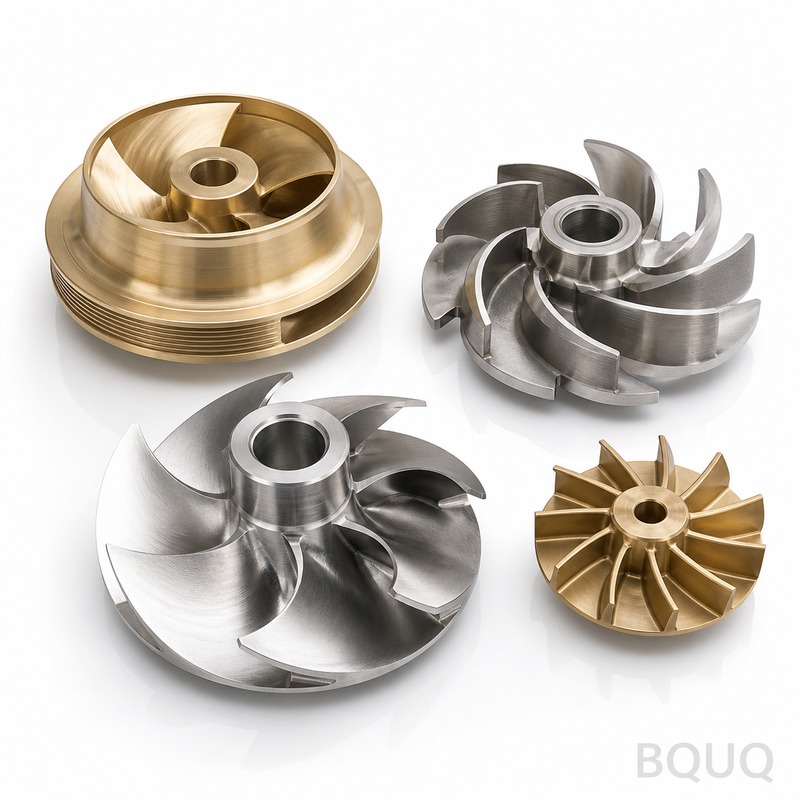
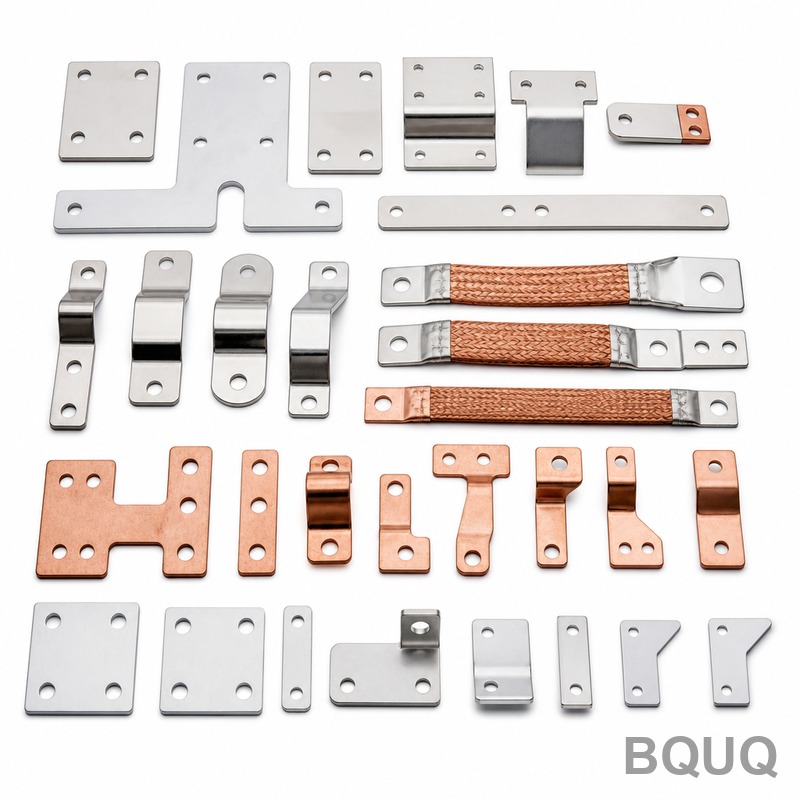
Copper's exceptional electrical and thermal properties justify its premium in specific engineering contexts. Electrical conductivity of 101% IACS makes copper the default choice for high-current busbars, power connectors, and RF shielding components. A copper busbar carrying 200A will run 20-25°C cooler than an equivalent brass part, which is critical for insulation ratings and fire safety. Similarly, heat sinks and cold plates in laser diodes, IGBT modules, and high-power LEDs use copper because its 401 W/m·K thermal conductivity outperforms brass's 115 W/m·K by nearly 3.5x, enabling a 40-50% size reduction for the same thermal resistance.
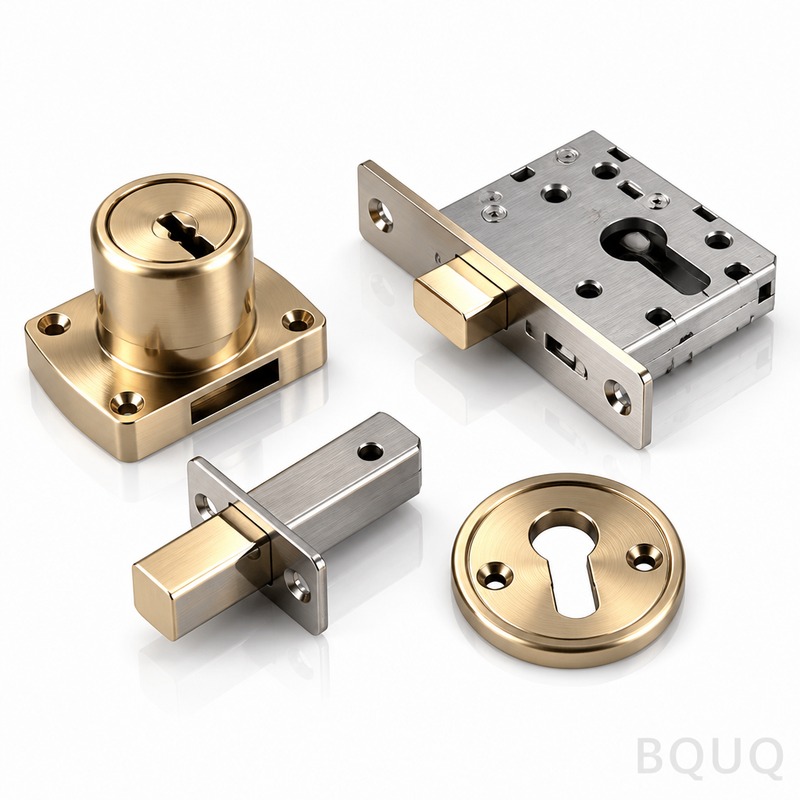
Brass is the correct choice when corrosion resistance, aesthetic appearance, or threaded fastening is paramount. Brass's zinc content provides natural corrosion resistance in atmospheric and freshwater environments, whereas copper forms a green patina that may be unacceptable for visible components. For pneumatic fittings, valve bodies, and plumbing components, brass's ability to machine clean threads without galling makes it the industry standard. Additionally, brass's hardness improves wear resistance in sliding contact applications like gears and bushings.
Why Does Surface Finish Quality Differ Between Brass and Copper?
Surface finish quality is directly tied to material microstructure. Brass's lead content acts as a solid lubricant during machining, allowing the cutting tool to shear material cleanly without tearing. This produces a bright, smooth surface with minimal burr formation. Post-machining, brass can be polished to a mirror finish or brushed for a satin appearance, making it ideal for decorative hardware and visible instrument parts.
Copper's lack of alloying elements means the material deforms plastically before shearing, leading to micro-tearing and burr formation along edges. This requires additional deburring operations, often manually or with tumbling, adding 0.5-2 minutes per part. Copper also work-hardens rapidly, meaning that secondary operations like tapping or reaming can produce inconsistent results if not carefully controlled. For applications requiring a flawless surface, specify brass and accept copper only if electrical performance mandates it.
Can Brass or Copper Be Anodized or Coated for Enhanced Performance?
Neither brass nor copper can be anodized like aluminum, but both accept electroplating and conversion coatings. Brass can be nickel-plated (5-10 microns) for wear resistance, chrome-plated for aesthetics, or passivated with a benzotriazole solution to prevent tarnishing. Copper is commonly tin-plated (for solderability in electrical connections) or silver-plated (for high-frequency RF applications where skin effect dominates). Electroless nickel plating on copper provides a hard, corrosion-resistant surface that improves wear resistance by 2-3x.
For precision components requiring electrical insulation, both materials can receive PTFE or parylene coatings at thicknesses of 10-25 microns. These coatings add $0.50-$1.50 per part depending on area and complexity. If you require RoHS compliance, be aware that C36000 brass contains 3% lead; specify C27400 (leaded-free brass) or C26000 (cartridge brass) if you need a lead-free alternative, though machinability drops to about 80% and 60% respectively.
What Is the Recommended Design and Procurement Strategy for Brass vs Copper?
For new designs, start with brass unless the component has a measurable electrical or thermal requirement above 50A or 50 W/m·K. Define your tolerance budget realistically: brass at ±0.01 mm, copper at ±0.02 mm. Specify copper only for current-carrying paths, thermal interfaces, or where galvanic compatibility with other copper components is required. Always request DFM feedback from your machining partner before finalizing material selection; a good CNC shop can recommend the optimal alloy grade (e.g., C36000 vs C14500 tellurium copper) that balances machinability and conductivity.
For existing copper parts, evaluate whether a brass core with a copper insert or copper plating could meet performance requirements at 40-60% lower cost. Conversely, if you have brass parts failing due to overheating or insufficient conductivity, copper is the only viable upgrade. Lead time planning matters: copper parts typically require 3-5 additional days in production due to slower machining and more frequent tool changes. Include this in your supply chain schedule to avoid expedite fees.
FAQ: CNC Machining Brass vs Copper
Which Material Is Easier to Machine for Complex Geometries?
Brass is significantly easier to machine, particularly for internal threads, deep holes, and thin-walled features. Its free-machining properties allow standard tooling at high speeds, while copper requires special ground tools, high-pressure coolant, and slower feed rates to prevent work-hardening and tool breakage.
What Tolerances Are Standard for Brass CNC Machining?
Standard brass CNC machining holds ±0.01 mm for features up to 50 mm, with ±0.005 mm achievable on critical bores. For features above 50 mm, expect ±0.02 mm due to thermal expansion and material variability. These tolerances are repeatable across production batches of 100 to 100,000 parts.
Is Copper More Expensive Than Brass for CNC Prototyping?
Yes, copper prototyping typically costs 60-90% more than brass for identical geometry. The price difference comes from higher raw material cost, 2-3x longer cycle times, and increased tooling wear. A simple 20 mm brass prototype might cost $45, while the same part in copper runs $75-$85.
How Does Corrosion Resistance Compare Between Brass and Copper?
Brass offers superior corrosion resistance in atmospheric, freshwater, and mildly acidic environments due to its zinc content. Copper performs better in reducing environments and seawater, but it tarnishes and forms a green patina. For outdoor or humid environments, brass is the recommended choice unless electrical conductivity is required.
Can I Use Copper Parts for High-Temperature Applications?
Yes, copper's melting point (1,084°C) is higher than brass (900-940°C), making it better for sustained high-temperature operation above 200°C. However, copper loses mechanical strength above 150°C, so consider beryllium copper (C17200) if you need both conductivity and strength at elevated temperatures.
What Is the Typical Lead Time for Brass and Copper CNC Components?
Brass components quote at 5-7 business days for quantities under 1,000 pieces, while copper requires 8-12 days due to slower machining. Larger quantities (10,000+) add 5-10 days for both materials. Expedited services can reduce these times by 40% at a 30-50% cost premium.
Which Material Is Better for EMI Shielding Enclosures?
Copper is superior for EMI shielding, offering 60-80 dB shielding effectiveness at frequencies up to 1 GHz, compared to brass's 40-50 dB. The higher conductivity of copper provides better reflection and absorption of electromagnetic waves, making it the preferred choice for sensitive RF circuits and aerospace avionics.
Conclusion
Selecting between brass and copper for CNC machined precision components requires a clear-eyed assessment of electrical/thermal needs versus cost and machinability. Brass delivers tighter tolerances, faster lead times, and 40-45% lower total part cost, making it the default for structural, mechanical, and aesthetic applications. Copper is the only choice when conductivity above 50% IACS or thermal performance above 200 W/m·K is non-negotiable, accepting a 1.8-2.0x cost multiplier. By quantifying your requirements in terms of ampacity, thermal load, and tolerance class, you can make a data-driven decision that optimizes both performance and budget.
For immediate engineering consultation on your specific brass or copper component, send your 2D/3D drawings and material requirements. Our BQUQ engineering team will provide DFM feedback and a firm quotation within 12 hours. Contact us at sc@bquq.com or WhatsApp +86 13713157787. Visit www.bquq.com to upload your files and track your quote online.