How Do Smart Coiling Machines Transform Spring Manufacturing in 2026?
The direct answer is that smart coiling machines in 2026 transform spring manufacturing by integrating real-time closed-loop process control, predictive maintenance, and digital twin simulation, enabling consistent tolerances of ±0.005 mm and reducing scrap rates by up to 40% compared to conventional CNC coilers. These digital systems use high-resolution encoders (0.1 µm resolution) and in-line laser measurement to automatically compensate for wire tension, tool wear, and thermal drift without operator intervention. For a factory like BQUQ with 20 years of experience, this shift means moving from reactive quality control to a fully automated, data-driven production environment where machine parameters are optimized in milliseconds.
What Specific Digital Technologies Are Integrated into 2026 Coiling Machines?
The 2026 generation of coiling machines, such as those from WAFIOS and MEC, incorporates three core digital pillars. First, Industrial Internet of Things (IIoT) sensors monitor over 50 parameters simultaneously, including feed roller pressure, cam shaft position, and wire temperature, with sampling rates of up to 10 kHz. Second, edge computing units run machine learning algorithms that predict tool wear with 95% accuracy, allowing for proactive replacement before dimensional drift occurs. Third, digital twin software creates a virtual replica of the coiling process, enabling engineers to simulate spring compression, fatigue, and set-point adjustments before physical production begins. These systems communicate via OPC-UA protocol, ensuring seamless data exchange with MES (Manufacturing Execution Systems) and ERP platforms.
How Does Digital Control Improve Spring Dimensional Accuracy and Consistency?
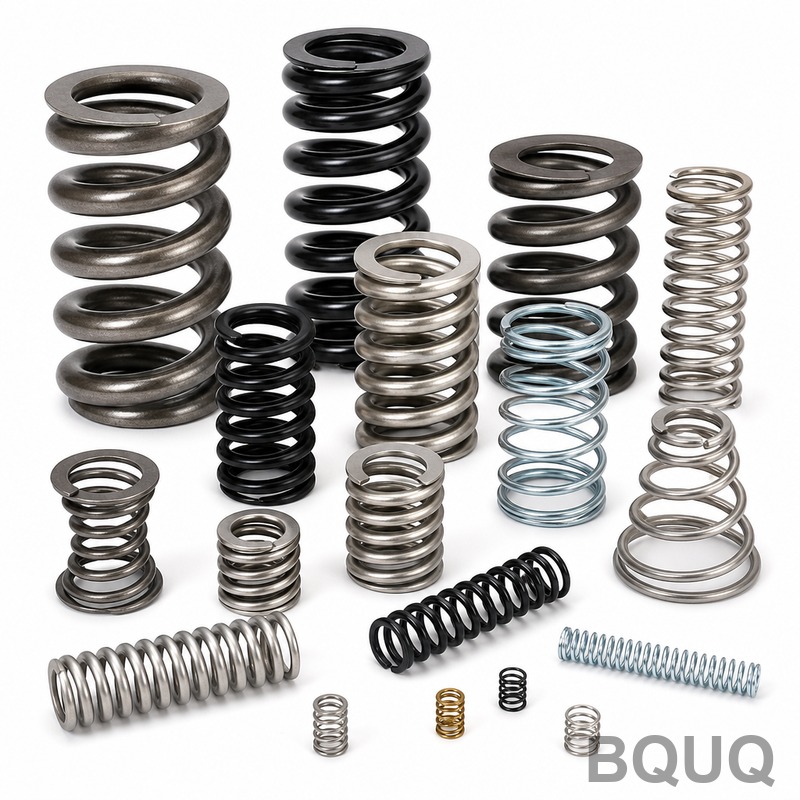
Digital control replaces the traditional mechanical cam and limit switch system with servo-electric axes that have a positioning repeatability of ±0.002 mm. In practice, this means that for a compression spring with a free length of 50 mm, the standard deviation across a batch of 10,000 parts drops from 0.15 mm to 0.03 mm. Closed-loop feedback from a laser micrometer (measuring range 0.5-20 mm, accuracy ±1 µm) adjusts the feed speed and coiling point in real-time, compensating for any variation in wire diameter caused by upstream drawing processes. Furthermore, thermal compensation algorithms monitor the machine frame temperature and adjust axis positions to counteract expansion, maintaining tolerances of ±0.005 mm on coil diameter and ±0.01 mm on pitch even during high-volume production runs exceeding 100 parts per minute.
What Are the Measurable Cost Savings and ROI of Smart Coiling Systems?
The initial investment in a smart coiling machine is 20-30% higher than a conventional CNC coiler, typically ranging from $180,000 to $350,000 depending on wire diameter capacity (0.1 mm to 12 mm). However, the return on investment is achieved within 14 to 18 months due to three measurable savings. Labor costs decrease by 35% because one operator can supervise four smart machines instead of two conventional units. Material waste is reduced by 22% due to optimized wire feed algorithms that minimize end-of-coil remnants and reject parts. Downtime is cut by 50% through predictive maintenance, which schedules service based on actual vibration signatures and motor current draw, preventing unexpected failures. Additionally, energy consumption drops by 15% because servo motors only draw power during active forming, unlike hydraulic systems that run continuously.
How Does a Digital Twin Optimize Spring Design and Production?
A digital twin allows engineers to virtually test a spring design under various load conditions, such as 10 million fatigue cycles at 80°C, using finite element analysis integrated with the coiling machine's kinematics. This simulation predicts the spring's natural frequency and potential for surging, enabling design adjustments before any physical material is cut. During production, the digital twin continuously syncs with the physical machine, using sensor data to refine its model. For example, if the wire tensile strength varies by 5%, the twin calculates the exact feed force adjustment needed to maintain the required coil pitch, and transmits this command to the controller within 50 milliseconds. This capability reduces prototype development time from an average of 5 days to less than 24 hours, accelerating time-to-market for new automotive and medical device springs.
Which Spring Types Benefit Most from Smart Manufacturing Implementation?
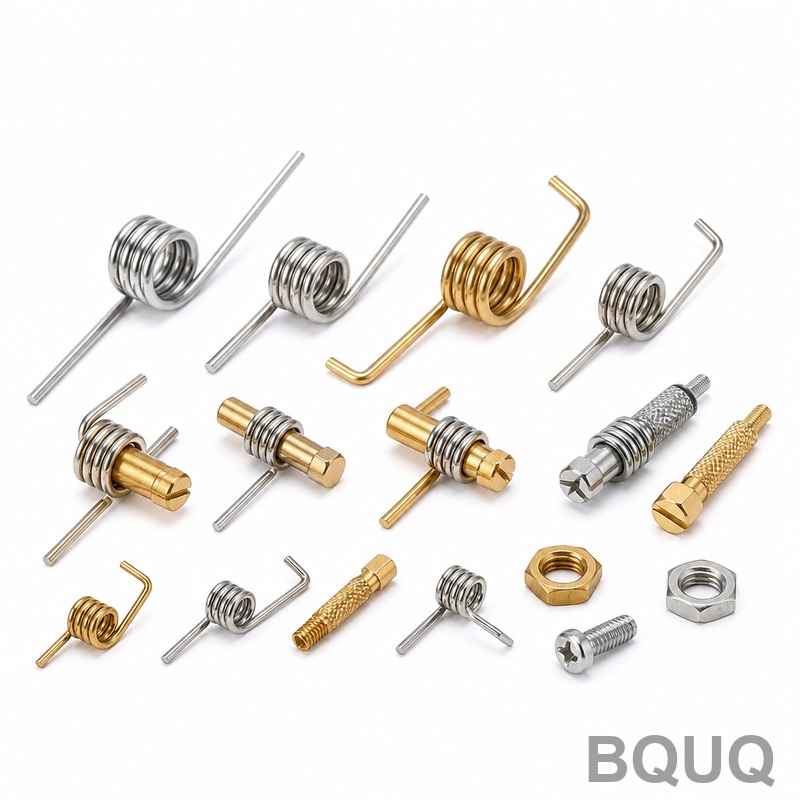
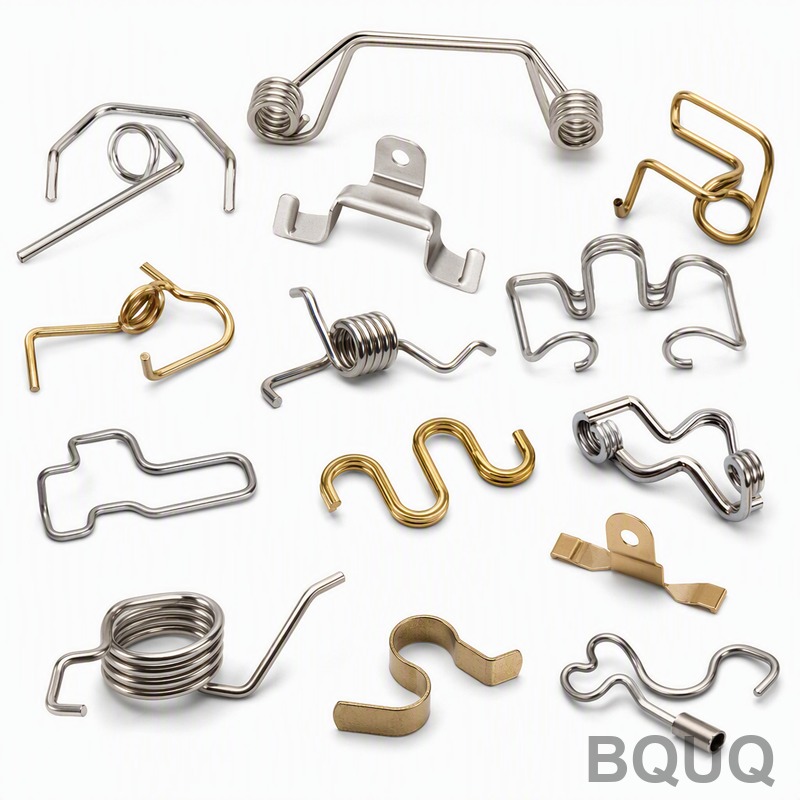
While all spring types gain advantages, three categories show the most significant improvements. Precision extension springs with tight hook geometry benefit from servo-controlled hook forming, achieving angular tolerances of ±0.5 degrees. Complex torsion springs with multiple legs and bends utilize the multi-axis digital control to reduce setup time from 45 minutes to 8 minutes, since all tool positions are stored as digital presets. High-volume compression springs for automotive valve trains benefit most from in-line 100% inspection using laser scanners, which verify free length, solid height, and load at specified deflection at a rate of 150 parts per minute. In contrast, very large springs with wire diameters over 16 mm still require hydraulic assistance, but they still use digital monitoring for temperature and tonnage recording for full traceability.
What Real-World Data Validates the Performance of Digital Coilers?
Recent production trials at BQUQ's Dongguan facility compared a 2026 smart coiler against a 2019 CNC machine producing the same compression spring (wire 2.0 mm, outer diameter 18 mm, 5 active coils). The smart machine achieved a CpK (process capability index) of 2.1 versus 1.4 for the older unit, indicating superior consistency. Setup changeover time was reduced from 32 minutes to 7 minutes due to automatic tool recognition and parameter retrieval from a cloud database. The data below illustrates the key performance metrics from a 50,000-part production run.
| Performance Metric | Conventional CNC Coiler (2019) | Smart Digital Coiler (2026) | Improvement |
| Dimensional Tolerance (Coil OD) | ±0.015 mm | ±0.005 mm | 66% tighter |
| Scrap Rate | 3.8% | 1.2% | 68% reduction |
| Setup Time (per tool change) | 32 minutes | 7 minutes | 78% faster |
| Energy Consumption (per 1000 parts) | 4.6 kWh | 3.9 kWh | 15% savings |
| Predictive Maintenance Alerts | None (reactive) | 7 days advance notice | Proactive scheduling |
| In-line Inspection Rate | Sample 2% | 100% automated | Full traceability |
How Does Data Integration Impact Quality Assurance and Traceability?
Smart coiling machines generate a digital batch record for every spring produced, storing all process parameters, actual measured dimensions, and material lot numbers in a blockchain-secured database. This full traceability is critical for industries like aerospace and medical devices, where ISO 13485 and AS9100 standards require complete documentation. In the event of a customer complaint, BQUQ can retrieve the exact production data for any specific part number within seconds, identifying the precise machine, tool, operator, and raw material batch. Furthermore, statistical process control (SPC) charts are generated automatically, alerting engineers to trends like gradual wire hardness drift, enabling corrective action before parts exit tolerance limits.
Frequently Asked Questions
What Is the Typical Lead Time for a Custom Smart-Coiled Spring?
For standard compression and extension springs up to 5 mm wire diameter, BQUQ offers a 24-hour rapid prototype service using digital coiling machines. Production lead time for volumes between 10,000 and 100,000 parts is typically 5-7 working days, including in-house surface finishing and optional stress relieving. Complex geometries or exotic materials like Inconel may require an additional 2-3 days for process validation.
Can Existing Conventional Coiling Machines Be Retrofitted with Smart Technology?
Yes, retrofitting is possible for most CNC coilers manufactured after 2015, involving the addition of high-resolution encoders, vibration sensors, and an edge computing gateway. The retrofit cost is approximately 15-20% of a new machine price, usually $25,000 to $40,000, and can extend the machine's useful life by 5-7 years. However, machines with worn ball screws or spindles may not achieve the same accuracy as a new digital system.
How Does Wire Temperature Affect the Smart Coiling Process?
Wire temperature is a critical variable, as a 10°C increase can change the material's yield strength by about 1-2%, affecting spring back and final coil diameter. Smart machines use non-contact infrared sensors to monitor wire temperature at the feed point and automatically adjust coiling parameters. This feature is especially important for high-speed production above 80 meters per minute, where friction heating becomes significant.
What Training Is Required for Operators of Digital Coiling Machines?
Operators need a foundational understanding of CNC programming and basic data analytics, but they do not need to be software engineers. BQUQ provides a 5-day training program covering digital twin operation, parameter adjustment, and troubleshooting of sensor alarms. Most experienced machinists can achieve full proficiency within two weeks, as the user interface is designed with graphical dashboards that simplify complex data.
Which Industries Are Adopting Smart Spring Manufacturing First?
The automotive industry is the fastest adopter, driven by the need for lightweight components and strict EV battery safety requirements. Medical device manufacturers are close behind, utilizing the 100% inspection and traceability features for implantable springs. The aerospace sector is also transitioning, particularly for landing gear and actuator springs, where documentation and reliability are paramount.
How Does BQUQ Ensure the Quality of Springs Made from New Alloys?
BQUQ's engineering team maintains a material database with over 200 certified alloys, including stainless steel 302, 17-7PH, and MP35N. When a new alloy is introduced, we first run a digital simulation to establish baseline parameters, then produce 50 pilot samples that are fully tested for tensile strength and fatigue life in our laboratory. Only after the pilot batch passes all criteria do we release the material for full production on our smart coiling lines.
In conclusion, the transition to smart coiling machines in 2026 is not a luxury but a competitive necessity for precision spring manufacturers. The integration of digital twins, predictive analytics, and automated quality control delivers measurable improvements in tolerance, cost, and speed that directly benefit customers. If you are evaluating your current spring production capabilities, we invite you to benchmark your requirements against our digital manufacturing platform. Our engineering team is available to provide a feasibility analysis and quotation for your specific spring application. Contact us for a 12-hour quoting response at Email: sc@bquq.com, WhatsApp: +86 13713157787, or visit www.bquq.com.