How Does Forging Compare to CNC Machining for High-Performance Heat Sinks?
Forged heat sinks offer superior structural integrity and thermal performance compared to machined or extruded alternatives, achieving densities up to 99.9% of theoretical values and thermal conductivities of 200-220 W/m·K for aluminum alloys. The forging process also delivers a near-net-shape component with a grain flow that follows the fin geometry, reducing material waste by 30-50% while improving fatigue resistance by up to 25% compared to billet-machined parts. For high-volume production runs exceeding 5,000 units, forging provides a cost-per-part reduction of 15-40% despite higher initial tooling investments.
What Materials Are Best Suited for Forged Heat Sinks?
Aluminum alloys 6061-T6 and 6063-T5 dominate the forged heat sink market, representing approximately 85% of all applications due to their excellent forgeability and thermal conductivity. Alloy 6061-T6 delivers a thermal conductivity of 167 W/m·K with a yield strength of 276 MPa, while 6063-T5 offers slightly lower strength (214 MPa yield) but superior surface finish and corrosion resistance. For extreme thermal demands, copper alloys such as C11000 (conductivity 391 W/m·K) are forged when the application justifies a 3-4x material cost premium over aluminum, typically in high-end IGBT modules and laser diode mounts. Beryllium copper (C17200) and aluminum bronze are niche choices for applications requiring combined thermal management and wear resistance, though their use is limited to specialized military and aerospace sectors.
How Does the Forging Process Affect Heat Sink Thermal Performance?
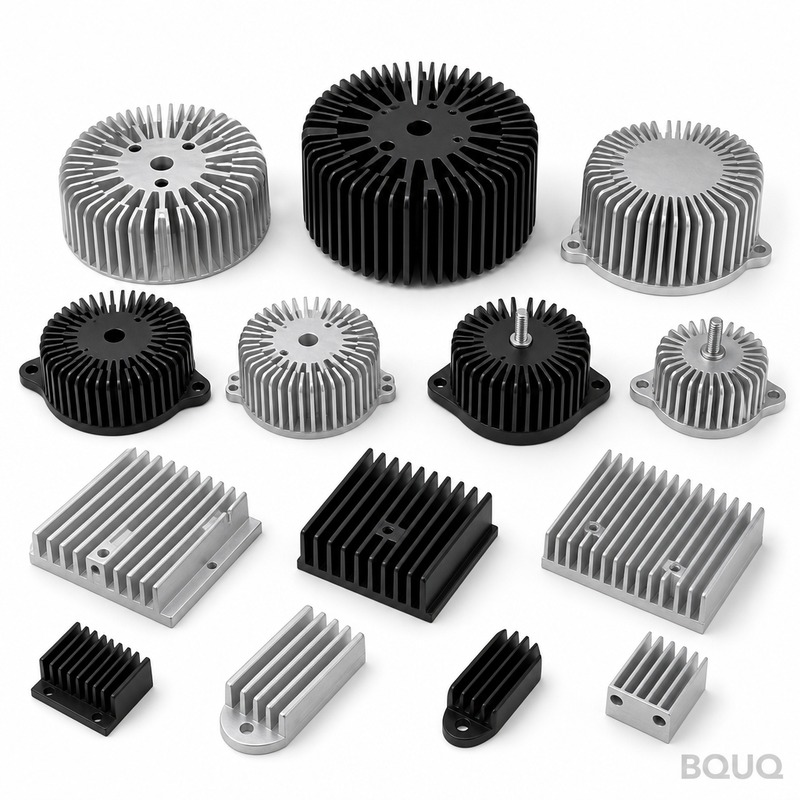
The forging process aligns the material grain structure along the fin geometry, which reduces thermal resistance at the fin-base junction by 8-12% compared to machined parts where grains are randomly oriented. This grain flow continuity eliminates the micro-voids and porosity commonly found in cast heat sinks, which can reduce effective conductivity by 15-20% at high heat flux densities above 50 W/cm². Forged aluminum heat sinks demonstrate a thermal resistance of 0.08-0.15 °C/W for a typical 100 mm x 100 mm x 40 mm geometry with 10 fins, outperforming extruded equivalents by 5-10% under natural convection conditions. The dense, pore-free microstructure also improves the effectiveness of subsequent surface treatments, such as anodizing, by providing a more uniform oxide layer with 10-15% higher emissivity (0.85 versus 0.75 for machined surfaces).
What Tolerances Can Forged Heat Sinks Achieve?
Forged heat sinks can hold dimensional tolerances of ±0.1 mm on critical mounting surfaces and ±0.3 mm on fin thickness and spacing, which is suitable for most electronic packaging requirements. Flatness on the base plate can be maintained at 0.05 mm per 100 mm length, allowing direct mounting to IGBT modules without thermal interface material compensation layers. Fin tip radius can be controlled to 0.5 mm minimum, and draft angles of 1-3 degrees are required for part ejection, which can slightly reduce effective fin surface area by 2-4%. For applications requiring tighter tolerances than ±0.05 mm, a secondary CNC machining operation is recommended, adding 8-15% to the unit cost but achieving precision of ±0.02 mm on critical features.
How Much Does Forging Tooling Cost and What Is the Lead Time?
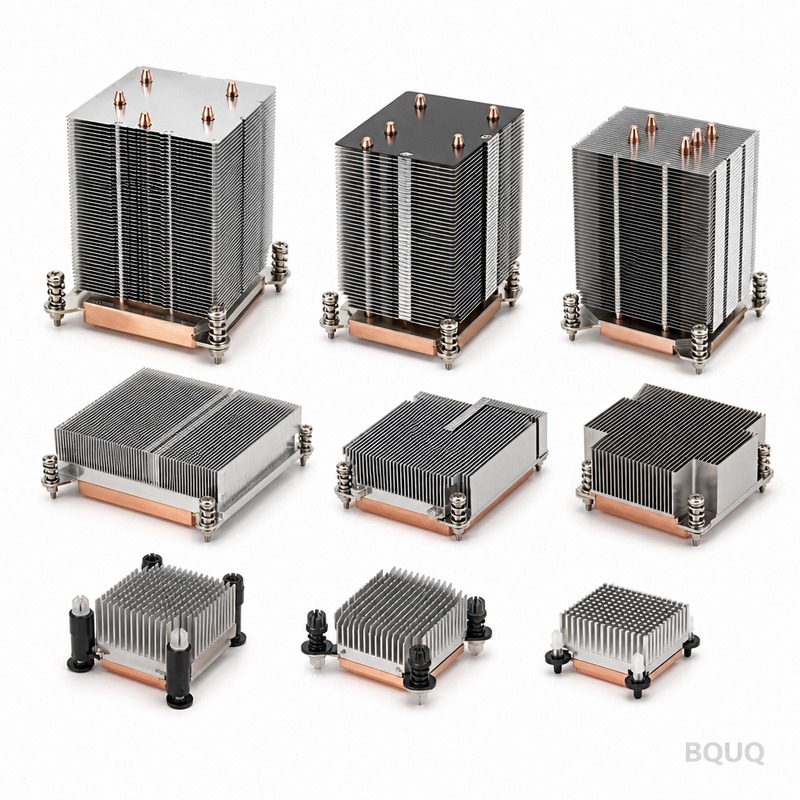
Forging die tooling for a typical heat sink ranges from $8,000 to $25,000 per die set, depending on part complexity, cavity number, and required die steel grade (H13 tool steel is standard). A single-cavity die for a simple flat-base heat sink with straight fins costs approximately $8,000-12,000, while multi-cavity dies for complex geometries with angled fins or bosses can reach $20,000-25,000. Tooling lead time is 4-6 weeks from final design approval, including die design, CNC machining of the die cavities, heat treatment, and surface polishing. Production lead time for the first article samples is an additional 2-3 weeks, with full-rate production commencing after customer approval, typically at 3,000-10,000 units per month depending on press capacity.
Which Applications Justify Forged Heat Sinks Over Extruded or Machined Alternatives?
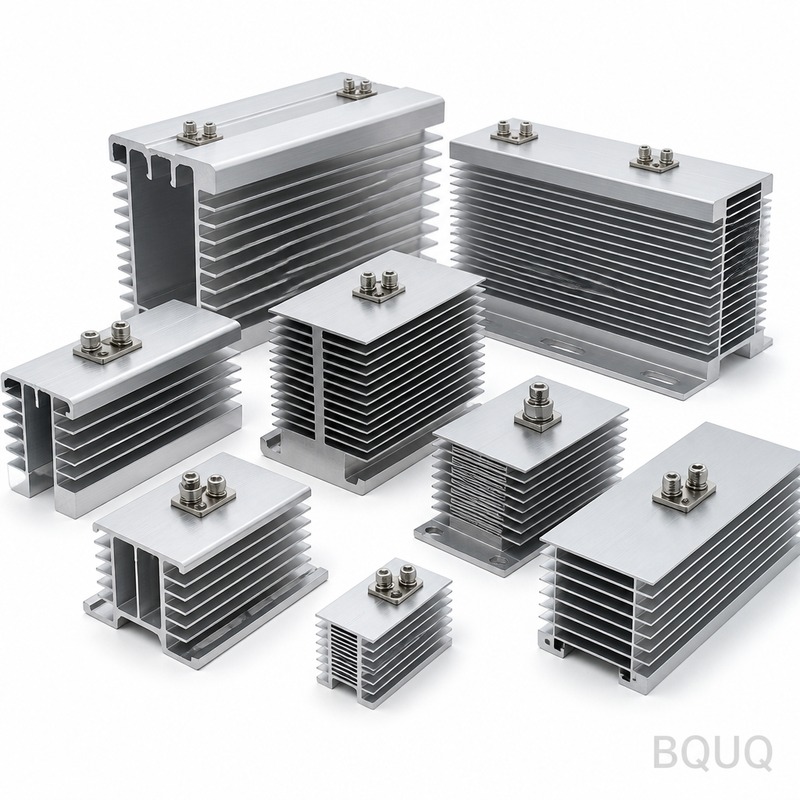
Forged heat sinks are economically justified when production volume exceeds 5,000 units per year and the application demands high thermal cycling reliability, such as in automotive power electronics, railway traction converters, and industrial servo drives. The improved fatigue strength of forged parts (185 MPa for 6061-T6 versus 150 MPa for machined billet) makes them essential for applications subjected to more than 100,000 thermal cycles between -40°C and 150°C. For LED lighting systems in outdoor environments, forged heat sinks provide superior resistance to stress corrosion cracking compared to extruded profiles, extending service life from 50,000 to 100,000 hours. However, for low-volume prototyping or highly complex geometries with undercuts, CNC machining from solid billet remains more practical despite higher unit costs.
How Does Forging Compare to Other Manufacturing Methods in Cost and Performance?
| Parameter | Forged (6061-T6) | Extruded (6063-T5) | Die Cast (A380) | CNC Machined (6061-T6) |
| Thermal Conductivity (W/m·K) | 167 | 209 | 96 | 167 |
| Porosity (%) | 0.1-0.5 | 0.5-1.0 | 3-7 | 0.1 |
| Yield Strength (MPa) | 276 | 214 | 159 | 276 |
| Dimensional Tolerance (mm) | ±0.1 | ±0.3 | ±0.3 | ±0.02 |
| Tooling Cost (USD) | 8,000-25,000 | 2,000-5,000 | 5,000-15,000 | 0-500 |
| Unit Cost at 10,000 pcs (USD) | 3.50-6.00 | 2.80-4.50 | 2.50-4.00 | 8.00-15.00 |
| Maximum Fin Aspect Ratio | 8:1 | 15:1 | 6:1 | 20:1 |
| Minimum Fin Thickness (mm) | 1.5 | 1.0 | 2.0 | 0.5 |
| Thermal Cycling Life (cycles) | 100,000+ | 50,000 | 20,000 | 80,000 |
The data above demonstrates that forging offers the best balance of thermal performance and structural reliability for demanding applications, though extrusion wins on cost for simple geometries and machining wins on precision for complex fin arrays.
Why Is Forging Preferred for High-Reliability Power Electronics?
Power semiconductor modules, such as IGBTs and SiC MOSFETs, generate heat fluxes of 100-300 W/cm² at the chip level, requiring heat sinks with minimal thermal resistance and maximum reliability. Forged heat sinks provide a coefficient of thermal expansion (CTE) of 23.4 ppm/°C for aluminum, which closely matches the CTE of ceramic substrates (Al2O3 at 7.2 ppm/°C and AlN at 4.5 ppm/°C) when used with appropriate thermal interface materials. The forging process eliminates internal shrinkage voids that act as crack initiation sites under thermal cycling, which is critical for automotive applications where vibration and temperature extremes are simultaneous. Accelerated life testing of forged heat sinks shows a 95% survival rate after 150,000 thermal cycles from -40°C to 125°C, compared to 70% for die-cast parts under identical conditions. Additionally, forge-hardened surfaces with a microhardness of 95-110 HB provide better resistance to fretting wear at mounting interfaces, ensuring long-term thermal contact integrity.
What Are the Design Limitations of Forged Heat Sinks?
The forging process imposes specific design constraints, including a maximum fin height-to-thickness ratio of 8:1, which limits achievable surface area compared to skived or machined heat sinks with ratios up to 20:1. Undercuts and re-entrant angles are not possible without complex multi-piece dies, and a minimum draft angle of 1 degree is required on all vertical surfaces for part ejection. The maximum practical part size for conventional forging presses is approximately 400 mm x 400 mm x 100 mm, with larger parts requiring specialized equipment or alternative processes. Additionally, the minimum achievable fin pitch is 4 mm, which restricts fin density to 2.5 fins per cm, while folded-fin or bonded-fin heat sinks can achieve 5-6 fins per cm for high-performance air-cooled applications.
How Can Engineers Optimize a Forged Heat Sink Design for Manufacturing?
Engineers should design fin cross-sections as trapezoids with a 1-2 degree draft angle per side, tapering from a 2.5 mm base to a 1.5 mm tip, to facilitate metal flow and die filling. The transition radius between the base and fins should be at least 3 mm to reduce stress concentrations and prevent die cracking during the forging stroke. For maximum thermal performance, the base plate thickness should be 6-10 mm to ensure uniform heat spreading from point sources, with a flatness requirement of 0.05 mm over the mounting area. It is also recommended to specify a T6 heat treatment (solution treatment at 520°C followed by artificial aging at 175°C for 8 hours) to achieve peak strength and conductivity, adding 2-3 days to the production schedule.
FAQ Section
What Is the Minimum Order Quantity for Forged Heat Sinks?
The minimum order quantity typically starts at 1,000 pieces per year, though 5,000 pieces is the economic break-even point where forging becomes more cost-effective than CNC machining. Lower volumes are possible but will incur higher per-unit costs, typically 15-25% above the optimal volume pricing.
Can Forged Heat Sinks Be Anodized or Plated?
Yes, forged aluminum heat sinks can be anodized to MIL-A-8625 Type II or Type III specifications, with Type II providing a 5-25 micron coating and Type III offering 25-75 micron hard coating. The dense forging surface yields a more uniform anodic layer, improving corrosion resistance and thermal emissivity.
What Is the Typical Lead Time for Forged Heat Sink Production?
Production lead time after tooling approval is 3-4 weeks for quantities up to 5,000 pieces and 5-6 weeks for quantities up to 20,000 pieces. Rush orders can be expedited to 2 weeks with a 10-15% surcharge on the unit price.
How Does Forging Affect the Electrical Conductivity of Heat Sinks?
Forged aluminum 6061-T6 has an electrical conductivity of 43% IACS, which is slightly lower than extruded 6063-T5 at 53% IACS, but acceptable for most grounding applications. If electrical conductivity is critical, specify copper forging C11000 with 100% IACS, though this will increase cost by 300-400%.
Are Forged Heat Sinks Suitable for Liquid Cooling Applications?
Yes, forged heat sinks can be designed with integral liquid channels, though the process requires more complex dies and increases tooling cost by 40-60%. The forged channel walls are pore-free, reducing the risk of coolant leakage compared to die-cast alternatives.
What Is the Maximum Operating Temperature for Forged Aluminum Heat Sinks?
Forged 6061-T6 aluminum heat sinks can operate continuously at temperatures up to 200°C, above which the T6 temper begins to over-age and reduce strength. For sustained operation at 250°C or higher, consider forged copper or specialized aluminum alloys such as 2618-T61.
How Do I Validate the Thermal Performance of a Forged Heat Sink Prototype?
Thermal validation should include a steady-state test using a calibrated heat source and thermocouples, measuring junction-to-ambient thermal resistance with an accuracy of ±0.01 °C/W. Computational fluid dynamics (CFD) simulation should be correlated with physical testing, with a target deviation of less than 5% between simulated and measured values.
BQUQ has been manufacturing precision forged heat sinks in Dongguan, China, for over 20 years, serving automotive, telecom, and industrial power electronics customers worldwide. Our in-house forging presses, CNC machining centers, and thermal testing laboratories ensure complete control over quality and lead times. We provide free design-for-manufacturing reviews and thermal simulations within 24 hours of receiving your drawings. For a detailed quotation, send your CAD files to sc@bquq.com or contact us on WhatsApp at +86 13713157787. Visit www.bquq.com to explore our full range of thermal management solutions.