How Much Does CNC Machining Cost Per Hour in 2026? Pricing Breakdown for Custom Parts
In 2026, the average CNC machining cost per hour ranges from $55 to $120 for standard 3-axis milling and turning, with precision 5-axis operations costing between $150 and $250 per hour. This rate includes machine depreciation, operator labor, overhead, and standard tooling, but excludes material costs and specialized programming. For a typical custom part, total machining labor costs usually represent 30-50% of the final unit price, with setup and programming fees often adding $75 to $150 per hour separately.
What Is the Exact Hourly Rate Breakdown for Different CNC Machine Types in 2026?
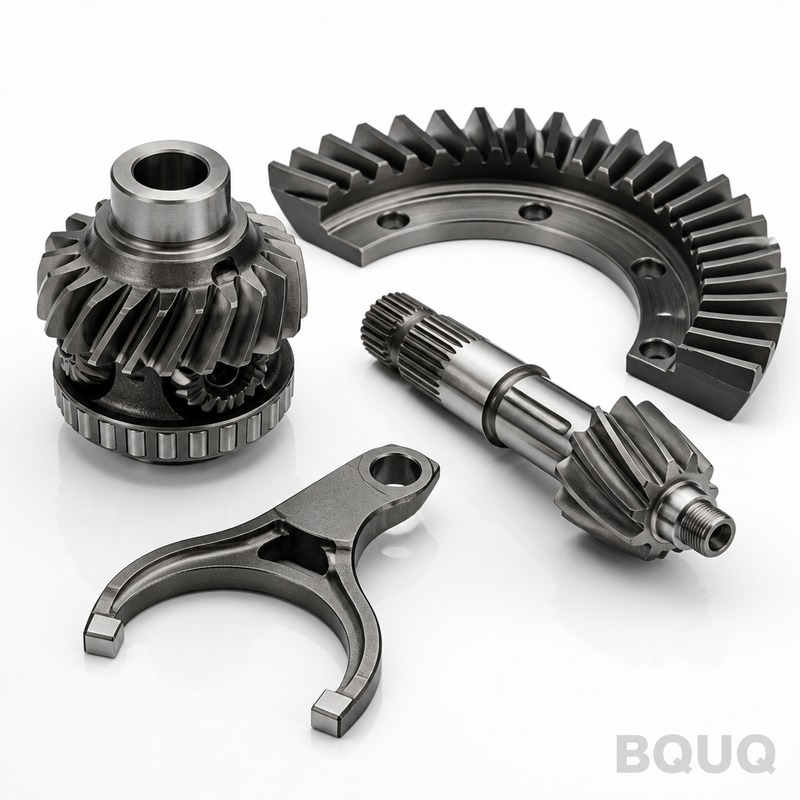
The hourly rate varies significantly based on machine capability and precision level. Standard 3-axis vertical machining centers (VMCs) typically cost $55-$85 per hour, while 4-axis machines run $85-$120 per hour due to increased setup complexity and indexing time. High-precision 5-axis machines, essential for aerospace and medical components, command $150-$250 per hour because of higher calibration requirements and slower machining speeds. Swiss-type lathes, used for small diameter parts under 25mm, follow a similar pricing structure at $90-$140 per hour, reflecting their tight tolerance capabilities of ±0.005mm. For production runs exceeding 500 pieces, many factories including BQUQ offer reduced rates of 15-20% below the standard hourly figures.
How Do Setup Time and Programming Costs Affect the Final Price Per Hour?
Setup and programming are billed separately from machining time and directly influence your effective hourly cost. For a simple part with fewer than 10 features, programming typically takes 1-2 hours at $75-$100 per hour. Complex 5-axis parts with organic surfaces or tight tolerances below ±0.01mm may require 8-16 hours of CAM programming, adding $600-$1,600 to your project before any material is cut. Fixture design and fabrication for medium-volume runs (100-500 parts) costs $300-$800 per fixture, which when amortized over the production quantity, adds $3-$8 per part. For a single prototype, setup alone can represent 40-60% of the total quoted cost, which is why per-hour rates appear higher for small batches.
Which Cost Factors Have the Largest Impact on CNC Machining Hourly Rates?
Material machinability, tolerance requirements, and part geometry are the three dominant cost drivers in 2026. Aluminum 6061, the most common material, machines at 100% baseline efficiency, while stainless steel 304 reduces cutting speeds by 40%, effectively increasing hourly cost from $60 to $100 for the same cycle time. Titanium Ti-6Al-4V requires specialized tooling and reduced feed rates, pushing effective costs to $180-$220 per hour. Tolerance requirements above ±0.025mm (standard) to ±0.005mm (precision) increase inspection time and require slower machining passes, adding 30-50% to the base hourly rate. Deep cavities with depth-to-diameter ratios exceeding 4:1 necessitate specialized long-reach tooling and peck drilling cycles, increasing machining time by 25-60% compared to standard features.
How Do Material Costs Compare to Hourly Machining Rates in 2026?
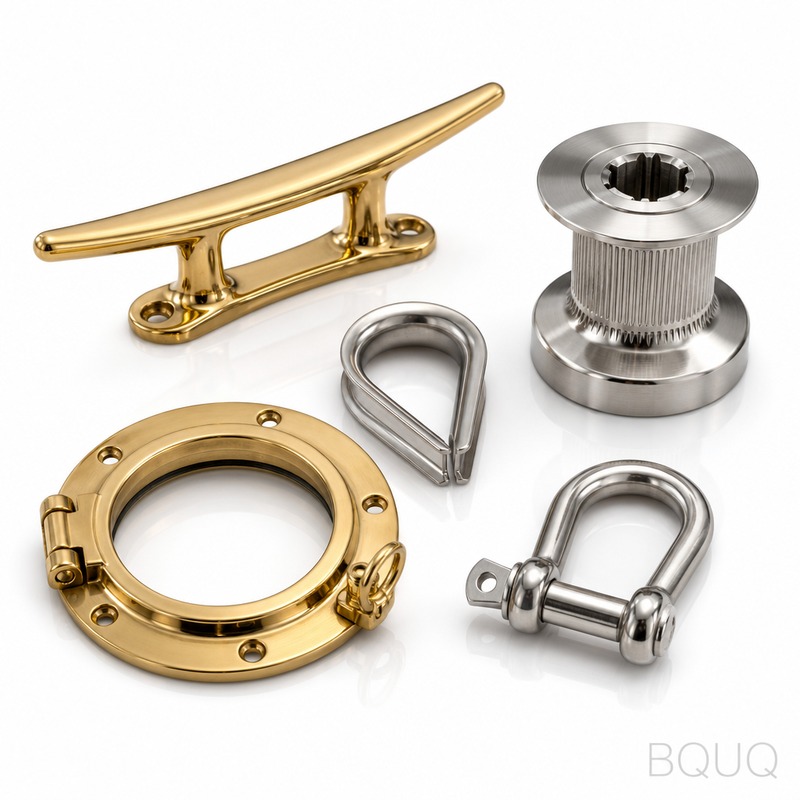
Material pricing has remained volatile in 2026, and for most parts, material cost exceeds machining cost per unit. Aluminum 6061-T6 costs $4.50-$6.50 per kilogram, while 7075-T6 aluminum is $12-$18 per kilogram. Stainless steel 304 runs $6-$8 per kilogram, and 17-4PH stainless steel is $15-$22 per kilogram. For a typical machined aluminum bracket weighing 0.5kg finished, raw material costs $3-$5, while machining time at 30 minutes costs $30-$40 at standard rates. This 10:1 ratio between machining and material cost is common for aluminum; however, for titanium parts, material at $50-$80 per kilogram can exceed machining costs when the finished part weight is high. Always request material pricing separately in quotes to identify cost reduction opportunities through near-net-shape blanks or alternate alloys.
Why Do Chinese Manufacturers Like BQUQ Offer Lower Hourly Rates Than Western Shops?
Chinese CNC machining facilities, particularly in Dongguan where BQUQ operates, typically quote $25-$45 per hour for 3-axis work, which is 40-50% lower than US or European rates. This difference stems from lower labor costs ($8-$15 per hour for skilled machinists versus $35-$60 in the West), lower facility overhead, and vertically integrated supply chains for tooling and raw materials. However, these lower rates do not imply lower quality; established Chinese factories maintain ISO 9001:2015 certification and achieve the same ±0.005mm tolerances using imported DMG and Mazak equipment. The total landed cost, including shipping (typically $50-$150 for express, $20-$50 for sea freight per order), still results in 30-40% overall savings for most custom parts. For time-critical prototypes requiring 3-day turnaround, Western shops may be preferable despite higher hourly rates.
Which Additional Fees Should You Expect Beyond the Hourly Machining Rate?
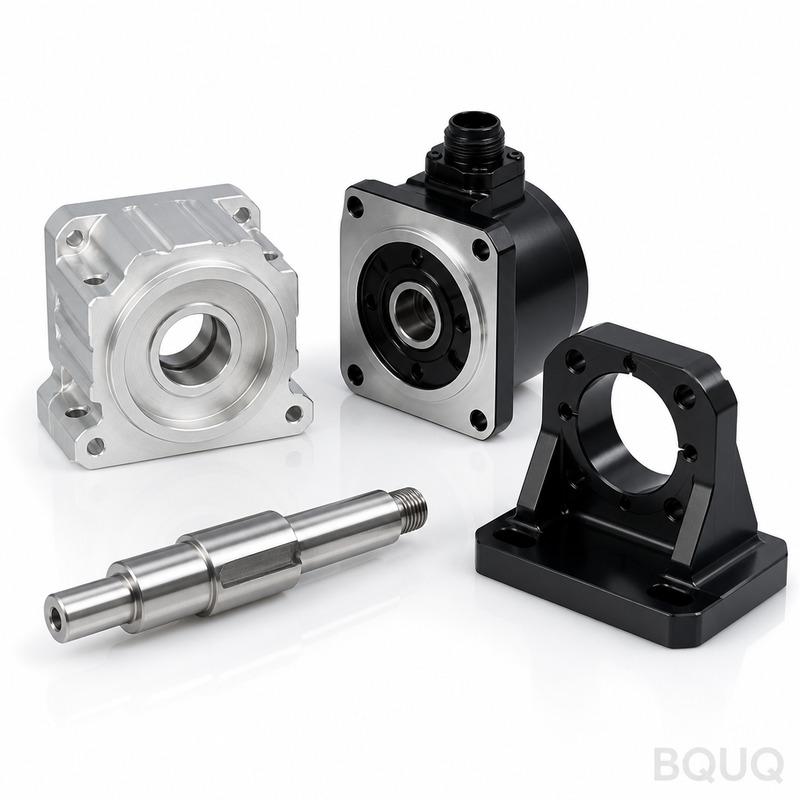
Quoted hourly rates rarely include all costs, and understanding auxiliary fees prevents budget overruns. Surface finishing such as anodizing costs $0.50-$2.00 per part for aluminum, while powder coating runs $2-$5 per part depending on color and thickness. Heat treatment for steel components adds $1-$4 per kilogram with a minimum batch charge of $50-$100. Inspection with a CMM (coordinate measuring machine) report costs $20-$50 per part for precision components requiring full dimensional verification. Packaging for fragile or precision parts adds $1-$3 per unit, and custom wooden crates for heavy parts cost $20-$80 each. For a 100-piece order, these secondary operations can add 15-25% to the total machining cost, so always request a fully itemized quote rather than relying solely on hourly rates.
How Can You Reduce Effective CNC Machining Costs Per Hour for Large Orders?
Production quantity is the most powerful lever for reducing effective hourly costs. For orders of 1-10 pieces, machining time dominates, and you will pay full prototype rates. At 50-100 pieces, you can reduce per-part cost by 20-30% through fixture amortization and optimized tool paths. Beyond 500 pieces, CNC machining becomes less economical compared to metal stamping or die casting, where per-part costs drop by 60-80% after initial tooling investment. For example, a part machined at $60 per hour with a 15-minute cycle time costs $15 per unit at quantity 10; at quantity 500, optimized cycle time of 10 minutes and reduced rate of $50 per hour brings per-unit cost down to $8.33. Additionally, designing for manufacturability, such as standardizing hole sizes and avoiding deep pockets, can reduce machining time by 20-40%.
Cost Comparison Table for CNC Machining in 2026
| Machine Type | Hourly Rate (USD) | Typical Tolerance | Best for Part Size | Minimum Order Recommendation |
| 3-Axis VMC | $55-$85 | ±0.025mm | 10-500mm | 1-10 pieces (prototypes) |
| 4-Axis Machining Center | $85-$120 | ±0.015mm | 20-400mm | 10-100 pieces |
| 5-Axis Precision Mill | $150-$250 | ±0.005mm | 5-300mm | 1-50 pieces (complex geometry) |
| CNC Swiss Lathe | $90-$140 | ±0.005mm | 1-25mm diameter | 100-10,000 pieces |
| CNC Turning Center | $60-$90 | ±0.020mm | 10-300mm diameter | 10-500 pieces |
| Chinese Factory (3-Axis) | $25-$45 | ±0.025mm | 10-500mm | 50-5,000 pieces |
What Is the Realistic Total Cost for a Typical Custom CNC Part in 2026?
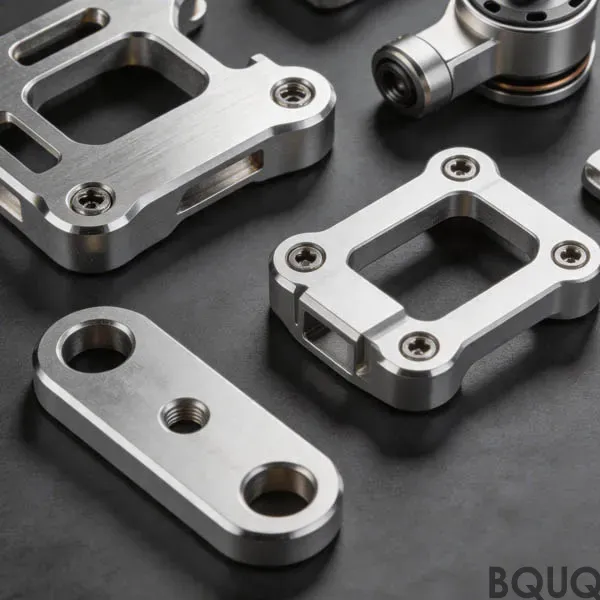
For a standard aluminum bracket measuring 100mm x 80mm x 10mm with four mounting holes, expect a total cost of $25-$45 per unit at quantity 50 from a Western supplier. This breaks down to $15-$25 in machining labor (15-20 minutes at $60-$75 per hour), $4-$6 in material, $3-$5 in finishing and inspection, and $3-$9 in setup amortization. From a Chinese supplier like BQUQ, the same part costs $12-$20 per unit, including shipping by sea freight. For a more complex 5-axis impeller with 12 blades and ±0.01mm tolerances, per-unit costs range from $200-$400 at quantity 20, reflecting 2-3 hours of machining time and extensive programming. Always request quotes with explicit hourly rates, material costs, and setup fees to enable accurate comparison.
Can You Get Accurate Quotes Without Detailed Engineering Drawings?
Yes, but the accuracy depends on the information you provide. A complete 2D drawing with GD&T (geometric dimensioning and tolerancing) symbols, surface finish specifications, and material grade will yield quotes within ±5% of final cost. If you only have a 3D model in STEP or IGES format, expect a quote range of ±15-25%, as the supplier must make assumptions about tolerances and secondary operations. For fastest and most accurate quoting, provide both the 3D model and a 2D PDF with critical dimensions highlighted, plus your required annual volume and target delivery date. BQUQ can provide a preliminary quote within 12 hours based on STEP files alone, with a firm quote after drawing review.
FAQ Section
How Much Does CNC Machining Cost Per Hour for Aluminum Parts?
For aluminum 6061, the most economical material, hourly rates range from $55-$75 for 3-axis work in Western countries and $25-$40 from Chinese suppliers. Aluminum machines at high speeds, reducing cycle times and effectively lowering the cost per part compared to steel or titanium.
What Is the Minimum Order Quantity for Reasonable CNC Pricing?
For CNC machining, there is no strict minimum, but orders under 10 pieces incur high setup costs, making per-part prices 50-100% higher than at quantity 100. A quantity of 50-100 pieces typically provides the best balance between setup amortization and inventory holding costs.
How Fast Can I Get a CNC Machining Quote?
Most professional suppliers, including BQUQ, provide initial quotes within 12-24 hours for parts with complete drawings or 3D models. Complex 5-axis parts with difficult tolerances may require 2-3 business days for accurate pricing and manufacturability analysis.
Are Chinese CNC Machining Services Reliable for Precision Parts?
Yes, established Chinese factories with 20+ years of experience, like BQUQ, maintain ISO 9001:2015 certification and export millions of precision parts annually. They use imported CNC machines with the same accuracy as Western shops and typically offer 30-40% cost savings while maintaining ±0.005mm tolerances.
What Causes CNC Machining Costs to Increase Unexpectedly?
The most common causes are design changes mid-production, materials with poor machinability, excessively tight tolerances (±0.005mm or better), and large part sizes requiring specialized fixturing. Unexpected hard spots in raw material or thin walls below 0.5mm also increase cycle times and tooling costs.
Can I Reduce CNC Costs by Supplying My Own Material?
Yes, supplying your own material can reduce costs by 10-15% if you purchase in bulk or have existing inventory. However, you assume responsibility for material certification and dimensional stability, and the supplier may not guarantee workmanship if material defects are discovered during machining.
How Do Surface Finishing Requirements Affect Hourly Machining Rates?
Surface finish requirements below Ra 0.8 micrometers require slower spindle speeds and additional finishing passes, increasing machining time by 15-30%. This effectively raises the hourly cost, as more time is spent on each part to achieve the specified surface quality.
In conclusion, CNC machining costs in 2026 range from $55 to $250 per hour depending on machine type, precision, and geography, with Chinese suppliers offering the best value at $25-$45 per hour for standard work. To optimize your budget, provide complete engineering documentation, choose aluminum when possible, design for standard tool sizes, and order quantities of 50-500 pieces. For accurate pricing on your custom parts, send your drawings or 3D models to BQUQ for a detailed quote within 12 hours. Contact us at sc@bquq.com or WhatsApp +86 13713157787, or visit www.bquq.com to start your project today.