How Stable Is Home Appliance Stamping Demand and What Are the 2026 Design Trends?
Home appliance stamping demand remains structurally stable, with global shipment volumes projected to hold at approximately 480 million major appliances annually through 2026, growing at a modest 2.1% CAGR. The 2026 design trends center on thinner-gauge high-strength steels (0.4–0.6 mm), integrated EMI shielding features, and corrosion-resistant coatings that withstand 500+ hour salt spray tests, driven by energy efficiency regulations and smart home integration. For precision manufacturers, this means a shift toward tighter tolerances (±0.05 mm on critical mounting surfaces) and higher-volume, lower-mix production runs that reward automated stamping lines.
What Is the Actual Demand Forecast for Home Appliance Stamping Through 2026?
The global home appliance market is expected to reach 512 million units by 2026, with stamping accounting for 68–72% of all sheet metal components in washing machines, refrigerators, air conditioners, and microwave ovens. Demand is not cyclical but replacement-driven: the average appliance lifespan is 11–13 years, creating a predictable refresh cycle that smooths out quarterly volatility. In China, where BQUQ operates, domestic production volume is 38% of the global total, with export demand from Southeast Asia and Europe growing at 6.8% annually due to reshoring of assembly lines. The stability comes from necessity: every appliance requires 15–40 stamped parts, from outer cabinets to internal brackets, and material substitution to plastic has plateaued because stamped steel offers superior thermal conductivity (45–50 W/m·K) and structural rigidity at high temperatures.
How Are Material Specifications Changing for 2026 Stamped Components?
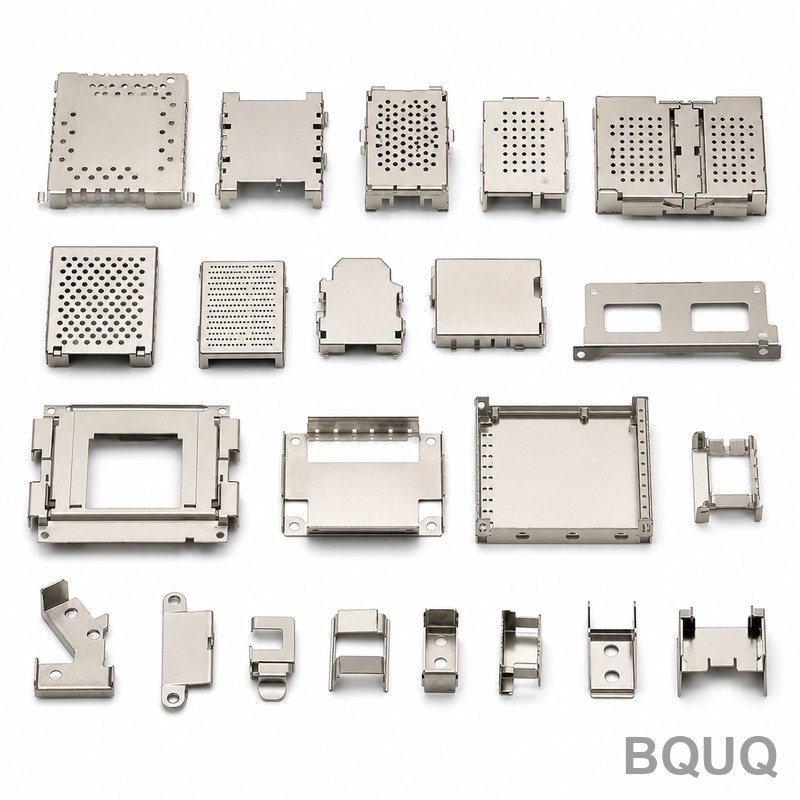
The 2026 trend is toward thinner material gauges with higher yield strength to reduce weight and material cost without sacrificing dent resistance. For refrigerator outer panels, the industry is moving from 0.8 mm SPCC steel to 0.6 mm DC05 deep-drawing steel with a yield strength of 180–220 MPa, achieving a 25% weight reduction while maintaining a Vickers hardness of 95–110 HV. For washing machine drums and tubs, 430 stainless steel (16–18% chromium) is standard, with a required surface roughness of Ra 0.4 μm on the inner surface to prevent fabric snagging. Aluminum alloys, particularly 5052-H32 and 6061-T6, are replacing steel in heat pump dryer components due to their 2.3× higher thermal conductivity, with typical tolerances of ±0.1 mm on formed flanges. The most significant specification change is the adoption of pre-painted steel with a 25 μm PVDF coating; this eliminates post-stamping painting, reduces VOC emissions by 90%, and requires stamping dies with a mirror-polished surface finish (Ra 0.1 μm) to avoid scratching the coating.
Why Is Precision Tolerance More Critical in 2026 Appliance Stamping?
The integration of sensors, printed circuit boards, and brushless DC motors into appliance enclosures has tightened assembly tolerance requirements from ±0.3 mm to ±0.08 mm on critical locating features. For example, the mounting bosses for a smart refrigerator's compressor must hold a positional tolerance of ±0.05 mm to ensure vibration isolation; deviation beyond this causes acoustic noise above 45 dB, which fails new EU Ecodesign regulations. The trend toward modular construction, where stamped panels are joined by laser welding rather than screws, demands flatness within 0.3 mm per 300 mm length to maintain consistent weld gaps. Additionally, the move to integrated EMI shielding, where stamped parts double as RF shields for Wi-Fi and 5G modules, requires a surface conductivity of less than 0.01 Ω/sq, achievable only with tight tolerance on surface finish and no oil residue after stamping. Progressive dies for these parts now run at 60–80 strokes per minute, and in-die optical sensors inspect 100% of parts for dimension, maintaining a Cpk value of 1.67 or higher.
Which Stamping Processes Are Most Cost-Effective for High-Volume Appliance Parts?
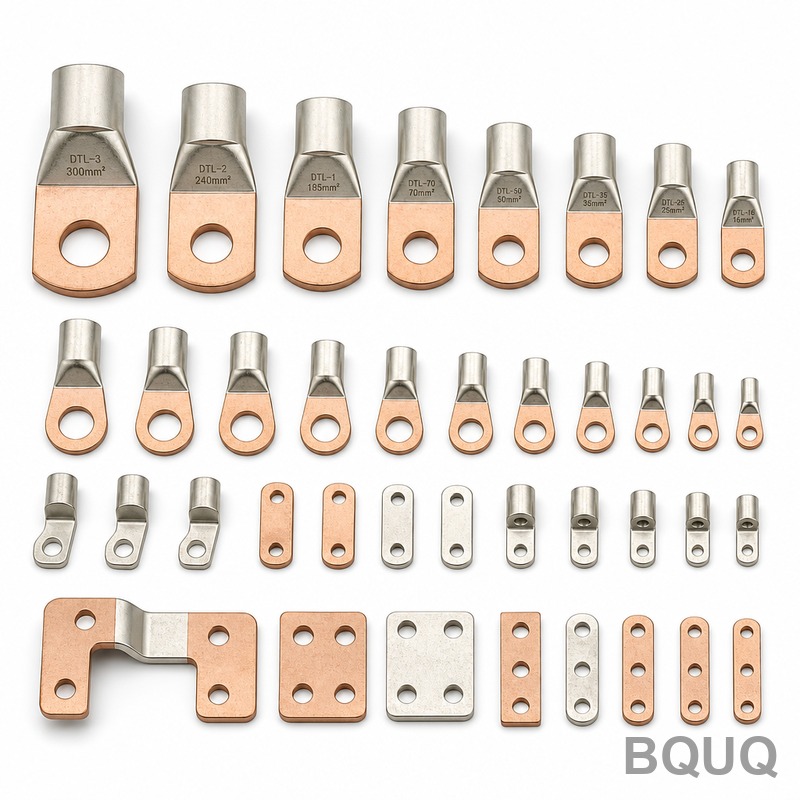
For annual volumes above 500,000 pieces, multi-slide stamping and progressive die stamping are the dominant processes, offering cycle times of 400–1200 parts per minute for small brackets and 15–40 parts per minute for large panels. The tooling cost for a progressive die for a washing machine drum assembly ranges from $45,000 to $85,000, amortized over 3–5 years, yielding a per-part tooling cost of just $0.03–$0.09. Deep drawing, used for sink bowls and washing machine tubs, requires double-action hydraulic presses (400–800 tons) and tooling costs of $30,000–$60,000, but produces parts with zero scrap in a single operation. For low-volume or prototype runs (under 10,000 pieces), CNC turret punching with a 2 mm nibbling tolerance is more cost-effective, at $0.15–$0.25 per hit, but is not viable for mass production due to burr formation. The 2026 shift is toward servo-driven mechanical presses with energy recovery, which reduce energy consumption by 30% compared to hydraulic presses, lowering the per-part cost by roughly $0.004 at a 20-ton capacity.
How Much Does Tooling Cost and What Is the Lead Time for New Appliance Stamping Dies?
A typical set of stamping tools for a new refrigerator cabinet—including a blanking die, a forming die, and a flanging die—costs between $80,000 and $150,000, with a lead time of 8–12 weeks for design and fabrication. For smaller components like hinge brackets or compressor mounts, a single progressive die costs $25,000–$50,000 with a 6–8 week lead time. The 2026 trend is toward modular die systems, where a standard die set with interchangeable inserts reduces new tooling costs by 35–40% when a design change is required. Rapid tooling using hardened D2 tool steel with electrical discharge machining (EDM) achieves a die surface hardness of 60–62 HRC, enabling a die life of 2–5 million strokes before reconditioning. To minimize downtime, BQUQ recommends designing parts with a minimum bend radius of 1.5× material thickness, which avoids micro-cracks and extends die life by 20%. For urgent projects, soft tooling made from aluminum bronze can be produced in 3 weeks but is limited to 50,000–100,000 parts, suitable for pilot runs.
What Are the Key Design for Manufacturing Rules for 2026 Appliance Stampings?
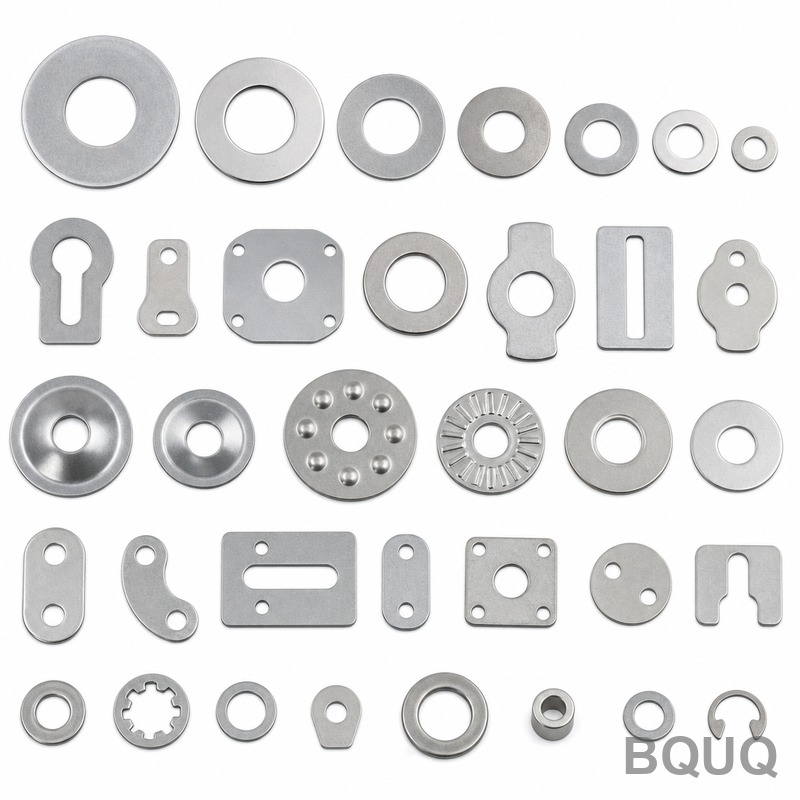
Design for stamping in 2026 requires adherence to five critical rules: maintain a minimum wall thickness of 0.4 mm for steel and 0.8 mm for aluminum to prevent tearing; ensure bend radii are at least 1× material thickness for steel and 2× for aluminum to avoid cracking; keep hole diameters at least 1.5× material thickness to prevent die punch breakage; design flanges with a minimum height of 3× material thickness for dimensional stability; and avoid tight corner radii under 0.5 mm which require expensive precision grinding. The industry standard for burr height is now 0.05 mm maximum on visible surfaces, achieved by maintaining a die clearance of 5–8% of material thickness per side. For 2026, the adoption of simulation software (AutoForm or PAM-STAMP) is mandatory; it predicts springback within 0.1 mm accuracy for high-strength steels, reducing trial-and-error die tryout iterations from six to two. Parts should be designed with a consistent material thickness, as multi-gauge designs require secondary operations that add $0.02–$0.05 per part in handling costs.
How Can You Ensure Consistent Quality in High-Volume Appliance Stamping?
Quality assurance in appliance stamping relies on statistical process control and 100% automated inspection for critical dimensions. In-die sensors measure part thickness and surface defects at rates of 200 parts per minute, rejecting non-conforming parts in real-time, achieving a defect rate of less than 50 parts per million (PPM). For dimensional verification, coordinate measuring machines (CMM) with a resolution of 0.001 mm audit every 50th part, holding a tolerance of ±0.02 mm on critical features. Surface quality is verified using a profilometer for Ra and Rz values; typical acceptance criteria are Ra ≤ 0.8 μm for visible panels and Ra ≤ 0.4 μm for painted surfaces. For corrosion resistance, the neutral salt spray test (ASTM B117) requires 500 hours without red rust for outdoor appliance components, while indoor parts only require 72 hours. The 2026 addition is acoustic testing: stamped parts are now measured for natural frequency to ensure they do not resonate with the compressor or fan vibration spectrum of 50–200 Hz.
| Parameter | 2020 Standard | 2026 Standard | Change |
| Material gauge (refrigerator panel) | 0.8 mm SPCC | 0.6 mm DC05 | -25% thickness |
| Critical tolerance | ±0.3 mm | ±0.08 mm | 73% tighter |
| Salt spray resistance | 150 hours | 500 hours | 3.3× longer |
| Burr height limit | 0.15 mm | 0.05 mm | 66% lower |
| Die life (progressive) | 1 million strokes | 3 million strokes | 3× longer |
| Inspection rate | 5% sampling | 100% in-die | Full coverage |
| Energy per part (20-ton press) | 0.035 kWh | 0.024 kWh | -31% |
FAQ Section
What Is the Minimum Order Quantity for Custom Appliance Stamping?
For progressive die stamping, the minimum economic order quantity is 50,000 parts per year to amortize tooling costs; below this, CNC punching or laser cutting is more viable. For prototype or pilot runs, BQUQ accepts orders as low as 500 parts using soft tooling or 3D-printed dies. The break-even point for custom hard tooling is typically 200,000 parts over the tool's lifetime.
How Fast Can I Get a Quote for a Home Appliance Stamping Project?
Standard quoting for parts with complete 2D or 3D CAD files (STEP or IGES format) requires 12 hours, including material cost, tooling cost, and per-piece pricing. For complex deep-drawn parts requiring simulation analysis, the quote time extends to 48 hours. All quotes include a detailed DFM report highlighting potential stamping defects and cost reduction opportunities.
Can Stamped Parts Replace Die-Cast Aluminum in Appliance Housings?
Yes, for many structural applications, stamped steel or aluminum can replace die casting at a 40–60% lower part cost, but with a trade-off in geometric complexity. Stamping is ideal for flat or shallow-drawn shapes with uniform wall thickness; die casting is superior for complex internal bosses and heat sinks. Hybrid designs using stamped shells with die-cast inserts are becoming common for motor housings in 2026.
What Surface Finishes Are Available for Appliance Stamping?
Common finishes include brushed stainless steel (Ra 0.2–0.4 μm), powder coating (60–80 μm thickness) in any RAL color, and zinc-nickel plating (8–12 μm) for corrosion resistance. Pre-painted steel with PVDF or polyester coatings is the most cost-effective for large panels, offering 10+ year outdoor durability. For interior components, a simple oiled or chromated finish is standard to prevent rust during storage.
Which Materials Should I Avoid for Cost-Effective Stamping?
Avoid 300-series stainless steel for purely structural parts, as it costs 3.5× more than galvanized steel and has 20% higher springback. Also avoid materials over 2.0 mm thickness for complex bends, as they require 500+ ton presses and tooling costs increase by 50%. High-strength steels above 590 MPa yield strength should be reserved for safety-critical components, as they accelerate die wear by 30%.
When Should I Choose Progressive Die Versus Transfer Die Stamping?
Progressive die stamping is ideal for small parts under 150 mm in width with high volume, where all operations occur in a single stroke cycle. Transfer die stamping is better for large parts like washing machine tubs, where parts are moved between stations to allow deeper draws and reduce material stress. For 2026, progressive dies dominate at 70% of appliance parts, while transfer dies are used for 25% of large panels, and multi-slide for 5% of wire forms.
How Does BQUQ Ensure On-Time Delivery for Large Stamping Orders?
BQUQ operates 24/7 with 40 stamping presses from 25 to 800 tons, and maintains a raw material inventory of 2,000 tons of steel and aluminum. Standard lead time is 3–4 weeks after tooling approval, with expedited delivery in 2 weeks for an additional 15% surcharge. Our quality system is IATF 16949 certified, and we provide PPAP Level 3 documentation for all production parts.
Conclusion
Home appliance stamping in 2026 is a stable, precision-driven market, with demand anchored by replacement cycles and design trends moving toward thinner materials, tighter tolerances, and integrated functionality. Manufacturers must invest in servo presses, modular tooling, and 100% in-line inspection to remain competitive on cost and quality. For engineers seeking a reliable stamping partner, BQUQ offers a 12-hour quoting turnaround on new projects, with comprehensive DFM feedback to optimize your part for manufacturability.
For a free quotation or engineering consultation, contact us at Email: sc@bquq.com, WhatsApp: +86 13713157787, or visit www.bquq.com. With 20 years of experience in CNC machining, metal stamping, springs, and heat sinks, we deliver precision components from our Dongguan factory to clients worldwide.