How to Choose a CNC Machining Service Provider: 10 Questions to Ask Before You Order
Selecting the right CNC machining partner determines your project’s cost, lead time, and final part quality. The direct answer is that you must verify process capability, tolerance standards, material traceability, and communication transparency before placing an order. This article provides the exact checklist of 10 questions, backed by real factory data, to help you avoid costly rework and delivery delays.
Material Sourcing and Certification
The foundation of a quality machined part is the raw material. A provider that sources generic aluminum or steel without certifications risks hidden defects that appear only after surface treatment or during functional testing.
Ask if the supplier holds material certificates (MTC) for every batch. For aerospace or medical work, require 3.1 certifications per EN 10204. At BQUQ, we stock 6061-T6 and 7075-T6 aluminum, 303 and 316L stainless steel, and C17200 beryllium copper, all with traceable mill test reports. Confirm whether the supplier can provide a full chemical composition analysis for your specific alloy. If they hesitate to share the source mill, consider that a red flag. Also ask about raw material lead times—standard 6061 aluminum is 2–3 days in stock, but custom brass or titanium may take 7–10 days.
Tolerance Capability and Inspection Equipment
Do not assume a "CNC shop" holds tight tolerances automatically. The difference between a prototype shop and a precision manufacturer lies in the inspection loop. Ask what the standard machining tolerance is and what the best achievable tolerance is for your part geometry.
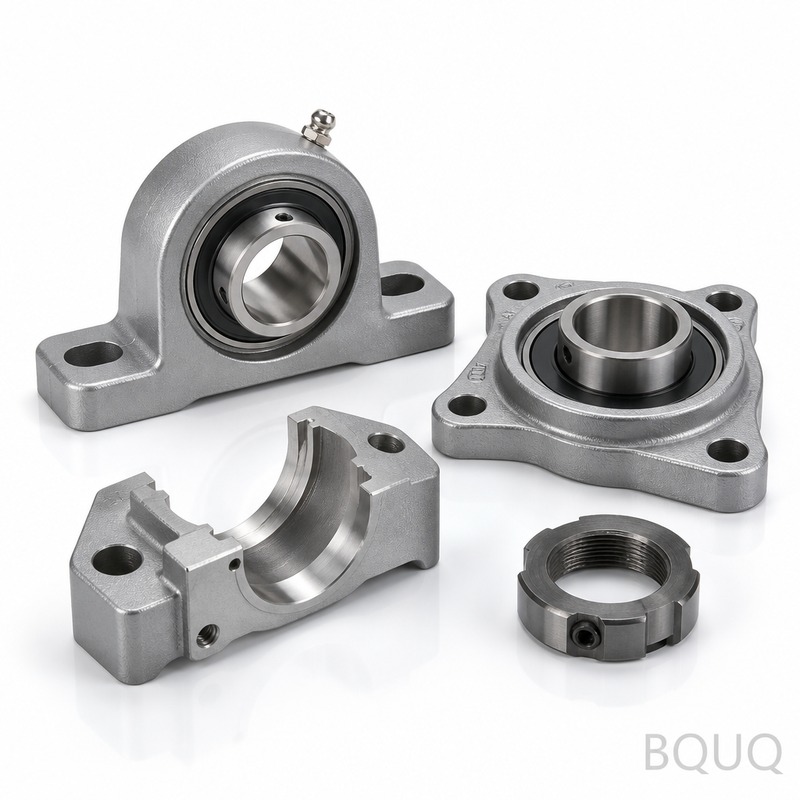
A reliable provider will quote ±0.005 mm (0.0002 in) for critical bores and ±0.01 mm (0.0004 in) for general features. However, that capability means nothing without verification. Ask about their inspection tools: CMM (coordinate measuring machine) for 3D features, optical comparators for threads, and surface roughness testers for Ra values. At BQUQ, we maintain a temperature-controlled inspection room at 20 ± 1°C to prevent thermal expansion errors during measurement. Always request a first article inspection (FAI) report before mass production, not after.
Surface Finish Options and Process Control
CNC machining is not just about removing material; it is about the final surface integrity. Ask what surface finish they can guarantee as-machined and what post-processing they recommend for your application.
For standard milling, expect a Ra 0.8 µm to 1.6 µm. For precision sealing surfaces, we achieve Ra 0.4 µm with specific tool paths and finishing passes. If you need anodizing, ask if they control the coating thickness (typically 8–12 µm for Type II) and if they mask threads. For heat sinks, the critical parameter is the thermal interface—ask if they can provide a flatness of 0.05 mm over a 100 mm length to ensure proper contact with the heat source. Confirm whether they have in-house anodizing or use a third party, as this affects lead time by 3–5 days.
Lead Time Breakdown and Rush Order Flexibility
Lead time is a vague term if not broken down. A provider might quote "10 days" but that includes 5 days of queue time and 3 days of shipping. Ask for a specific breakdown: machining hours, inspection hours, surface treatment days, and packaging.
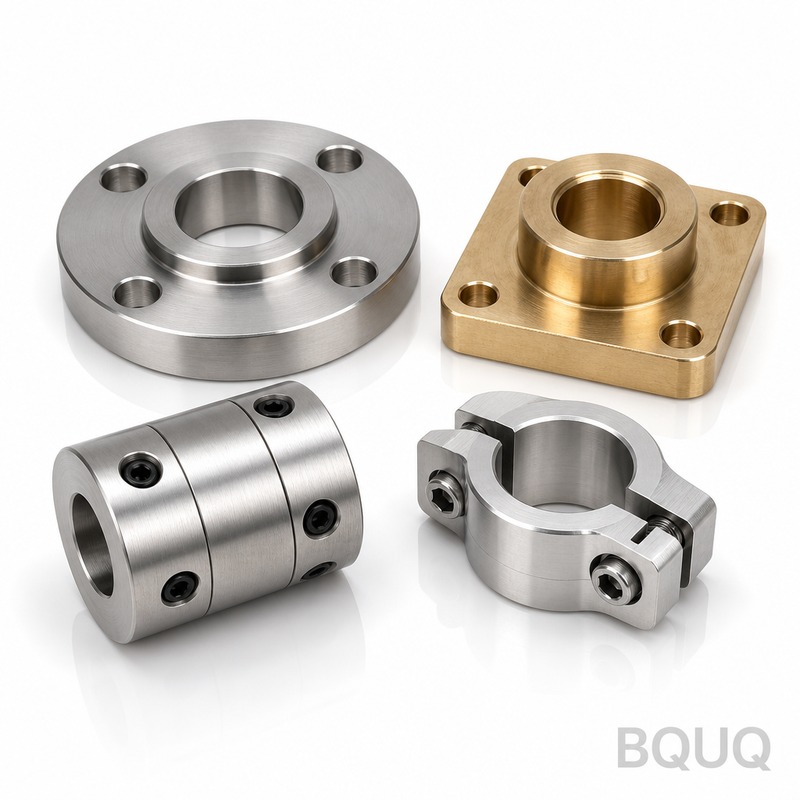
For a typical aluminum part with 10 operations, BQUQ quotes 5–7 working days for prototypes and 15–20 days for production runs of 1,000 pieces. Rush orders for critical parts can be compressed to 48 hours if the design is simple and material is in stock, but this incurs a 30% surcharge. Always ask what happens if the machine breaks down mid-order. A professional shop has backup machines and a clear escalation protocol. Do not accept a quote without a guaranteed delivery date penalty clause.
Cost Structure and Hidden Fees
Price transparency prevents invoice shock. Ask for a detailed quote that separates machining time, material cost, surface treatment, and packaging. Be wary of quotes that are significantly lower than the market average—they often hide costs in tooling, setup, or inspection.
For a standard 6061 aluminum bracket (100 mm x 50 mm x 10 mm), the typical machining cost is $8–$15 per piece for 100 pieces, excluding material. Precision stainless steel parts run 30–50% higher due to slower cutting speeds and tool wear. Ask about setup fees, which range from $50 to $200 per operation, and programming fees of $75–$150 per hour. Also ask about minimum order quantity (MOQ). Some suppliers require 50 pieces, while BQUQ accepts 1-piece prototypes at a slightly higher unit price. Always confirm the shipping term (EXW, FOB, or DDP) because this can add 5–10% to the total cost.
Communication and Engineering Support
The best CNC partner is not just a machine operator but an engineering resource. Ask if their team can provide DFM (Design for Manufacturing) feedback before you finalize the order. A good provider will flag thin walls below 0.5 mm, deep pockets with poor tool access, or sharp internal corners that require EDM.
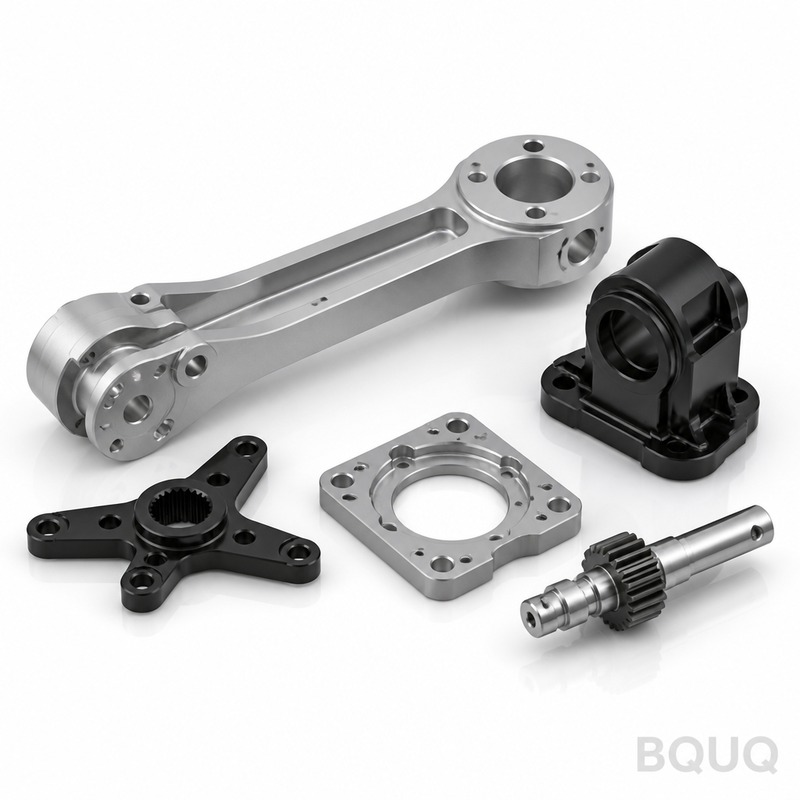
Ask about the revision process. If you change a hole diameter or add a thread, how fast can they update the quote and machine path? At BQUQ, our engineering team responds within 4 hours during working hours (GMT+8) and offers free DFM analysis for all inquiries. Also ask about language support. A provider with bilingual engineers (English and Mandarin) will reduce miscommunication errors. Request a sample part or a test order to evaluate their responsiveness and accuracy before committing to a large volume.
Data Table: Comparative Evaluation of CNC Service Providers
| Evaluation Criterion | Standard Shop | Precision Shop (BQUQ) | Critical Requirement |
| General tolerance | ±0.05 mm | ±0.01 mm | ±0.005 mm |
| Inspection equipment | Calipers, height gauge | CMM, optical comparator, surface tester | CMM with temperature control |
| Material traceability | No MTC provided | MTC with 3.1 cert available | Full chemical analysis |
| Standard lead time (100 pcs) | 15–20 days | 12–15 days | 10 days with rush fee |
| Surface finish (as-machined) | Ra 1.6 µm | Ra 0.8 µm | Ra 0.4 µm |
| DFM feedback | Not offered | Free within 4 hours | Mandatory before order |
| MOQ | 100 pieces | 1 piece (prototype) | 1–5 pieces |
| Rush order surcharge | 50% | 30% | 20% for repeat customers |
| Warranty on defects | 30 days | 12 months | Lifetime for critical parts |
FAQ-Style Tips for Engineers
Do I need to provide a 2D drawing or just a 3D model? Always provide both. The 3D model defines geometry, but the 2D drawing specifies critical tolerances, thread callouts, and surface finish symbols. If you only send a STEP file, clearly annotate the critical dimensions in the order notes.
How do I handle a tight tolerance on a non-critical feature? This is a common mistake. Marking all dimensions to ±0.01 mm increases machining time by 40% and cost by 25%. Only specify tight tolerances for mating surfaces, bearing bores, and sealing flanges. Let the rest default to ±0.1 mm to save money.
What is the best material for a high-temperature heat sink? For operating temperatures above 200°C, 6061 aluminum loses strength. Use C17200 copper or 7075-T6 aluminum with a nickel plating. Ask the supplier about their maximum continuous operating temperature for anodized coatings, which is typically 150°C for Type II and 200°C for hard anodizing.
Conclusion and Practical Recommendations
Your final choice should balance three factors: verified capabilities, transparent communication, and realistic pricing. Start with a small test order of 5–10 pieces to evaluate the supplier's actual performance, not their promises. Always request a full inspection report with the shipment, and keep a record of the material certificate for your own quality system.
For heat sinks or high-precision mechanical parts, pay extra for a supplier that offers temperature-controlled inspection and DFM feedback. This upfront cost prevents catastrophic failures in the field. If you are working with a tight deadline, ask about their current machine load—a busy shop might quote a long lead time, while a less busy one can start immediately.
Ready to Evaluate Your Project with 12-Hour Precision Quoting
At BQUQ, we have 20 years of experience in CNC machining, metal stamping, springs, and heat sinks for factories worldwide. Our engineers provide free DFM feedback and can confirm your tolerances and material specifications within 12 hours of receiving your drawings. We maintain a 98.7% on-time delivery rate and offer a 12-month defect warranty on all machined parts. For a detailed quote with full cost breakdown and lead time, contact us directly. Email: sc@bquq.com, WhatsApp: +86 13713157787, or visit www.bquq.com to upload your CAD files and receive a professional response within 12 business hours.
Related Articles
- Custom CNC Machining Services: A Complete Guide for Engineers
- High-speed machining technology: principles, tool path optimization, and industrial applications
- Analysis of the core technology of five-axis linkage machining: from motion to high-precision curved surface manufacturing
Frequently Asked Questions
What material certifications can you provide for CNC machined parts?
We provide material certificates (MTC) for every batch, including 3.1 certifications per EN 10204 for aerospace or medical work. Our stocked materials—6061-T6 and 7075-T6 aluminum, 303 and 316L stainless steel, and C17200 beryllium copper—all come with traceable mill test reports and full chemical composition analysis upon request.
What tolerances can you actually hold on CNC machined parts?
Our standard machining tolerance is ±0.01 mm (0.0004 in) for general features, and we achieve ±0.005 mm (0.0002 in) for critical bores. All tolerances are verified using CMM for 3D features, optical comparators for threads, and surface roughness testers, with measurements taken in a temperature-controlled inspection room at 20 ± 1°C.
What surface finishes do you guarantee and what post-processing do you recommend?
As-machined, we guarantee Ra 0.8 µm to 1.6 µm for standard milling, and Ra 0.4 µm for precision sealing surfaces using specific tool paths. For anodizing, we control Type II coating thickness at 8–12 µm and mask threads. For heat sinks, we provide flatness of 0.05 mm over 100 mm length for proper thermal interface.
How long does raw material sourcing take for different metals?
Standard 6061 aluminum is in stock with a 2–3 day lead time. Custom brass or titanium typically takes 7–10 days for sourcing. All materials are traceable to the source mill, and we can provide full chemical composition analysis for your specific alloy before production begins.