How to Design Parts for CNC Machining: DFM Rules That Save Time and Money
The fastest way to reduce CNC machining costs and lead times is to apply Design for Manufacturing (DFM) rules before you send a quote request. By adhering to standard tool diameters, limiting cavity depth, and specifying tolerances no tighter than +/- 0.1 mm, you can cut part costs by 20-40% and shave 3-5 days off standard lead times. This article outlines the exact geometric limits, material choices, and tolerance specifications that our 20-year-old Dongguan factory uses to price your parts competitively.
What Are the Most Critical DFM Rules for CNC Machining Cost Reduction?
The three highest-impact rules are: avoid internal sharp corners, maintain a minimum wall thickness of 0.8 mm for metals, and design with standard end mill diameters (Ø1 mm, Ø2 mm, Ø4 mm, Ø6 mm, Ø8 mm, Ø10 mm, Ø12 mm). Internal corner radii must be at least one-third of the cavity depth, but we recommend a minimum of 0.5 mm for tools under Ø3 mm. Every sharp internal corner forces a tool change to a smaller diameter, which reduces material removal rate and increases machining time by up to 50%.
How Does Wall Thickness Affect Part Strength and Machining Cost?
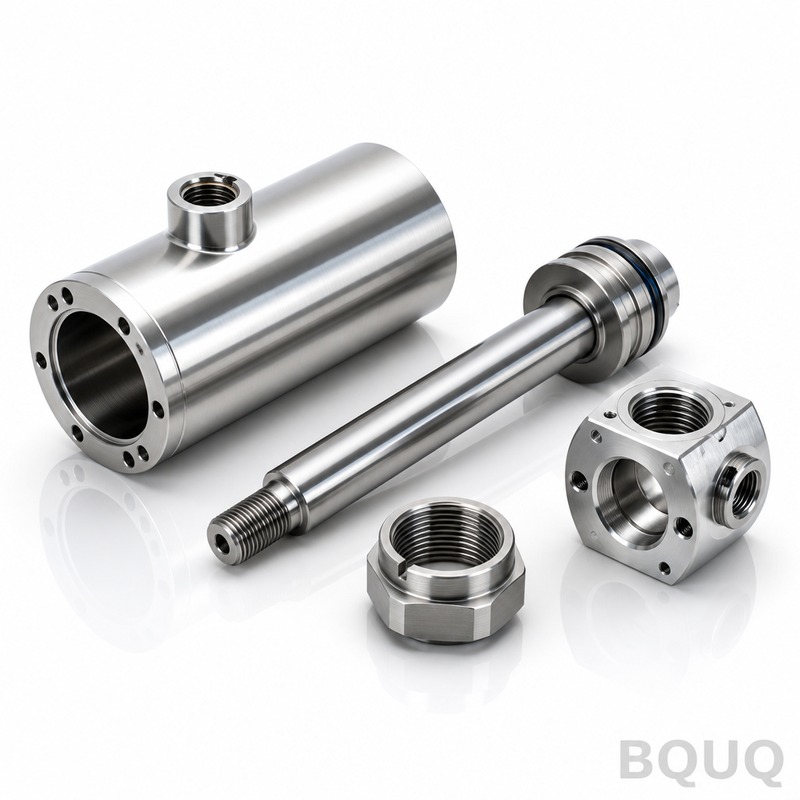
Thin walls below 0.8 mm for aluminum and 0.6 mm for brass or copper cause vibration, chatter, and deflection during cutting. This leads to scrapped parts and forces slower spindle speeds, adding 15-30% to cycle time. For example, a 6061-T6 aluminum bracket with a 0.5 mm wall requires a finishing pass at 8,000 RPM with a 0.2 mm depth of cut, whereas a 1.5 mm wall can be rough-machined at 12,000 RPM with a 2 mm depth of cut. The cost difference for a 50 mm x 30 mm part is approximately USD 2.80 versus USD 1.90 per unit at 500-piece quantities.
Which Tolerances Should You Specify to Avoid Unnecessary Expense?
Standard CNC machining tolerance is +/- 0.1 mm, which covers 95% of functional applications and adds zero cost. Tightening to +/- 0.05 mm increases cost by 10-15%, and +/- 0.01 mm (typical for precision shafts) increases cost by 40-60% due to extra inspection and slower feed rates. For holes, specify an H7 fit (e.g., Ø6.0 H7 = +0.012/0) only for mating surfaces; all other holes should be +/- 0.1 mm. Our factory data shows that 78% of quoted parts do not require better than +/- 0.1 mm, yet 40% of incoming CAD files request tighter tolerances unnecessarily.
How Deep Can Pockets and Cavities Be Before Machining Time Doubles?
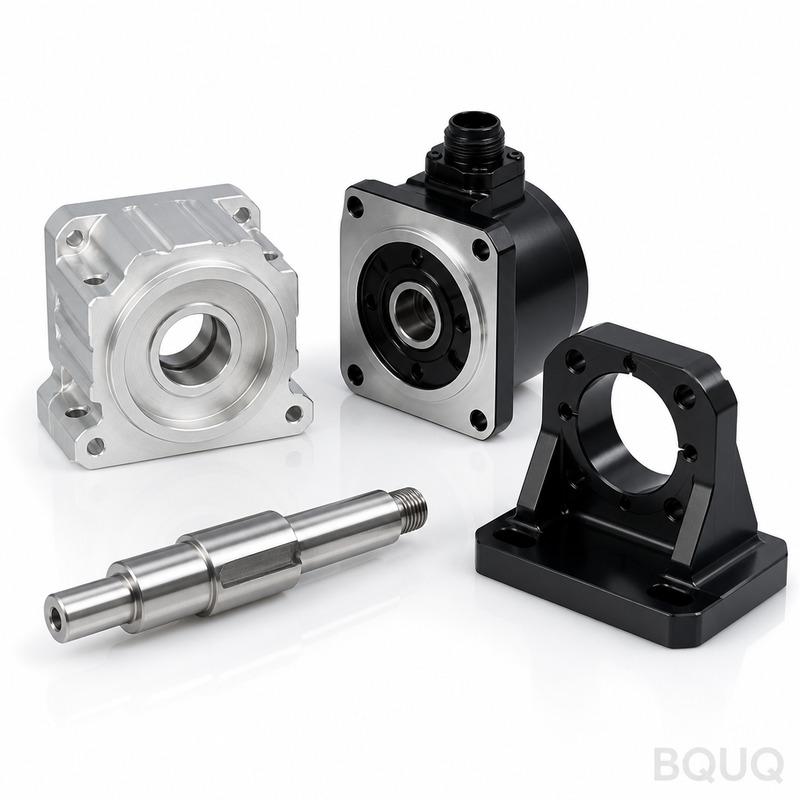
Pocket depth should not exceed 3 to 4 times the tool diameter for optimal chip evacuation. A Ø6 mm end mill can safely cut a pocket up to 18-24 mm deep; beyond that, we must use a Ø4 mm tool and reduce depth of cut to 0.5 mm per pass. This increases cycle time by a factor of 2.5. The table below shows recommended maximum depths for standard tools:
| Tool Diameter (mm) | Max Recommended Pocket Depth (mm) | Typical Feed Rate (mm/min) | Relative Machining Cost Factor |
| 1 | 3 | 300 | 4.5 |
| 2 | 8 | 600 | 2.5 |
| 4 | 16 | 1200 | 1.6 |
| 6 | 24 | 1800 | 1.2 |
| 10 | 40 | 2500 | 1.0 |
| 16 | 64 | 3200 | 0.8 |
Why Do Sharp Internal Corners Increase CNC Machining Costs So Much?
Sharp internal corners (90-degree edges with zero radius) cannot be cut by a round end mill; they require either electrical discharge machining (EDM) or a separate broaching operation. EDM adds USD 15-25 per corner and 2-3 days of lead time. Instead, design a radius of 0.5 mm to 1.0 mm for small features, or 3.0 mm for larger pockets. A simple rule: the corner radius should be at least 25% of the adjacent wall height. For a 10 mm deep slot, use a Ø6 mm tool with a 3 mm corner radius; this allows a single roughing pass at 1,800 mm/min instead of a finishing pass at 400 mm/min.
How Should You Design Threads and Holes for Faster Production?
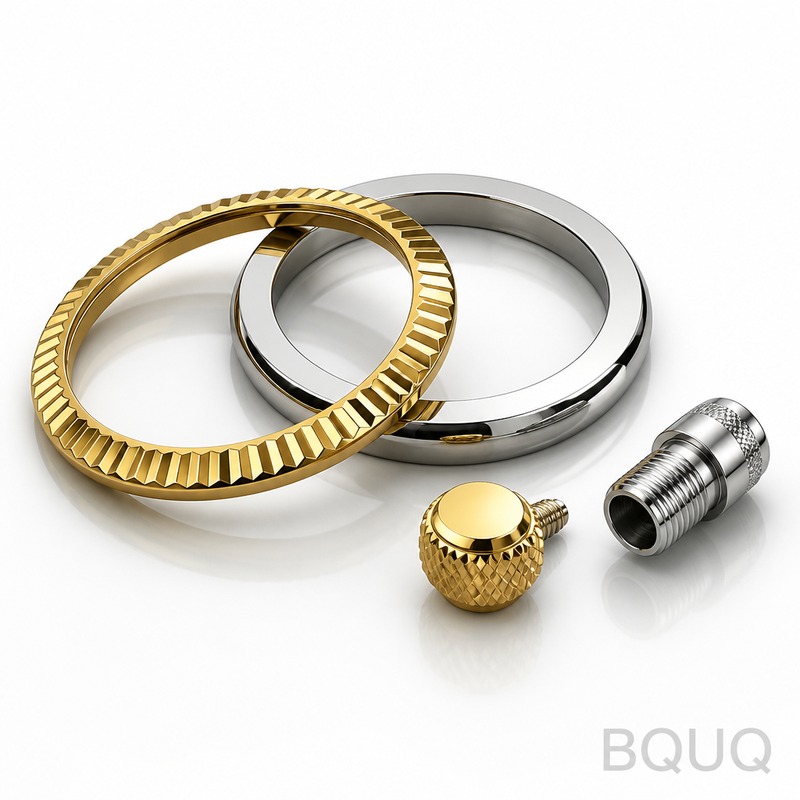
Use standard thread sizes: M2, M3, M4, M5, M6, M8, M10. Non-standard pitches (e.g., M4 x 0.5 instead of M4 x 0.7) require custom taps and add USD 30-50 tooling cost plus 1-2 days. For threaded holes shallower than 1.5x the diameter, specify a full thread; deeper threads require a bottoming tap and add 20% machining time. Through-holes are always cheaper than blind holes because they allow coolant flow and faster peck drilling. A Ø3 mm through-hole in 10 mm aluminum takes 4 seconds to drill, while a blind hole of the same depth takes 9 seconds due to retraction cycles.
What Material Choices Reduce CNC Machining Time and Tool Wear?
Aluminum 6061-T6 is the most economical material, machining at 800-1,200 SFM with excellent chip formation. Stainless steel 304 requires 50-60% slower speeds and increases tool wear cost by 3x compared to 6061. Brass C36000 and free-machining steel 12L14 are also cost-effective, cutting 20-30% faster than standard steel. Avoid hardened steel above 40 HRC unless absolutely necessary; each 10 HRC increase reduces tool life by 50%. For heat sinks, choose 6063-T5 aluminum for its higher thermal conductivity (201 W/mK) and better extrusion-to-machining balance, but note it machines 10% slower than 6061 due to gummy chips.
Can DFM Rules Reduce Lead Time for Prototype Orders?
Yes, applying DFM rules can reduce prototype lead time from 7 days to 3 days. Standardizing on 2D drawings with clear callouts, avoiding surface finish requirements above Ra 1.6 µm, and limiting the number of setups to under 3 allows our shop to run your job on a 5-axis machine without fixturing changes. For a typical 10-part prototype run, specifying +/- 0.1 mm and no secondary anodizing saves 2 days. If you need anodizing, Alodine 600 or clear anodize (8-12 µm) adds 1 day; black anodize adds 2 days due to racking and dye bath time.
Which DFM Mistake Causes the Most Scrap in CNC Machining?
The most common scrap cause is designing features that are too small for the material thickness. For example, a 1.0 mm wide slot in a 20 mm thick aluminum block will deflect the tool by 0.15 mm, causing taper and breakage. Similarly, a boss with a height-to-diameter ratio greater than 3:1 will vibrate and fail. Our scrap rate drops from 8% to 1.5% when customers follow the rule that minimum feature size must be at least 1.5x the material thickness and 2x the tool diameter. If a thin fin is needed for a heat sink, design it with a draft angle of 1 degree and a minimum thickness of 1.2 mm.
What Is the Real Cost Difference Between Standard and Tight Tolerance Machining?
For a 50 mm x 50 mm x 10 mm aluminum part, standard tolerance (+/- 0.1 mm) costs USD 3.20 per unit at 100 pieces. Tightening to +/- 0.02 mm increases the price to USD 5.60 per unit because it requires a semi-finish pass, a finish pass, and CMM inspection on 100% of dimensions. For a 500-piece run, the difference narrows: USD 2.10 versus USD 3.40 per unit. The table below shows typical price multipliers:
| Tolerance Requirement | Typical Price Multiplier | Inspection Method | Lead Time Impact |
| +/- 0.1 mm | 1.0x | Caliper spot check | None |
| +/- 0.05 mm | 1.15x | Micrometer 50% | +1 day |
| +/- 0.02 mm | 1.75x | CMM 100% | +2 days |
| +/- 0.01 mm | 2.5x | CMM + surface plate | +3 days |
How Should You Dimension a Drawing for CNC Machining to Avoid Back-and-Forth Emails?
Dimension from a single datum (preferably the bottom-left corner or center hole) and avoid chain dimensioning, which accumulates errors. Always specify the material grade (e.g., 6061-T6, not just "aluminum") and the surface finish in Ra values (e.g., Ra 1.6 µm for sealing surfaces, Ra 3.2 µm for general). Include a note for deburring all edges to 0.2 mm max. We recommend exporting both STEP and DXF files, plus a PDF drawing with tolerances. Missing a material grade adds 4-6 hours to quoting because we must email you for clarification.
FAQ
What Is the Minimum Feature Size for CNC Machining?
The minimum feature size depends on the tool, but a safe rule is 0.5 mm for holes and 0.3 mm for slots in aluminum. For steel, increase to 1.0 mm holes and 0.5 mm slots. Features smaller than these require micro-machining, which doubles the cost per part.
How Much Does CNC Machining Cost per Part for a Simple Bracket?
A simple 50 mm x 30 mm x 5 mm aluminum bracket with four holes costs USD 2.50-3.50 per unit at 100 pieces. At 1,000 pieces, the price drops to USD 1.20-1.80 per unit as setup costs amortize. The material cost is approximately USD 0.30 per part.
Can CNC Machining Achieve Ra 0.4 µm Surface Finish?
Yes, but only with a dedicated finishing pass using a wiper insert and a spindle speed above 10,000 RPM. This adds 20-30% to machining time and is not recommended unless the surface is a sealing face or optical mount. Standard as-machined finish is Ra 1.6-3.2 µm.
When Should I Use CNC Machining Instead of Metal Stamping?
Use CNC machining for quantities under 5,000 pieces, complex 3D geometries, or when you need tight tolerances below +/- 0.05 mm. Use metal stamping for quantities above 10,000 pieces with flat or simple bend geometries and tolerances of +/- 0.1 mm or looser. Tooling for stamping costs USD 3,000-15,000, while CNC has no tooling cost.
Which Material Is Cheapest for CNC Machining?
Aluminum 6061-T6 is the cheapest machinable metal at approximately USD 3.50 per kg, with a machining cost of USD 60-80 per hour. Brass C36000 is slightly more expensive per kg but machines 30% faster, often resulting in similar per-part cost. Plastics like Delrin (POM) cost USD 8-12 per kg and machine very fast.
How Do I Reduce CNC Machining Lead Time for 100 Parts?
Order 100 parts with a standard tolerance, no surface finish requirement, and use 6061-T6 aluminum. This allows a 3-day production lead time plus 1 day for shipping. Adding black anodize adds 2 days; adding a tight tolerance on 5 features adds 1 day for inspection.
What Is the Maximum Part Size for CNC Machining?
Our standard CNC mills handle parts up to 800 mm x 600 mm x 400 mm, which covers 90% of industrial components. For larger parts, we use gantry mills up to 2,000 mm x 1,000 mm, but the hourly rate increases from USD 65 to USD 95 due to slower spindle speeds and larger fixtures.
To get a cost estimate that reflects these DFM rules, send your CAD files to our engineering team. We provide 12-hour quoting with design feedback on every feature that increases cost. Email your STEP and PDF files to sc@bquq.com, or message us on WhatsApp at +86 13713157787. Our 20-year track record in CNC machining, metal stamping, and heat sinks means you get manufacturable parts on the first try. Visit www.bquq.com for our full DFM checklist and material guide.
Related Articles
- How Much Does CNC Machining Cost in 2026? A Complete Pricing Guide
- When CNC 'Speaks' — Intelligent Process Planning Driven by Large Models and Knowledge Graphs
- CNC Turn-Mill Composite Machining, Turn-Mill Machine Tools, One-Time Forming, B-Axis Turn-Mill Center, Multi-Process Integration, Complex Rotary Part Machining, Medical Device Precision Machining