How to Get an Accurate CNC Machining Quote: What Suppliers Need From You
**The short answer:** To get an accurate CNC machining quote, you must provide a complete technical package including a full 2D/3D CAD model, material specification, required tolerance, surface finish, and estimated order quantity. Missing any of these five data points will force the supplier to make assumptions, which typically results in a quote that is either inflated by 15–30% to cover risk or delayed by 24–48 hours for clarifications.
At BQUQ, our 20 years of CNC machining, metal stamping, and heat sink fabrication in Dongguan has taught us that 80% of quoting errors stem from incomplete customer inputs. This article details exactly what our engineers need from you—and why each piece of data matters—so you receive a precise, competitive, and manufacturable price on the first submission.
---
Section 1: The Five Non-Negotiable Data Points for a CNC Quote
A quote is only as good as the information it is based on. Suppliers use your inputs to calculate machine time, tool wear, setup labor, and inspection cost. Here are the five elements you must include, or you will receive a "provisional" quote with broad price ranges.
| Data Point | What We Need | Why It Matters | Impact of Omission | :--- | :--- | :--- | :--- | **CAD Model** | STEP (.stp) or IGES file, preferably 3D solid body | Drives CAM programming and toolpath simulation | Quote accuracy drops to ±25% | **2D Drawing** | PDF or DWG with critical dimensions and GD&T | Defines tolerance zones and inspection criteria | Risk of rework; price increases 10–15% | **Material Grade** | e.g., 6061-T6 Aluminum, 304 Stainless, 17-4 PH H900 | Determines cutting speed, tooling, and raw material cost | Material cost variance up to 40% | **Quantity** | Annual volume or per-order batch size | Setup cost amortization; bulk raw material pricing | Per-piece price can swing ±35% | **Surface Finish** | Ra value (e.g., Ra 1.6 µm) or cosmetic spec (anodize, bead blast) | Adds secondary operations and labor time | Finish ops add $15–$50 per part |
|---|
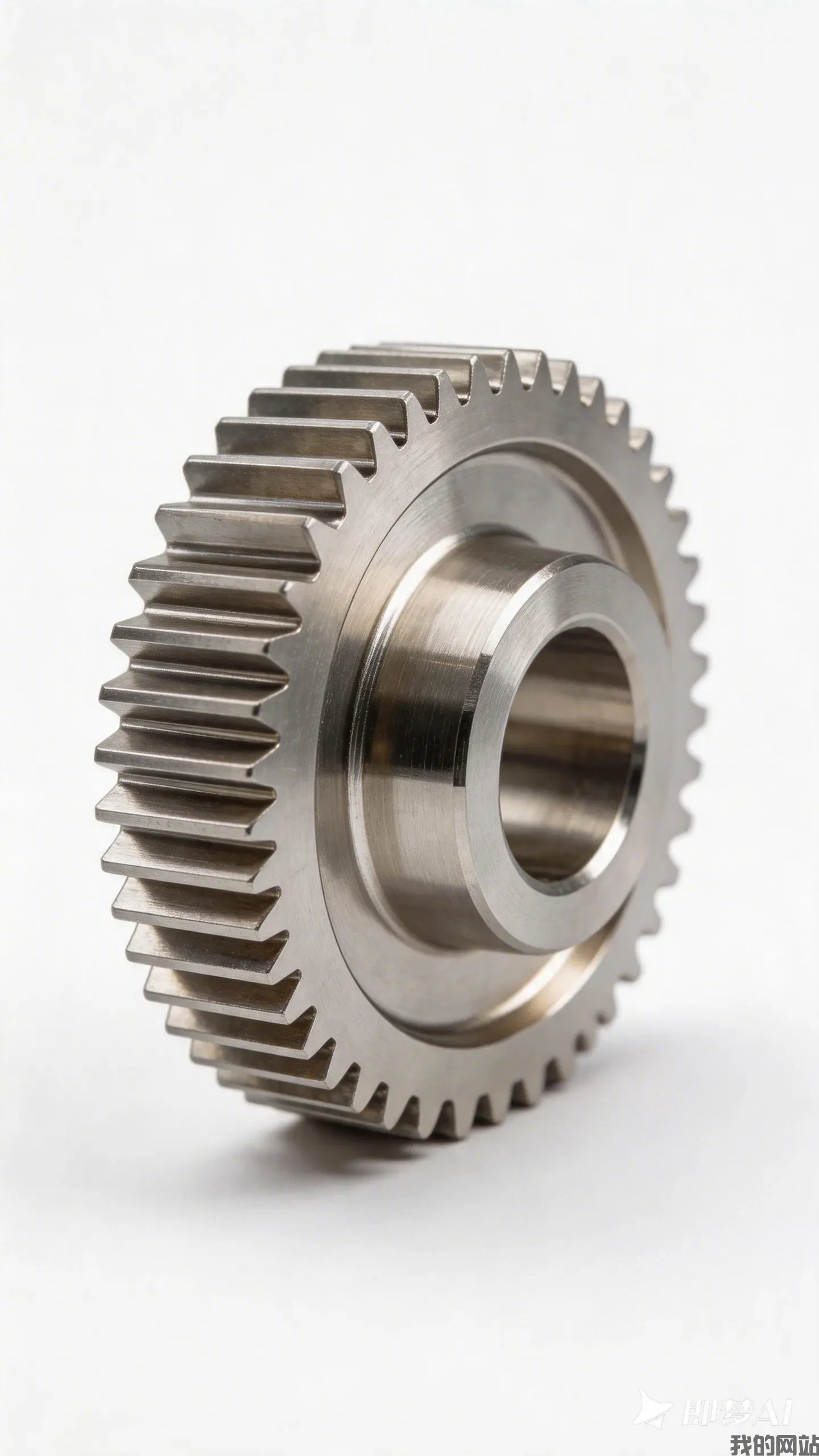
If you lack a 2D drawing, our engineers can generate one from your 3D model, but this adds 4–6 hours to the quoting process. For fastest turnaround, supply both.
---
Section 2: Tolerance and GD&T—How Precision Directly Alters Price
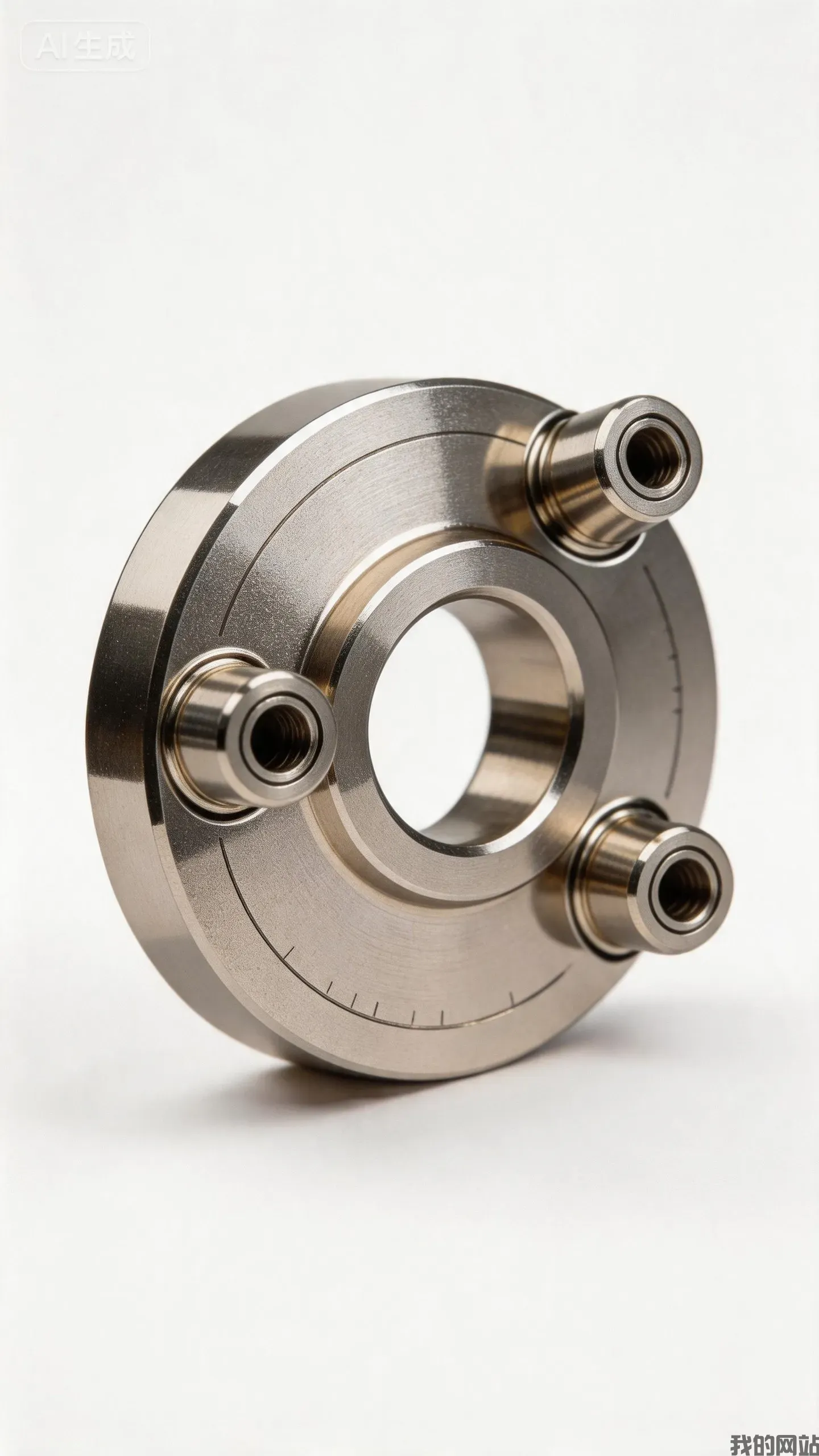
Tolerance is the single largest cost driver in CNC machining. Standard machining tolerance for most parts is ±0.125 mm (±0.005 in). Tightening to ±0.025 mm (±0.001 in) is achievable but requires slower feed rates, additional inspection passes, and often a dedicated machine setup.
**Real World Data from BQUQ Production Floor (2024 Average):**
| Tolerance Requirement | Relative Cost Multiplier | Typical Lead Time Impact | :--- | :--- | :--- | ±0.125 mm (standard) | 1.0x (baseline) | +0 days | ±0.050 mm (precision) | 1.35x | +1–2 days | ±0.025 mm (high precision) | 1.8x | +2–3 days | ±0.010 mm (jig grinding / lapping) | 2.5x | +5–7 days |
|---|
**Engineering recommendation:** Only specify tight tolerances on functional surfaces. For example, if a bore must mate with a bearing, call out a tolerance of +0.000 / -0.013 mm on that diameter. Leave the rest of the part at standard ±0.125 mm. This reduces your cost by up to 40% without sacrificing performance.
When you provide GD&T (Geometric Dimensioning and Tolerancing), we can apply true position and flatness callouts directly. But be aware: a flatness of 0.005 mm across a 200 mm surface will require a precision surface grind, adding $18–$25 per part in secondary operation cost.
---
Section 3: Material Selection and Thermal Effects on Machining
The material grade you specify determines not only raw material cost but also machining time and tool wear. For example, 6061-T6 aluminum machines at 3–4 times the speed of 304 stainless steel. This is a critical factor in your quote.
**Comparative Machinability and Cost Data (BQUQ, 2025 Pricing):**
| Material | Hardness (HB) | Relative Machining Time | Raw Material Cost (per kg, 50mm round bar) | Typical Surface Finish Achievable | :--- | :--- | :--- | :--- | :--- | 6061-T6 Aluminum | 95 | 1.0x (baseline) | $3.20 | Ra 0.8 µm | 7075-T6 Aluminum | 150 | 1.2x | $8.50 | Ra 0.8 µm | 304 Stainless Steel | 200 | 3.2x | $4.10 | Ra 1.6 µm | 17-4 PH Stainless (H900) | 350 | 4.5x | $9.80 | Ra 0.4 µm | C36000 Brass | 120 | 1.5x | $7.90 | Ra 0.4 µm | Ti-6Al-4V Titanium | 350 | 6.0x | $45.00 | Ra 1.6 µm |
|---|
**Thermal note for heat sink applications:** If your part is a heat sink, specify the base material and required thermal conductivity. We typically use 6063-T5 aluminum for extrusions (thermal conductivity 201 W/mK) or 6061-T6 for CNC-machined fins (167 W/mK). Do not specify "aluminum" without a grade—the thermal performance difference is 20%, and the price difference can be 15% depending on billet versus extrusion.
---
Section 4: Quantity, Setup Costs, and Economies of Scale
The quantity you order directly affects the per-unit price because CNC setup is a fixed cost. A typical 3-axis CNC setup at BQUQ takes 45–90 minutes, costing between $60 and $120 in labor. Tooling (vises, fixtures, custom jaws) adds $50–$300 depending on complexity.
**Price Breakdown for a Standard Bracket (6061-T6, 80x40x10mm, 4 holes):**
| Order Quantity | Setup Cost per Part | Machining Time per Part | Raw Material per Part | Total Per-Unit Price | :--- | :--- | :--- | :--- | :--- | 1 piece | $120.00 | $18.00 | $4.50 | $142.50 | 10 pieces | $12.00 | $18.00 | $4.50 | $34.50 | 100 pieces | $1.20 | $16.00 (optimized) | $4.10 (volume discount) | $21.30 | 1,000 pieces | $0.12 | $14.00 (fixtured) | $3.80 (tighter material) | $17.92 |
|---|
**Engineering recommendation:** If you are prototyping, expect to pay a 4–6x premium per part compared to production quantities. We recommend ordering 5–10 prototype pieces to validate fit and function, then immediately moving to a 100+ piece production run to amortize setup. For high-volume orders (500+), we invest in custom hard tooling that reduces cycle time by 30–40%, lowering your per-unit cost further.
---
Section 5: Surface Finish and Secondary Operations—Hidden Costs
Surface finish is often a hidden cost in quotes. A standard machined finish (Ra 3.2 µm) is free—it is the natural result of a good milling pass. However, any cosmetic or functional finish adds time and materials.
**Secondary Operation Pricing (BQUQ, 2025):**
| Operation | Typical Cost (per part) | Lead Time Addition | Notes | :--- | :--- | :--- | :--- | Bead blasting (matte finish) | $2.50–$5.00 | +1 day | Removes tool marks; uniform appearance | Clear anodize (Type II, 5–10 µm) | $8.00–$15.00 | +2–3 days | Must be ordered in batches of 20+ parts | Hard anodize (Type III, 25–50 µm) | $15.00–$25.00 | +3–5 days | Increases surface hardness to 60+ HRC | Powder coating (any color) | $10.00–$20.00 | +3 days | Thick film, masks tight tolerances | Passivation (stainless steel) | $3.00–$6.00 | +1 day | Removes free iron; required for medical/food |
|---|
**Critical warning:** If you specify a surface finish of Ra 0.4 µm or better, the machinist must use a wiper insert and a slower spindle speed (typically 8,000 RPM instead of 12,000 RPM on aluminum). This increases machining time by 25–35%. Also, never apply powder coating to a surface with a tolerance tighter than ±0.05 mm; the coating thickness of 60–100 µm will violate your tolerance.
---
Section 6: The 6-Step Checklist Before You Send Your RFQ
To ensure your quote is accurate within 24 hours, follow this engineering checklist:
1. **Export a STEP file** from your CAD software. Ensure it is a solid body, not a surface model. Check for "dirty geometry"—zero-thickness walls, overlapping faces, or open contours. A watertight model saves 2 hours of repair time. 2. **Create a 2D PDF** with critical dimensions. Mark the three most important tolerances with a "CTP" (Critical To Product) symbol. Our engineers will focus inspection there. 3. **Specify material and temper** (e.g., 6061-T6, not just "aluminum"). Include hardness if it is critical (e.g., 17-4 PH H900 for springs or tooling). 4. **State the annual volume and order frequency.** This allows us to quote a blanket order discount or raw material bulk buy. 5. **Define the expected surface finish** with an Ra value. If it is cosmetic, state "cosmetic—no visible tool marks" rather than a Ra number, which is cheaper to achieve. 6. **Mention any special inspection requirements.** Do you need a CMM report, material cert, or RoHS compliance? These add 2–3 days to lead time.
---
FAQ-Style Tips from Our Quoting Engineers
**Q: What if I only have a 2D drawing and no 3D model?** A: Send the PDF. We can create a 3D model, but this adds 4–8 hours to the quote timeline. The quote will be based on our interpretation, so review the final model before production.
**Q: Why did my quote double when I changed from 5 to 50 pieces?** A: This is unlikely unless you changed tolerances or material. For 50 pieces, setup cost per part drops dramatically. If your quote doubled, check if the supplier is using a different material grade or adding a setup charge for a new fixture.
**Q: Can you quote from a physical sample?** A: Yes, but we must reverse-engineer it. This costs $150–$300 for digitizing and modeling, and the quote accuracy depends on the part's complexity. It is always cheaper to provide a CAD file.
**Q: What is a realistic lead time for a CNC quote?** A: At BQUQ, we provide a detailed quote within 12 hours for parts with complete data. Incomplete packages take 24–48 hours due to clarification rounds.
---
Conclusion: The Cost of Incomplete Information
An accurate CNC machining quote is not a guess—it is a calculation based on machine time, tool wear, material cost, and inspection labor. Every missing data point forces the supplier to pad the price with contingency. In our experience, a complete technical package saves you 15–30% on your final price and accelerates your project by 2–3 days.
At BQUQ, with 20 years of precision manufacturing in Dongguan, our engineers review every RFQ against the five critical data points: CAD model, 2D drawing, material grade, quantity, and surface finish. We provide transparent, itemized quotes that break down material, machining, and finishing costs.
**Ready to get an accurate quote?** Send your complete technical package to our engineering team. We respond with a detailed, fixed-price quote within 12 hours, no matter your location.
**Contact BQUQ:** - Email: sc@bquq.com - WhatsApp: +86 13713157787 - Website: www.bquq.com
We look forward to manufacturing your next precision component.
Related Articles
- Rail Track Equipment Manufacturing 2025: Safety-Critical Precision and 5 Tolerance Standards
- CNC Precision Turned Parts for Medical Devices: Guide
- Aluminum Heat Sink CNC Machining: Best Practices Guide
Frequently Asked Questions
What five data points do I need to provide to get an accurate CNC machining quote?
You must provide a complete technical package including a full 2D/3D CAD model (STEP or IGES), a 2D drawing with critical dimensions and GD&T, material grade (e.g., 6061-T6 Aluminum), estimated order quantity, and surface finish requirement (e.g., Ra 1.6 µm). Missing any of these forces assumptions, inflating quotes by 15–30% or delaying them by 24–48 hours.
How does tolerance affect CNC machining cost and lead time?
Tolerance is the largest cost driver. Standard ±0.125 mm is baseline at 1.0x cost with no lead time impact. Tightening to ±0.050 mm increases cost 1.35x and adds 1–2 days; ±0.025 mm costs 1.8x and adds 2–3 days; ±0.010 mm costs 2.5x and adds 5–7 days. Only specify tight tolerances on functional surfaces to control costs.
What happens if I don't have a 2D drawing for my CNC quote?
If you lack a 2D drawing, our engineers can generate one from your 3D model, but this adds 4–6 hours to the quoting process. For fastest turnaround, supply both the 3D CAD file and 2D drawing. Missing the 2D drawing risks rework and increases price by 10–15% due to undefined tolerance zones and inspection criteria.
How does material grade selection impact my CNC machining quote?
Material grade determines cutting speed, tooling, and raw material cost. For example, 6061-T6 Aluminum, 304 Stainless, and 17-4 PH H900 each require different machining parameters. Material cost variance can be up to 40% depending on grade. Providing the exact grade ensures accurate pricing and manufacturability.